Creating a Sleep-Optimized Herbal Tea Bar at Home
You can create a sleep-optimized herbal tea bar by choosing calming herbs like chamomile, passionflower, and valerian root, then pairing them with tools like a gooseneck kettle, mesh strainer, and amber glass jars to preserve freshness. Set up your station in a quiet spot with soft lighting to encourage relaxation. Blend herbs mindfully, test small batches, and steep 30–60 minutes before bed to support natural wind-down cues-consistency strengthens results over time, and there’s more to discover about fine-tuning your routine.
Notable Insights
- Choose calming herbs like chamomile, valerian root, passionflower, and lemon balm to support relaxation and improve sleep quality.
- Gather essential tools including a gooseneck kettle, mesh strainer, amber glass jars, measuring spoon, and digital timer for precision and consistency.
- Set up a dedicated tea station in a quiet, soothing space near your bedroom with warm lighting and minimal clutter.
- Create custom sleep blends using base and complementary herbs, testing small batches and labeling for freshness and tracking.
- Incorporate tea into your nightly routine 30–60 minutes before bed to signal relaxation and reinforce healthy sleep associations.
Choose Your Best Sleep-Supporting Herbs
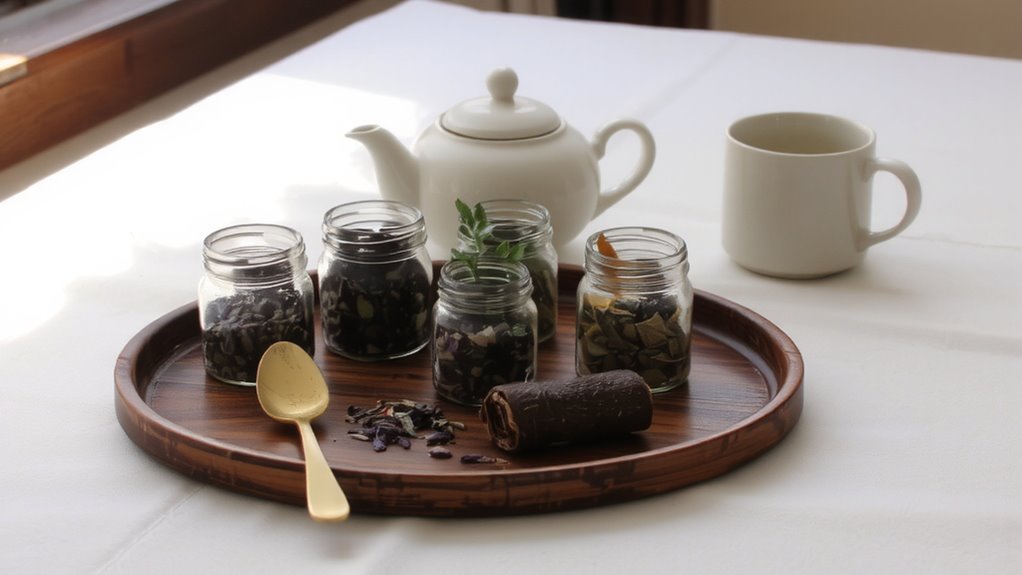
Why not start by considering which herbs truly support restful sleep? You’ll want to choose based on proven herbal benefits and how well they create sleep synergy. Chamomile calms the nervous system, making it easier to unwind. Valerian root may improve sleep quality, though its strong taste isn’t for everyone. Passionflower helps reduce nighttime awakenings, while lemon balm eases anxiety that can disrupt rest. When combined, these herbs often work better together-this is sleep synergy in action. You’re not just picking ingredients; you’re building a response to your body’s nighttime needs. Consider trying one herb at a time first, then small blends, to see what supports your sleep pattern best. Look for organically grown, clearly labeled herbs to guarantee freshness and purity. Some come with usage tips or satisfaction guarantees-use those to guide your trial. Your ideal mix supports calm, not sedation. For a curated selection of high-quality ingredients, explore the best sleep teas recommended for consistent rest.
Gather the Essential Tea Bar Tools
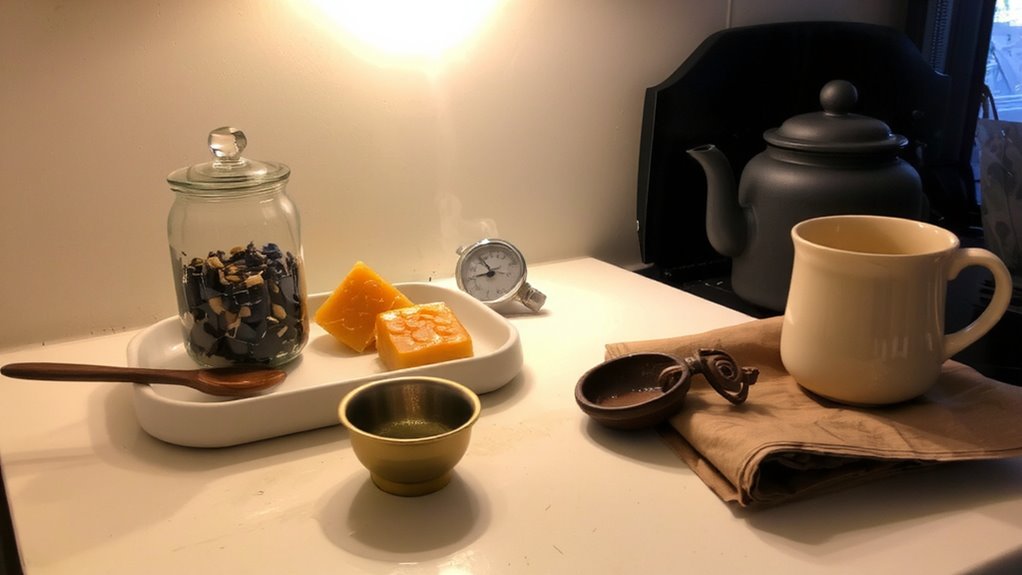
While setting up your sleep-optimized tea bar, having the right tools makes each step simpler and more effective. Proper tea strainer selection guarantees minimal leaf escape and easy cleanup-choose fine mesh for powdered herbs or blooming flowers. Storage container organization keeps herbs fresh and accessible; dark, airtight jars protect against light and moisture. Consider size, material, and labeling for quick identification. A variety of herbal sleep teas can be blended and stored in your tea bar for personalized nighttime routines. Below are key tools and their benefits:
| Tool | Feature | Purpose |
|---|---|---|
| Tea kettle | Gooseneck spout | Precise water control |
| Tea strainer | Stainless steel mesh | Effective filtration |
| Storage jars | Amber glass, airtight | Preserve herb potency |
| Measuring spoon | Calibrated | Consistent dosing |
| Timer | Digital display | Steep time accuracy |
These support consistent preparation, helping you trial herbal combinations for better sleep patterns. Check warranties on electrical kettles and test strainers for durability.
Set Up Your Nighttime Tea Station
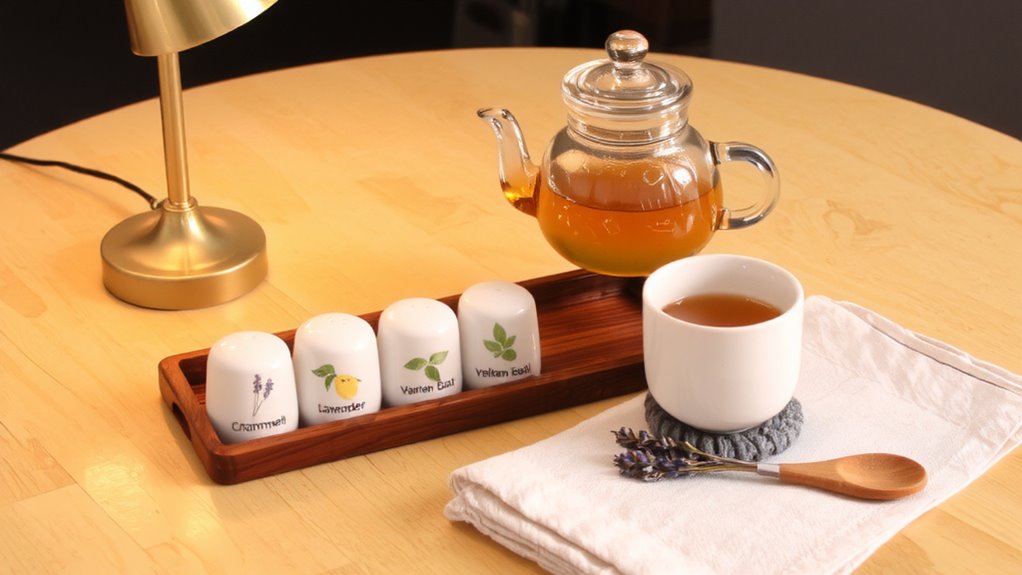
Where should you place your tea station for the best nighttime routine? Choose a quiet corner near your bedroom or bathroom, somewhere you can move through calmly without bright lights or distractions. A small table or shelf works best-keep it simple and accessible. Your tea station decor should include soft elements like warm lighting, calming colors, and natural materials to support a relaxing shift to sleep. Consider a small lamp or candle-style bulb to enhance the nighttime ambiance without overstimulation. Store tools within reach but neatly arranged, reducing clutter that might disrupt focus. Make sure everything feels intentional and easy to use, even when you’re tired. This setup supports consistency, helping signal to your body that it’s time to unwind. With thoughtful placement and design, your station becomes a functional part of a healthier sleep pattern.
Create Custom Herbal Tea Blends for Sleep
Now that your tea station is set up in a calm, low-light spot, you can begin preparing blends tailored to your sleep needs. Start with base herbs like chamomile or passionflower, known for supporting relaxation. Mix in complementary ingredients such as lavender for calm or valerian root for deeper sleep, using blend creativity to balance flavor and effect. Always check for tea safety-avoid ingredients that interact with medications or worsen sleep disorders. Use small batches to test potency and tolerance. Label each blend with ingredients and date to track results. Some herbs can take weeks to show effects, so consistency matters. Rotate blends if one isn’t working; your body may respond better to different compounds. Store blends in airtight jars away from light to preserve freshness. Over time, you’ll identify what helps you wind down safely and effectively. For a soothing option backed by tradition, try including best sleep-inducing herbal teas in your custom mixes.
Make Tea Time Part of Your Bedtime Routine
Since you’ve prepared your custom herbal blends, making tea time a consistent part of your bedtime routine can help signal to your body that it’s time to unwind. Start by setting a regular time each night, ideally 30 to 60 minutes before bed, to begin your tea rituals. This consistent window allows your nervous system to adjust gradually, supporting natural sleep onset. Use the process of heating water, steeping tea, and settling into a comfortable spot as cues for relaxation. Practice mindful sipping-focus on the warmth, aroma, and flavor of each slow drink. This small act can reduce mental chatter and ease physical tension. Over time, these repeated habits strengthen the mental association between tea and sleep, offering a drug-free way to improve sleep hygiene. No equipment warranty or trial period needed-just daily practice and awareness.
Use Your Tea Bar to Wind Down Naturally
What if calming your mind before bed didn’t require pills or expensive supplements? Your tea bar can become a natural touchstone for sleep-friendly habits. By selecting herbs like chamomile, valerian, and passionflower, you’re not just brewing tea-you’re creating herbal synergy, where combined ingredients support deeper calm. These blends work best when used consistently as part of your relaxation rituals, signaling to your body that it’s time to slow down. Keep your space simple: a kettle, favorite mug, and clearly labeled herbs make the process inviting and repeatable. Avoid caffeine-containing ingredients and focus on flavors you enjoy, since taste impacts adherence. Over time, this nightly pause helps regulate your sleep cycle. There’s no trial period or warranty needed-just regular use and small adjustments based on how you feel. Let your tea bar be a practical, soothing step toward better sleep.
On a final note
You now have the tools to build a calming, personalized tea ritual. Choosing herbs like chamomile or valerian lets you test mild, natural options before stronger sleep aids. This setup supports consistent wind-down habits, which often help more than any single ingredient. Try blends for a few nights, adjusting based on how you feel. There’s no warranty on better sleep-but small, informed changes often improve rest over time.