Best Sleep-Promoting Teas That Naturally Calm Your Mind
You’ll find calming effects in herbal teas with valerian root, chamomile, and passionflower, all shown to support relaxation and sleep onset. Brands like Traditional Medicinals and Yogi offer organic, caffeine-free blends in compostable bags, with options for longer use or stronger potency. Steep for 5–7 minutes to extract active compounds. Some include melatonin, which may help short-term use but isn’t ideal daily. Consider flavor and ingredient synergy when choosing your blend-trialing a few helps identify what works best for your routine.
We are supported by our audience. When you purchase through links on our site, we may earn an affiliate commission, at no extra cost for you. Learn more. Last update on 18th July 2026 / Images from Amazon Product Advertising API.
Notable Insights
- Chamomile tea contains apigenin, a compound that binds to brain receptors to promote relaxation and support sleep onset.
- Valerian root tea increases GABA levels, helping you fall asleep faster and improve overall sleep quality.
- Passionflower tea enhances GABA activity, reducing nervous system activity and naturally calming the mind before bed.
- Lavender herbal tea, rich in linalool, has been shown to reduce anxiety and improve sleep efficiency.
- Organic, caffeine-free blends with calming ingredients like lemon balm and spearmint offer a natural, holistic approach to better sleep.
Traditional Medicinals Nighty Night Tea (16 Bags)

If you’re looking for a reliable, herbal option to help wind down at night, Traditional Medicinals Nighty Night Tea (16 Bags) stands out as a strong choice, especially if you respond well to valerian root. I’ve found this blend works steadily, combining valerian with passionflower and lemon balm to support relaxation. Peppermint adds a mild, minty finish that softens the earthy notes, making it easier to sip nightly. It’s caffeine-free, USDA Organic, and uses compostable bags, which matters if you value sustainability. The company designs teas for targeted wellness, so this one’s meant specifically for sleep. There’s no trial period, but many notice effects within a week. It’s not a sedative, but it can help ease into rest-especially if you’re sensitive to stronger medications.
Best For: Individuals seeking a natural, herbal sleep aid with a blend of valerian root, passionflower, and lemon balm to support relaxation and restful sleep.
Pros:
- USDA Certified Organic and caffeine-free, making it a clean, natural option for nighttime use
- Includes calming herbs like valerian root, passionflower, and lemon balm shown to support sleep
- Compostable tea bags and sustainable practices appeal to eco-conscious consumers
Cons:
- Earthy flavor from valerian root may be strong or off-putting for some palates
- Effects are subtle and not immediate, requiring consistent use over time
- Contains peppermint, which may relax the esophageal sphincter and potentially cause reflux in sensitive individuals
Organic Nighty Night Extra Tea (48 Bags)

I choose Organic Nighty Night Extra Tea when I need a potent, herb-based solution for occasional sleeplessness, especially if I want something both clinically supportive and mindfully produced. It’s Traditional Medicinals’ strongest blend, with valerian root as the main sedative herb, backed by passionflower, lemon balm, and peppermint to ease your mind. I appreciate the earthy, minty flavor-it’s herbal but not harsh. Each of the 48 compostable tea bags is individually wrapped, so the herbs stay fresh. It’s USDA Organic, Non-GMO, and Kosher, with no caffeine. Knowing it’s made in a solar-powered, zero-waste U.S. factory gives me confidence in its sustainability.
Best For: People seeking a potent, organic, and sustainably made herbal tea to support restful sleep during occasional sleeplessness.
Pros:
- Features a strong blend of valerian root, passionflower, lemon balm, and peppermint for effective relaxation
- USDA Organic, Non-GMO Verified, Kosher, and caffeine-free with compostable tea bags
- Produced in a solar-powered, TRUE Zero Waste certified facility by a Certified B Corporation
Cons:
- Earthy, herbal taste may not appeal to those who prefer milder or sweeter tea flavors
- Contains valerian root, which can have a strong aroma some find unpleasant
- Higher price point compared to conventional sleep teas due to premium organic and sustainable practices
Traditional Medicinals Nighty Night Tea (16 Bags)

One solid choice among sleep-promoting teas, Traditional Medicinals Nighty Night Tea stands out for people seeking a certified organic, herbal blend designed to support relaxation and restful sleep. I like that it combines chamomile, passionflower, valerian root, linden flower, and spearmint-each chosen by herbalists to gently ease the mind. The taste is earthy and minty, thanks to organic spearmint, making it easy to sip nightly. It’s caffeine-free, non-GMO, and USDA Organic, so I know I’m not ingesting unnecessary chemicals. The compostable bag supports eco-friendly habits. With just 16 servings per box, it’s best for trial use or light nightly routines.
Best For: Individuals seeking a certified organic, caffeine-free herbal tea to support relaxation and promote restful sleep.
Pros:
- USDA Certified Organic, non-GMO, and Kosher, ensuring high-quality, clean ingredients
- Thoughtfully formulated with traditional calming herbs like chamomile, passionflower, and valerian root
- Eco-conscious packaging with compostable tea bags and sustainable brand practices
Cons:
- Only 16 tea bags per box, which may be insufficient for regular or long-term use
- Earthy, herbal taste may not appeal to those preferring milder or sweeter flavors
- Contains valerian root, which some users may find has a strong or unpleasant aftertaste
Twinings Sleep+ Herbal Tea with Melatonin (16 Bags)
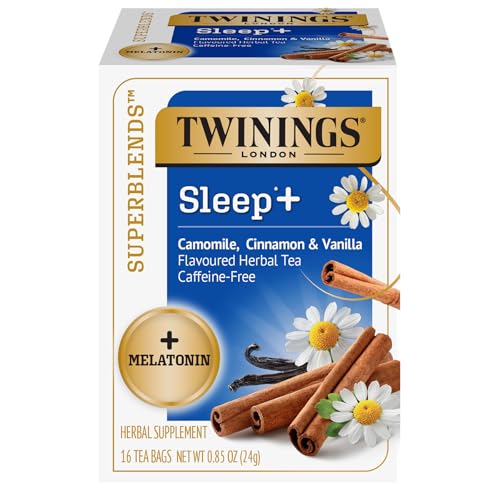
Twinings Sleep+ Herbal Tea with Melatonin stands out for those seeking a calming nighttime ritual backed by functional ingredients, especially if you’re sensitive to caffeine or prefer a gentle, non-habitual aid to help wind down. I find the blend of 1mg melatonin, camomile, cinnamon, and vanilla works well to support relaxation. The tea is naturally caffeine-free, comes in 16 convenient bags, and brews into a smooth, floral cup with warm, sweet notes. Part of Twinings’ Superblends Fortify line, it’s designed for daily wellness. I appreciate Twinings’ long-standing quality and ethical sourcing, which adds trust. It’s not a sleep cure, but it can help ease your body into a rest-ready state when used consistently.
Best For: Individuals seeking a naturally caffeine-free, gentle evening tea with melatonin to support relaxation and a consistent nighttime routine.
Pros:
- Combines 1mg of melatonin with calming camomile, cinnamon, and vanilla for a soothing, flavorful herbal blend
- Part of Twinings’ trusted Superblends Fortify line, emphasizing functional wellness and expert craftsmanship
- Ethically sourced with a commitment to social and environmental initiatives in tea-growing communities
Cons:
- Contains melatonin, which may not be suitable for everyone or for long-term daily use without medical advice
- Limited to 16 tea bags per pack, which may require frequent reordering for regular users
- May not be effective for individuals with chronic sleep disorders or those needing stronger sleep support
Yogi Tea Bedtime Herbal Blend (64 Bags)

If you’re looking for a reliable, caffeine-free option to help wind down consistently at night, Yogi Tea Bedtime Herbal Blend stands out with its thoughtfully combined organic ingredients. I’ve found the mix of chamomile flower, passionflower, and lavender gently promotes relaxation, while licorice root, spearmint, and cardamom add balance and flavor. Each box contains 64 tea bags-four packs of 16-so I never worry about running out. It’s USDA Organic, NON-GMO, and vegan, which matters if you prioritize clean, plant-based choices. I steep one bag for 7 minutes, or two for a stronger effect, right before bed. Over time, it’s become part of my routine to support consistent, restful sleep.
Best For: Individuals seeking a natural, caffeine-free herbal tea to support relaxation and consistent, restful sleep.
Pros:
- USDA Organic, NON-GMO, and vegan certified, made with high-quality organic ingredients
- Thoughtful blend of chamomile, passionflower, and lavender promotes calmness and sleep support
- Generous 64 tea bags per package, ideal for long-term nightly use
Cons:
- Some may find the licorice root imparts a strong, lingering sweetness not suitable for all palates
- Requires 7-minute steep time for optimal effectiveness, which may be longer than desired
- Effectiveness may vary for individuals with severe sleep disorders or heightened sensitivity to herbs
Celestial Seasonings Sleepytime Tea with Melatonin (18 Bags)

You’ll find Celestial Seasonings Sleepytime Tea with Melatonin especially helpful if you’re looking for a gentle, plant-based way to wind down and support a consistent sleep schedule. I appreciate how it blends chamomile, spearmint, and other natural botanicals with 1 mg of melatonin per cup-just enough to gently signal bedtime. Each box includes 18 caffeine-free tea bags, perfect for nightly use without artificial additives. The tea bags are stringless and staple-free, reducing waste, while the box is made from 100% recycled paperboard. I steep mine for 5 minutes, making it part of my calming routine.
Best For: Individuals seeking a natural, plant-based tea to help establish a calming bedtime routine and support consistent, restful sleep.
Pros:
- Combines soothing herbal ingredients like chamomile and spearmint with 1 mg of melatonin to gently promote sleep
- Caffeine-free, contains no artificial flavors or colors, and uses eco-friendly, stringless, staple-free tea bags
- Packaged in 100% recycled paperboard with 35% post-consumer content, supporting sustainable practices
Cons:
- Contains only 18 tea bags per box, which may run out quickly with nightly use
- Melatonin dosage is fixed per tea bag, offering no flexibility for dosage adjustment
- Herbal taste may not appeal to those who dislike chamomile or mint flavors
Celestial Seasonings Sleepytime Extra Herbal Tea, 20 Tea Bags Box

This tea works best for adults seeking a caffeine-free, herbal option to support relaxation before bed, especially those sensitive to stimulants or looking to ease into a consistent nighttime routine. I rely on its blend of valerian root, chamomile, and spearmint to gently encourage sleep without artificial additives. It’s gluten-free and不含 common allergens, though those allergic to daisies should be cautious. The tea bags have no staples, strings, or tags, reducing waste, and the box uses 35% post-consumer recycled material. I avoid driving after drinking it, and I’d advise checking with a healthcare provider if you’re pregnant, nursing, or on medication.
Best For: Adults seeking a caffeine-free, herbal tea to support relaxation and improve sleep quality, especially those sensitive to stimulants or establishing a nighttime routine.
Pros:
- Naturally caffeine-free, gluten-free, and contains no artificial additives
- Blend of valerian root, chamomile, and spearmint promotes calmness and sleep support
- Eco-conscious packaging with staple-free tea bags and 35% post-consumer recycled paperboard
Cons:
- May cause drowsiness, making it unsafe for driving or operating machinery
- Not recommended for pregnant, nursing individuals, or those on medication without medical approval
- Potential allergy risk for individuals sensitive to chamomile or plants in the daisy family
Yogi Tea Bedtime Herbal Tea (6 Pack)

Who hasn’t struggled to quiet their mind before bed, searching for a natural way to ease into sleep? I’ve found Yogi Tea Bedtime Herbal Tea helps me unwind with its blend of passionflower, chamomile, valerian root, and lavender. It’s caffeine-free, USDA Organic, non-GMO, and vegan, so I trust the quality. I steep one bag for 7 minutes, or two if I need extra calm. The flavor’s herbal but smooth, not bitter. While it won’t cure insomnia, it supports relaxation as part of a consistent routine. I appreciate that Yogi uses premium botanicals without fillers. It’s sold in a 6-pack, letting me try it before committing.
Best For: Individuals seeking a natural, caffeine-free herbal tea to support relaxation and improve sleep quality as part of a bedtime routine.
Pros:
- Made with USDA Organic, non-GMO, and vegan ingredients for trusted quality
- Features a soothing blend of passionflower, chamomile, valerian root, and lavender proven to promote relaxation
- Easy to prepare with clear steeping instructions for optimal flavor and effect
Cons:
- May not be strong enough for those with severe sleep disorders or chronic insomnia
- Herbal taste may not appeal to those who prefer sweeter or more robust tea flavors
- Sold in a 6-pack which may limit accessibility for long-term use without repurchase
Luxmi Valerian Root Tea (25 Bags)

Though I’ve tried several sleep teas, Luxmi Valerian Root Tea stands out for someone dealing with occasional sleeplessness or stress-related tension, thanks to its targeted blend of organic valerian root, chamomile, and lavender. I’ve found it helps calm my mind without caffeine, and the added rose petals and peppermint lend a soothing herbal balance. Steeping one bag for 5 minutes before bed fits easily into a nightly routine. Sourced from estates in India and Africa, the tea comes from a brand with over a century of experience. Luxmi donates 1% of online sales to women’s empowerment in tea communities-something I appreciate when choosing long-term wellness products.
Best For: Individuals seeking a natural, caffeine-free herbal tea to support relaxation, stress relief, and better sleep quality.
Pros:
- Combines organic valerian root, chamomile, and lavender, known for promoting calmness and restful sleep
- Sourced from a reputable brand with over 100 years of tea expertise and sustainable sourcing practices
- Supports social good through 1% of online sales funding women’s empowerment in tea-growing communities
Cons:
- May have a strong herbal taste that some find slightly bitter or medicinal
- Contains rose petals and peppermint, which may not suit those with sensitivities to floral or minty notes
- Only available in pre-packaged tea bags, limiting options for loose-leaf tea enthusiasts
Celestial Seasonings Sleepytime Herbal Tea Variety Pack

If you’re looking for a simple, caffeine-free way to unwind before bed, Celestial Seasonings Sleepytime Herbal Tea Variety Pack offers a trusted blend designed to support a calm night’s rest. I’ve found the mix of spearmint, chamomile, and peppermint leaves gently soothing, with no caffeine to disrupt sleep. Each box has 20 tea bags, and the pack includes six boxes, giving you plenty to try over time. I appreciate that the tea bags lack strings, tags, or staples, and the outer boxes use 100% recycled paperboard with 35% post-consumer content-small touches that make a difference. Steeping one bag for 4 to 6 minutes brings out a mild, herbal flavor that’s not overpowering, making it easy to include in a nightly routine.
Best For: Individuals seeking a natural, caffeine-free herbal tea to help relax and support restful sleep.
Pros:
- Calming blend of chamomile, spearmint, and peppermint known for soothing qualities
- Eco-friendly packaging with recyclable materials and tea bags free of staples or tags
- Convenient variety pack with six boxes (20 tea bags each) for long-term use
Cons:
- Mild flavor may not satisfy those expecting a stronger herbal taste
- Contains no melatonin or sleep aids beyond herbal ingredients
- Some users may find the lack of a string or tag on tea bags inconvenient
Factors to Consider When Choosing Sleep-Promoting Teas
You should check the herbal ingredients, since ones like chamomile and valerian root are backed by research to support sleep. Make sure the tea is caffeine-free, and look for certifications like USDA Organic or non-GMO to guarantee quality and safety. Your flavor preferences, dosage needs, and how strong you need the blend to be will also shape which tea works best over time.
Herbal Ingredients Matter
A good night’s sleep often starts with the right blend of herbs, and knowing what’s in your tea can make a real difference. You’ll want to look for valerian root, a well-studied herb that boosts GABA levels in your brain, helping you fall asleep faster and improve sleep quality. Passionflower works similarly, enhancing GABA activity to quiet your nervous system. Chamomile contains apigenin, which binds to brain receptors linked to sedation, gently easing you into rest. Lavender, rich in linalool and linalyl acetate, has proven effects on anxiety and sleep efficiency-ideal if stress keeps you up. Peppermint or spearmint may not directly induce sleep, but their soothing flavor and mild antispasmodic traits help relax your body. When choosing a tea, check for these ingredients and prefer blends with clinical backing. Trial different options to see what aligns with your body’s response, since effectiveness varies from person to person.
Caffeine Content Check
While sipping a soothing tea before bed can set the stage for rest, making sure it won’t disrupt your sleep starts with checking the caffeine content. Caffeine is a stimulant that can delay sleep onset and shorten sleep duration, so even small amounts matter. Always check that your tea is explicitly labeled caffeine-free, because some herbal blends may have trace caffeine from cross-contamination or hidden ingredients. Avoid teas containing white or green tea leaves-they naturally contain caffeine and shouldn’t be in a sleep-focused blend. Decaffeinated black or green teas still carry 2–5 mg of caffeine per cup, which might affect sensitive individuals. For peace of mind, choose products with clear labeling confirming they’re 100% caffeine-free. This small step helps guarantee your nightly ritual supports, rather than hinders, a restful night’s sleep.
Certifications To Consider
Certifications on your sleep-promoting tea can tell you a lot about what you’re really drinking-beyond just flavor and aroma. Look for the USDA Certified Organic label to guarantee the ingredients were grown without synthetic pesticides or fertilizers. Choose Non-GMO Verified teas so you know the plants weren’t genetically modified. If you follow dietary restrictions or want stricter production standards, pick kosher-certified options. Always check for caffeine-free certification-this guarantees no stimulants that could disrupt your sleep. Don’t overlook the tea bag itself: go for brands that use compostable or biodegradable materials, often verified by third-party eco-certifications, to reduce environmental harm. These labels aren’t just marketing; they give clear insight into quality, safety, and sustainability. By paying attention to certifications, you make a more informed choice about what supports both your sleep goals and personal values-without guessing what’s really in your cup.
Flavor Profile Preference
Since your taste preferences play a key role in whether you’ll stick with a bedtime tea routine, it’s worth considering the flavor profile that suits your palate. Many sleep-promoting teas lean earthy or herbal, thanks to ingredients like valerian root, which can be strong but calming. If you prefer something milder, blends with chamomile offer a floral, slightly sweet taste that’s easy to enjoy. Minty notes from peppermint or spearmint add freshness and balance bitterness. Lavender brings a soft, aromatic touch without overwhelming your senses. For subtle tanginess, passionflower and lemon balm blend well with base herbs. If you like a touch of sweetness, look for teas with vanilla or warming spices-they enhance mouthfeel and make nightly sipping more pleasant. Choosing a flavor you genuinely like increases the chance you’ll make it a consistent habit.
Dosage And Potency
When choosing a sleep-promoting tea, paying attention to dosage and potency helps guarantee you get the desired effect without overdoing it. You’ll want to check how much active compound-like valerenic acid in valerian root or apigenin in chamomile-is present, since stronger concentrations often mean deeper sedative effects. Steep your tea for 5–10 minutes to fully extract these calming compounds. Some blends add standardized extracts or melatonin (0.5–3 mg per serving), offering a more predictable result. Synergy matters too-ingredients like passionflower and lavender work better together, boosting overall potency. Stick to one to two cups daily, preferably just before bed, especially with high-potency formulas, to avoid next-day drowsiness. Reading labels helps you compare strength and serving size, so you can choose based on your sensitivity and sleep needs.
Sustainability Practices
Look for tea brands that prioritize sustainability from source to shelf, as your choice can support both personal and planetary health. Choose companies using solar-powered facilities and TRUE Zero Waste certification to reduce environmental harm. Opt for teas with compostable bags, which break down easily and cut plastic waste. Packaging made from 100% recycled paperboard with high post-consumer content lowers demand for virgin materials and eases landfill strain. Skip brands with extra parts like tags, strings, or staples-these increase waste and complicate recycling. Some companies also give back, using part of sales to fund social programs that support farming communities. These practices don’t just protect ecosystems-they often mean cleaner, purer tea. You’ll still get calming effects for sleep support while making a thoughtful choice. Small changes in packaging and sourcing add up, letting you rest easier, mind and body.
Frequently Asked Questions
Can I Drink Sleep Tea While Pregnant?
You shouldn’t drink most sleep teas while pregnant without checking with your doctor first. Many contain herbs like valerian or chamomile, which might affect hormone levels or uterine activity. Some blends include ingredients not well-studied in pregnancy. You’re better off choosing pregnancy-safe options like decaf herbal teas with ginger or peppermint. Always read labels, avoid blends with undisclosed ingredients, and talk to your provider before trying any new tea. Safety comes first.
Is It Safe to Drink Sleep Tea Every Night?
You shouldn’t drink sleep tea every night unless you’ve checked with your doctor. Regular use might lead to dependency or reduce its effectiveness over time. Some blends contain herbs that can build up in your system or interact with medications. It’s better to use sleep tea occasionally while focusing on consistent sleep habits. Try tracking how you feel after nightly use and discuss any concerns with a healthcare provider to make a safe, informed choice.
Can Children Drink Herbal Sleep Teas?
You shouldn’t give herbal sleep teas to children regularly without checking with a pediatrician first. Their bodies react differently to herbs, and some ingredients may affect development or interact with medications. Chamomile and mild mint blends are generally safer but still require caution. Labels often lack child-specific dosing, so you’ll need expert guidance. If you try them, start with small amounts and watch for reactions. It’s better to focus on consistent bedtimes and screen limits as safer long-term solutions.
Do Sleep Teas Interact With Medications?
Yes, sleep teas can interact with medications, so you should check with your doctor before using them. Many contain herbs like valerian or chamomile, which may affect how your body processes certain drugs, especially sedatives, antidepressants, or blood thinners. These interactions could increase drowsiness or reduce medication effectiveness. Starting with a small dose and monitoring your response helps assess safety. If you’re unsure, a healthcare provider can review your meds and recommend a safe approach.
How Long Before Bed Should I Drink Sleep Tea?
You should drink sleep tea about 30 to 60 minutes before bed to let its calming effects align with your body’s wind-down phase. This timing gives herbs like valerian or passionflower time to take effect without rushing digestion too close to sleep. If you’re new to an herbal blend, test it on a night when you’ve no commitments, monitor how you feel, and adjust timing based on your response.