Sleep Needs and Patterns of Newborns: A Comprehensive Guide
Your newborn sleeps 14–17 hours in short bursts, driven by hunger and undeveloped circadian rhythms. They enter REM quickly, supporting brain development through neural connections and sensory processing. Sleep cues like eye rubbing or fussiness help you respond before overtiredness sets in. A consistent, safe sleep space with a firm mattress and dim lighting supports rest. You’ll notice gradual changes over weeks as night stretches lengthen and day-night confusion fades, with more to discover as patterns emerge.
Notable Insights
- Newborns sleep 14–17 hours daily in unpredictable bursts due to small stomachs and feeding needs every 2–3 hours.
- REM sleep makes up about half of a newborn’s sleep, supporting critical brain development and sensory integration.
- Sleep cues like eye rubbing, yawning, and fussiness signal tiredness and should be met with a calm, consistent response.
- Circadian rhythms are not yet developed at birth, leading to day-night confusion that gradually improves over weeks.
- Safe, quiet, and dim sleep environments with swaddling help reduce overstimulation and support emerging sleep patterns.
Why Newborns Nap Constantly (And Randomly)
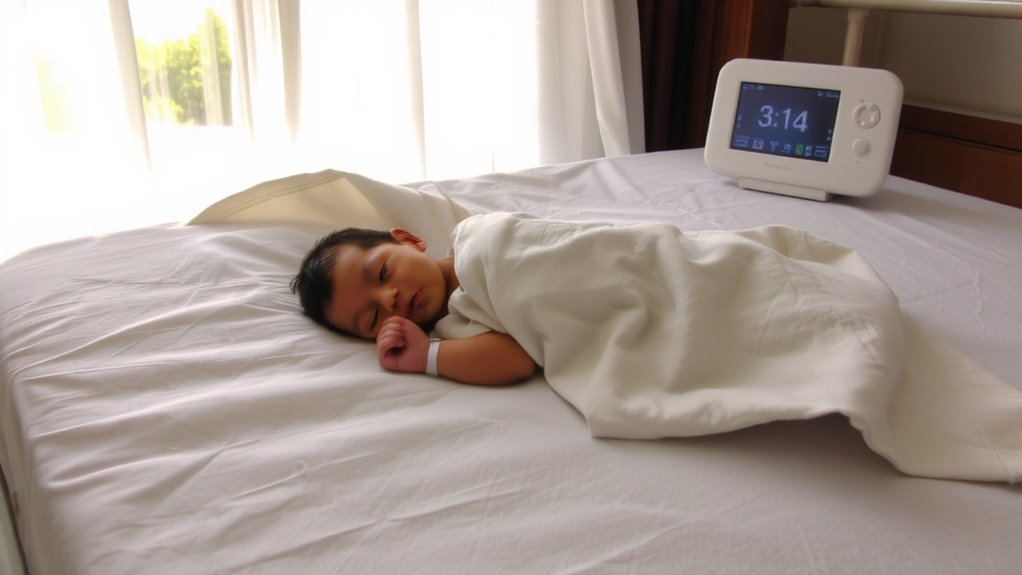
While newborns don’t follow a set schedule, their constant and unpredictable napping is rooted in how their brains and bodies are growing. You’ll notice sleep cues like eye rubbing, fussiness, or yawning-these signals help you catch tiredness before overtiredness makes settling harder. Responding calmly to these cues supports healthy nap routines over time, even if naps seem random at first. Consistent environments-a quiet room, soft lighting, a swaddle-help signal it’s time to rest. You don’t need special sleep aids yet; newborns thrive on rhythm, not gadgets. Avoid overstimulation before naps, and keep routines simple so you can spot what works. These early patterns aren’t about discipline but development. As weeks pass, nap routines may stabilize, making it easier to track needs without pressure. You’re building a foundation-gentle responses now support better sleep later.
How Much Sleep Do Newborns Really Need?
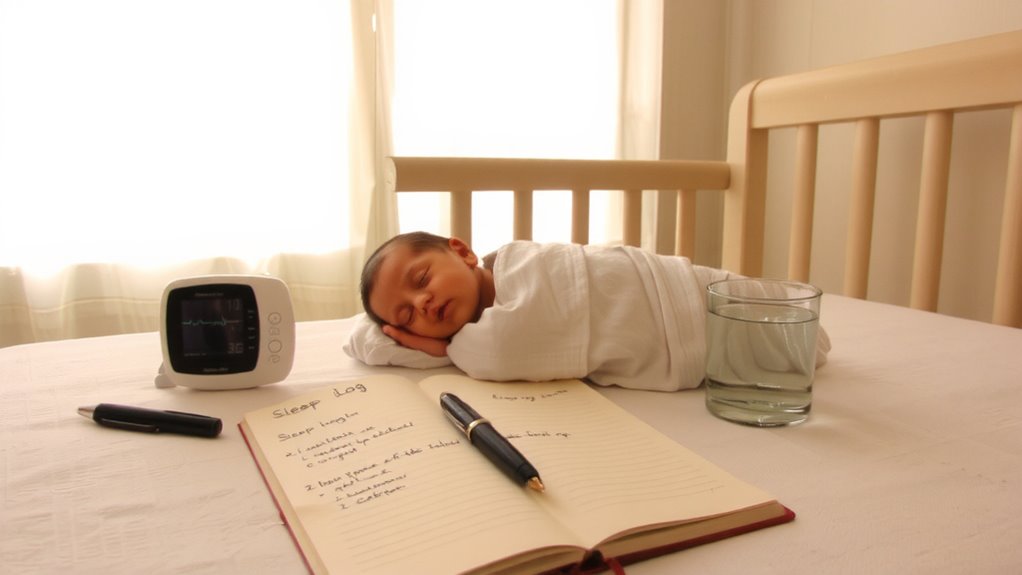
Newborns need a lot of sleep-typically between 14 and 17 hours a day, spread across multiple naps and nighttime stretches. You’ll notice their sleep happens in short bursts, often tied to feeding schedules and diaper changes. Since their stomachs are tiny, they need to eat every 2–3 hours, which naturally breaks up their rest. Watch for cues like eye rubbing or fussiness to time sleep around these needs. While some babies sleep longer at night early on, most wake frequently. Plan your routine around flexible sleep windows rather than strict timing. Use comfortable, safe sleep spaces that meet current safety standards-firm mattresses with fitted sheets, no loose bedding. Trial different swaddles or white noise options if sleep stays disrupted, and track patterns to discuss with your pediatrician. Always prioritize safe sleep practices over convenience. For added comfort and security, consider using one of the best swaddles for newborns recommended by parenting experts.
How Newborn Sleep Cycles Support Brain Development

Sleep cycles play a quiet but essential role in shaping your baby’s growing brain. During REM sleep, your newborn’s brain is highly active, helping to strengthen neural connections critical for learning and development. This stage makes up about half of a newborn’s sleep time, supporting memory processing and sensory integration. While your baby sleeps, these cycles quietly reinforce the groundwork for future skills like language and motor control. You may notice fluttering eyelids or twitching-these are signs of REM sleep at work. Unlike adults, newborns enter REM sleep almost immediately after falling asleep, making their sleep patterns uniquely suited to early brain growth. Though irregular at first, these cycles naturally support cognitive development without intervention. There’s no need for sleep aids or strict scheduling; simply ensuring a safe, calm environment helps your baby get the rest they need for healthy neural connections.
How Newborn Sleep Changes in the First 3 Months
Your baby’s sleep patterns start shifting noticeably in the first three months, building on the REM-rich cycles that supported early brain development. You’ll likely notice longer stretches of nighttime sleep as their stomach grows and feeding schedules become more predictable. This shift allows for fewer night awakenings, though most babies still need one or two feeds. Adjusting the sleep environment-keeping it quiet, dark, and cool-can support these emerging patterns. Swaddles or wearable blankets may help reduce startling, but always guarantee they’re safe and breathable. You might consider monitoring how changes in routine or environment affect sleep quality over several days. There’s no need for commercial sleep aids, as most infants respond best to consistency and responsive care. Track changes gently, knowing that development varies. A calm approach helps you and your baby adapt without pressure. Choosing the right sleepwear, such as a well-fitted best newborn sleeper, can further support uninterrupted sleep and comfort during these critical early weeks.
Why Newborns Mix Up Day and Night
Why do day and night seem like interchangeable concepts to your newborn? Because their internal clock isn’t developed yet-this is called circadian confusion. Your baby hasn’t spent enough time outside the womb to sync rhythms with the natural 24-hour cycle, so sleep happens in bursts. Light exposure plays a key role in training this rhythm over time. During the day, keep rooms bright and expose your baby to natural light; it helps signal wakefulness. At night, dim lights and keep stimulation low to encourage sleep. You’re not fixing a problem-you’re guiding development. This phase is temporary and normal. Gentle consistency with light exposure supports the gradual shift from circadian confusion to a more predictable pattern. There’s no need for sleep aids or interventions yet-just patience and routine. You’ll see progress in a few weeks.
Common Newborn Sleep Issues and Warning Signs
While most newborns settle into sleep with few concerns, it’s worth recognizing patterns that might signal a need for closer attention. You may notice frequent wakefulness, prolonged crying, or restlessness, often tied to colic episodes that peak in the first few weeks. These bouts can disrupt sleep cycles and leave both you and your baby weary. Feeding difficulties-like poor latch, gulping, or refusal-may also contribute to unsettled sleep since hunger or discomfort keeps your newborn from staying asleep. Watch how your baby responds to soothing techniques, such as swaddling or white noise, and track sleep and feeding logs to spot trends. Consider sleep aids like firm, flat mattresses or wearable blankets that meet safety standards. Trial different approaches gently, noting what supports longer sleep stretches. Most sleep challenges improve with time, but understanding early signs helps you respond effectively. For added comfort during colic episodes, consider trying one of the best baby sleep cozy relief gear picks designed to soothe and support better sleep.
Red Flags: When Newborn Sleep Needs a Doctor’s Eye
Could something be off if your newborn isn’t sleeping as expected? Yes, and some signs mean it’s time to call the doctor. If your baby stops breathing briefly during sleep, gasps for air, or has noisy breathing pauses, sleep apnea might be involved. These episodes need medical evaluation right away. Also, watch for feeding difficulties-poor sucking, choking, or tiring quickly during feeds-as they can lead to excessive sleepiness or low energy. A newborn who’s hard to wake for feeds or sleeps more than 18–20 hours without consistent eating may need assessment. While irregular sleep is normal, persistent extreme patterns aren’t. Trust your instincts. Doctors can check oxygen levels, feeding efficiency, and overall health. Early evaluation helps rule out serious causes. Always report sudden changes. Your observations matter. Medical guidance guarantees your baby gets safe, restorative sleep while addressing underlying issues like sleep apnea or feeding difficulties.
On a final note
You’ll notice your newborn sleeps often but erratically, which supports brain growth and adapts over the first three months. Watch for consistent patterns forming by day and night, and learn the signs that suggest a need for medical advice. When choosing sleep aids, check safety features, trial periods, and warranties. Consider how each option fits your routine, ensuring it’s breathable, firm, and meets current guidelines-small adjustments can improve rest for both of you.