How to Adjust Medication Schedules for Delayed Sleep Phase Disorder
You can adjust your medication schedule to fit your delayed sleep phase by taking doses at times aligned with your natural rhythm, like shifting morning meds to when you actually wake. Keep timing consistent, and match it to your current sleep pattern, not conventional hours. Work with your doctor to safely tweak your plan-this supports better results. Small changes, tracked over time, help optimize how your body responds, and there’s more to explore about customizing your routine.
Notable Insights
- Align medication timing with your delayed sleep-wake cycle instead of conventional morning or evening schedules.
- Take morning medications at your actual wake time, which may be late morning or early afternoon.
- Consult your healthcare provider before shifting doses to ensure safety and maintain efficacy.
- Maintain consistent daily timing of medications to support stable circadian and therapeutic rhythms.
- Adjust schedules gradually and track symptoms to identify the optimal dosing window.
What Is Delayed Sleep Phase Disorder (DSPD)?
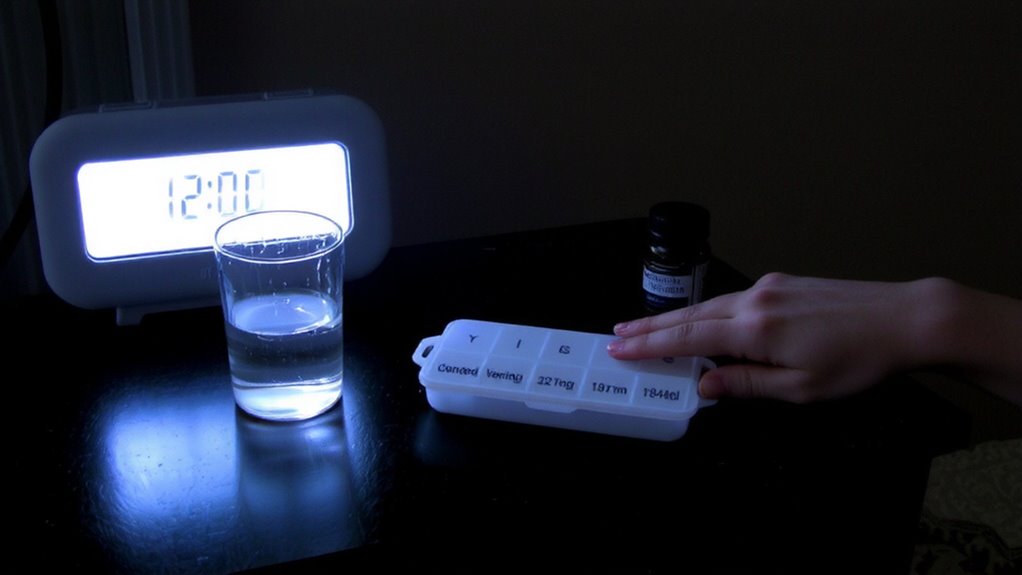
Sleep that’s out of sync with the world’s rhythm often points to Delayed Sleep Phase Disorder, or DSPD, a condition where your internal clock runs markedly later than typical sleep-wake patterns. You likely struggle to fall asleep until late at night or early morning, even when tired. This isn’t poor discipline-it’s circadian misalignment, meaning your body’s natural timing conflicts with daily demands. Waking up on time feels nearly impossible, leaving you fatigued during the day. Research shows a strong genetic predisposition, so if a family member has it, you might be more prone. DSPD affects school, work, and social life, but it’s diagnosable through sleep logs and actigraphy. Unlike general insomnia, your sleep quality is usually fine-just delayed. Recognizing the pattern is the first step toward effective management. You’ll need strategies that respect your biology while aligning more closely with real-world schedules.
Shift Medication Times to Match Your DSPD Schedule
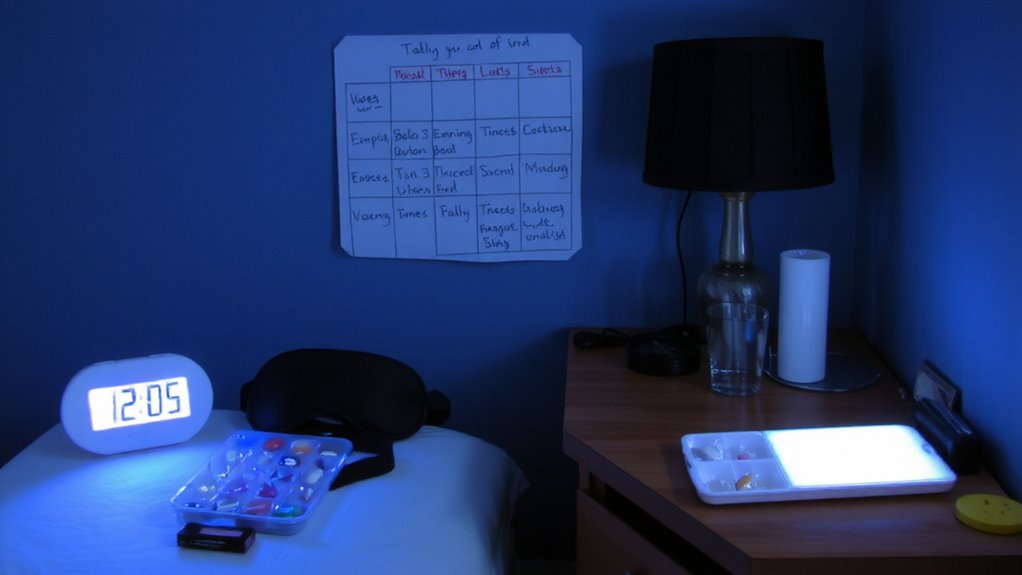
While your body’s internal clock may run on a delayed cycle, adjusting medication times to fit your DSPD schedule can help align treatment with your natural rhythms. Proper medication timing isn’t about sticking to a rigid 9-to-5 schedule-it’s about syncing with when your body actually responds best. Shifting doses to match your delayed sleep phase supports better circadian alignment, improving effectiveness. For example, if you fall asleep at 3 a.m. and wake at noon, taking morning meds at 11 a.m. may work better than at 7 a.m. This doesn’t reduce the dose or change the drug-it just repositions it. Work with your doctor to trial new times gradually, tracking symptoms and side effects. Consistency matters most once you find a schedule that helps. Small adjustments in medication timing can lead to meaningful gains in circadian alignment over time.
Adjust Common Meds for DSPD and Stay Effective
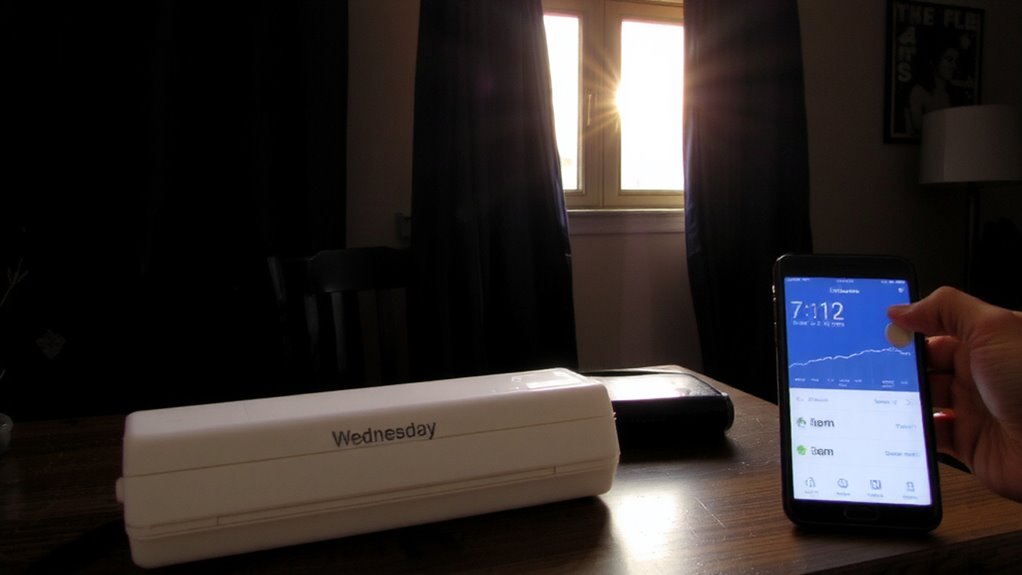
How do your current medications fit into a life that runs on DSPD time? Shifting when you take them is key to maintaining dosing consistency and preserving medication efficacy. Many meds rely on a steady schedule to work best, especially those for mental health, blood pressure, or seizures. If your sleep-wake cycle starts at 4 a.m., taking a morning pill at 9 a.m. might make sense-but check with your doctor before changing anything. Some drugs need fasting, others food, and timing affects absorption. Delaying doses too much could reduce effectiveness or increase side effects. Work with your provider to adjust timing gradually, aligning doses with your natural rhythm without losing treatment benefits. Monitor how you feel, track symptoms, and don’t change anything all at once. Small, steady shifts help maintain control while honoring your body’s clock.
Use Morning Light to Reset Your Clock With DSPD
What if the key to shifting your rhythm isn’t a pill, but a pattern of light? Morning exposure to bright light helps guide your internal clock toward healthier circadian alignment. When you wake, aim for 20–30 minutes of natural sunlight or use a light therapy box with at least 10,000 lux. Sit within 16–24 inches of the device, keeping your eyes open but not staring directly at it. Consistency matters-try doing this at the same time each day, even on weekends. Over days, you may notice sleep coming earlier and mornings feeling less groggy. This shift supports medication timing by making your body more responsive to treatment. Morning exposure works best when combined with reduced light at night. It’s low-risk, non-invasive, and builds gradually. Give it two to four weeks to assess changes in sleep onset and wakefulness.
Time Melatonin Right to Support Your DSPD Rhythm
If you’re using melatonin to help reset your sleep cycle, timing it right can make a real difference in how well it works. Proper melatonin timing supports circadian alignment by signaling to your body that it’s time to wind down, even when your internal clock runs late. For DSPD, taking melatonin 2 to 3 hours before your desired bedtime helps shift your rhythm gradually. This advance in dosing cues your brain to start releasing sleep-related hormones earlier each night. Consistency matters-take it at the same time daily to reinforce the pattern. Short-acting formulas are often best, as they mimic natural melatonin release without lingering effects. Start with a low dose, like 0.5 to 1 mg, to reduce grogginess. Over weeks, this can improve circadian alignment and make falling asleep easier. Track your response to find what supports your rhythm without side effects. Choosing the right product, such as a best melatonin sleep aid, can enhance effectiveness and consistency in your treatment plan.
Align Dosing With Your Natural Sleep-Wake Cycle
Why does your melatonin dose feel ineffective or leave you groggy? It might be due to poor chronotype alignment. Your body’s natural sleep-wake cycle runs later than average with DSPD, so standard dosing times won’t match your internal clock. Taking melatonin too early can cause drowsiness at the wrong time, while taking it too late won’t shift your rhythm effectively. Aligning medication with your current sleep pattern improves hormone timing, helping your body prepare for sleep when you actually plan to rest. Start by noting your typical bedtime and work backward-dose melatonin 2–3 hours before that to support, not force, sleepiness. This method respects your biology and enhances treatment response. Consistency matters, as does gradual adjustment. Proper timing makes a difference in how well the medication supports your cycle.
Work With Your Doctor to Personalize Your DSPD Plan
You’ve already started aligning your melatonin with your natural sleep pattern, and that timing adjustment may have improved your nighttime routine. Now, it’s important to maintain medication collaboration with your doctor to refine your DSPD plan. They can assess how well your current dose and schedule are working and whether adjustments are needed. Treatment flexibility allows for changes based on your response, lifestyle, and any side effects. Your doctor might suggest trying different formulations, adjusting timing further, or combining medication with light therapy. Regular check-ins help track progress and make informed decisions. Never change your dose or stop taking medication without medical guidance. Open communication guarantees your treatment stays safe and effective. With ongoing evaluation, you and your doctor can fine-tune your approach for better sleep consistency and daytime function over time.
On a final note
You can adjust your medication schedule to better fit your delayed sleep phase disorder by shifting doses to match your natural sleep-wake cycle. Work with your doctor to time medications correctly, especially those tied to circadian rhythms. Use morning light and properly timed melatonin to help reset your internal clock. Always personalize your plan for safety and effectiveness, and monitor changes with professional guidance.