Understanding Advanced Sleep Phase Disorder: Causes and Key Symptoms
You might have advanced sleep phase disorder (ASPD) if you feel sleepy by 7 or 8 p.m. and wake before 5 a.m., even when trying to stay up or sleep later. This shift isn’t just preference-it’s a real circadian rhythm change, often tied to genetics or age. Your internal clock runs on a shorter cycle, making you peak early and fade fast. Light cues and routines can reinforce it. If this sounds familiar, understanding the underlying patterns could help you find better alignment.
Notable Insights
- Advanced Sleep Phase Disorder (ASPD) involves an abnormally early internal clock, shifting sleep onset and wake times earlier than typical.
- People with ASPD often fall asleep before 8 p.m. and wake up before 5 a.m., regardless of intent or lifestyle.
- The disorder stems from a shortened circadian rhythm and can be linked to genetic mutations in clock-related genes.
- Morning light exposure and fixed routines can reinforce the advanced sleep pattern, worsening misalignment with social schedules.
- ASPD can disrupt work, social life, and evening activities due to early sleepiness and unintentional early awakening.
What Is Advanced Sleep Phase Disorder (ASPD)?

Think of your body’s internal clock like a built-in timer that tells you when to feel sleepy and when to wake up. This timing system is your circadian rhythm, and when it shifts earlier than normal, you might be experiencing Advanced Sleep Phase Disorder (ASPD). You’ll likely feel tired in the early evening, maybe by 7 or 8 p.m., and wake up too early, often before sunrise. While your sleep architecture-meaning the structure and cycles of your sleep-remains mostly normal, the timing is off. You’re not choosing this schedule; your rhythm drives it. Diagnosing ASPD usually involves sleep logs or actigraphy to track patterns over time. Treatments like light therapy in the evening or timed melatonin may help delay your rhythm. Understanding these options lets you make informed choices about managing sleep without rushing to conclusions or unnecessary aids.
Is Your Early Sleep Pattern a Sign of ASPD?

Could your early bedtime and morning wakefulness be more than just a preference? If you’re regularly falling asleep before 8 p.m. and waking up before 5 a.m., it might be a sign of Advanced Sleep Phase Disorder (ASPD). Unlike simply being an early riser, ASPD shifts your internal clock markedly, often clashing with social habits and work schedules. You may struggle to stay awake during evening events or find that your energy peaks too early for your job. This consistent, involuntary shift isn’t just about discipline-it’s a circadian rhythm disorder. While some adapt by adjusting work schedules or embracing early social habits, others may consider light therapy or melatonin under medical guidance. Not every early sleeper has ASPD, but if timing disrupts your plans, it’s worth discussing with a sleep specialist to explore causes and options.
Is ASPD Disrupting Your Daily Life?
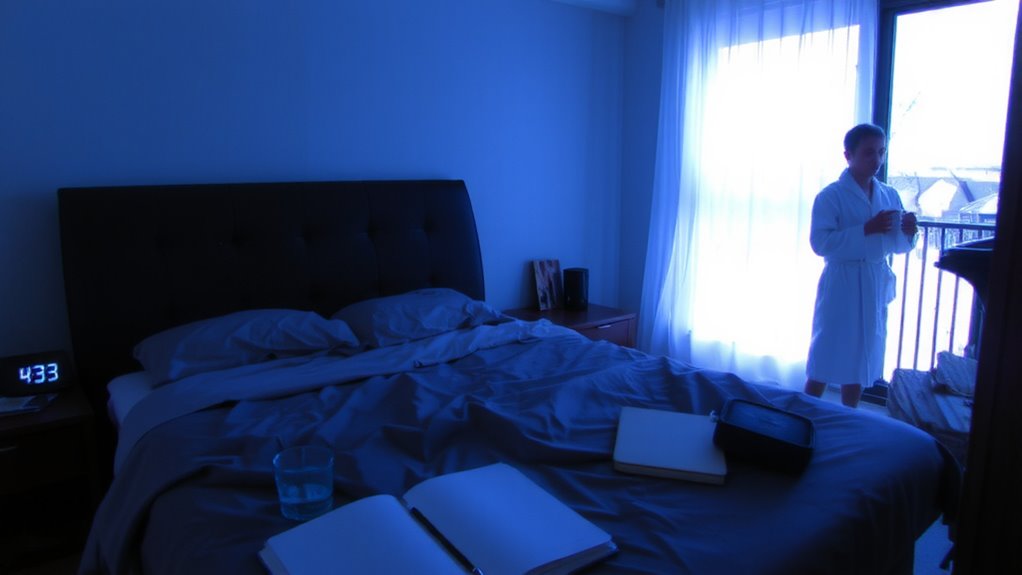
How often does your sleep schedule get in the way of evening plans or make it hard to stay alert at work in the afternoon? If you’re consistently falling asleep by 8 PM and waking up by 4 AM, Advanced Sleep Phase Disorder (ASPD) might be affecting your daily life. This pattern can lead to social isolation, as dinners or gatherings become difficult to attend. Reduced productivity may occur when your energy dips long before the workday ends.
| Challenge | Impact |
|---|---|
| Early sleep onset | Missed social events |
| Early wake time | Fatigue during morning work |
| Evening alertness | Reduced productivity |
| Nighttime routine | Social isolation risk |
Adjusting light exposure and considering timed melatonin might help shift your rhythm. Discussing options with a sleep specialist guarantees informed choices based on evidence and personal needs.
Why Does Your Internal Clock Run Too Fast in ASPD?
Your body’s internal clock usually aligns with the 24-hour day, but in ASPD, it runs on a shorter cycle, making you feel sleepy earlier than most and wake up before sunrise. This shift happens because your circadian rhythm-the natural process regulating sleep and wakefulness-operates on a compressed schedule. Light cues, which normally reset this rhythm daily, don’t correct the early timing as they do in others. Scientists believe a genetic predisposition plays a key role, with mutations in specific clock-related genes found in some families. While you can’t alter your genes, understanding this helps you choose effective strategies. Light therapy in the evening may help delay sleep onset, and melatonin timing can fine-tune your rhythm. These options don’t fix the fast clock, but they can shift your sleep window closer to social norms. Tracking your patterns and discussing options with a sleep specialist allows for informed decisions about managing your sleep health effectively.
Who Is Most at Risk for ASPD?
A small but significant number of people experience a sleep pattern that shifts hours ahead of the typical cycle, and you’re more likely to be in this group if you’re over 60, as age is one of the strongest risk factors for Advanced Sleep Phase Disorder (ASPD). You may notice earlier sleep and wake times that feel unavoidable, especially as age factors naturally alter your circadian rhythm. If a close family member also has ASPD, you could be at higher risk due to genetic predisposition. Though less common, younger adults with a family history can also develop it. You’re not alone, and recognizing these patterns early helps you make informed choices about monitoring your sleep health. While no cure exists, understanding your personal risk allows you to explore light therapy or adjusted sleep schedules with your provider. Knowing your risks doesn’t require immediate action, but it does support better long-term decisions about sleep routines and possible treatments.
What Triggers ASPD? Genes and Environment
While some sleep shifts come from lifestyle habits, Advanced Sleep Phase Disorder often stems from a mix of genetic wiring and environmental cues that reset your internal clock earlier than normal. Your genetic predisposition may make you more likely to develop ASPD, especially if a close family member has it. Specific gene mutations affect circadian rhythm proteins, shifting your sleep-wake cycle forward. At the same time, environmental cues like early morning light exposure or fixed social schedules can reinforce this advance. You might notice you feel sleepy by 7 or 8 p.m. and wake at 3 or 4 a.m., even without trying.
| Factor | Impact on ASPD |
|---|---|
| Genetic predisposition | Increases risk due to inherited circadian rhythm traits |
| Light exposure | Morning light can deepen early phase shifts |
| Age | Older adults more likely to show symptoms |
| Routine | Fixed early schedules may strengthen the pattern |
On a final note
You might feel tired early and wake up too soon, but don’t assume it’s just habit-ASPD could be the cause. If it affects your daily life, tracking sleep patterns helps spot the issue. Light therapy or adjusted schedules may help reset your internal clock. Some find relief with melatonin, though timing matters. Talk to a doctor before trying sleep aids. Many clinics offer evaluations, often covered by insurance, and treatments come with trial periods to gauge effectiveness.