Best Herbal Sleep Teas That Actually Help You Drift Off
You’ll find relief in herbal teas with chamomile, valerian root, and passionflower, which help quiet your mind and ease you into sleep. Look for caffeine-free, organic blends like Celestial Seasonings Sleepytime or Numi Sweet Slumber to guarantee purity and effectiveness. These teas often use compostable packaging and need 8–10 minutes to steep for full effect. While effects can be subtle, consistent use supports better sleep. Choosing trusted brands means you get verified ingredients without hidden stimulants-key for reliable results night after night. Each option balances flavor and function, so your preference matters-some lean floral and mild, others earthy and strong. A few include melatonin to help speed up sleep onset, but they may cause drowsiness if taken too late. Knowing what’s inside-and how it’s made-helps you match the tea to your sleep routine and values.
We are supported by our audience. When you purchase through links on our site, we may earn an affiliate commission, at no extra cost for you. Learn more. Last update on 19th July 2026 / Images from Amazon Product Advertising API.
Notable Insights
- Chamomile, valerian root, and passionflower are clinically supported herbs that promote relaxation and reduce time to fall asleep.
- Look for caffeine-free, organic blends with melatonin (1mg) for enhanced sleep onset, like Celestial Seasonings Sleepytime with Melatonin.
- Numi Organic Sweet Slumber combines chamomile, lavender, valerian root, and lemon balm for a synergistic, aromatic sleep blend.
- Traditional Medicinals Chamomile & Lavender uses certified organic, non-GMO ingredients for purity and consistent calming effects.
- Peppermint and lemon balm improve flavor and digestibility, making strong herbal blends more palatable without sedative compromise.
Organic Nighty Night Extra Tea (16 Bags)

If you’re looking for a herbal sleep tea that leans on a strong, science-backed ingredient like valerian root, Organic Nighty Night Extra Tea might be your best bet. I rely on its blend of valerian, passionflower, and lemon balm to support relaxation, while peppermint adds a clean, minty note that softens the earthy base. It’s USDA Organic, caffeine-free, and uses compostable bags, so I don’t worry about additives or environmental impact. Knowing it’s part of a line designed by herbalists gives me confidence in its formulation. I find it best for nights when sleep feels out of reach, though the flavor takes some getting used to.
Best For: Those seeking a potent, herbal sleep tea with science-backed valerian root to support relaxation and improve sleep onset.
Pros:
- Features valerian root, passionflower, and lemon balm, herbs traditionally used for calming and sleep support
- USDA Organic, caffeine-free, and uses compostable tea bags for clean, eco-conscious consumption
- Formulated by herbalists with a focus on traditional herbal synergy and mindful sourcing
Cons:
- Earthy, herbal flavor profile may be strong or unpleasant for some palates
- Effects may take time to be noticeable, requiring consistent use
- Drowsiness may occur if taken earlier in the day, limiting time of use
Celestial Seasonings Sleepytime Herbal Tea (Pack of 6)

This variety pack suits anyone seeking a caffeine-free evening ritual to support relaxation and sleep, offering six boxes of 20 tea bags each-plenty for consistent use or shared households. I find the blend of spearmint, chamomile, and peppermint leaves calms my senses without overpowering them, and steeping it for 4 to 6 minutes brings out its soothing flavor. It’s gluten-free and contains no caffeine, making it a safe choice for most people. The tea bags have no strings, tags, or staples, and the packaging uses 100% recycled paperboard with 35% post-consumer material, which I appreciate for its low environmental impact.
Best For: Individuals seeking a caffeine-free, herbal evening tea to promote relaxation and support sleep in an environmentally conscious way.
Pros:
- Caffeine-free and gluten-free, making it suitable for a wide range of dietary needs
- Contains calming herbs like chamomile, spearmint, and peppermint known for relaxation benefits
- Eco-friendly packaging and tea bag design with no staples, strings, or tags, using 100% recycled paperboard
Cons:
- May lack flavor intensity for those who prefer bolder herbal blends
- The absence of tea tags or strings may make disposal less convenient for some users
- Limited variety within the pack-only one herbal blend included
Traditional Medicinals Nighty Night Tea (16 Bags)

One of the best choices among herbal sleep teas is Traditional Medicinals Nighty Night Tea, especially if you’re looking for a thoughtfully blended, organic option that supports relaxation without caffeine. I’ve found it combines chamomile, passionflower, valerian root, linden flower, and spearmint-herbs long used for rest and sleep. It’s USDA Organic, Non-GMO, and Kosher, so it meets high purity standards. The compostable bags align with eco-conscious habits. As someone exploring natural sleep aids, I appreciate it targets occasional sleeplessness without grogginess. It’s part of a broader wellness line, so it fits well into nightly routines.
Best For: Individuals seeking a certified organic, caffeine-free herbal tea to support relaxation and occasional sleeplessness.
Pros:
- Blended with traditional sleep-supporting herbs like chamomile, passionflower, and valerian root
- USDA Certified Organic, Non-GMO, and Kosher, ensuring high-quality, clean ingredients
- Compostable tea bags support eco-friendly and sustainable practices
Cons:
- Contains valerian root, which some may find has an unpleasant taste or earthy aftertaste
- May not be potent enough for individuals with chronic insomnia
- Limited quantity with only 16 tea bags per box compared to other brands
Celestial Seasonings Sleepytime Extra Herbal Tea, 20 Tea Bags Box

I rely on valerian root for faster relaxation, and that’s why Celestial Seasonings Sleepytime Extra stands out among herbal sleep teas-it delivers a targeted blend designed for those needing extra support winding down. This version combines valerian root, chamomile, and spearmint to help calm the body naturally. It’s caffeine-free, gluten-free, and has no artificial additives, making it a flexible choice if you have dietary limits. Each of the 20 tea bags is wrapped individually, ideal for travel or consistent nightly use. The packaging skips strings and tags, using 100% recycled paperboard with 35% post-consumer material, so it’s lighter on the environment. While it may take a few nights to notice effects, its formulation suits those seeking stronger herbal support without medication.
Best For: Individuals seeking a natural, herbal tea with enhanced calming properties to support sleep, especially those sensitive to caffeine or with dietary restrictions.
Pros:
- Contains valerian root, chamomile, and spearmint for a potent, sleep-promoting blend
- Naturally caffeine-free, gluten-free, and free of artificial additives, suitable for various dietary needs
- Eco-conscious packaging with individually wrapped tea bags and recycled materials
Cons:
- Effects may take several uses to become noticeable, depending on individual sensitivity
- The taste of valerian root may be strong or unpleasant for some users
- Limited quantity with only 20 tea bags per box, which may require frequent repurchasing
Twinings Sleep+ Herbal Tea with Melatonin (16 Bags)
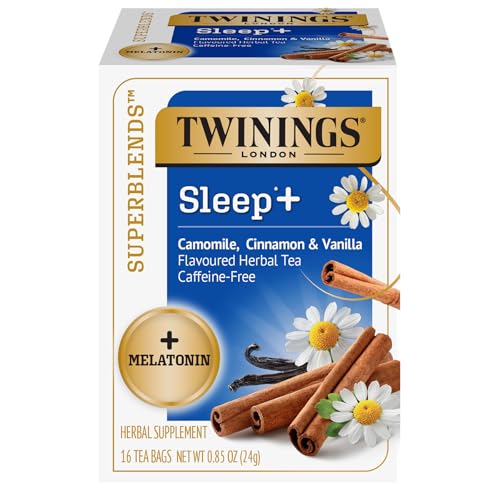
If you’re looking for a gentle, ready-to-use option that combines herbal support with a clinically relevant dose of melatonin, Twinings Sleep+ Herbal Tea with Melatonin stands out among 16-bag blends designed for evening routines. I find it useful when winding down, thanks to 1mg of melatonin and calming camomile, which may help reduce sleep onset time. The cinnamon and vanilla add a softly sweet, golden infusion you can sip hot or iced. It’s part of Twinings’ Superblends line, blending taste and function without caffeine. Twinings ethically sources ingredients, supporting wellness in tea-growing communities since 1706.
Best For: Individuals seeking a natural, convenient evening tea to support relaxation and faster sleep onset with a blend of melatonin and calming herbs.
Pros:
- Contains 1mg of melatonin, which is clinically shown to help reduce the time it takes to fall asleep
- Naturally caffeine-free herbal blend with calming chamomile, cinnamon, and vanilla for a pleasant taste
- Part of Twinings’ ethically sourced Superblends line, supporting wellness and sustainability
Cons:
- Melatonin may cause drowsiness the next morning in sensitive individuals
- Limited to 16 tea bags per pack, which may not last long for daily users
- Effectiveness can vary based on individual sleep issues and body chemistry
Traditional Medicinals Organic Nighty Night Tea

For those struggling with occasional sleeplessness and seeking a natural approach, Traditional Medicinals Organic Nighty Night Extra Tea stands out with its potent blend built around valerian root-a herb long recognized for supporting relaxation and sleep onset. I find the mix of passionflower, lemon balm, and peppermint helps smooth the edge of stress while adding a minty, earthy flavor that’s herbal but not harsh. Each of the 48 individually wrapped tea bags is compostable, and the tea is USDA Organic, Non-GMO, and caffeine-free. Made in a solar-powered, zero-waste U.S. factory, this B-Corp brand balances effectiveness with sustainability.
Best For: Individuals seeking a natural, herbal solution for occasional sleeplessness who value organic ingredients and sustainable manufacturing practices.
Pros:
- Features a powerful sleep-supporting blend with valerian root, passionflower, lemon balm, and peppermint for relaxation and improved sleep quality
- USDA Organic, Non-GMO Verified, caffeine-free, and made with compostable tea bags, supporting health and environmental values
- Produced in a solar-powered, TRUE Zero Waste certified factory by a Certified B-Corp committed to sustainability
Cons:
- The earthy, herbal taste may be strong or medicinal for those unaccustomed to valerian root
- Contains valerian, which can cause grogginess the following morning in sensitive individuals
- Higher price point compared to conventional sleep aids or non-organic herbal teas
Celestial Seasonings Sleepytime Tea with Melatonin (18 Bags)

Celestial Seasonings Sleepytime Tea with Melatonin stands out for those seeking a sleep aid that blends tradition and science-one that pairs a time-tested herbal mix with a precisely measured dose of melatonin. I’ve found it helps ease me into sleep, thanks to chamomile and spearmint, while the added melatonin supports my body’s natural rhythm. It’s caffeine-free, with no artificial flavors or colors, so I don’t worry about side effects. Each bag steeps in 4 to 6 minutes, and the simple design-no staples or tags-cuts waste. The box uses recycled paperboard, which aligns with my preference for eco-friendly products.
Best For: Individuals seeking a natural, caffeine-free sleep aid that combines trusted herbal ingredients with melatonin to support restful sleep.
Pros:
- Combines soothing chamomile and spearmint with a measured dose of melatonin for enhanced sleep support
- Caffeine-free with no artificial flavors or colors, making it a clean, gentle option before bedtime
- Eco-conscious packaging with no staples, tags, or strings and boxes made from 100% recycled paperboard
Cons:
- Melatonin may cause grogginess in some users, especially if taken too late or in higher doses
- Limited quantity with only 18 tea bags per box compared to larger tea pack options
- Herbal taste may not appeal to those who dislike chamomile or mint-based teas
Chamomile & Lavender Tea for Relaxation
I find the Traditional Medicinals Organic Chamomile & Lavender tea works especially well when stress keeps me from unwinding, because its blend of chamomile and lavender delivers a gentle, natural path to relaxation. Grown organically in Bulgaria’s meadows and Egypt’s Nile Valley, the herbs are rich in calming essential oils. The tea has a floral taste, with strong lavender notes that aren’t overwhelming. It’s caffeine-free, non-GMO, Kosher, and USDA Certified Organic. The compostable tea bags are a plus. As part of their “There’s a Tea for That” line, this tea is formulated by herbalists to help support the nervous system. I think it’s worth trying if you want mild relaxation before bed.
Best For: Individuals seeking a natural, caffeine-free way to ease stress and support relaxation, especially before bedtime.
Pros:
- USDA Certified Organic, non-GMO, Kosher, and made with compostable tea bags for a sustainable choice
- Blended by herbalists with calming chamomile and lavender rich in essential oils for nervous system support
- Pleasant floral flavor with pronounced but balanced lavender notes, ideal for unwinding
Cons:
- Lavender taste may be too strong for those sensitive to herbal flavors
- Limited potency for individuals needing stronger stress-relief solutions
- Only available in one flavor profile within the line, offering less variety
Numi Organic Sweet Slumber Tea (16 Bags)

One of the best choices among herbal sleep teas for those seeking a truly caffeine-free, organically sourced option is Numi Organic Sweet Slumber Tea. I find its blend of chamomile, lavender, and valerian root gently calming, while lemon balm and passionflower help ease mental chatter. I steep it for 8 to 10 minutes, inhaling the soothing steam to relax my shoulders and jaw. The warmth signals my nervous system to unwind, easing me into restful sleep. It’s plastic-free, non-GMO, and packaged in recyclable cartons, so I feel good about choosing it nightly.
Best For: Individuals seeking a naturally caffeine-free, organic herbal tea to support relaxation and restful sleep without artificial ingredients or environmental harm.
Pros:
- Expertly blended with organic chamomile, lavender, valerian root, lemon balm, and passionflower to promote mental calm and physical relaxation
- Plastic-free, staple-free tea bags and recyclable packaging align with eco-conscious values
- Long steeping releases aromatic steam that helps ease tension in the shoulders, jaw, and chest, enhancing bedtime rituals
Cons:
- Valerian root’s earthy flavor may be strong or off-putting for those unaccustomed to herbal teas
- Requires 8–10 minute steep time for full effect, which may be longer than desired for quick evening routines
- Subtle flavor profile may not satisfy those expecting a sweeter or more robust taste without added sweeteners
Yogi Tea Bedtime Herbal Sleep Tea (6 Pack)

If you’re looking for a natural way to unwind before bed without caffeine or artificial ingredients, Yogi Tea Bedtime Herbal Sleep Tea (6 Pack) could be a solid choice, especially if you prefer trusted, certified organic blends. I’ve found the mix of passionflower, chamomile, valerian root, and lavender works gently to support relaxation. It’s USDA Organic, NON-GMO, and vegan, so it fits clean-eating lifestyles. I steep one bag for 7 minutes, or two if I need deeper calm. The flavor’s herbal but balanced-not too strong. Since it’s caffeine-free, it’s safe for nightly use, and the small pack lets me test it before committing.
Best For: Individuals seeking a natural, caffeine-free herbal tea to support relaxation and restful sleep, especially those who prefer certified organic and vegan products.
Pros:
- Made with USDA Organic, NON-GMO, and vegan ingredients for clean, conscious consumption
- Features a calming blend of passionflower, chamomile, valerian root, and lavender to promote nighttime relaxation
- Easy to prepare with clear steeping instructions for a mild or stronger infusion
Cons:
- Herbal flavor may not appeal to those who prefer sweeter or more aromatic tea profiles
- Smaller pack size offers limited quantity for long-term use without repurchasing
- Effects may be subtle for individuals with severe sleep difficulties
Factors to Consider When Choosing Herbal Sleep Teas
You should check the herbal ingredients to make sure they match your needs and won’t interact with any medications you’re taking. Pay attention to caffeine content-most herbal teas are naturally caffeine-free, but it’s wise to confirm, especially if you’re sensitive to stimulants. Also, look for quality marks like USDA Organic or Fair Trade, consider how the flavor suits your taste, and check if the packaging is eco-friendly and supports long-term use.
Herbal Ingredients To Consider
Several proven herbal ingredients can make a real difference in how well you sleep, and knowing which ones to look for helps you choose a tea that matches your needs. Valerian root is well-studied and shown to shorten the time it takes to fall asleep while improving overall sleep quality, though its strong taste may take getting used to. Chamomile contains apigenin, which gently supports drowsiness by interacting with brain receptors linked to relaxation. Passionflower helps increase GABA, a calming brain chemical that reduces nervous tension and restlessness. Lavender offers mild anxiety relief, helping quiet your mind before bed. Peppermint and spearmint aren’t sedatives, but they soothe digestion and add a pleasant aroma, making the tea ritual more enjoyable. Blends often combine these herbs to balance effectiveness and taste. Try one ingredient at a time first to see how your body responds, then adjust based on what supports your sleep most comfortably.
Caffeine Content Awareness
Choosing the right herbal sleep tea means paying close attention to caffeine content, especially since even small amounts can interfere with falling or staying asleep. Always check that the label clearly states “caffeine-free,” because trace amounts from cross-contamination or plant relatives can still affect sensitive individuals. Caffeine’s half-life of 3–5 hours means evening consumption-even of mildly caffeinated blends-can delay sleep onset or reduce sleep quality. Fortunately, herbs like chamomile, valerian root, and passionflower are naturally caffeine-free and widely used for their calming effects. Still, some functional blends may include undisclosed stimulants or ingredients from caffeinated plant families, so verify claims through reputable brands that test their products. Reading ingredient lists carefully helps you avoid accidental caffeine exposure. Confirming caffeine-free status through labeling and processing standards guarantees your tea supports, rather than hinders, restful sleep.
Certifications And Quality Marks
When searching for a reliable herbal sleep tea, paying attention to certifications can make a real difference in quality and safety. Look for the USDA Certified Organic label to guarantee ingredients were grown without synthetic pesticides or fertilizers. If avoiding genetically modified components matters to you, choose brands with the Non-GMO Verified seal. Kosher certification means the tea meets strict dietary guidelines, which may align with your personal or religious preferences. If environmental impact is a concern, opt for teas with compostable bags certified by third parties to break down in commercial facilities. Always confirm caffeine-free claims through clear labeling-true herbal sleep teas must be stimulant-free. These marks don’t guarantee effectiveness, but they do offer transparency about sourcing, purity, and production. Checking them helps you make informed, confident choices when selecting a tea to support your nightly routine.
Flavor Profile Preferences
You’ve checked the labels and verified the certifications-now it’s time to contemplate how the tea tastes, because flavor plays a key role in whether you’ll stick with a night-time routine. If you prefer mild, floral notes, chamomile-based blends offer a slightly sweet, gentle taste that’s easy to enjoy nightly. For a more complex profile, blends with valerian root bring earthy, pungent tones that some find unpleasant unless balanced. Peppermint or spearmint can cool and refresh, softening harsher flavors. Lavender adds a perfumed aroma and soothing quality, though its strong floral character might not suit everyone. Lemon balm and passionflower introduce subtle citrus and mellow herb notes, smoothing the overall taste. Try small batches first to assess what you truly enjoy, since consistent use depends on liking how it tastes.
Sustainability Of Packaging
A tea brand’s commitment to sustainable packaging often shows in the small details that add up over time. You’ll notice brands skipping strings, tags, and staples to cut waste and boost compostability. Look for tea bags made from plant-based, plastic-free materials-they break down easier and reduce plastic pollution. Many use recyclable cartons made from 100% recycled paperboard, often with up to 35% post-consumer content, which lessens demand for virgin resources. Biodegradable components help lower environmental impact across the product’s life. Choosing brands with non-GMO, staple-free, and certified organic ingredients supports sustainable farming, too. These choices don’t just affect the planet-they shape how responsibly your nightly ritual aligns with long-term wellness. You’re not just buying tea; you’re choosing what kind of footprint each cup leaves. Small switches add up, especially when you drink tea nightly.
Recommended Steeping Time
Choosing the right herbal sleep tea involves more than just checking packaging sustainability-how you prepare your tea matters just as much. Steep your tea for 4 to 10 minutes, depending on the herbs used. If your blend includes dense botanicals like valerian root or linden flower, let it steep 7 to 10 minutes to extract the most active compounds. Delicate flowers such as chamomile and lavender do best with 5 to 7 minutes-long enough to release calming oils but not so long they turn bitter. For the strongest effect, always steep the full recommended time. Cover your cup while it steeps to trap essential oils, boosting both aroma and soothing benefits. You’ll get better results by matching steep time to the herb’s texture and potency. Small changes in brewing can improve how well the tea supports relaxation, making timing a practical factor worth adjusting based on your needs.
Brand Transparency Matters
When evaluating herbal sleep teas, it’s essential to take into account how transparent the brand is about what’s in the product. You should look for clear ingredient lists that name specific botanicals and their amounts, so you know exactly what you’re drinking. Opt for brands with third-party labels like USDA Organic or Non-GMO Project Verified-they show the product meets strict standards. Check if the company shares where and how it sources herbs, such as organic farming or wildcrafting, since that affects purity and sustainability. Avoid vague terms like “natural flavors” or unexplained “proprietary blends,” which can hide ingredients or inconsistent doses. Make sure added compounds like melatonin or valerian root are listed with their concentrations, helping you steer clear of unexpected effects. Clear labeling supports smarter, safer choices for your sleep routine.
Serving Size And Quantity
You’ve checked the label transparency-now it’s time to think about how much you’ll actually use. Most herbal sleep tea boxes include 16 to 20 tea bags, which gives you about a month’s supply if you drink one each night. If you plan to use it longer or share with someone else, look for bulk options with 48 or more tea bags. One tea bag per 8 oz of hot water is the standard serving, designed to properly extract the calming botanicals. Many larger packages use individually wrapped tea bags to lock in freshness and keep the ingredients potent over time. Buying in bulk often lowers the cost per serving, which makes it a smarter choice if you use the tea regularly. Consider your routine and how often you’ll brew a cup-it’ll help you pick a size that’s practical, fresh, and cost-effective in the long run.
Frequently Asked Questions
Can I Drink Herbal Sleep Tea Every Night?
You can drink herbal sleep tea every night, but you should monitor how your body responds. Most blends use ingredients like chamomile or valerian, which are generally safe long-term. Still, regular use might lead to tolerance or mild digestive upset in some. Check labels for additives or allergens. If you have health conditions or take medications, talk to your doctor first. Start with a week-long trial to assess effectiveness and adjust as needed.
Are Herbal Sleep Teas Safe During Pregnancy?
you shouldn’t drink most herbal sleep teas during pregnancy without checking with your doctor first. some herbs, like valerian or chamomile, may affect hormones or uterine activity. even natural doesn’t mean safe when you’re expecting. always read labels, avoid blends with unproven or strong ingredients, and talk to your healthcare provider. they’ll help you weigh benefits against possible risks so you can choose wisely and stay safe.
How Long Before Bed Should I Drink Sleep Tea?
You should drink sleep tea about 30 to 60 minutes before bed to let its effects build as your body winds down. This timing gives your metabolism a chance to process the herbs, like valerian or chamomile, so their calming properties peak when you’re ready to sleep. Sip it warm and avoid screens afterward to strengthen the signal that it’s time to rest.
Do Herbal Sleep Teas Interact With Medications?
Yes, herbal sleep teas can interact with medications. You shouldn’t assume they’re safe just because they’re natural. Ingredients like valerian or chamomile may affect sedatives, blood thinners, or antidepressants. Always check with your doctor before combining them with prescription drugs. It’s smart to review labels and research each herb. Start with a small dose to monitor effects, and discontinue use if you notice drowsiness, dizziness, or unusual reactions.
Can Children Safely Consume Herbal Sleep Teas?
You shouldn’t give children herbal sleep teas without checking with their doctor first. Their bodies react differently to herbs, and some ingredients may affect development or interact with medications. Even natural doesn’t mean safe for kids. If approved, start with the smallest dose and watch for side effects. There’s limited research on long-term use in children, so short-term, cautious trials are best. Always prioritize proven sleep habits first.