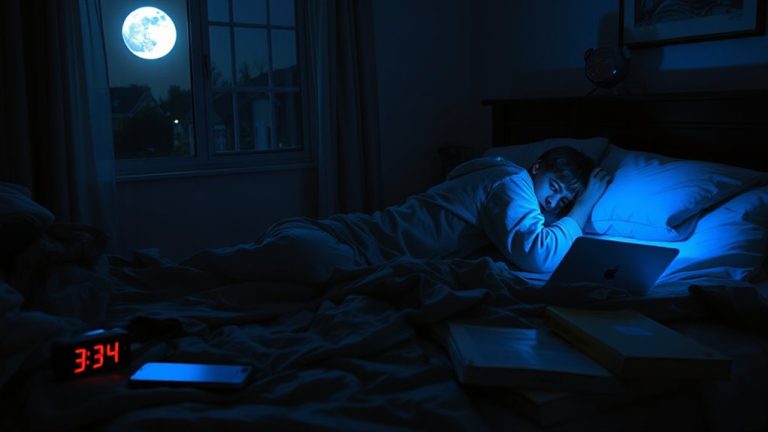
Supporting Sleep in Patients With Dementia and Alzheimer’s Disease
You can improve sleep by creating a calm, well-lit room with blackout curtains and motion-sensor nightlights to reduce confusion. Stick to a quiet, dim routine each night with soft music or a gentle massage to signal it’s time to rest. Encourage morning sunlight and light activity during the day to support natural sleep cycles. If breathing pauses or sudden sleep changes happen, talk to a doctor. More effective strategies follow.
Notable Insights
- Create a sleep-friendly room with dim, warm evening lighting and blackout curtains to support circadian rhythms.
- Use consistent bedtime routines with calming activities like soft music and gentle touch to reduce anxiety.
- Encourage morning sunlight exposure and daily physical activity to improve nighttime sleep quality.
- Limit daytime naps to 20–30 minutes to prevent interference with nighttime sleep patterns.
- Consult a doctor if sleep issues worsen, especially with breathing pauses, agitation, or sudden routine changes.
Create a Sleep-Friendly Room for Dementia Patients

A well-designed sleep environment can make a meaningful difference in how easily you or your loved one with dementia falls and stays asleep. Start by adjusting room lighting to support natural circadian rhythms-use dim, warm lights in the evening and brighter lights during the day. Consider installing motion-sensor nightlights to reduce disorientation if they wake at night. Noise levels also matter; keep them low and consistent, using white noise machines or fans to mask sudden sounds. Choose blackout curtains to block outside light and reduce disturbances from streetlights or early morning sun. Make sure furniture is arranged for easy movement, reducing fall risks. Test changes gradually and observe what improves sleep quality. Simple, low-cost adjustments often work better than expensive aids, and most lighting or noise devices come with trial periods or warranties, letting you find what fits. For added protection against artificial blue light at night, consider recommending orange and blue light-blocking glasses to help maintain healthy melatonin levels.
Use Calm Bedtime Routines to Prevent Night Wandering

While a consistent bedtime routine won’t stop dementia-related sleep changes entirely, it can reduce confusion and lower the chances of night wandering when tailored to the person’s needs. You can start by dimming lights and reducing noise to signal it’s time to wind down. Try playing soft music therapy playlists with familiar songs-this often calms anxiety and supports relaxation. Pair that with a gentle massage of the hands or shoulders, which may ease physical tension and encourage drowsiness. Keep interactions quiet and soothing, avoiding stimulating conversation or bright screens. The routine should last about 30 to 45 minutes, happening at the same time each night to build predictability. If the person resists touch, skip the massage and focus on music therapy instead. These steps don’t work overnight, so give them a few weeks to assess results. Watch what helps most-adjust timing, music choices, or pressure during massage for better comfort and response.
Build Daytime Habits That Improve Night Sleep

Why does a morning walk or midday chat carry more weight than you might think? Because daily routines shape nighttime rest just as much as bedtime actions do. Regular physical activity helps regulate sleep cycles, making nights calmer and more restorative. Limiting daytime napping to 20–30 minutes can also support better sleep at night by reducing sleep fragmentation. Social engagement and light exposure during the day further stabilize circadian rhythms.
| Emotion | Daytime Routine | Nighttime Result |
|---|---|---|
| Calm | Morning walk in sunlight | Deeper, uninterrupted sleep |
| Connected | Midday conversation | Less confusion at bedtime |
| Grounded | Gentle physical activity | Reduced restlessness |
| Secure | Consistent meal times | Fewer night wakings |
| Rested | Controlled daytime napping | Easier to fall asleep |
Understand How Dementia Disrupts Sleep
Sleep changes in dementia aren’t just about bad habits-they’re tied to brain changes that affect your nightly rest. Your body’s circadian rhythms, which help control sleep-wake cycles, often become disrupted as dementia progresses. This means you might feel awake at night and drowsy during the day. Damage to brain areas involved in regulating sleep can also reduce melatonin production, the hormone that signals it’s time to sleep. As a result, falling and staying asleep gets harder. These shifts aren’t due to poor choices but are part of the disease’s effect on brain function. Understanding this helps guide better decisions about sleep aids or routines. Light therapy or scheduled activities may help reset circadian rhythms. Some consider melatonin supplements, though results vary. Knowing how dementia alters sleep biology informs your choices without blame or confusion. A consistent bedtime routine can be supported by using a clock radio with soothing alarm features.
Know When to Call a Doctor About Sleep Issues
When should you reach out to a doctor about sleep problems in dementia? If you notice your loved one stops breathing briefly at night, it could be sleep apnea, which needs medical testing and treatment. Sudden changes in sleep patterns, like extreme restlessness or long daytime naps, may also signal an underlying issue. Watch for confusion, agitation, or falls that could stem from poor sleep or medication side effects. Some drugs used for dementia, pain, or sleep itself might worsen nighttime awakenings or drowsiness. A doctor can review all current medications and adjust them safely. Don’t wait if sleep problems affect daily function or safety. Bring notes on sleep times, behaviors, and symptoms to the visit. A sleep study might be recommended. Early help improves comfort and slows decline. Using the right CPAP equipment, such as a mask designed for best CPAP masks for dry mouth, can improve adherence and comfort for patients with sleep apnea and reduce complications related to dryness.
On a final note
You can help improve sleep by adjusting the bedroom environment, sticking to calm nightly routines, and keeping days active and bright. Remember, sleep changes are common in dementia, but sudden shifts or loud snoring could signal a treatable issue. Talk with a doctor if sleep troubles worsen, especially before trying aids or supplements, since some carry risks. Watch for side effects, check warranty details on sleep devices, and give new habits time to work-most show results after a few consistent weeks.