Innerspring Mattress Compatibility With Adjustable Bases: What to Check
Your innerspring mattress might work with an adjustable base if it’s under 10 inches thick and has flexible coils like wrapped or helical types. Check for reinforced seams and flexible comfort layers to avoid cracking or sagging. Older, taller models often resist bending, causing strain. Make sure the warranty covers adjustable bases, since some brands void coverage otherwise. Look for trial periods to test comfort and performance-your next move could reveal even more about long-term fit.
Notable Insights
- Check mattress thickness, as models under 10 inches typically bend more easily with adjustable bases.
- Look for flexible coil systems like wrapped or helical coils that resist damage during articulation.
- Inspect seam construction for double-stitched, reinforced edges to prevent splitting from repeated movement.
- Verify manufacturer warranty allows adjustable base use to avoid voiding coverage.
- Test for compatibility by adjusting the base and watching for creasing, noise, or resistance.
Can Your Innerspring Mattress Work With an Adjustable Base?
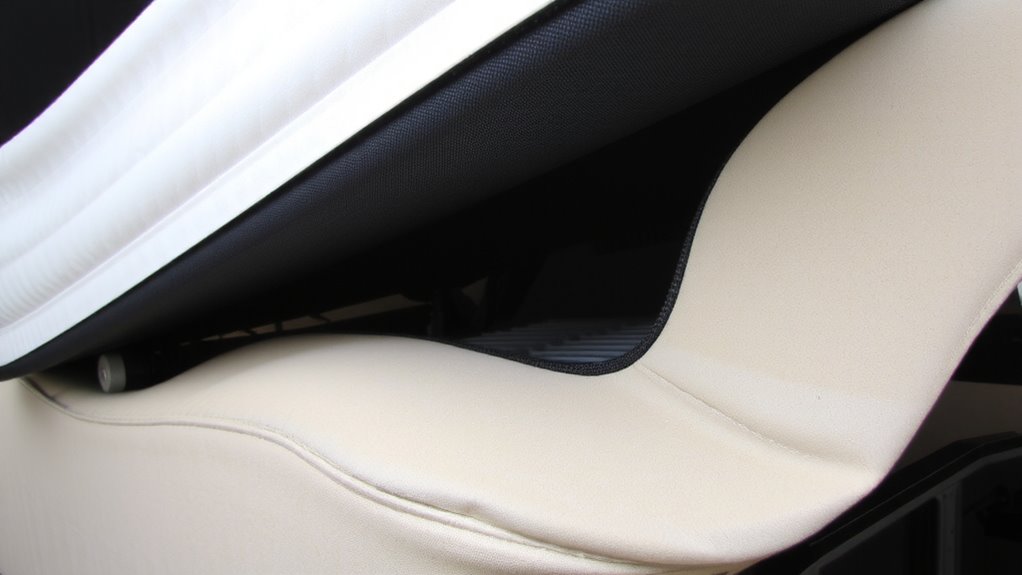
Have you ever wondered whether your current innerspring mattress can adapt to an adjustable base? The answer often lies in its construction. Innerspring mattresses vary in flexibility, and not all bend easily over adjustable base joints. Mattress thickness affects how well it conforms-mattresses under 10 inches usually work better, reducing strain during movement. Thicker models may resist articulation, causing discomfort or damage over time. Also, check base voltage compatibility. Adjustable bases require stable electrical input, and mismatched voltage can impair motor performance or lead to malfunctions. While some innersprings hold up well on adjustable frames, especially newer, more flexible designs, older or high-profile ones may not. Performance depends on coil type, foam layers, and overall flexibility. Consider manufacturer guidelines and warranty terms-some void coverage if used with adjustable bases. Trial periods help determine real-world comfort and functionality. For optimal performance, consider pairing your base with one of the top picks for adjustable bases.
Top Signs Your Innerspring Isn’t Adjustable Base-Ready
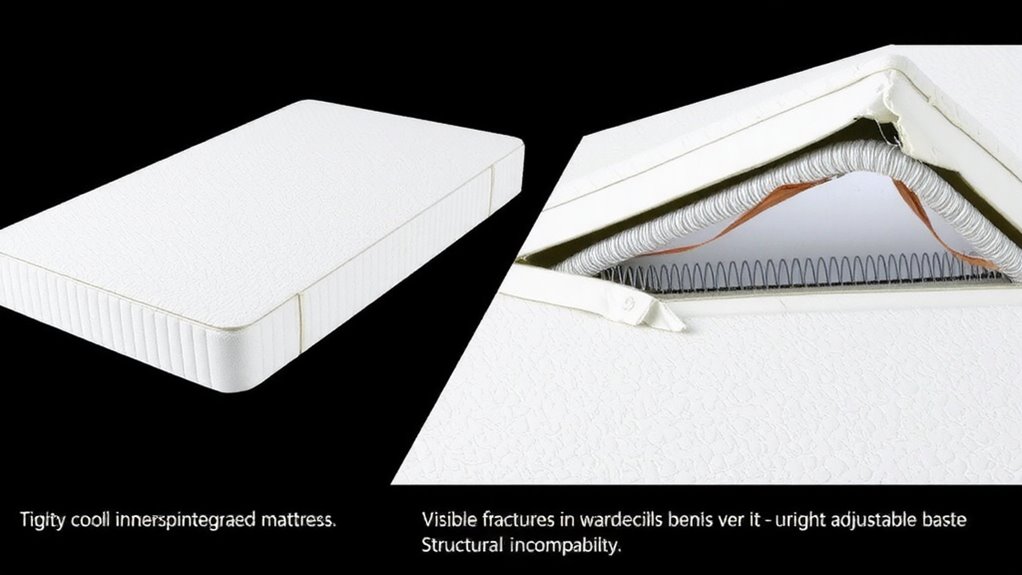
Why does your mattress resist bending at the hips or knees when you adjust your base? If it cracks, strains, or won’t flex smoothly, your innerspring likely isn’t built for adjustability. Mattress sagging in the center or edges often signals weak coil support under shifting positions. You might also notice base misalignment, where the mattress slips or shifts oddly on the frame during movement.
| Issue | What It Means |
|---|---|
| Cracking or popping sounds | Internal coil or foam damage when bending |
| Mattress sagging | Coils can’t maintain support under articulation |
| Base misalignment | Poor fit, leading to uneven positioning or sliding |
These signs suggest compromised comfort and durability. Over time, restricted motion may disrupt sleep posture, potentially worsening discomfort. If you’re experiencing these issues, consider whether your current setup supports your sleep needs effectively.
Key Features That Make Innerspring Mattresses Compatible
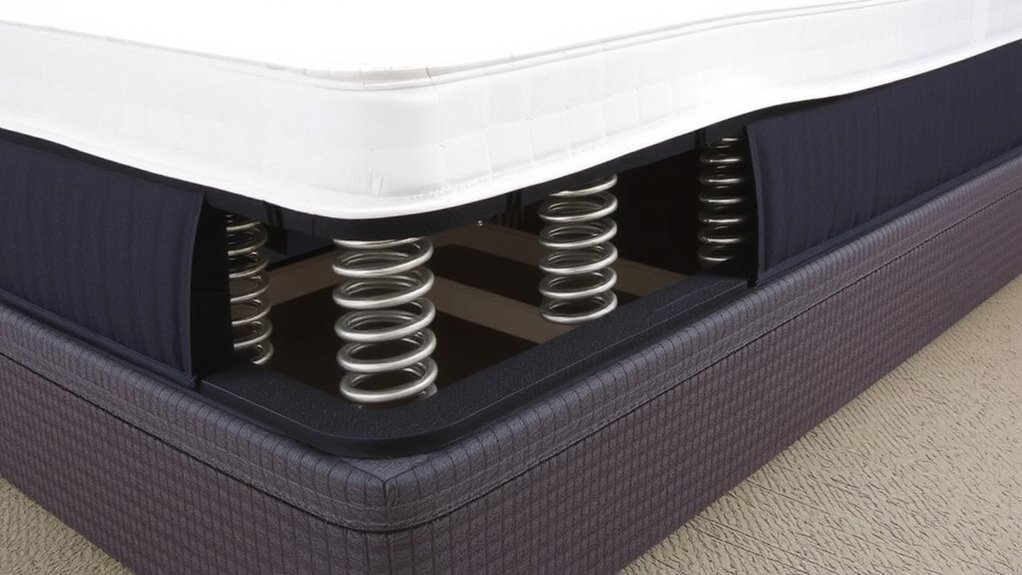
While not all innerspring mattresses work with adjustable bases, the ones that do typically include specific design elements that allow smooth bending and long-term durability. Look for models with reinforced edge support, which helps the mattress maintain stability when the base adjusts and prevents sagging along the sides. This is especially helpful if you share the bed or need support when getting in and out. Many compatible innerspring models also offer improved motion isolation, meaning your partner’s movements won’t travel across the mattress as much-useful for light sleepers or those with sleep disruptions. The materials in the comfort layers tend to be flexible, so they bend without cracking. Check for manufacturer warranties that cover use with adjustable bases, and see if they offer a sleep trial. That way, you can test how well it supports your sleep posture and comfort needs over time.
How Coil Systems and Seams Handle Movement
When your adjustable base moves, the way an innerspring mattress responds depends largely on its coil system and seam construction. Coil flexibility determines how well the springs bend without damage during adjustments, while seam durability guarantees the fabric holds up against repeated folding. Poor flexibility may lead to noise or sagging, and weak seams can start to unravel over time. To assess compatibility, consider the type of coils and the quality of stitching along the edges and center. For those also considering hybrid options, the Best Nectar Mattress Picks offer models designed to balance support and flexibility with adjustable bases.
| Feature | Good Sign | Risk if Poor |
|---|---|---|
| Coil Flexibility | Helical or wrapped coils | Breakage, reduced lifespan |
| Seam Durability | Reinforced, double-stitched seams | Fraying, seam splitting |
| Mattress Bend | Smooth contour without resistance | Gaps or creasing |
Will Your Warranty Cover an Adjustable Base?
Your warranty’s coverage often depends on whether the manufacturer explicitly allows use with an adjustable base. If they don’t, you risk warranty voidance, even if the damage seems unrelated. Many brands have manufacturer restrictions that prohibit bending or angling the mattress, which adjustable bases do by design. Check the fine print before setting it up-some allow it only with approved bases. Others require specific frame angles or forbid use entirely. Violating these terms could leave you without support if sags or seam splits develop. Some companies offer modified warranties for adjustable bases, so it’s worth asking. Always keep proof of purchase and read trial policies, too. Confirming compatibility now protects your investment and helps avoid surprises later. Your sleep comfort matters, but so does following the rules set by the maker. Staying informed means fewer risks and better rest.
On a final note
Your innerspring mattress might work with an adjustable base, but check the coil type, seam flexibility, and manufacturer guidelines first. Mattresses with continuous coils or rigid edges often don’t bend safely. Look for flexible seams and hinged foundation compatibility. Using the wrong setup could void your warranty. If unsure, contact the maker or test during a sleep trial. Matching your needs with the right construction helps support restful sleep and long-term comfort.