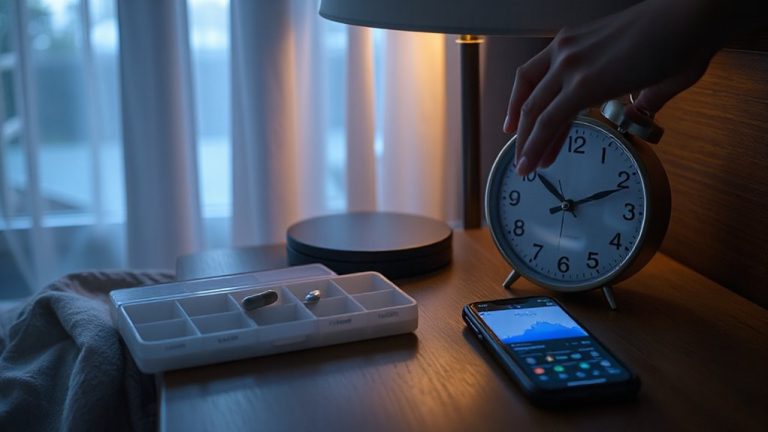
Using Skullcap Herb to Quiet Mental Chatter Before Sleep
You might find skullcap helps quiet mental chatter before sleep by gently calming overactive brain activity. It supports natural GABA function, easing anxious thoughts without strong sedation. Typically taken as tea, tincture, or capsule 30–60 minutes before bed, it works best with consistent use. While generally safe short-term, it can interact with sedatives or antidepressants. For some, pairing it with chamomile boosts results-there’s more to reflect on about timing and quality.
Notable Insights
- Skullcap calms mental overactivity by supporting GABA activity in the brain, helping quiet racing thoughts before sleep.
- Traditionally used by Native American and Chinese herbalists, skullcap promotes natural relaxation without strong sedative effects.
- Regular use of skullcap may improve sleep onset by reducing anxious thinking and nervous system overstimulation.
- Dried herb teas, tinctures, and capsules offer flexible options for using skullcap, with tinctures providing faster absorption.
- Skullcap is non-habit forming but should be used short-term and with caution alongside sedatives or antidepressants.
Why Overthinking Keeps You Awake (And How Skullcap Helps)?

Why does your mind race just when you need it to rest? Overthinking disrupts your sleep cycles by keeping your brain active when it should wind down. When you lie in bed replaying conversations or worrying about tomorrow, your mental activity delays the shift into restorative sleep. This repeated disruption can lead to brain fog the next day, making focus and clarity harder to achieve. Poor sleep doesn’t just leave you tired-it weakens memory, slows reaction time, and affects mood. Your body relies on consistent, quality sleep cycles to repair and reset. While some turn to sleep aids, not all support natural brain function. Certain options work with your biology, helping quiet mental noise without grogginess. Evaluating sleep solutions means weighing effectiveness, ingredients, and how well they align with your body’s natural rhythms. A practical choice supports both falling asleep and staying asleep, without next-day side effects.
Meet Skullcap: The Herb That Calms Mental Chatter

Envision a quiet mind, one where thoughts settle like evening shadows instead of racing in circles-skullcap might help you get there. You’ve likely heard of skullcap, a herb long used in traditional remedies to support calmness. Its historical use among Native American and Chinese herbalists highlights its role in easing mental restlessness. The dried aerial parts of the plant, often brewed as tea or taken in capsules, contain compounds that may gently influence nervous system activity. Unlike strong sedatives, skullcap works subtly, making it a candidate for those seeking natural options without harsh side effects. While not a quick fix, consistent use aligns with broader sleep hygiene practices. It’s often paired with lifestyle changes, and most forms come with clear dosage guidance. Always check with a healthcare provider, especially if you’re on other medications.
How Skullcap Soothes Anxiety and Promotes Sleep

You’ve probably heard how skullcap helps quiet a racing mind, and now it’s worth looking at how that same calming effect plays out when you’re trying to sleep or manage daily anxiety. Skullcap influences your brain chemistry by supporting GABA activity, which gently slows overactive neural pathways. This can reduce anxious thoughts and prepare your body for rest. Unlike harsh sedatives, it works subtly, making it a choice many consider for long-term use.
| Benefit | Mechanism | Consideration |
|---|---|---|
| Calms anxiety | Modulates GABA receptors | Effects build over time |
| Supports sleep onset | Slows neural pathways | Best taken 30–60 mins before bed |
| Non-habit forming | Natural herb interaction | Mild potency compared to pharmaceuticals |
These traits make skullcap a practical option when weighing sleep aids or anxiety support.
Best Skullcap Forms for Nighttime Relaxation
While skullcap’s calming effects can support better sleep, the form you choose may influence how well it fits into your nightly routine. Dried herb teas offer gentle relaxation and let you control herbal potency through steeping time-longer infusions extract more active compounds. Tinctures, taken in drops under the tongue, provide faster absorption and consistent dosing, with alcohol-based extracts often preserving potency longer. Capsules deliver precise amounts and are convenient, though they may take longer to act. Your choice depends on your preference for preparation methods and how quickly you want effects. Teas require brewing but offer ritual comfort; tinctures and capsules save time. Consider trying each form for a few nights to see which supports your relaxation best. Always check product labels for sourcing and potency information to guarantee quality.
How to Take Skullcap Before Bed for Best Results
Taking skullcap before bed can help ease your shift into restful sleep, especially when timing and dosage are tailored to your routine. For best results, consider your preferred preparation methods and ideal dosage timing. Taking it 30–60 minutes before bed allows your body to absorb the active compounds when you need them most. You can choose from teas, tinctures, or capsules, depending on your lifestyle and comfort.
| Preparation Methods | Dosage Timing |
|---|---|
| Tea (1–2 cups) | 45–60 min before sleep |
| Tincture (1–2 mL) | 30–45 min before sleep |
| Capsule (300–500 mg) | 45–60 min before sleep |
Start with a low dose to assess tolerance, then adjust slightly if needed. Consistency matters more than high amounts. Try each form for several nights to see what supports your sleep pattern best.
How Skullcap Compares to Other Calming Herbs
Although many herbs promote relaxation, skullcap stands out for its gentle support of nighttime calm without heavy sedation. Unlike valerian, which can cause grogginess, or passionflower, which may be too mild for persistent mental chatter, skullcap offers a balanced effect-calming but not overwhelming. When you compare options, consider skullcap synergy with herbs like chamomile or lemon balm, which together enhance relaxation through complementary actions. Herb comparisons show skullcap is less likely to disrupt morning clarity, making it a practical choice if you want rest without next-day sluggishness. It’s especially helpful when racing thoughts interfere with sleep onset. While some herbs act faster, skullcap’s moderate timeline and smooth effect appeal to those seeking natural, predictable support. For tailored results, try combining it with other calming herbs based on your sleep pattern-just remember, responses vary, so allow time to assess what works best for you.
Skullcap Side Effects and Safety Tips
Skullcap is generally safe for most people when used in recommended amounts, but it’s smart to know what side effects could show up. You might feel drowsy, dizzy, or have an upset stomach, especially at higher doses. If you have skullcap allergies, stop use immediately-signs include rash, itching, or swelling. Always check with your doctor before starting, particularly if you’re on sedatives, antidepressants, or blood thinners, since skullcap can cause drug interactions. It may boost the effects of medications that slow the central nervous system, increasing drowsiness. Long-term safety isn’t fully known, so limit use to short periods unless guided otherwise. Choose standardized extracts from reputable brands to guarantee purity and potency. Look for products tested by third parties and check labels for added ingredients. Starting with a low dose helps you assess tolerance. While helpful for quieting mental chatter, it’s not a fix for chronic sleep disorders-consider professional advice if sleep problems persist.
On a final note
You can try skullcap if overthinking keeps you awake, as it may ease mental chatter and support restful sleep. It comes in teas, tinctures, and capsules, each with varying absorption rates. Start with a low dose before bed to gauge tolerance. While milder than prescription aids, it’s not for everyone-check with your doctor, especially if pregnant or on medications. Give it a few nights to assess results.