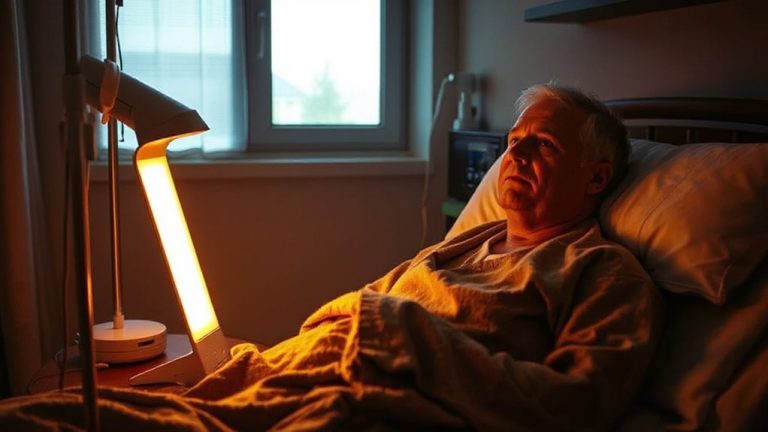
How to Use Sleep Tracking Devices to Monitor Shift Work Sleep Disorder
You can use sleep tracking devices to monitor Shift Work Sleep Disorder by tracking your sleep quality, timing, and stages across rotating or night shifts. These devices use motion and heart rate to detect light, deep, and REM sleep, helping you spot irregular patterns like frequent awakenings or low restorative sleep. Look for models with strong sleep staging, like Fitbit, Garmin, or Oura, and check for trial periods and warranties. Review weekly trends to adjust your schedule or environment-consistent bedtimes, blackout curtains, and cooling pillows may help. If fatigue persists despite changes, it may be time to explore professional guidance.
Notable Insights
- Use sleep trackers to identify patterns of disrupted sleep common in shift work sleep disorder.
- Monitor sleep stages to detect excessive light sleep and low deep sleep indicative of poor recovery.
- Track sleep timing and duration to assess alignment with your shifted circadian rhythm.
- Analyze data weekly to spot trends and adjust sleep hygiene or environment for improvement.
- Share tracker data with a doctor if sleep issues persist despite consistent interventions.
What Is Shift Work Sleep Disorder (SWSD)?
Sleep problems aren’t just about tossing and turning-they can stem from your schedule, especially if you work nights or rotating shifts. You might have Shift Work Sleep Disorder (SWSD), a condition caused by circadian misalignment. Your body’s internal clock expects sleep at night, but your job requires alertness then and rest during the day, which often doesn’t come easily. This mismatch disrupts your natural rhythm and can trigger a hormonal imbalance, reducing melatonin at needed times and increasing stress hormones like cortisol. As a result, you may struggle to fall asleep, stay asleep, or feel rested. Daytime sleep is often shorter and less restorative. SWSD affects energy, focus, and long-term health. Recognizing symptoms early helps you make informed choices about sleep strategies, environment adjustments, or possible treatments, supporting better decisions for managing sleep health. Using a best sleep tracker can provide detailed insights into sleep quality and help identify patterns affected by shift work.
How Can Sleep Trackers Detect Shift Work Sleep Problems?
How do you know if your sleep issues go beyond normal fatigue? Sleep trackers can help by measuring your sleep quality over time, spotting patterns like frequent awakenings or too much light sleep. If you work nights, your body’s circadian rhythm is likely out of sync, and many trackers detect this by analyzing sleep timing and duration. They use motion and heart rate data to estimate when you fall asleep, wake up, and how deeply you rest. Over days, this reveals whether your sleep schedule supports recovery. Poor sleep quality and irregular circadian rhythm signals may point to shift work sleep disorder. Trackers don’t diagnose, but they provide useful data to share with a doctor. Reviewing trends helps you decide if changes-or medical advice-are needed. Some of the most effective devices for this purpose are considered the best sleep trackers.
Which Sleep Tracker Works Best for Night Shifts?
You’ve seen how wearable trackers can reveal patterns tied to disrupted sleep from night shifts, but now it’s time to look at which devices handle this challenge most effectively. Look for models with strong device compatibility, so your sleep data syncs easily with phones or apps you already use. Some trackers misread sleep stages due to accuracy limitations, especially when you sleep during daytime hours. Devices using optical heart rate sensors and movement tracking tend to perform more consistently for night shifts. Brands like Fitbit, Garmin, and Oura offer features tailored to irregular schedules, with sleep staging and readiness scores. Most come with trial periods, letting you test comfort and data reliability. Check warranty length and software updates, since long-term use matters. While no tracker is perfect, choosing one with proven night-shift performance and good syncing options improves your ability to monitor sleep patterns over time. A top choice for shift workers is the Best Sleep Tracker Smartwatches due to their advanced sleep analytics and consistent performance.
How to Use Your Sleep Data to Sleep Better on Shifts
Why do some shift workers struggle to feel rested, even after logging hours of sleep? It’s often due to poor sleep quality, not just sleep quantity. Your sleep tracker shows when you’re in light, deep, or REM sleep, helping you spot patterns. If you see little deep sleep, your body isn’t recovering well, which can raise fatigue levels. Use this data to adjust your environment-try blackout curtains, white noise, or cooling pillows. Test changes over a few shifts and check if your sleep quality improves. Consistent bedtimes-even on off-days-can stabilize your rhythm. Track fatigue levels each morning to link them to sleep data. Over time, you’ll see what habits support better rest. Some devices offer sleep scores or fatigue alerts, which can guide small, useful adjustments. Review weekly trends, not single nights, for clearer insight.
When to See a Doctor for Shift Work Sleep Issues?
Could your sleep problems be more than just a tough schedule? If poor sleep quality persists despite adjustments and tracking, it might be time to contemplate a doctor consultation. You’re not alone-many shift workers struggle, but when fatigue affects daily function, mood, or safety, medical advice becomes important. Signs like constant exhaustion, trouble staying asleep, or excessive daytime sleepiness could point to shift work sleep disorder or another underlying condition. A doctor can review your sleep data, medical history, and work pattern to find solutions. They might suggest changes in routine, light therapy, or short-term sleep aids. Don’t wait until performance suffers. Early consultation helps you protect your health. Your sleep tracker’s data can support this visit, giving your doctor real insights into your sleep patterns for a more accurate evaluation.
On a final note
You can use sleep trackers to spot patterns like short sleep duration or poor sleep quality linked to shift work. Devices with accurate movement and heart rate monitoring help log your sleep when schedules shift. Review trends over time, noting when disruptions occur. If problems persist despite adjustments and tracking, seeing a doctor guarantees you rule out disorders like SWSD. Some trackers offer free trials, helping you test comfort and data clarity before committing.