How to Use Chamomile to Improve Sleep in People With Eczema
You can use chamomile to improve sleep with eczema by drinking caffeine-free tea or taking supplements 30–60 minutes before bed, which may calm your nervous system and reduce inflammation. Apply fragrance-free chamomile cream to damp skin after a lukewarm shower to relieve nighttime itching. Choose organic, standardized, or third-party-tested products to guarantee safety and effectiveness. Combining chamomile with consistent sleep habits increases your chances of better rest, and there’s more to explore about making it work for you.
Notable Insights
- Drink chamomile tea before bed to calm the nervous system and support longer, deeper sleep without caffeine interference.
- Apply fragrance-free chamomile cream with at least 1% extract to damp skin post-shower to reduce nighttime itching.
- Take 300–500 mg chamomile supplements 30–60 minutes before bed to promote sleep onset safely and consistently.
- Use chamomile’s anti-inflammatory and histamine-modulating properties to break the eczema-sleep disruption cycle.
- Choose third-party tested, organic, and eczema-safe chamomile products to ensure quality and minimize irritation risk.
Why Chamomile Helps Eczema and Sleep

Calmness isn’t just a feeling-it’s often the result of smart, science-backed choices, and chamomile offers one such option when you’re dealing with both eczema and sleep troubles. You may already know chamomile soothes nerves, but its anti inflammatory properties also help calm irritated skin. When your skin flares, it sends stress signals that disrupt sleep, and reducing inflammation can ease that cycle. Chamomile works partly through histamine modulation, gently influencing your body’s response to allergens and irritation-common eczema triggers. This dual effect means less itching at night and fewer sleep interruptions. You’re not just masking symptoms; you’re addressing underlying causes. While chamomile isn’t a cure, its role in managing discomfort is supported by research. Consider it a gentle addition to your routine, especially if harsher treatments cause side effects. It’s not about replacing proven therapies, but complementing them with something mild and accessible.
Drink Chamomile Tea for Better Sleep

When you’re looking for a natural way to unwind and support better sleep, drinking chamomile tea might be a simple step worth trying. This gentle herbal infusion contains compounds that may help calm your nervous system, making it a soothing addition to your bedtime ritual. For people with eczema, better sleep hygiene can mean fewer flare-ups and improved skin recovery overnight. Among the best herbal sleep teas, chamomile stands out for its research-backed calming effects and gentle profile.
| Feature | Why It Matters |
|---|---|
| Caffeine-free | Won’t interfere with falling or staying asleep |
| Natural sedative properties | May improve sleep quality over time |
| Easy to prepare | Ready in minutes as part of a consistent routine |
Studies suggest regular use of chamomile as a bedtime drink may support longer, deeper rest. While results vary, many find this herbal infusion a tolerable, low-risk option compared to pharmaceutical sleep aids. Try it for a few weeks to assess its effect on your sleep pattern.
Use Chamomile Cream for Nighttime Itch Relief
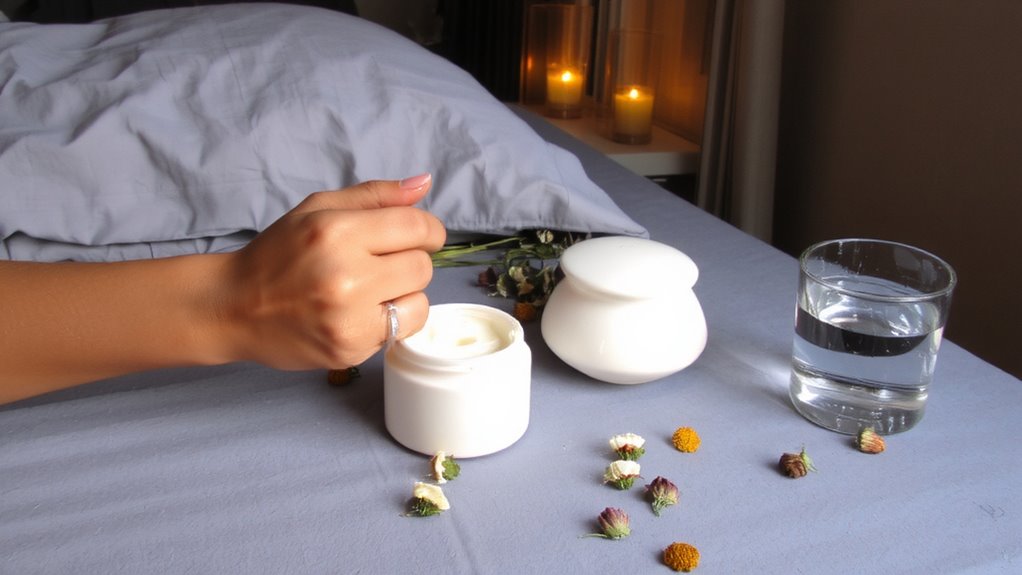
A light layer of chamomile cream might be just what you need to ease nighttime itching linked to eczema. Nighttime application helps calm irritated skin when your body’s temperature rises and itch signals increase. Chamomile contains anti-inflammatory compounds that soothe irritation and strengthen skin barrier support, reducing moisture loss while protecting against triggers. Choose a fragrance-free cream with at least 1% standardized chamomile extract for consistent results. Apply it after a lukewarm shower to damp skin for better absorption. Unlike oral antihistamines, topical chamomile doesn’t cause drowsiness but still promotes sleep by reducing discomfort. It works well alongside other sleep aids but doesn’t replace medical treatments for chronic sleep disorders. Results may vary, and some users report improvement within a week. Always patch-test first to rule out sensitivity. With regular use, you might find fewer nighttime awakenings and improved sleep quality. Some individuals also find relief from night leg cramps when using soothing topical creams before bed.
Take Chamomile Supplements the Safe Way
Though chamomile supplements can support sleep, it’s important to use them wisely, especially if you have eczema or other chronic conditions. Pay close attention to dosage timing and possible side effects. Taking chamomile too late may disrupt your sleep cycle, while consistent early use could help regulate it. Always check for potential interactions with medications like blood thinners or sedatives. Herbal teas such as best sleep-inducing herbal teas can be a gentle and effective way to incorporate chamomile into your nightly routine.
| Factor | Recommendation | Notes |
|---|---|---|
| Dosage | 300–500 mg | Start low, increase slowly |
| Timing | 30–60 mins before bed | Aligns with sleep onset |
| Form | Capsules or tea | Capsules offer precise dosing |
| Frequency | Once daily | Avoid continuous long-term use |
| Interactions | Review with doctor | Especially if on other meds |
Talk to your healthcare provider before starting any new supplement.
Pick the Right Chamomile Product for Your Needs
Since not all chamomile products deliver the same results, choosing one that fits your sleep goals and skin sensitivities matters. Your product selection should balance form, purity, and potency. If you prefer tea, opt for organic, non-irritating blends with minimal additives. For capsules, check label strength-standardized extracts often provide more consistent effects. Topical creams should be fragrance-free and tested for eczema-prone skin. Always do a patch test first. When making a brand comparison, look at third-party testing, customer reviews, and transparency in sourcing. Reputable brands share lab results and offer clear dosing. Some even provide satisfaction guarantees or trial sizes, helping you test without full commitment. Performance varies, so track how well each option supports your sleep over a few nights. Prioritize gentle, reliable formulations that match your routine and skin needs.
Combine Chamomile With Proven Sleep Hygiene Tips
You’ve chosen a chamomile product suited to your needs, whether it’s tea, capsules, or a gentle cream for sensitive skin-now consider how well it works alongside daily habits that support restful sleep. Pairing chamomile with a consistent bedtime helps regulate your body’s internal clock, making it easier to fall and stay asleep. Aim to go to bed and wake up at the same time every day, even on weekends, to strengthen your sleep cycle. Also, reduce screen time at least 30 to 60 minutes before bed; the blue light from phones and tablets can interfere with melatonin production. Using chamomile tea as part of this routine can serve as a calming signal to your body. These habits, combined, may improve sleep quality without relying solely on supplements.
On a final note
You can use chamomile to support sleep and ease eczema symptoms, but results vary. Tea, creams, or supplements may help, depending on your needs. Look for products with clear labels, third-party testing, and minimal additives. Start with low doses to check for tolerance. Chamomile works best when combined with consistent sleep habits, like a cool room and a regular bedtime. Talk to your doctor, especially if you take other meds or have allergies. Try it for a few weeks to see if it helps.