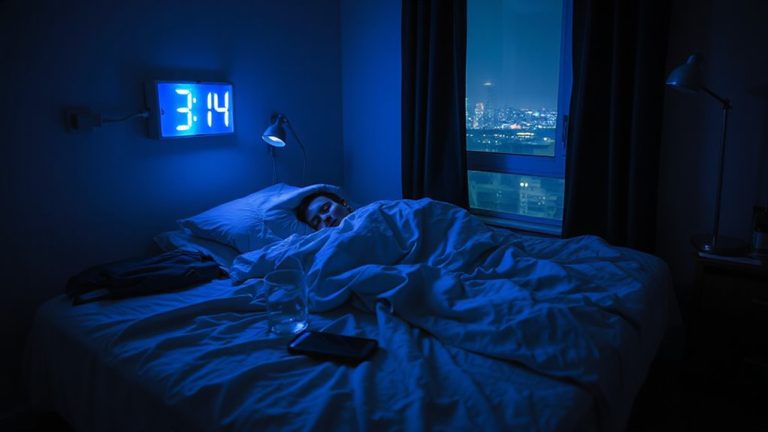
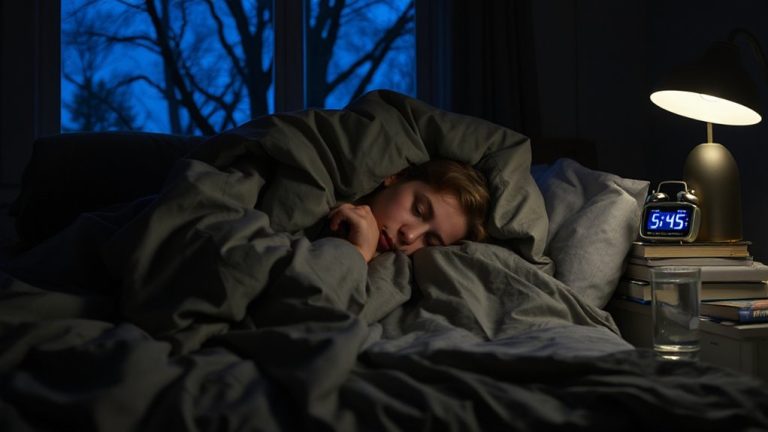
Delayed Sleep Phase Disorder: Long-Term Management with Light & Melatonin
You can’t fix Delayed Sleep Phase Disorder with a quick habit change because it’s rooted in your biology, not laziness or poor routine. Your internal clock naturally runs late, shifting melatonin and temperature rhythms past typical sleep times. Short-term fixes rarely work. Long-term management-like daily light therapy, strict wake times, and timed melatonin-gradually resets your rhythm. Consistency over weeks helps align your body with daily life, and sticking with it makes progress last. More helpful strategies follow.
Notable Insights
- DSPD is caused by a persistent biological delay in circadian rhythms, not lifestyle choices, requiring ongoing management.
- The internal clock in DSPD resists realignment, making long-term strategies necessary to maintain earlier sleep times.
- Light therapy and melatonin work gradually and require consistent, sustained use for lasting effects.
- Irregular sleep schedules quickly undo progress, so fixed routines must be maintained indefinitely.
- Relapse is common without continuous behavioral and environmental cues to support circadian alignment.
What Is Delayed Sleep Phase Disorder (DSPD)?
While most people follow a sleep schedule aligned with the natural cycle of day and night, your body might consistently resist falling asleep at conventional times if you have Delayed Sleep Phase Disorder (DSPD). This condition stems from a chronotype mismatch, where your internal clock runs markedly later than typical societal norms. You’re not choosing late nights-your biology drives this shift. Circadian misalignment means your melatonin release and body temperature rhythms delay, making sleep before 2 a.m. feel nearly impossible. Even with effort, forcing earlier sleep often fails long-term. Diagnosis usually involves sleep diaries or actigraphy over weeks. Though not dangerous itself, DSPD can disrupt work, school, or social life. Treatments focus on resetting your clock, not masking symptoms. Light therapy, melatonin timing, and consistent wake times help realign rhythms. Success varies, so trying options under guidance improves outcomes.
Why DSPD Isn’t Just Bad Sleep Habits
You might have heard people say that going to bed late is just a matter of discipline, but with Delayed Sleep Phase Disorder, it’s not about poor choices or lazy habits-it’s your biology running on a different schedule. This isn’t insomnia or poor time management. DSPD involves a strong genetic predisposition and consistent circadian misalignment, meaning your internal clock naturally shifts later, making early sleep nearly impossible.
| Feature | Typical Insomnia / Habit | |
|---|---|---|
| Cause | Lifestyle, stress | Genetic predisposition |
| Sleep Ability | Difficulty falling/staying asleep | Can sleep well, just later |
| Circadian Timing | Generally aligned | Clear misalignment |
This biological shift affects work, school, and health. Understanding the root cause helps you choose appropriate treatments and avoid blaming yourself. Effective management focuses on aligning life with your physiology-not willpower.
How Light Therapy Shifts Your DSPD Clock
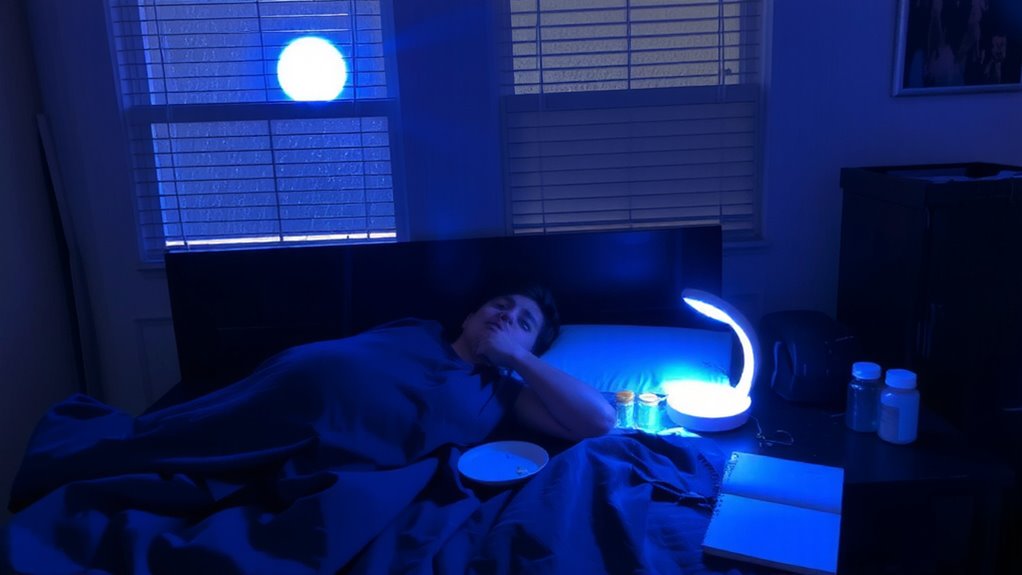
What if the key to resetting your sleep schedule isn’t in willpower, but in light? Light therapy works by targeting your circadian rhythm, the internal clock that controls when you feel awake or tired. When you use a light therapy box each morning, you’re delivering strong, consistent light exposure that signals your brain to wake up earlier. This daily cue shifts your internal clock forward, helping you feel sleepy at a more typical bedtime. Most devices offer 10,000 lux of bright, white light and should be used for 20–30 minutes shortly after waking. Studies show that regular use improves sleep timing in many people with DSPD. You’ll likely see changes within one to two weeks. Choose a device with a UV filter and a solid warranty. Stick with it daily for best results.
Why Sleep Routines Anchor DSPD Recovery
Could consistency be the quiet force that reshapes your sleep? It can. For DSPD, behavioral consistency isn’t just helpful-it’s essential. Going to bed and waking up at the same time daily, even on weekends, supports circadian alignment, helping your internal clock settle into a sustainable rhythm. This routine strengthens your body’s natural cues for sleep and wakefulness, making it easier over time to fall asleep earlier and rise alert. Small, steady habits-like limiting screens before bed or avoiding caffeine late in the day-boost the effect. These choices don’t fix DSPD overnight, but they create the foundation for lasting recovery. Think of sleep routines as long-term anchors, not quick fixes. With time, they improve sleep quality and daytime function, offering a practical path forward tailored to your biology and lifestyle.
When Medication Helps Treat DSPD
Isn’t it sometimes clear that lifestyle changes alone aren’t enough to shift a deeply delayed sleep cycle? That’s when medication can play a helpful role. Melatonin supplements, taken carefully at the right time, may help reset your internal clock by signaling bedtime earlier. They’re most effective when used consistently and under guidance, usually in low doses. Beyond melatonin, doctors might suggest chronopharmacology approaches-timing medications to align with your body’s rhythms-for more precise control. These methods rely on understanding your unique sleep biology, not just symptom management. While not a quick fix, they support long-term adjustment when paired with good sleep habits. Always consult a specialist before starting any treatment, since timing, dosage, and individual response vary. Used wisely, these tools can complement your routine and improve sleep timing over time.
Living With DSPD: Real Daily Struggles
You’ve likely tried adjusting your schedule and may have even added melatonin or other timed medications into the mix, but daily life with Delayed Sleep Phase Disorder often brings challenges that don’t resolve with treatment alone. Morning commitments clash with your natural rhythm, leading to chronic fatigue that stacks up over days. You’re not lazy-your body simply runs on a delayed clock. Social isolation creeps in when friends meet early or expect evening energy you can’t give. Even simple plans feel overwhelming. School or work routines rarely bend to later starts, so missed events and reduced participation become common. This isn’t just about sleep timing-it’s about how your internal schedule affects relationships, focus, and daily function. Recognizing these struggles helps inform choices about sleep aids, routines, or professional support without assuming quick fixes.
Sticking to a Long-Term DSPD Sleep Plan
While sticking to a long-term DSPD sleep plan can feel challenging at first, consistency over time improves your chances of aligning your internal clock with daily demands. You’ll want to set consistent wake times, even on weekends, to reinforce your body’s sleep-wake rhythm. These fixed wake times act like anchors, helping your internal clock reset gradually. Pair this with regular sleep tracking to identify patterns in your sleep onset and quality. Tools like wearable trackers or journal logs offer objective data, so you can see progress or adjust strategies. Light exposure in the morning supports the shift, while minimizing screens at night helps maintain it. Sleep aids might offer short-term relief, but they’re not a long-term fix. Always consult a professional before starting or stopping any treatment. With patience and tracking, small changes can lead to meaningful improvement in your sleep routine. A reliable best sleep monitoring wearables device can enhance tracking accuracy and long-term adherence to your sleep schedule.
On a final note
You’ll manage DSPD best with consistent, long-term strategies that align your body clock to daily demands. Light therapy, set routines, and possibly medication can help shift your sleep schedule gradually. These tools work when used together over time, not just once. Think of treatment as a flexible plan, not a quick fix. Trial periods and doctor guidance improve success, while warranties don’t apply-progress relies on your steady effort and adjustments.