How Ambient Noise Can Help You Fall Asleep Faster and Deeper
Ambient noise helps you fall asleep faster by masking sudden sounds like traffic or creaking doors, creating a steady backdrop that keeps your brain from waking. It supports deeper sleep by maintaining a consistent auditory environment, which helps regulate breathing and heart rate. You can choose white, pink, or brown noise-each balances frequencies differently-or try nature sounds like rain or ocean waves. Using low, even volume through apps or dedicated devices works best. Try different options over several nights to see what fits your sleep pattern. You’ll learn how to optimize your setup with simple adjustments and find reliable sources for high-quality soundscapes.
Notable Insights
- Ambient noise masks disruptive sounds, helping you fall asleep faster by creating a consistent auditory environment.
- Steady soundscapes like pink or brown noise promote deeper sleep by supporting natural sleep cycle rhythms.
- The brain relaxes in response to predictable sounds, reducing arousal from sudden environmental noises.
- Nature sounds such as ocean waves or rain induce calmness and help synchronize breathing and heart rate.
- Using low-volume, uninterrupted ambient noise throughout the night enhances sleep quality and minimizes awakenings.
Why Ambient Noise Helps You Sleep
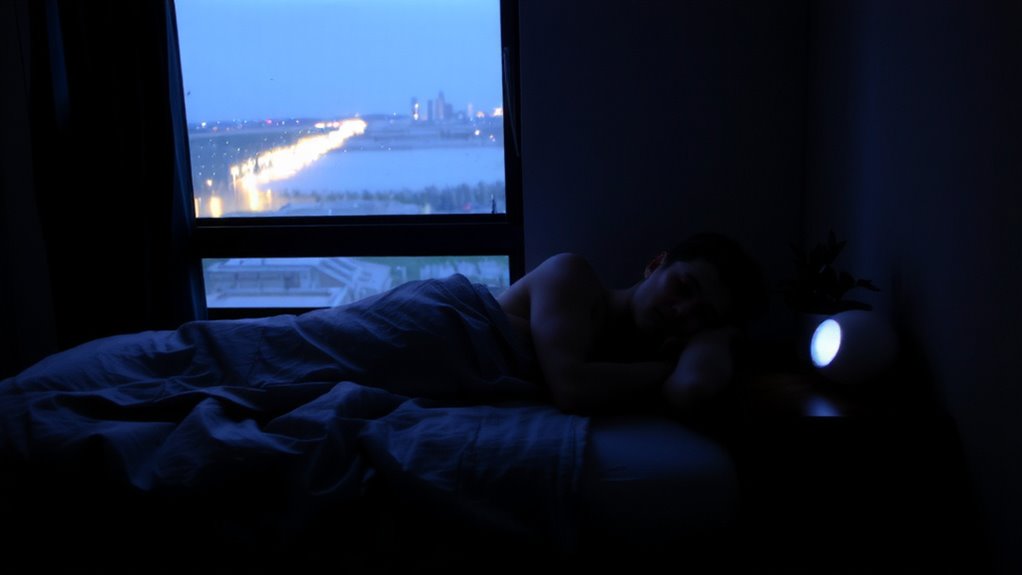
While your brain stays active during sleep, masking disruptive sounds with ambient noise can help maintain uninterrupted rest. Your brain chemistry responds to steady soundscapes by promoting relaxation, easing the shift into deeper sleep stages. These consistent tones support natural sleep cycles, reducing abrupt awakenings caused by sudden noises. Unlike silence, which heightens sensitivity to disturbances, ambient noise creates a predictable auditory environment. This stability helps regulate melatonin and cortisol levels, aligning with your body’s internal clock. You might find white, pink, or brown noise effective, each offering different frequency balances. Devices vary in sound quality, timer functions, and portability, so consider trying one with adjustable settings and a warranty period. Many come with trial options, letting you test compatibility with your sleep routine. Ambient noise isn’t a cure for sleep disorders, but it can improve sleep continuity when used thoughtfully alongside other healthy habits. For those seeking targeted relief, a dedicated sleep therapy sound machine can provide clinically designed sound profiles to enhance sleep quality.
How Ambient Noise Blocks Distractions
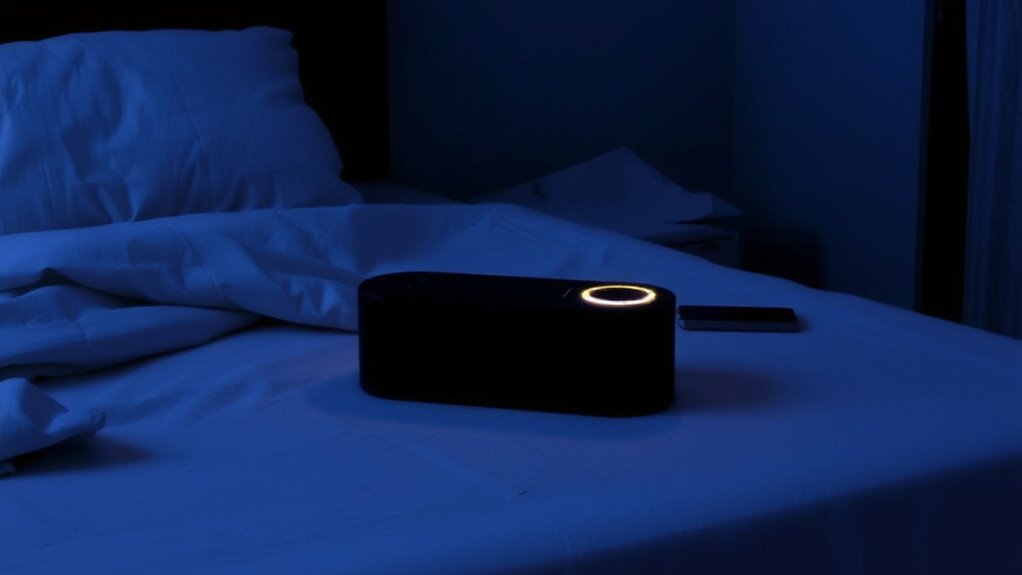
Because sudden sounds like doors closing or traffic noise can pull you out of sleep, ambient noise works by filling the air with a steady backdrop that masks those interruptions. This is known as sound masking-the idea that consistent background noise reduces the contrast between sudden noises and silence, making them less noticeable. Unlike active noise cancellation, which uses electronics to cancel sound waves, ambient noise relies on natural or recorded sounds like rain or wind to create a buffer. You don’t need special gear; even a fan or a phone app can provide effective sound masking. For people sensitive to noise, this can mean fewer wake-ups and deeper rest. Many sleep aids now include built-in ambient sounds with adjustable volume and timers. Look for models with long warranties or trial periods so you can test what works best without risk. It’s a simple, low-cost way to improve sleep conditions. A reliable option for creating this soothing backdrop is choosing one of the best sleep sound machines on the market, such as those highlighted in best sleep sound machines for their quality and user-tested performance.
White, Pink, and Brown Noise: Which Is Best?
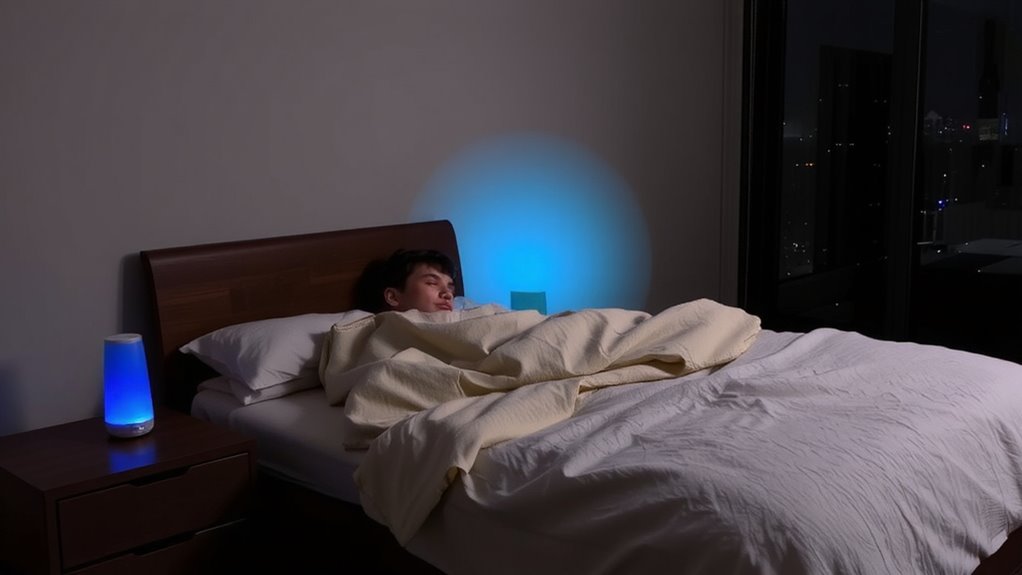
You’ve probably heard of white noise, but pink and brown noise are also popular choices for better sleep. Each of these noise types uses different sound frequencies to create steady background sound. White noise includes all frequencies at equal intensity, which can feel harsh to some. Pink noise lowers the higher frequencies, giving a more balanced, even sound-like steady rain. Brown noise focuses even more on the lows, sounding deeper, like distant thunder. Though personal preference matters, studies suggest pink and brown noise may support deeper sleep for some people, especially those sensitive to abrupt sounds. There’s no single best choice-trying each helps you decide what works. Many sleep apps and machines offer all three, often with trial periods. Consider your comfort with different sound frequencies and stick with what feels most natural. For those looking to test these options, high-quality white noise machines can make a noticeable difference in sleep consistency.
Nature Sounds as Sleep-Friendly Ambient Noise
Nature sounds offer a soothing alternative to colored noise, using familiar auditory cues like ocean waves, rustling leaves, or chirping crickets to create a calming sleep environment. You might find bird songs especially effective if you respond well to gentle, rhythmic patterns that mimic natural cycles. Ocean waves provide steady, repetitive sounds that help regulate breathing and slow your heart rate, supporting deeper rest. These sounds work by masking disruptive background noise without the artificial tone of white or pink noise. Many sleep apps and sound machines include nature tracks with adjustable volume and loop settings, letting you customize your experience. Look for high-quality recordings without sudden volume shifts to avoid nighttime awakenings. Some devices offer trial periods, so you can test different options. There’s no single best choice, but nature-based ambient sounds often feel more intuitive and less intrusive, making them a practical option for long-term use.
How to Use Ambient Noise for Deeper Sleep
Where should you start when using ambient noise to improve sleep quality? Begin by adjusting your sleep environment to support relaxation. Choose a sound source that offers steady sound consistency-sudden shifts in volume or tone can disrupt rest. Play the noise at a low, even level throughout the night, ideally through a dedicated device or speaker placed away from your bed to avoid overexposure. Use a timer or continuous loop setting so the sound doesn’t stop mid-sleep. Test different types over several nights to see what helps you stay asleep. Consistent use strengthens sleep cues. If you have a diagnosed sleep disorder, consider discussing ambient noise as a complementary tool with your provider. It’s non-invasive, low-risk, and adaptable, but works best when matched to personal preference and sleep patterns.
Find Free Sleep Sounds: Apps and Playlists
While a growing number of apps and streaming platforms offer sleep sounds, not all provide high-quality or ad-free experiences, so it’s important to choose wisely. You can find reliable free resources that deliver soothing ambient noise without cost. Check user reviews to assess sound quality, usability, and whether playlists loop seamlessly. Many apps offer sleep-specific tracks like rain, white noise, or forest sounds, often backed by positive feedback. Streaming platforms also host curated playlists tested by regular users. Consider these options:
| Platform | Free Tier Available | User Reviews Avg. (5-star) |
|---|---|---|
| MyNoise | Yes | 4.8 |
| Insight Timer | Yes | 4.7 |
| YouTube | Yes | 4.5 |
| Spotify | Yes | 4.6 |
These free resources balance performance and accessibility, helping you test sounds before committing to premium versions.
Avoid These Common Ambient Noise Mistakes
If you’re using ambient noise to help with sleep, it’s easy to overlook simple mistakes that might reduce its effectiveness. One common error is poor volume control-setting the sound too loud can overstimulate your brain, while too low might not mask disruptive noises. Aim for a level that’s soft but steady, like distant rainfall. Another issue is inconsistent sound output; abrupt changes or looping noises break concentration and hinder relaxation. Choose recordings with seamless sound consistency, such as those labeled “continuous loop” or “non-interrupted.” Avoid sources that fade in and out or include spoken prompts. Test different options over a few nights to see what supports your sleep cycle best. Reliable apps often offer customizable settings and trial periods, so take advantage of warranties or free versions to find what works without commitment.
On a final note
You can use ambient noise to help fall asleep faster and stay asleep longer by masking disruptive sounds. White, pink, or brown noise and nature sounds each offer different benefits-try them to see what works best for you. Use free apps or playlists at low volume, ideally with a timer. Avoid sudden sounds or high volume to prevent sleep disruption. Consistent use may improve sleep quality over time, especially if you’re sensitive to noise.