The Impact of Blue Light From Screens on Delayed Sleep Phase Disorder
Your delayed sleep phase disorder makes you more sensitive to blue light from screens, which can push your sleep time even later. Evening screen use suppresses melatonin and increases alertness, worsening your circadian delay. Natural light in the morning helps, but reducing blue light at night is key. Use filters, wear blue-blocking glasses, or limit screens before bed. Small changes can stabilize your rhythm, and there’s more to discover about managing your sleep pattern effectively.
Notable Insights
- Blue light from screens suppresses melatonin more strongly in people with DSPD due to circadian misalignment.
- Evening screen exposure delays sleep onset further in DSPD by enhancing alertness and neural hyperexcitability.
- Individuals with DSPD are more sensitive to blue light’s phase-delaying effects, worsening their delayed sleep pattern.
- Using blue light-blocking glasses or screen filters in the evening can help stabilize circadian rhythms in DSPD.
- Morning exposure to natural light combined with reduced evening screen use improves sleep timing in DSPD.
What Is Delayed Sleep Phase Disorder (DSPD)?
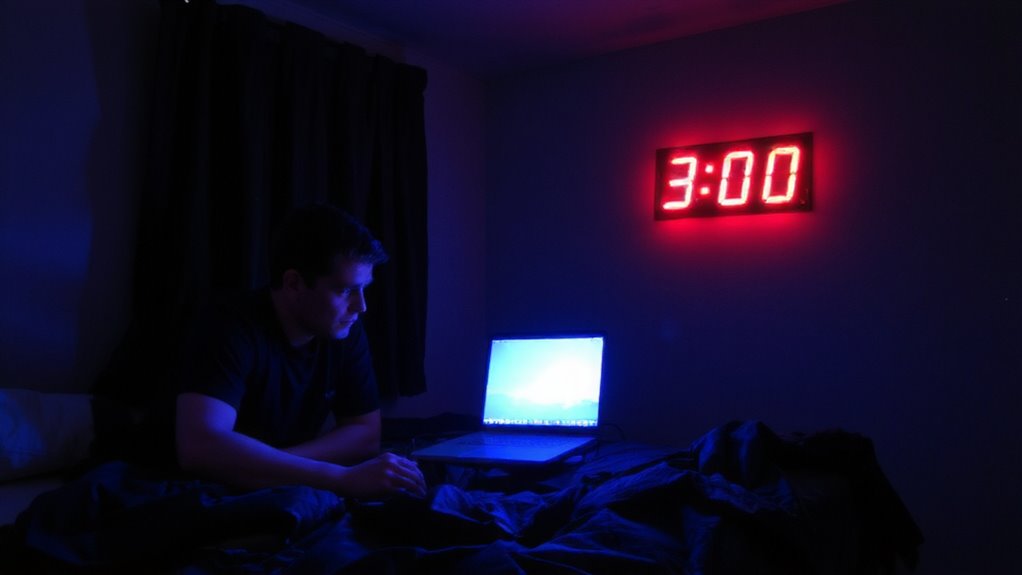
Ever wonder why you feel wide awake late at night when others are fast asleep? You might have Delayed Sleep Phase Disorder (DSPD), a condition where your circadian rhythm shifts later than typical. This delay pushes your sleep onset to much later hours, often past midnight, even if you’re tired. Your body naturally wants to fall asleep and wake up later, making early schedules tough. Unlike insomnia, you can sleep well-if allowed to follow your internal clock. It’s common in teens and young adults, and it’s more than just staying up late; it’s a biological shift. Diagnosis usually involves tracking sleep patterns for weeks. Treatments like light therapy or melatonin may help reset your circadian rhythm. Results vary, so trials under medical guidance are key. While long-term, many adjust with lifestyle changes or timed interventions.
How Blue Light Disrupts Sleep in DSPD
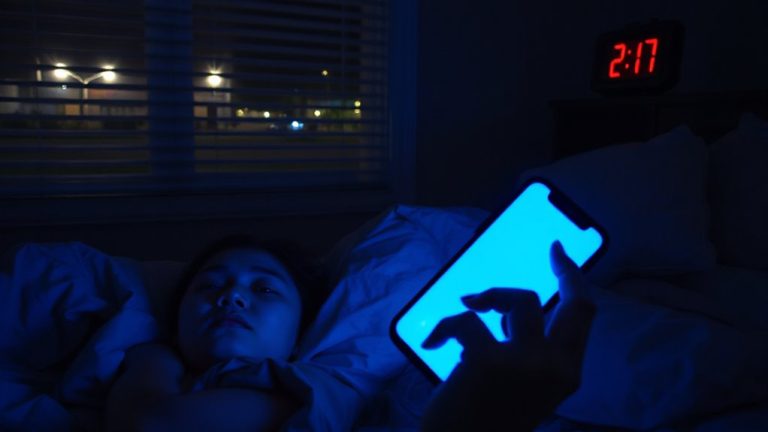
Although your internal clock already runs on a delayed schedule with DSPD, exposure to blue light in the evening can make it even harder to fall asleep at a desired time. This light suppresses melatonin more strongly in people with circadian misalignment, pushing sleep further into the night. Neural hyperexcitability may also increase, making your brain more alert when it should be winding down. Below is how different light types affect your sleep biology:
| Light Type | Melatonin Suppression | Impact on Neural Hyperexcitability |
|---|---|---|
| Blue light | High | Increased |
| Amber light | Low | Minimal |
| Natural daylight | Moderate (morning) | Regulates rhythm |
Managing evening light exposure helps align your rhythm. Simple changes-like using blue light filters or reducing screen time-can support better timing without medication. These strategies target core disruptions without side effects, letting you test adjustments safely and consistently over a few weeks. For those sensitive to screen light, wearing blue light glasses can significantly reduce evening melatonin suppression.
Why DSPD Increases Blue Light Sensitivity
People with DSPD often notice that evening screen use keeps them up later than intended, and there’s a biological reason for that heightened reaction. Your sensitivity to blue light is stronger because of circadian misalignment-your internal clock runs markedly behind the typical 24-hour cycle. This delay means light exposure at night, especially blue wavelengths, has a more powerful phase-delaying effect on your system than it does for others. A genetic predisposition likely plays a role, making your photoreceptors more reactive when light hits them during sensitive periods. As a result, even moderate screen time can throw your rhythm further off track. Understanding this means you can plan screen use earlier or use filters when needed. Small changes in timing and lighting help stabilize your rhythm over time. Consistency matters more than perfection.
How Blue Light Suppresses Melatonin
When light enters your eyes in the evening, especially the blue wavelengths common in screens and LED bulbs, it signals your brain to halt melatonin production. This happens because blue light triggers photoreceptor activation in your retina, specifically in cells that regulate your internal clock. These cells send messages to your brain’s suprachiasmatic nucleus, which controls sleep-wake cycles. When this system activates too late, it can lead to circadian misalignment, pushing your natural sleep time later. Melatonin, the hormone that helps you feel sleepy, doesn’t rise as it should, making it harder to fall asleep at a typical hour. You might not notice the change right away, but over time, disrupted melatonin release worsens sleep timing. This is especially relevant if you already experience sensitivity from conditions like Delayed Sleep Phase Disorder. Managing evening light exposure helps maintain natural melatonin rhythms and supports healthier sleep patterns. Wearing blue light blocking glasses can significantly reduce evening melatonin suppression.
Block Blue Light Before Bed: 5 Proven Strategies
What if the key to better sleep starts with a simple change to your evening routine? You can reduce harmful blue light exposure just by adjusting how you use screens at night. Try using screen filters on phones, tablets, and computers-they block blue wavelengths without dimming visibility. These filters are easy to apply and often come as built-in settings or affordable add-ons with solid performance and no trial needed. Limiting light exposure in the two hours before bed is essential, especially if you have Delayed Sleep Phase Disorder. Consider blue light-blocking glasses; they’re low-cost and effective when used consistently. Some apps also automatically adjust screen color based on sunset times. Pairing screen filters with reduced brightness improves results. These strategies don’t demand big lifestyle shifts but offer meaningful support for healthier sleep patterns through better light exposure control.
Build a DSPD-Supportive Evening Routine
You’ve already taken steps to limit blue light with filters, glasses, and screen adjustments-now it’s time to structure the rest of your evening around your body’s natural rhythm, especially if you’re managing Delayed Sleep Phase Disorder. Consistent wind down rituals help signal your brain that sleep is coming. Try starting 60–90 minutes before your target bedtime with low-light reading, gentle stretching, or a warm shower. These activities support better sleep hygiene by reducing physical and mental stimulation. Keep the environment quiet, cool, and free from screens. Stick to a fixed nightly routine and wake-up time-even on weekends-to stabilize your internal clock. Gradually shift bedtime earlier in 15-minute increments if needed. Pair your routine with evidence-based supports like melatonin supplements or light therapy, but consult a doctor first. Tracking progress helps identify what works.
On a final note
You might feel more sensitive to blue light if you have DSPD, since your melatonin release is already delayed. Reducing screen exposure before bed helps support your body’s natural rhythm. Consider blue light filters, dimming screens, or wearing amber-tinted glasses. Pair these with a consistent routine to improve sleep timing. Many tools offer free trials or warranties, so test options gently. Small changes can make a meaningful difference in your sleep quality and daily functioning.