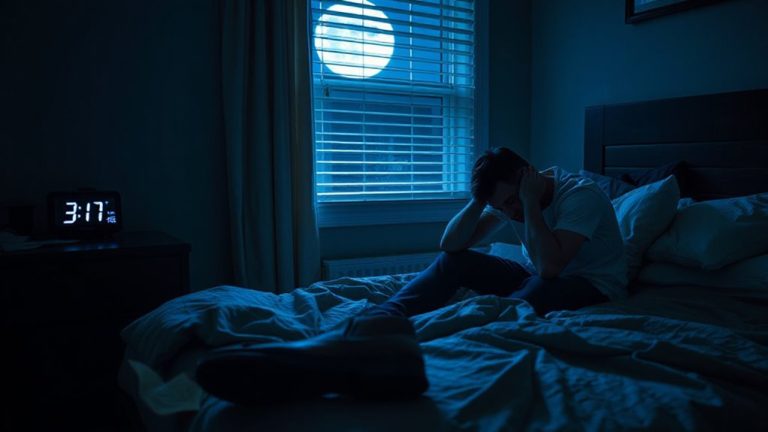
The Role of Sleep Hygiene in Irregular Sleep-Wake Rhythm Disorder
You can manage irregular sleep-wake rhythm disorder by using consistent sleep hygiene to strengthen your body’s internal clock. Stick to a regular wake time, limit naps, and avoid screens before bed, since blue light delays melatonin. Morning light and activity help reset your rhythm, while a quiet, clutter-free bedroom supports rest. Even small, steady habits improve sleep timing over time-there’s more to explore in shaping an effective routine.
Notable Insights
- Consistent wake times daily help stabilize the circadian rhythm despite irregular sleep patterns.
- Fixed bedtimes reinforce sleep-wake regularity and support circadian entrainment over time.
- Morning light exposure combined with physical activity strengthens internal clock alignment.
- Limiting daytime naps preserves sleep pressure for more consolidated nighttime rest.
- Avoiding screens before bed reduces blue light-induced melatonin suppression and sleep delays.
What Is Irregular Sleep-Wake Rhythm Disorder?
Irregular sleep-wake rhythm disorder (ISWRD) isn’t just occasional trouble falling asleep-it’s a circadian rhythm condition where your sleep gets scattered across the 24-hour day in seemingly random chunks. You might nap for a few hours here and there, without a clear main sleep period. This pattern stems from circadian misalignment-your internal clock doesn’t sync with the light-dark cycle. Over time, this can contribute to a neurochemical imbalance, affecting mood, alertness, and daily function. Unlike typical insomnia, ISWRD involves both excessive nighttime awakenings and daytime sleepiness. It’s more common in people with neurological conditions or irregular routines. Diagnosis usually requires a sleep diary or actigraphy over one to two weeks. Treatment options focus on resetting your rhythm, but first, understanding your pattern is key. Accurate tracking helps guide decisions about therapy or potential sleep aids.
Why Sleep Hygiene Controls Your Body Clock
While your body’s internal clock runs on its own rhythm, daily habits can either support or disrupt its timing, and that’s where sleep hygiene comes in. Good sleep hygiene guides circadian entrainment by aligning your behaviors with natural light-dark cycles. This helps set melatonin timing, signaling sleep onset at consistent hours. Consistent sleep and wake times, even on weekends, strengthen your body’s clock signals.
| Habit | Effect on Body Clock |
|---|---|
| Regular wake time | Boosts circadian entrainment |
| Morning light exposure | Resets melatonin timing |
| Fixed bedtime | Stabilizes sleep-wake rhythm |
| Pre-sleep routine | Eases shift into sleep |
| Limited daytime napping | Supports nighttime sleep drive |
These practices don’t fix everything overnight, but they lay the groundwork for improved rhythm regulation, especially in managing irregular sleep-wake patterns.
How Nighttime Light and Screens Delay Sleep
You’ve already seen how consistent routines and light exposure in the morning help set your body clock on track. At night, though, screen use can undo that progress. Devices like phones, tablets, and TVs emit blue light, which tricks your brain into thinking it’s still daytime. This causes melatonin suppression, delaying the drowsiness needed for sleep. Even dim screen light can reduce melatonin levels, especially when viewed within one to two hours of bedtime. The effect is stronger in people with irregular sleep-wake rhythm disorder, whose rhythms are already unstable. Reducing screen time at night, using blue light filters, or wearing blue-blocking glasses may lessen melatonin suppression. These options vary in performance and user comfort, so trials in real-world settings help determine fit. Small changes in light exposure can make a measurable difference in sleep timing. For those sensitive to evening light, trying the best blue light blocking glasses may improve nighttime melatonin production and sleep onset, with best blue light blocking glasses offering optimized lens technology for filtering harmful wavelengths.
6 Daily Habits to Stabilize Your Sleep Schedule
If your sleep feels scattered or unpredictable, small daily habits can gradually shift your rhythm toward consistency. Set a regular wake-up time, even on weekends, to strengthen your body’s internal clock. Pay close attention to nap timing-limit naps to 20–30 minutes and avoid them late in the day, as they can interfere with nighttime sleep. Caffeine tracking helps too; avoid consuming it within six hours of bedtime since it can linger and disrupt sleep onset. Pair morning light exposure with physical activity to reinforce alertness at the right time. These habits work best when applied consistently, giving your system a clear signal of when to be awake and when to wind down. Over time, this daily structure supports more stable sleep patterns without medication or drastic changes.
Design a Bedroom for Consistent Rest
| Feature | Recommended Choice | Why It Helps |
|---|---|---|
| Wall Color | Muted blue or gray | Promotes calm, reduces stimulation |
| Bed Position | Away from door/window | Lowers disturbances from light or noise |
| Storage | Closed, under-bed or built-in | Reduces clutter and visual stress |
| Layout Flow | Clear pathways, symmetrical | Supports routine and mental ease |
Choose pieces that stay functional over time, and test changes gradually. A supportive sleep surface can enhance comfort for CPAP users, especially when paired with a CPAP-friendly pillow.
When to Seek Help for Sleep-Wake Disruption
What if your sleep troubles aren’t just a phase? If your sleep-wake disruption lasts weeks and affects daily functioning, it’s time to consult a professional. Persistent fatigue, mood changes, or trouble focusing may point to underlying causes like sleep apnea or mental health conditions. Sleep apnea often disrupts rest through breathing pauses, while mental health issues can deeply influence sleep timing and quality. You’re not overreacting-these are treatable. Doctors may recommend a sleep study to diagnose disorders or adjust routines. Treatments vary from CPAP machines for sleep apnea to counseling or medication for mental health. Many sleep aids exist, but they work best alongside professional guidance. Early help improves outcomes. Tracking symptoms can aid diagnosis. Seeking care isn’t drastic-it’s practical, informed self-management. Your sleep matters. For those diagnosed with obstructive sleep apnea, using a Top CPAP Machines can significantly improve sleep quality and daytime functioning.
Stick to a Rhythm: Your Path to Better Sleep
You’ve probably noticed how sticking to a consistent sleep schedule helps regulate your body’s internal clock. When dealing with irregular sleep-wake rhythm disorder, maintaining a daily rhythm is key. Going to bed and waking up at the same time every day-even on weekends-can improve sleep quality over time. Using sleep tracking tools, like wearable devices or smartphone apps, helps you monitor patterns and identify disruptions. Pair this with dream journaling to spot emotional or mental trends tied to your rest. Together, these methods offer insight into your sleep cycles and potential triggers for poor rest. While not a cure, consistency enhances the effectiveness of other treatments. You don’t need perfect adherence, but regularity supports better long-term outcomes. Small changes, tracked over time, lead to informed decisions about when to adjust habits or seek professional guidance.
On a final note
You can manage irregular sleep-wake rhythm disorder by improving sleep hygiene. Keep a consistent schedule, limit screen time at night, and adjust your bedroom for better rest. These steps support your body clock and improve sleep quality. While changes may take time, they’re often effective. If problems persist, consult a professional. Some may benefit from light therapy or melatonin, but discuss options with your doctor to weigh benefits, timing, and possible side effects.