How to Choose an Innerspring Mattress for a Kids’ Bunk Bed
Choose a twin or full innerspring mattress that fits your bunk frame exactly, as even small gaps can be dangerous. Stick to a 6–7 inch thickness so guardrails stay effective and reduce fall risks. Pick a firm feel with tempered steel coils and reinforced edges to support your child’s spine and resist sagging over time. Look for a zip-off, washable cover made from breathable, hypoallergenic fabric to handle spills and stay clean. A 10-year warranty often signals lasting quality. You’ll find more details on matching your specific bunk setup and safety standards just ahead.
Notable Insights
- Match the mattress size exactly to the bunk bed frame to ensure a secure, gap-free fit.
- Choose a 6–7 inch thick innerspring mattress to maintain proper guardrail height and safety.
- Select a firm innerspring core to support spinal alignment and healthy posture in growing children.
- Opt for tempered steel coils with high coil count and reinforced edges to prevent sagging and ensure durability.
- Use a zip-off, breathable, hypoallergenic cover that’s machine washable for easy cleaning and long-term hygiene.
How to Choose an Innerspring Mattress for a Kids’ Bunk Bed
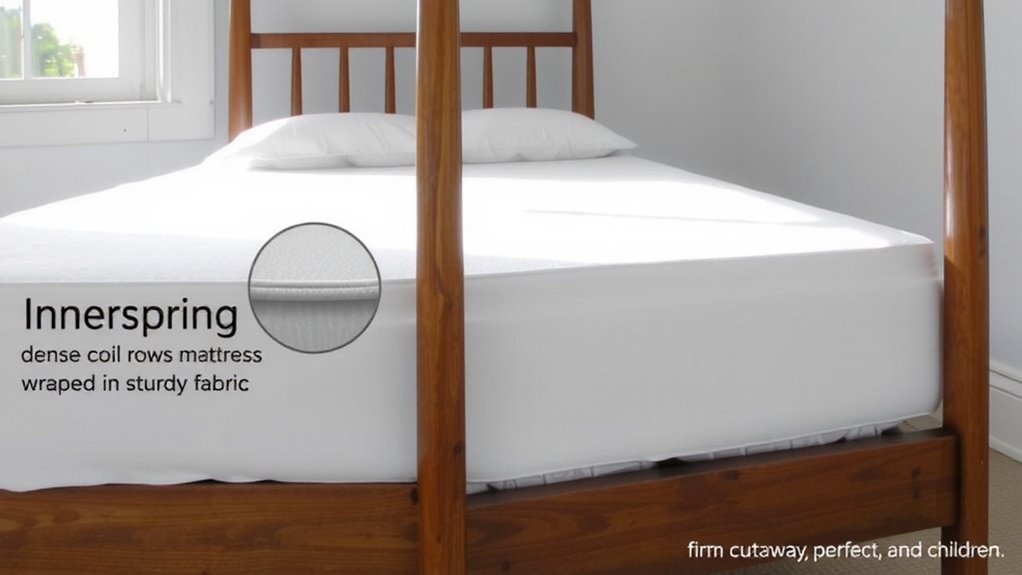
How do you begin picking the right innerspring mattress for a kids’ bunk bed? Start by checking the bunk bed’s weight limit-safety comes first, and exceeding it risks structural failure. Choose a mattress type that balances support and durability, like a double or continuous coil system, which offers firmness ideal for growing bodies. Innerspring mattresses typically provide good airflow, helping regulate temperature during sleep, which can support consistent rest patterns. Consider your child’s comfort preference: some like a firmer feel for spine alignment, while others need slight cushioning for pressure relief. Always verify if the model includes a trial period or warranty, so you can assess long-term performance. A well-chosen innerspring mattress supports healthy sleep posture, potentially reducing discomfort that might interfere with rest. Prioritize safety, support, and breathability to match your child’s sleep needs.
Match Your Bunk Bed’s Exact Mattress Size
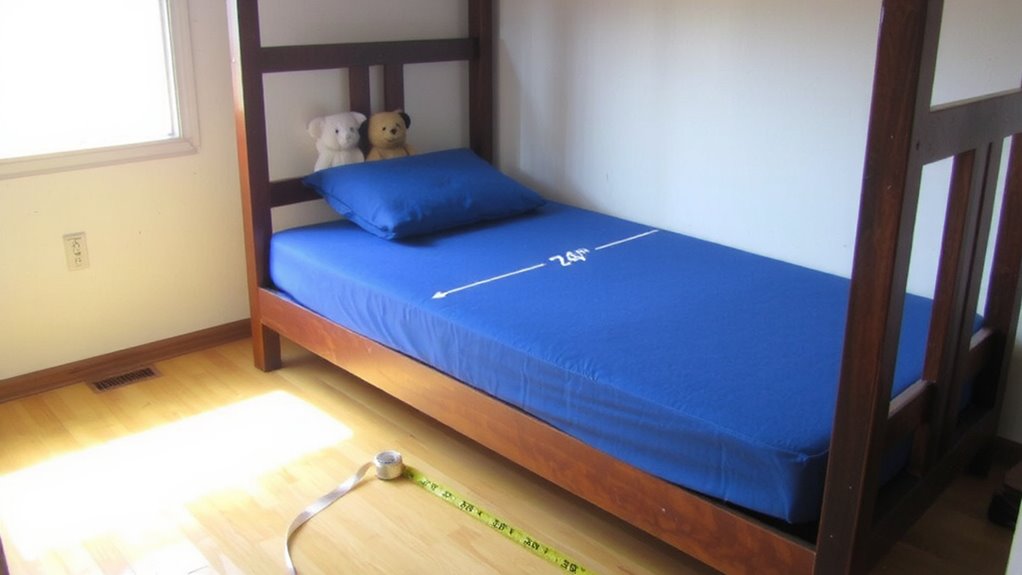
You’ve already considered support, durability, and safety when choosing an innerspring mattress, but getting the right fit starts with matching your bunk bed’s exact mattress size. Measuring your frame guarantees proper frame compatibility and prevents dangerous gaps. Most bunk beds fit standard sizes like twin or full, but always double-check the manufacturer’s specs. Don’t assume-some models use custom dimensions. Mattress thickness also matters; most bunk beds have a maximum depth recommendation, often between 6” and 8”. A mattress that’s too thick won’t fit securely and may compromise structural stability. Look for labels or guides on the bed frame or in the manual. Choosing the correct size and thickness improves both comfort and long-term performance. It also helps maintain proper airflow and ease of movement. When in doubt, contact the manufacturer to confirm frame compatibility before buying. For added comfort after a long day of physical activity, consider using best patches for neck pain to help relieve muscle tension.
Prioritize Low Profile for Guardrail Safety
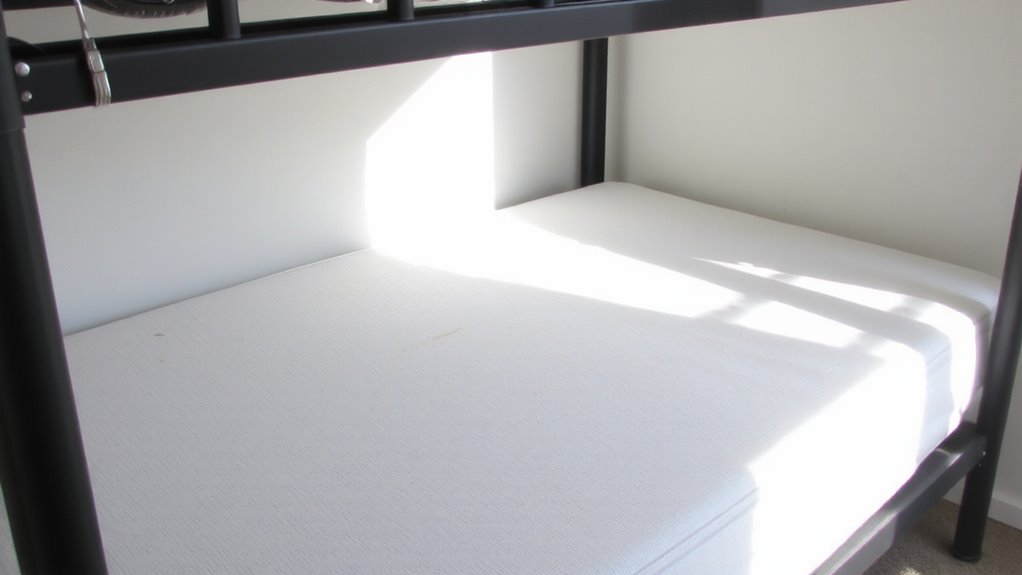
A low-profile innerspring mattress-typically between 6 and 7 inches thick-fits best in most bunk beds, especially when guardrails are involved. Choosing the right low profile height guarantees proper guardrail clearance, which is critical for safety. If your mattress is too thick, the guardrail may sit too high above the sleeping surface, creating a gap where a child could roll through or get stuck. Most manufacturers design guardrails to work within specific height ranges, so exceeding that can compromise protection. A 6- to 7-inch innerspring offers enough support while keeping the child well within the bed frame. Always measure your bunk’s maximum recommended mattress thickness before buying. This small detail makes a big difference in minimizing fall risks during sleep. Prioritizing guardrail clearance doesn’t reduce comfort-it just means smarter, safer choices for your child’s nighttime safety.
Choose Firm Support for Growing Kids
Now that you’ve considered the right thickness for guardrail safety, it’s just as important to think about how well the mattress supports your child’s developing body. A firm innerspring mattress helps maintain proper spinal alignment, especially as kids grow. Their spines are still forming, and consistent support can reduce the risk of posture issues over time. Firmness also aids pressure relief by distributing weight evenly, preventing soreness in hips and shoulders. Too soft a surface may cause sinking, which disrupts alignment and leads to restless sleep. Look for models designed specifically for children or youth, as these often balance support and comfort. Check if the warranty covers indentations over time, since durability matters with nightly use. Many brands offer sleep trials, so you can assess long-term comfort. A well-supported spine tonight may help prevent sleep troubles down the road.
Pick Strong Coils and Sturdy Edges
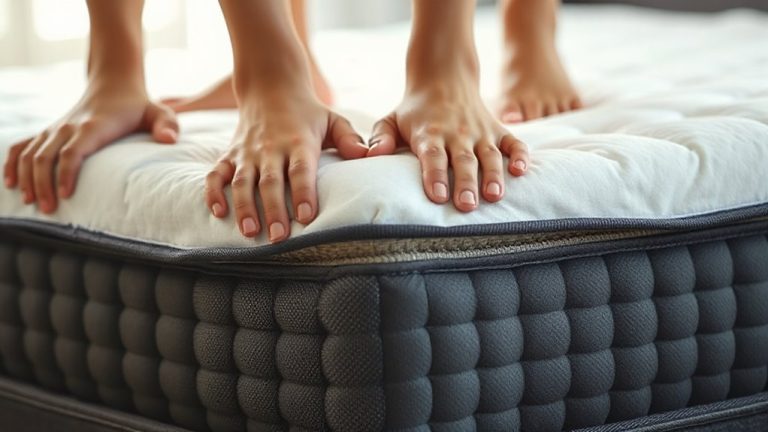
While coil count and edge support might not be the first things on your mind, they’re key to how well a bunk bed mattress holds up over time. You’ll want coils with strong temper and consistent coil durability to handle nightly use and active kids. Look for tempered steel coils that resist sagging and maintain support. A denser coil count usually means better longevity, especially for the bottom bunk. Equally important is edge reinforcement-solid perimeter support keeps the sleeping surface stable and prevents roll-off. Mattresses with high-density foam or reinforced coils along the border offer more usable space and help the mattress keep its shape. Edge reinforcement also improves sitting comfort when kids climb in or tie shoes. These features work together to support posture and reduce wear, especially near the frame. Check warranty terms too-many quality models offer 10-year coverage, reflecting confidence in coil durability and overall construction.
Choose a Removable, Washable Cover
One in three kids spills something on their bed each year, so picking a mattress with a removable, washable cover makes cleanup much easier. You’ll want a cover made from breathable fabric to help regulate temperature and keep your child comfortable through the night. Look for a hypoallergenic material, especially if your child has sensitive skin or allergies-it reduces exposure to common irritants. A zip-off cover lets you toss it in the machine when needed, saving time and effort. Make sure the fabric holds up after repeated washing and doesn’t shrink or lose shape. Some covers come with reinforced stitching for added durability, which matters with active kids. Check if replacements are available, in case you need a spare. A well-designed cover contributes to hygiene and long-term comfort, supporting consistent, restful sleep without extra maintenance stress. For added protection on a budget, consider using a best budget mattress protector to extend the life of the mattress and guard against spills and stains.
Choose Non-Toxic, Certified Materials
You’ve already considered a cover that’s easy to clean and built to last, but what’s inside the mattress matters just as much for your child’s health and comfort. Look for eco friendly materials and certified organic components to reduce exposure to harmful chemicals. These materials support safer sleep, especially for kids with sensitivities or respiratory concerns. Choosing a mattress with hypoallergenic properties can further minimize allergy triggers, making best mattresses for allergy relief a smart consideration for children prone to allergic reactions. | Certification | What It Means | |—————|—————| | GOTS | Certified organic textiles | | CertiPUR-US | Foam free from harmful chemicals | | GREENGUARD Gold | Low emissions, safe for kids | | Oeko-Tex | Tested for harmful substances | | FSC | Eco friendly materials from responsibly managed forests | Choosing certified materials doesn’t guarantee better sleep, but it can reduce irritants. Paired with a supportive innerspring core, these layers offer durability and peace of mind. Check warranty terms-many eco-conscious brands offer 10-year trials.
On a final note
Choose an innerspring mattress that fits your bunk bed exactly, ensuring a secure fit under guardrails. A low-profile, firm design supports growing bodies and prevents safety gaps. Look for strong coils with reinforced edges to handle active use and last longer. Pick a removable, washable cover for easy cleaning, and opt for non-toxic, certified materials for healthier sleep. Check warranties and trial periods to test comfort and durability over time.