College Student Sleep Patterns: Balancing Academic Demands and Sleep Health
You’re juggling classes, work, and social life, and it’s easy to sacrifice sleep. Pulling all-nighters or using screens late disrupts your body’s rhythm, making focus and memory harder. Caffeine after noon and inconsistent bedtimes worsen sleep quality. But sticking to a regular schedule, cutting screen time before bed, and using relaxation techniques can help. Stronger study habits like spaced repetition mean less cramming-and better rest. Small changes improve both grades and well-being, especially if sleep issues persist longer than expected.
Notable Insights
- Irregular schedules and academic pressure often lead college students to sacrifice sleep, disrupting their natural circadian rhythms.
- Sleep deprivation impairs memory consolidation and focus, undermining academic performance and long-term learning.
- Late-night screen use, caffeine, and poor napping habits commonly interfere with sleep quality and onset.
- Consistent sleep and wake times, even on weekends, improve cognitive function and academic resilience.
- Using active recall and spaced repetition reduces cramming, helping students succeed without sacrificing sleep.
Why College Students Don’t Get Enough Sleep
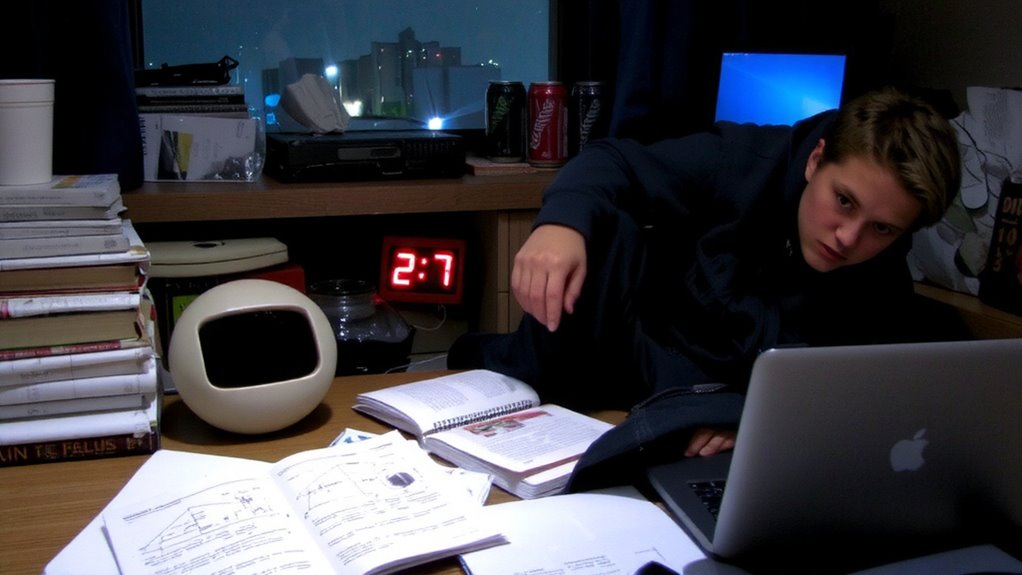
Why do so many college students end up sacrificing sleep? You’re juggling classes, work, social life, and assignments, and something’s got to give-often it’s your rest. Poor time allocation plays a big role; without a clear schedule, tasks pile up late into the night. Stress management is another key factor-when anxiety about deadlines builds, sleep often suffers. You might scroll through your phone or pull all-nighters, hoping to catch up, but these habits disrupt natural sleep cycles. Consider setting daily priorities and using planners to improve time allocation. For stress management, breathing exercises or short walks can help calm your mind. If sleep issues persist, evaluate sleep aids carefully-look for ones with safety trials and clear instructions. Small changes in routine can support better rest without drastic trade-offs.
How Sleep Deprivation Hurts Your Grades
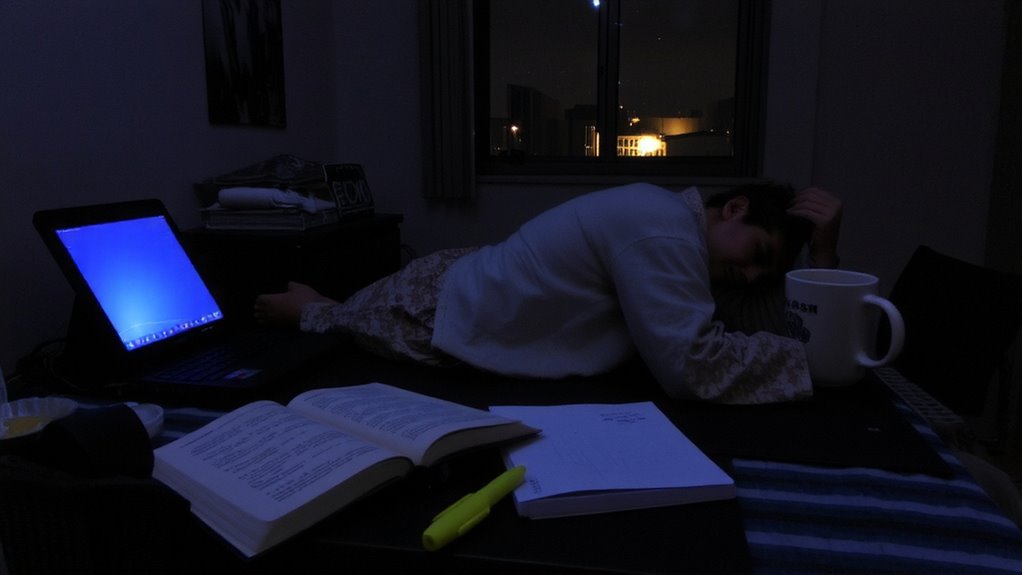
How often do you cut sleep to finish an assignment, only to feel foggy during the next day’s lecture? That grogginess isn’t just annoying-it’s harming your grades. When you’re sleep deprived, your brain struggles to form strong memories, leading to memory lapses when recalling key lecture points. You might also experience reduced focus, making it harder to follow complex material or think critically during exams. Even pulling an all-nighter once in a while can disrupt your cognitive rhythm over time. Consistent sleep supports information retention and mental clarity. If you’re often tired, consider checking for sleep disorders-many are treatable. Some students benefit from sleep aids, but it’s best to consult a doctor first. Prioritizing rest isn’t laziness; it’s a smarter way to study and learn.
Top Sleep Mistakes College Students Make
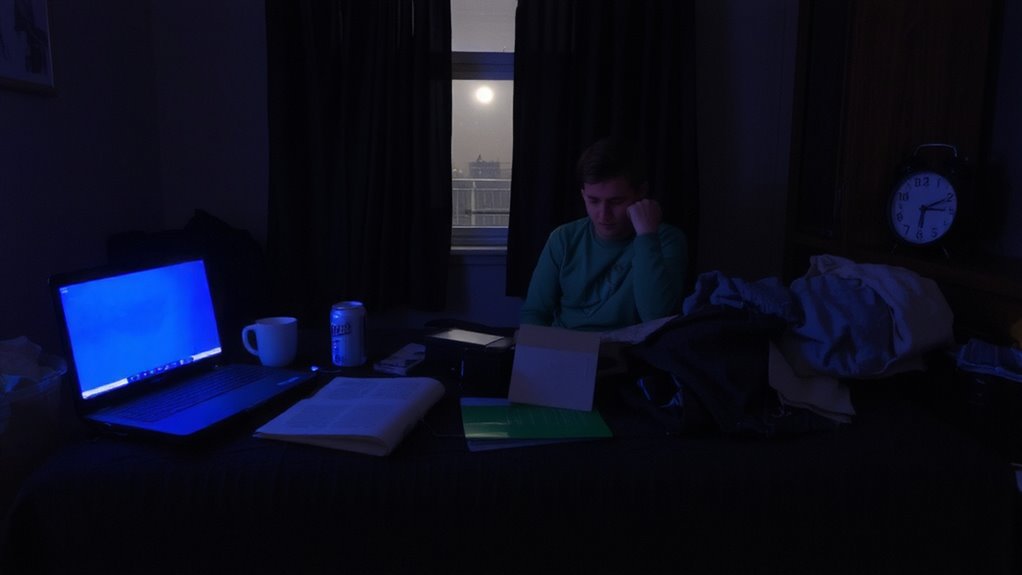
You might already know that skimping on sleep can tank your grades, but it’s worth looking at the habits behind that lost rest. Late nights are a common trap-pulling all-nighters or scrolling late cuts deep into needed recovery time. Your brain consolidates learning during sleep, so losing hours here weakens retention. Poor naps make it worse. Long or irregular daytime naps can disrupt your sleep cycle, making it harder to fall asleep at night. Limit naps to 20–30 minutes and avoid them past 3 p.m. Caffeine after noon, screen exposure before bed, and inconsistent sleep schedules also interfere. These habits pile up, affecting focus and mood. Adjusting them doesn’t require drastic change-small, consistent improvements in timing and routine can restore sleep balance. You’ll likely notice sharper thinking and better energy.
6 Science-Backed Habits for Better Sleep
A consistent sleep schedule is one of the most effective tools for better rest, and it’s something you can start tonight. Going to bed and waking up at the same time every day helps regulate your body’s internal clock, making sleep come more naturally. To improve your sleep environment, keep your room cool, dark, and quiet-consider blackout curtains or a white noise machine if needed. Limit screen time before bed, since blue light can interfere with melatonin. Try relaxation techniques like deep breathing, progressive muscle relaxation, or light stretching to ease your mind. These habits are supported by research and can help you fall asleep faster and stay asleep longer. They’re simple to begin, require no special equipment, and most have no side effects. Over time, combining a steady routine with a calming sleep environment and relaxation techniques improves sleep quality consistently and safely. For added comfort during study breaks or before sleep, consider using a heated neck pillow to relieve muscle tension and promote relaxation.
How to Study Smarter Without Losing Sleep
Sticking to a consistent sleep routine sets the foundation for both rest and productivity, making it easier to tackle coursework without sacrificing nighttime recovery. You can study smarter by using methods like active recall, where you test yourself instead of just rereading notes-this strengthens memory and reduces time needed to review. Pair it with spaced repetition, scheduling study sessions over days or weeks, which helps information stick with less last-minute cramming. These techniques rely on timing and engagement, not extra hours, so you can learn deeply without cutting sleep. Quality sleep improves focus, meaning you need less time to grasp tough material. When planning study strategies, consider how each method affects your energy and mental clarity. Tools like flashcards or apps that support spaced repetition make it easier to track progress. Choose methods that fit your schedule and support long-term retention without disrupting rest.
When to Get Help for Ongoing Sleep Problems
Why is it that some sleep troubles don’t improve, no matter how well you stick to a routine or adjust your habits? Sometimes, ongoing issues point to underlying sleep disorders like insomnia or sleep apnea, which won’t go away with lifestyle changes alone. If you’re still struggling after weeks of good sleep hygiene, it’s time to seek help. Persistent poor sleep can also affect your mental health, increasing anxiety or low mood. College counseling centers or campus health clinics can screen for both sleep disorders and related mental health concerns. They might recommend a sleep study, therapy, or short-term sleep aids with clear instructions. Most treatments come with follow-up support and info on how long they should be used. Don’t wait-getting help early improves your chances of better sleep and stronger academic performance. Your health matters, and support is available.
On a final note
You can improve your sleep by adjusting habits and recognizing when to seek help. Simple, science-backed routines-like keeping a consistent bedtime and limiting screen use before bed-often boost sleep quality. If problems persist, talk to a healthcare provider; sleep disorders are treatable. Consider sleep aids carefully, only after understanding risks and checking with a professional. Trials or short-term use may help, but long-term solutions focus on behavior and environment.