How Innerspring Mattress Edge Support Affects Sitting Comfort
You’ll notice better sitting comfort when the edge of your innerspring mattress resists sagging, thanks to reinforced coils or dense foam encasements. Strong edges keep the perimeter stable, making it easier to get in and out of bed without tipping or bottoming out. This support also extends the mattress’s shape and usable surface over time. Look for models with pocketed or offset coils and border rods, since they hold up better with regular use. Knowing how edge design impacts durability helps you choose wisely-and what comes next could make that choice even clearer.
Notable Insights
- Reinforced edges resist compression, providing a stable surface for sitting without sinking.
- Strong edge support prevents tipping, enhancing safety when sitting on the mattress perimeter.
- Denser foam encasements or border coils stiffen the frame for improved sitting comfort.
- Durable edges maintain shape over time, ensuring consistent support for daily use.
- Weak edges lead to sagging, reducing usable surface and making it harder to sit comfortably.
Why Edge Support Matters for Innerspring Mattresses
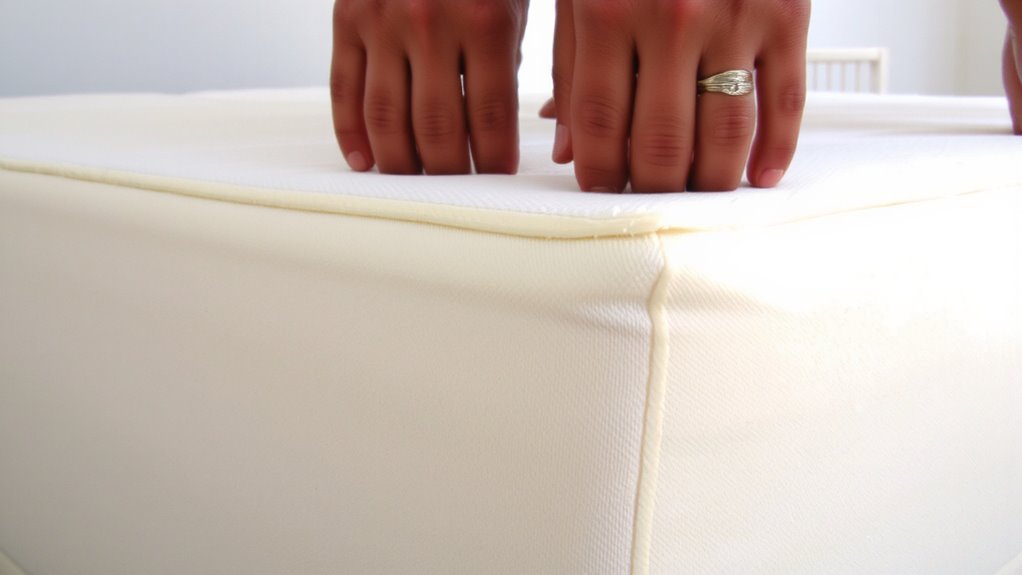
While you might not think about it every time you sit on the edge of your bed, good edge support in an innerspring mattress can make a real difference in how the mattress performs over time. Strong edge durability helps the mattress resist sagging along the perimeter, especially after years of use. This means you’ll get better sitting stability when getting in and out of bed, which is important if you have mobility concerns or need support during nightly routines. Reinforced edges also expand the usable sleep surface, letting you shift near the side without feeling like you’ll roll off. Over time, consistent edge support preserves the mattress’s shape and extends its lifespan. Many models with robust perimeter support include reinforced coils or dense foam encasements, features often backed by trial periods and warranties. These design choices improve long-term comfort and performance without compromising ease of movement.
Which Innerspring Coils Offer the Best Edge Support?
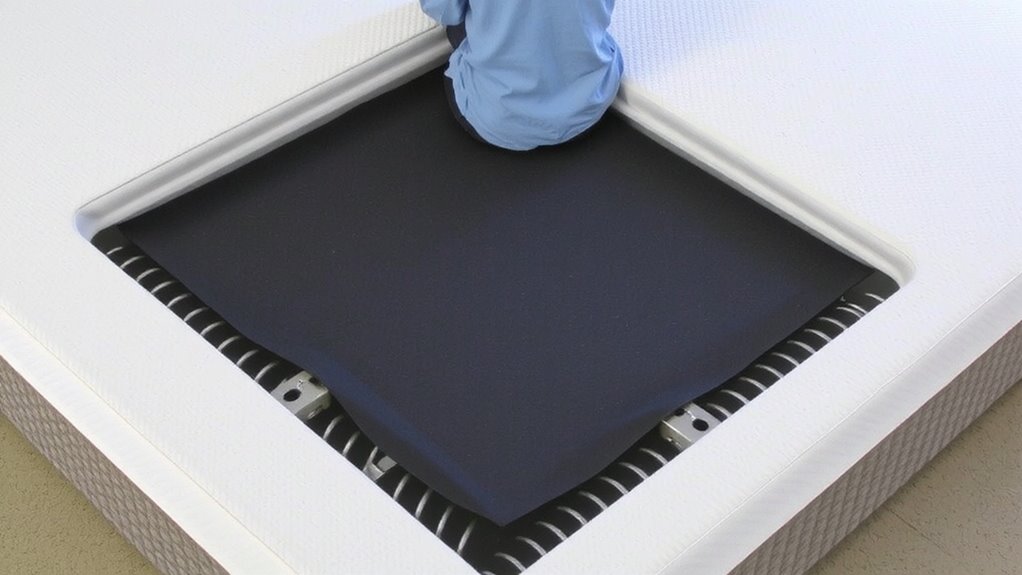
A few innerspring coil types stand out when it comes to edge support, and your best bet often depends on how the coils are built and reinforced. Pocketed coils with reinforced borders typically offer strong perimeter stability, especially when paired with sturdy border rods. The coil gauge affects firmness-lower numbers mean thicker, firmer wires that resist compression better. Open coils are less supportive at the edges unless extra reinforcements are added.
| Coil Type | Edge Support Level | Key Feature |
|---|---|---|
| Pocketed | High | Independent movement, border rods |
| Continuous | Moderate | Interconnected rows |
| Open (Bonnell) | Low to Moderate | Wavy design, often needs reinforcement |
| Wrapped | High | Enhanced motion isolation |
| Offset | Moderate to High | Hinged edges, added stability |
Look for models with durable border rods and a coil gauge between 12 and 15 for ideal support.
How Reinforced Edges Improve Sitting Comfort
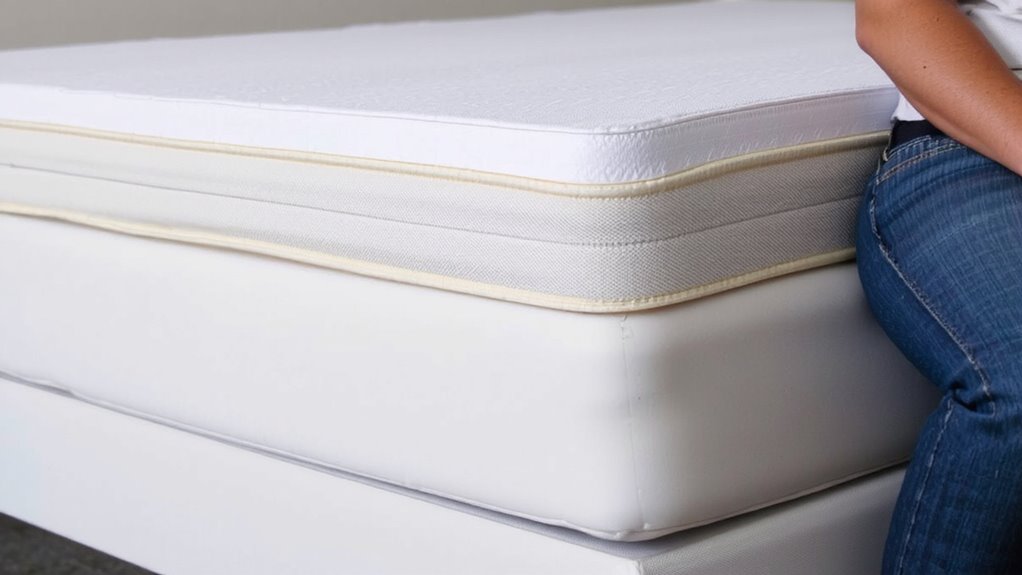
Why does sitting on the edge of some mattresses feel so much more secure than others? It’s because reinforced edges are built to resist compression and provide better edge durability over time. When you sit on a mattress with strong perimeter support, you’re less likely to feel like you’re tipping off the side. This support helps maintain proper sitting posture, especially if you use the edge as a seat daily. High-quality innerspring mattresses often include denser foam encasements or extra coils along the border to stiffen the frame. These features don’t just improve comfort-they extend the mattress’s usable surface and lifespan. Better edge support means you can sit, stretch, or get in and out of bed with more confidence. When comparing models, check warranty terms for edge durability coverage, as some manufacturers offer longer protection. A solid edge can make a real difference in daily use.
Signs Your Innerspring Mattress Has Weak Edge Support
You can often tell edge support is lacking when the perimeter of your mattress visibly sags or compresses under your weight, especially if you regularly sit near the edge. Visible sagging along the sides is a clear indicator that the coils or border rods aren’t providing enough reinforcement. You might also notice frequent bottoming out, where your body dips too close to or even touches the foundation when sitting or lying near the edge. This reduces usable sleep surface and can make getting in and out of bed difficult, especially for those with mobility concerns. Weak edges may compromise sleep quality by limiting comfortable positions and partner space. When shopping, look for models with reinforced perimeters or high-density foam encapsulation, and consider testing during a trial period. Check warranty terms, as sagging beyond 1.5 inches is often covered.
How Poor Edge Support Shortens Mattress Lifespan
Even though you might not notice it at first, weak edge support can accelerate wear across your entire mattress because the perimeter is meant to stabilize the internal structure. When the edges weaken, the innerspring core loses balance, increasing strain on coils and foams. This often leads to edge sagging, which spreads inward and degrades comfort layers faster. Over time, the compromised support may also contribute to frame damage, especially if the foundation can’t handle uneven pressure. A sagging edge puts extra stress on the mattress corners, making them collapse sooner and reducing overall durability. This wear limits the mattress’s usable surface, forcing you to sleep in a smaller area. Most warranties cover structural defects like severe sagging, but neglecting early signs shortens the effective lifespan. Choosing a model with reinforced edges helps maintain shape and support, preserving both comfort and longevity.
Simple Fixes to Strengthen Innerspring Edge Support
While you can’t rebuild a mattress’s internal structure at home, there are practical steps you can take to reinforce weakened edges and slow further damage. Simple edge reinforcement methods include using a supportive bed frame with center support legs, adding a firmer mattress topper, or rotating the mattress regularly to distribute wear. Avoid sitting on the edges frequently, as this compresses coils and reduces coil density effectiveness over time. A stable foundation helps maintain structural integrity and prolongs comfort. Using the right mattress foundation for foam beds can also enhance overall support and prevent premature sagging.
| Fix | Benefit | Impact on Edge Support |
|---|---|---|
| Center-support bed frame | Prevents sagging | High |
| Mattress topper (firm) | Adds surface stability | Medium |
| Regular rotation | Evens out wear | Medium |
| Avoid edge sitting | Reduces strain | High |
These small changes improve durability and sitting comfort without replacing the mattress.
On a final note
You’ll sit more comfortably on an innerspring mattress with strong edge support, especially if it uses firmer coils like Bonnell or pocketed edges reinforced with foam or rails. Weak edges sag over time, reducing usable surface and shortening lifespan. Consider models with trial periods and solid warranties to test durability. Reinforced edges help maintain shape and support, giving you better long-term performance and more stable seating when getting in or out of bed.