Innerspring Mattress Edge Support Importance for Getting In and Out of Bed
You need strong edge support in your innerspring mattress when getting in and out of bed-it keeps the perimeter stable and prevents sinking. Weak edges make movement unsteady, especially if you’re heavier or have limited mobility. Reinforced coils or high-density foam along the border help maintain durability and usable surface area. Look for models with firmer perimeter coils and solid frame attachment. A good warranty often backs long-term performance. You’ll find how design choices directly shape daily comfort and mattress longevity.
Notable Insights
- Weak edge support causes instability when sitting or standing on mattress edges.
- Reinforced perimeter coils prevent sagging and improve balance during entry or exit.
- Strong edges provide a stable surface for pushing up from the bed.
- High-density foam rails enhance durability and support near mattress borders.
- Proper edge construction reduces fall risk and eases mobility for all sleepers.
Why Edge Support Matters for Getting In and Out of Bed
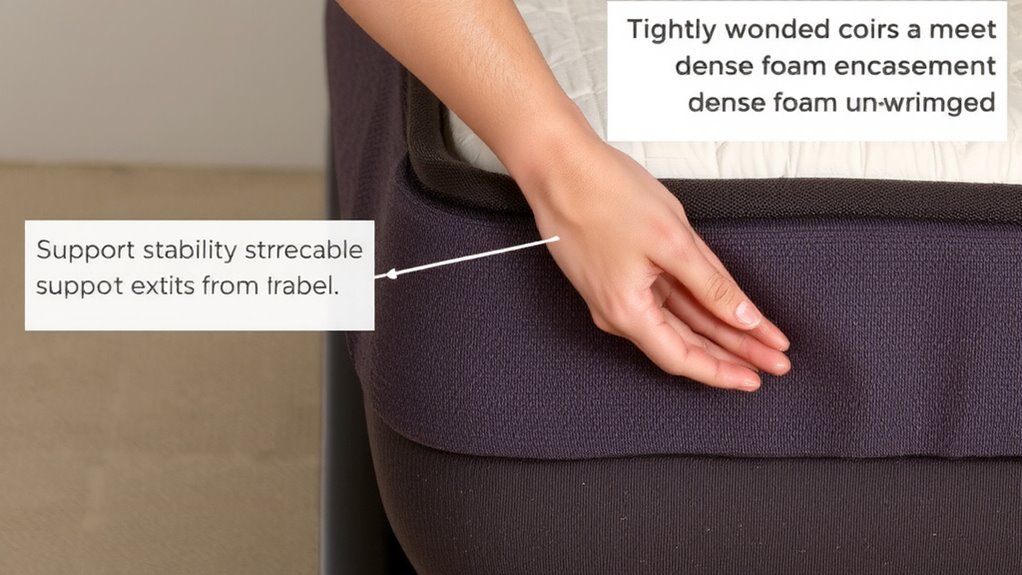
Ever wonder why getting in and out of bed sometimes feels unsteady? Weak edge support in your innerspring mattress could be the reason. Good edge support offers stability benefits, keeping the mattress firm along the sides so you don’t sink when sitting or moving. It provides reliable mobility assistance, especially if you’re older or have limited strength. Strong coils or reinforced borders help maintain shape and prevent sagging over time. This support makes it easier to use the full surface, not just the center. When shopping, look for models with high-density foam edges or encased perimeter coils. Many brands offer trial periods and warranties, so check those details to test firmness and support. A well-supported edge improves both comfort and safety, contributing to better daily routines and sleep quality without compromising long-term durability or performance.
Signs Your Innerspring Mattress Has Weak Edges
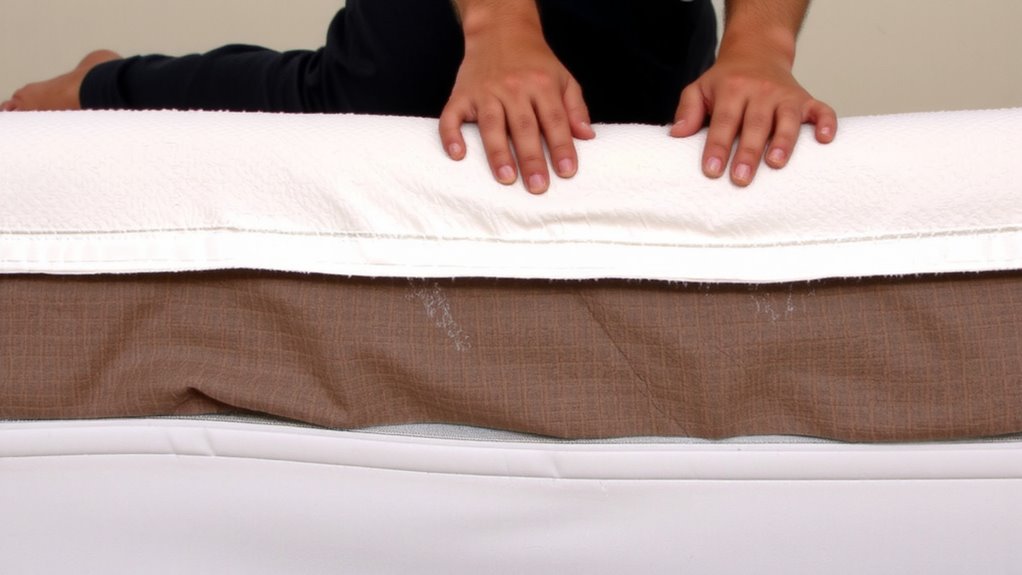
How can you tell if your innerspring mattress no longer holds up along the edges? You might notice sinking or tilting when sitting near the side-this is perimeter compression. Over time, consistent pressure leads to edge wear patterns, especially if you regularly sit or sleep near the border. These signs often appear as visible dips, uneven surfaces, or a soft, collapsed feeling along the frame. If getting in and out of bed feels unsteady or uncomfortable, weak edges are likely the cause. Reduced support at the perimeter can also disrupt your sleep posture, potentially worsening discomfort over time. While firmness varies by model, persistent sagging usually means structural breakdown. Many manufacturers offer trial periods or warranties that cover such wear-checking these details helps you decide whether repair, replacement, or added support is the smarter choice. Watching for these early symptoms improves long-term sleep quality and bed longevity.
How Coil Design Causes Edge Sag in Innerspring Mattresses
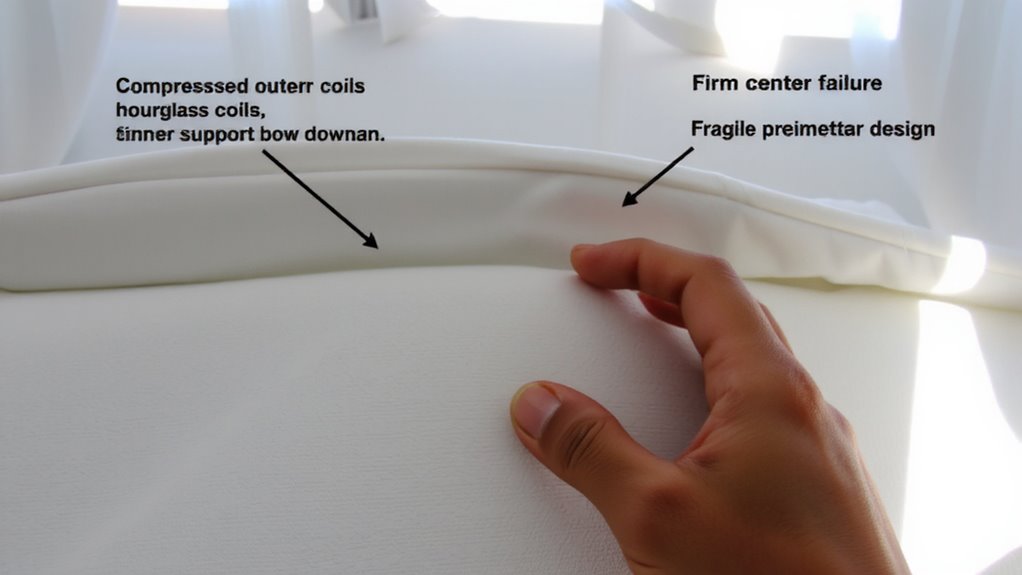
While the overall coil system supports your body, weaker edge support often stems from how the coils are designed and arranged near the perimeter. If the outer coils aren’t reinforced or properly anchored, they compress faster over time. Coil gauge plays a big role-thinner wires (higher gauge numbers) bend more easily, especially at the edges where pressure concentrates. Stronger edge support usually comes from firmer coils (lower gauge) and secure frame attachment, which stabilizes the perimeter. Without this, sagging starts early and makes getting in and out of bed harder.
| Feature | Weak Edge Design | Better Edge Design |
|---|---|---|
| Coil Gauge | Higher (thinner wire) | Lower (thicker wire) |
| Frame Attachment | Poor or missing | Reinforced with secure fastening |
| Long-Term Effect | Early sag, reduced usability | Holds shape, supports movement |
Unexpected Perks of a Firm Mattress Edge
A well-supported mattress edge does more than just resist sag-it quietly improves your sleep experience in ways you might not expect. You get better pressure distribution across the entire surface, so your hips and shoulders don’t sink unevenly, especially when you’re near the side. That helps maintain natural posture alignment all night, reducing strain. If you share the bed, a firm edge gives you more usable space without the feeling of rolling off. It also makes getting in and out easier, which matters if mobility is a concern. Strong edges often come from high-density foam rails or reinforced coils, features that also extend the mattress’s lifespan. Many brands include trial periods, so you can test edge performance risk-free. Check warranty terms, too-some cover edge wear separately. A sturdy perimeter isn’t just about durability; it supports healthier sleep patterns over time.
What to Look for in an Innerspring Mattress With Strong Edge Support
If you’re looking for an innerspring mattress that holds up well over time, paying close attention to edge support is key. Look for models with solid edge reinforcement-this means high-density foam or reinforced coils along the sides-to prevent sagging and aid mobility when getting in and out of bed. Strong perimeter durability guarantees the mattress maintains its shape and supports your weight evenly, especially if you sit on the edge frequently. Coils that extend to the border or use a reinforced border wire offer better stability. Check warranty details, as longer coverage often reflects confidence in long-term performance. A trial period lets you test real-world support and comfort. These features matter most if you share the bed or need reliable support due to limited mobility. Prioritizing edge strength helps maintain both safety and mattress lifespan.
On a final note
You’ll find it easier to get in and out of bed when your innerspring mattress has reinforced edges. Strong edge support limits sagging, especially near the perimeter, and improves stability during entry and exit. Look for models with dense perimeter coils or foam encasement for better durability. Many come with trial periods and warranties that cover edge wear, so check those terms. A firmer edge can aid mobility without sacrificing comfort, offering practical support for daily use.