How to Adjust Work Schedules for Advanced Sleep Phase Disorder
You can adjust your work schedule by using morning light exposure to gradually delay your sleep phase. Start your day with bright light, then negotiate flexible hours that let you begin work early and finish when energy drops. Prioritize key tasks in the morning and take a short nap before 3 p.m. if needed. Keep a consistent routine and track changes-you’ll likely discover better ways to balance work and your natural rhythm.
Notable Insights
- Negotiate flexible work hours to start and end earlier, aligning with your natural energy peak.
- Use morning light therapy shortly after waking to gradually delay sleep onset and shift your rhythm.
- Optimize early productivity by scheduling demanding tasks in the morning when alertness is highest.
- Take a short nap before 3 p.m. to combat afternoon fatigue without disrupting nighttime sleep.
- Propose remote work or job sharing to accommodate early schedules while maintaining team coverage.
How ASPD Impacts Work Life
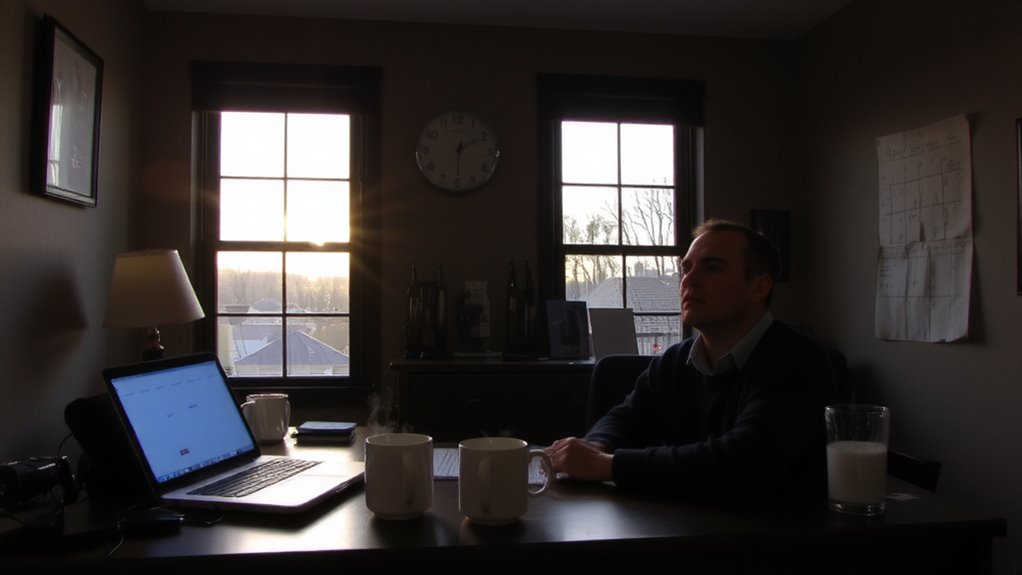
Early mornings can feel like a wall when you have Advanced Sleep Phase Disorder (ASPD)-your body winds down by 8 or 9 p.m. and wakes you at 4 or 5 a.m., whether you like it or not. If your job starts at 9 a.m., you’re often exhausted by midday, making full attendance tough. This mismatch can lead to workplace stigma, where others may see you as less committed, even though your energy peaks early. You might skip after-work events due to fatigue, increasing social isolation. Over time, these patterns affect performance and morale. Adjusting work hours, if possible, helps align your schedule with your natural rhythm. Remote or flexible shifts can reduce strain. Some consider melatonin or light therapy, but timing matters. Talk to a sleep specialist to weigh options, including risks and benefits.
Use Morning Light to Delay Your Sleep Cycle
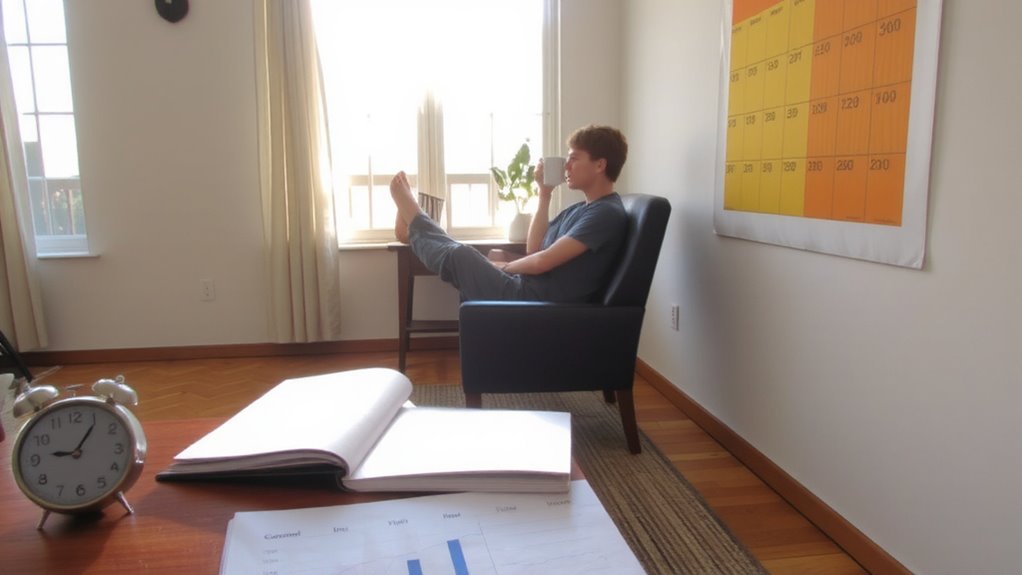
You might already know your body pushes for bedtime long before most people start winding down, and if your work schedule doesn’t match that rhythm, the strain can build quickly. Morning light exposure can help delay your sleep cycle by promoting a circadian shift. When you get bright light soon after waking, especially natural sunlight or from a light therapy box, it signals your brain to stay alert and resets your internal clock. Aim for 30 to 60 minutes of consistent morning light exposure each day. Position the light source at eye level, but avoid staring directly at it. Over several days, this practice can gradually delay your sleep onset by 30–60 minutes. Results vary, so track your sleep times and adjust as needed. This method is non-invasive and carries minimal risk when used properly.
Negotiate Flexible Work Hours With Your Employer
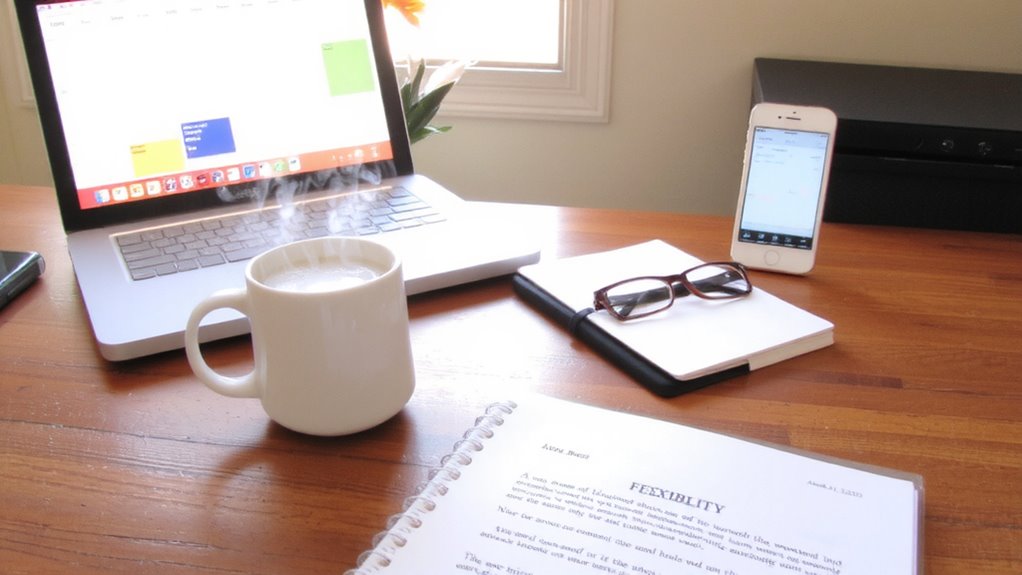
What if your most productive hours happen long before the office opens? You’re not alone, and adjusting your workday might be possible. Talk to your employer about flexible hours, especially if your condition is diagnosed. Remote work can align your schedule with your natural rhythm, letting you start early and finish when focus fades. Some companies allow core hours with flexibility around them, so you’re present when needed but free to adapt otherwise. Job sharing is another option-pairing with a colleague who works opposite hours guarantees coverage while you both stay within your energy peaks. Present a clear plan showing how productivity won’t slip. Many employers support adjustments once they see structure and reliability. Flexible arrangements often come with trial periods, so use that time to prove effectiveness. Keep communication open and data on performance handy.
Maximize Mornings for Best Focus
Once you’ve secured a flexible work arrangement that fits your advanced sleep phase, shaping your morning routine to harness peak alertness becomes the next step. Your body’s natural rhythm means you’re most alert early, so aligning work tasks with this window supports peak productivity. Design morning routines that ease you into focus-start with light exposure, a consistent wake time, and a light breakfast to stabilize energy. Avoid scrolling or distractions that delay mental engagement. Tackle complex tasks first, since your cognitive performance is strongest now. Keep your workspace bright and minimize interruptions. Planning this way turns your biological advantage into measurable progress. Over time, fine-tune your schedule based on what sustains focus without burnout. These adjustments support long-term work quality without pushing against your sleep biology.
Use Short Naps to Stay Alert: Without Disrupting Sleep
A 20-minute nap can sharpen focus and ease afternoon fatigue without interfering with nighttime sleep, making it a smart tool for managing advanced sleep phase disorder. You can use power naps to get an alertness boost when energy dips midday. Stick to 20 minutes or less-longer naps may cause grogginess or affect your ability to fall asleep at night. Schedule naps early, ideally before 3 p.m., so they don’t disrupt your sleep rhythm. Find a quiet, dim space where you won’t be interrupted. Even a short rest lying down helps. While not a substitute for good nighttime sleep, these naps support focus and reduce fatigue. Think of them as a reset, not a full sleep session. With regular use, power naps can become a reliable, low-effort part of your daily routine.
Stick to Early Bedtimes Without Sacrificing Downtime
While keeping an early bedtime might feel limiting at first, you can still enjoy meaningful downtime without pushing your sleep schedule later. A consistent routine helps your body adjust, making early sleep feel natural over time. Schedule your evenings around calming activities you enjoy, like reading, listening to music, or light stretching. These relaxation techniques ease your mind without delaying sleep. You don’t need to sacrifice personal time-just shift it earlier. Try moving dinner, conversations, or hobbies to the early evening so they fit within your window. The goal is balance: honoring your body’s natural rhythm while preserving space for rest and connection. Many find that over time, this structure improves both sleep quality and daily energy. Stick with it, and allow several weeks to fully adapt-consistency builds results.
Monitor What’s Working (And What’s Not)
How do you know if your adjusted schedule is truly helping? Pay close attention to your sleep quality and energy levels throughout the day. If you’re falling asleep faster, waking less at night, and feeling more alert in the morning, those are good signs. Track your patterns for at least two weeks using a sleep diary or app that records bedtime, wake time, and how rested you feel. Notice if your energy levels dip earlier or stay stable. If improvements are minimal, small tweaks-like shifting work start times by 30 minutes or adjusting light exposure-could help. Some find mild light therapy useful, but always consult a healthcare provider before trying sleep aids. Consistency matters, so give changes time to work before making big shifts. Monitoring progress helps you make informed decisions without rushing to conclusions. For more objective insights, consider using one of the best sleep tracker devices to measure sleep stages and rest quality. best sleep tracker devices
On a final note
You can manage ASPD at work by aligning your schedule with your natural rhythm. Use morning light to shift your cycle slightly, and request flexible hours when possible. Focus on high-energy tasks early, take brief, strategic naps, and keep a consistent bedtime. Monitor how changes affect your focus and mood. Adjust gradually, track results, and consult a sleep specialist if needed to explore safe, effective options.