Innerspring Mattress Sag Detection: Early Signs and What to Do
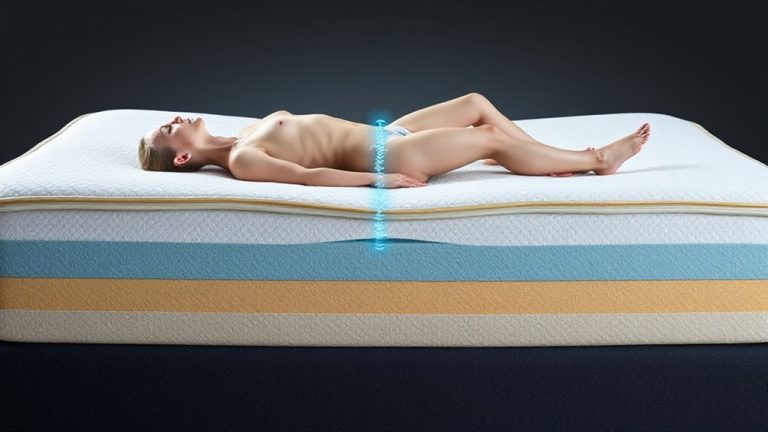
You might not see it yet, but if you wake up stiff or feel your body sinking slightly, especially in the midsection, your innerspring mattress could be sagging. Early signs include poor spinal alignment, unexplained aches, and a loss of firmness. Rotate or flip it if double-sided, and try a firm topper for temporary relief. Check for indentations over 1.5 inches-most warranties kick in around 2. Knowing these details helps you decide when support truly fails.
Notable Insights
- Waking up with stiffness or sinking sensations may signal early innerspring sag, even without visible dips.
- Visible indentations over 1.5 inches indicate significant wear and can disrupt spinal alignment during sleep.
- Coil fatigue from repeated pressure reduces support, especially in high-use areas like the midsection.
- Rotate or flip double-sided mattresses and use a firm topper to temporarily relieve minor sagging.
- Replace the mattress if sagging exceeds 1.5 inches, causes persistent pain, or doesn’t improve with temporary fixes.
Check for Innerspring Mattress Sag Now

How often do you wake up feeling like your body sinks in all the wrong places? That could mean your innerspring mattress has started to sag. Over time, coil support weakens, affecting both mattress firmness and your sleep alignment. You might not see visible dips yet, but your body feels it-hips sink too deep, spine curves unnaturally, and stiffness in the morning becomes routine. Check by lying down in your usual sleep position. Do you feel balanced, or are parts of your body tilted? Proper support keeps your spine straight and pressure points reduced. Loss of firmness often starts subtly, especially in high-use zones like the midsection. If realigning your body nightly feels exhausting, the mattress may no longer provide consistent support. Consider testing your mattress’s responsiveness and support level, and review trial periods or warranties if replacement becomes necessary. Early assessment helps maintain healthy sleep alignment.
Spot the Early Signs of Mattress Dips
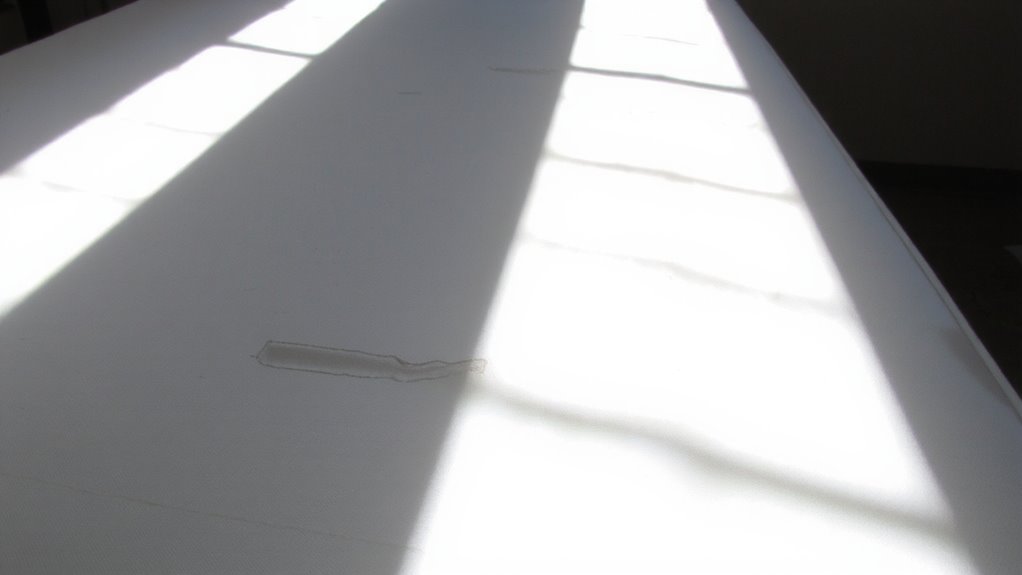
Why does your back ache more in the morning than it did at night? It might be due to early mattress dips affecting your body alignment. Even slight indentations can disrupt sleep quality by creating pressure points and poor spinal support. You might not see a deep sag yet, but your body feels it. Pay attention to how you wake up-stiffness or numbness are clues.
| Symptom | Indication | Impact on Sleep |
|---|---|---|
| Visible body impressions | Early material breakdown | Reduced body alignment |
| Morning stiffness | Poor spinal support | Lower sleep quality |
| Shifting during sleep | Uneven surface | Frequent awakenings |
Check your mattress monthly. Most manufacturers recommend replacement after 7–10 years, and many offer 10-year warranties covering indentations over 1.5 inches. Early detection helps maintain better sleep quality and supports long-term body alignment.
Why Is Your Innerspring Mattress Sagging?
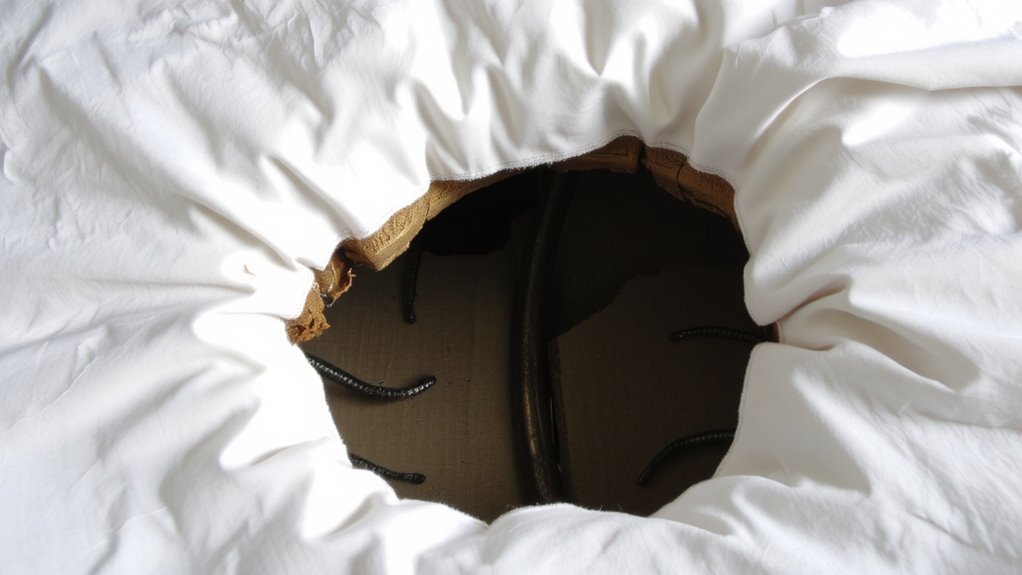
Though your innerspring mattress once felt firm and supportive, over time the internal steel coils can lose their shape due to repeated pressure, leading to noticeable sagging. This happens mainly because of coil fatigue, where the springs weaken from constant use and can’t bounce back like they used to. You might also face material degradation, especially if the mattress has layered foams or padding that break down over time. These changes reduce support and create body impressions. Your sleep quality may dip, especially if you wake up with aches. Heavier individuals or those who sleep in the same spot nightly often see this happen faster. Even high-quality coils aren’t immune-eventually, wear catches up. Check your warranty, too; many cover visible sagging after a certain depth. Knowing these factors helps you weigh when to adjust sleeping positions, try supports, or consider a replacement.
Can You Fix a Sagging Innerspring Mattress?
A sagging innerspring mattress doesn’t always mean it’s time to replace it, especially if the dip is mild and your comfort hasn’t drastically changed. You might be able to restore support temporarily by flipping or rotating the mattress, if it’s double-sided. Adding a firm mattress topper can help smooth out slight dips and improve surface comfort. Reinforcing the foundation with a solid platform or slatted base also stabilizes the support layers underneath. Over time, compressed mattress padding loses resilience, contributing to the sag. While external fixes offer short-term relief, they don’t repair weakened coils or fully restore original support layers. If you still wake up with stiffness or notice sleep disruptions, it may be time to evaluate your sleep environment more closely. Temporary solutions can extend usability, but long-term spinal alignment and sleep quality depend on consistent, intact internal support. A well-chosen mattress topper can make a significant difference in comfort and support.
When to Replace a Sagging Mattress
How long should you really hold on to a sagging mattress before it’s time to let go? If your innerspring mattress sags more than 1.5 inches, especially in key support zones, you’re likely past its useful life. Poor sleep quality-waking stiff, tired, or with aches-is a clear signal. Even if your mattress warranty covers sag depth, most require sagging beyond 2 inches, so don’t rely on it alone. Warranties rarely restore what matters most: restful sleep. Over time, weakened coils and compressed padding fail to support spinal alignment, disrupting sleep cycles. You might not realize how much this affects your daily energy. When flipping or rotating doesn’t help and sleep quality stays poor, replacement becomes practical, not just comfortable. A new mattress with better coil support and foam layers can improve comfort and long-term rest, giving you better value than extending the life of a worn one. Consider exploring the Top Mattress Picks to find a durable option that suits your sleep needs.
Extend Your Innerspring Mattress Lifespan
While you can’t stop wear over time, taking a few smart steps now helps slow the damage and stretch your innerspring mattress’s useful years. Proper ventilation keeps foam layers and coils dry, reducing corrosion and material breakdown. Use a breathable mattress protector and avoid placing the mattress directly on solid surfaces or carpet without a slatted foundation. Regular rotation, every three to six months, balances pressure distribution and delays sagging, especially in edge-support zones. Flip if it’s a double-sided model, but check manufacturer guidelines first-many modern innersprings are one-sided. Support matters too: a sturdy, compatible frame prevents undue stress. Most come with 10-year prorated warranties, so keep your receipt. While no mattress lasts forever, these habits make a real difference in performance and comfort over time.
On a final note
You can spot early signs of sag by checking for body impressions deeper than 1.5 inches or uneven support. Sagging often stems from worn coils or poor foundation use. While flipping or adding a topper may help short-term, persistent dips affect spinal alignment and sleep quality. Consider models with good trial periods and warranties when replacing. Choosing sturdy construction and proper support extends life, helping maintain comfort and support over time.