Balancing Omega-3 Intake to Influence Skin’s Response to Pillow Materials
Your pillow’s fabric can worsen irritation if it’s rough or non-breathable, but balancing your omega-3 intake helps strengthen your skin’s barrier against friction. Foods like salmon, chia seeds, and walnuts boost cellular hydration and reduce reactivity. Pair this with smooth, hypoallergenic pillowcases made from bamboo or high-thread-count cotton to minimize irritation. Choose washable covers and consider trial periods to test comfort and skin response, as the right combo of diet and fabric supports long-term skin health during sleep. More details follow on matching these choices to your specific skin needs.
Notable Insights
- Omega-3 fatty acids strengthen the skin’s barrier, reducing irritation from rough pillow fabrics.
- Combining smooth pillow materials with balanced omega-3 intake enhances skin hydration and resilience.
- Anti-inflammatory effects of omega-3s help mitigate skin reactions to heat-trapping or non-breathable pillows.
- Regular consumption of fatty fish or plant-based omega-3 sources supports long-term skin tolerance to bedding materials.
- Matching hypoallergenic pillows with omega-3-rich diets optimizes skin health and minimizes friction-related damage.
How Your Pillow Fabric Affects Your Skin
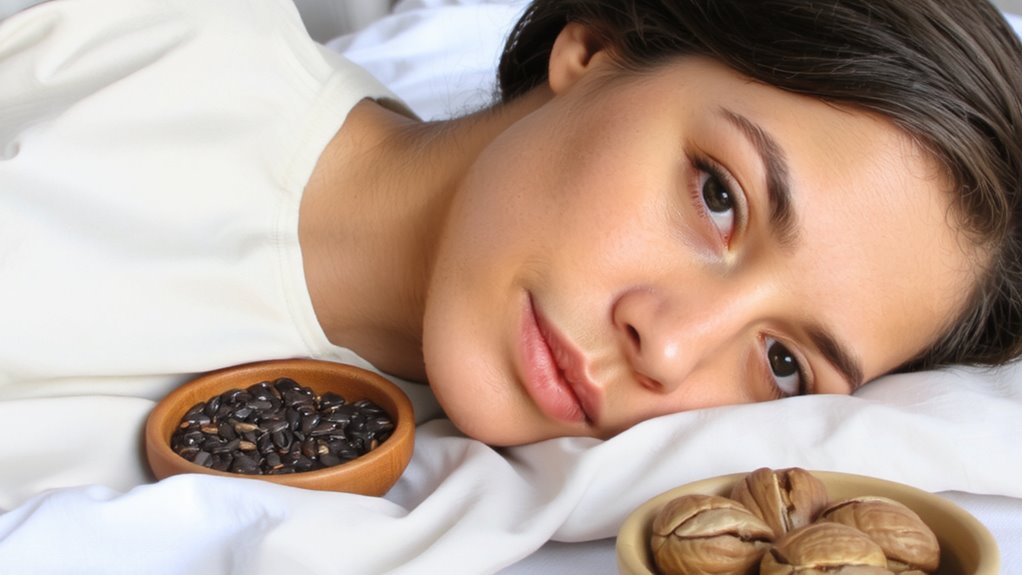
Why does your skin sometimes feel irritated or unusually dry in the morning? Your pillow fabric plays a bigger role than you might think. If you have skin sensitivity, rougher materials like polyester or low-thread-count cotton can worsen irritation over time. The pillow texture either supports or disrupts your skin’s natural moisture barrier, especially during long hours of contact. Smoother fabrics, like silk or high-thread-count bamboo, reduce friction and help retain hydration. These materials feel gentler on sensitive skin and may prevent overnight irritation. Some brands offer pillow covers designed specifically for sensitive skin, often with removable, hypoallergenic casings and breathable weaves. Many come with trial periods, so you can test comfort without risk. Check warranty terms, too, since durability affects long-term skin health. Choosing the right fabric isn’t about luxury-it’s a practical step toward better sleep and skin protection. A balanced magnesium supplement regimen may further support skin health by promoting relaxation and reducing stress-related skin flare-ups.
How Omega-3s Reduce Skin Irritation From Pillows
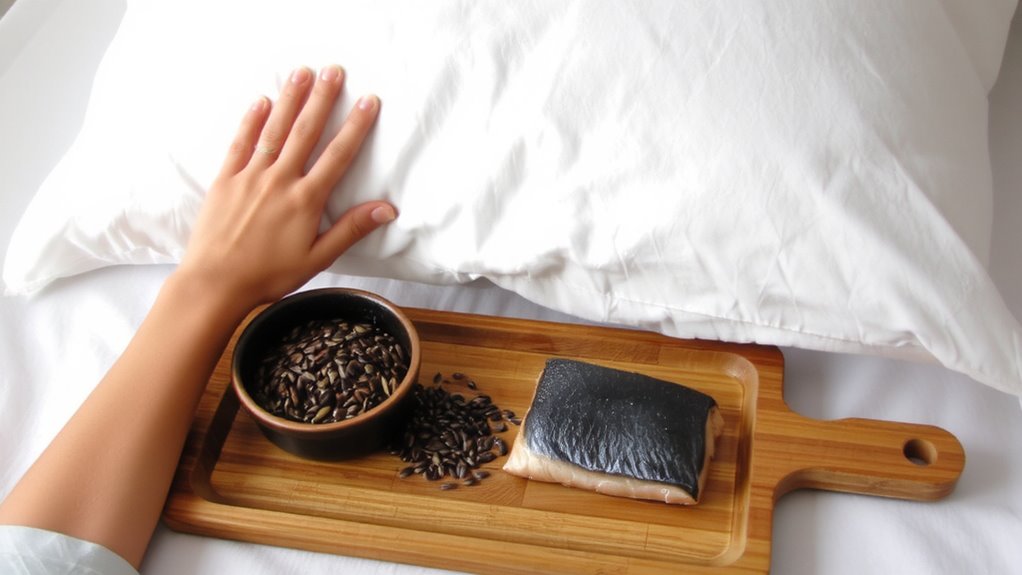
Even if you’ve switched to a smoother pillow fabric, your skin might still react to nighttime friction and moisture loss-this is where omega-3 fatty acids can make a real difference. These essential fats support your skin’s barrier, boosting cellular hydration so it retains moisture better while you sleep. That means less dryness and fewer flare-ups from rubbing against the pillow. Omega-3s also offer anti-inflammatory benefits, helping calm redness and irritation linked to sensitive skin or conditions like eczema. Over time, consistent intake can reduce the skin’s reactivity to environmental stressors, including fabric textures or heat buildup. You’re not just protecting skin overnight-you’re improving its resilience. While pillow material matters, pairing it with proper internal support enhances results. Think of it as part of your sleep environment’s performance, working behind the scenes to keep skin balanced, calm, and better equipped to handle contact throughout the night.
Eat These Omega-3 Foods to Protect Your Skin
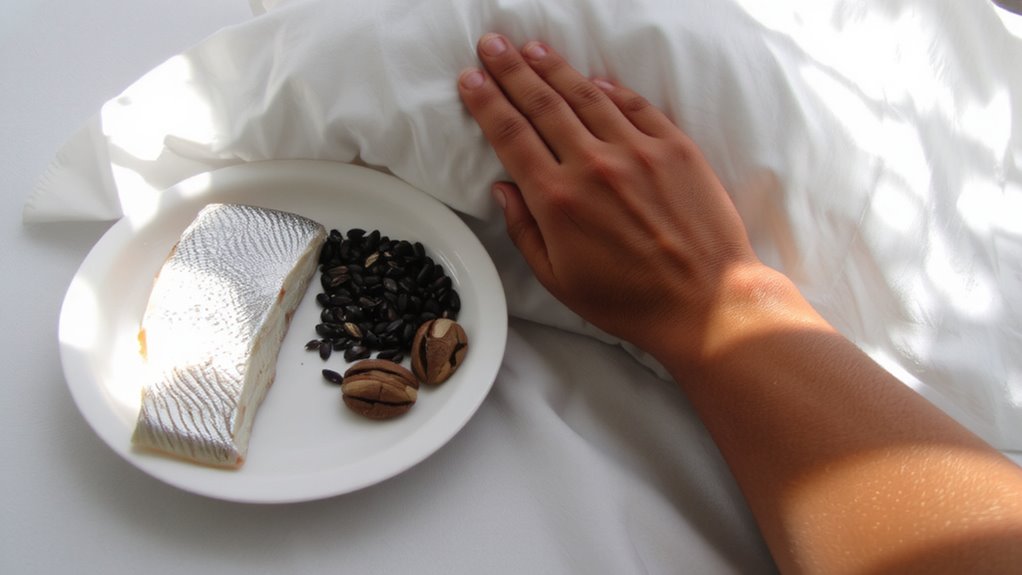
A solid night’s sleep starts with more than just a comfortable pillow-what you eat plays a key role in how your skin handles contact and pressure overnight. Adding omega-3-rich food sources to your diet can support your skin’s resilience. Fatty fish like salmon and mackerel, chia seeds, flaxseeds, and walnuts offer strong skin benefits by helping maintain moisture and reduce inflammation. These nutrients strengthen the skin barrier, making it less prone to irritation from friction or prolonged contact. You don’t need supplements if you include these foods regularly-just two servings of fatty fish per week can make a difference. Think of these foods as part of a long-term strategy, not a quick fix. Over time, consistent intake may improve how your skin responds to physical stressors, including nightly contact with pillow surfaces.
Choose the Right Pillow for Your Skin Type
Your skin’s comfort during sleep depends heavily on the pillow you choose, especially when factoring in your skin type and sensitivity. If you have sensitive skin, opt for hypoallergenic, breathable fabrics like organic cotton or bamboo, which reduce irritation and wick moisture. Pillow firmness plays a key role, too-softer pillows create less friction, helping prevent micro-tearing on delicate skin, while firmer options may benefit those with oily skin by minimizing prolonged contact. Memory foam supports alignment but can trap heat, worsening sensitivity for some. Down alternatives are often gentler and easier to clean. Look for removable, washable covers to maintain hygiene. Many brands offer trial periods, letting you test comfort and skin response over time. Check warranty lengths and return policies before buying. Choosing wisely helps support both restful sleep and balanced skin health. For added peace of mind, consider a Best Hypoallergenic Bedding option that combines comfort with skin-friendly materials.
Easy Upgrades for Better Skin and Sleep
What if better skin and deeper sleep started with just a few simple changes to your bedtime routine? Upgrading to breathable bedding helps regulate temperature, reducing night sweaves that can irritate sensitive skin. Look for natural fibers like cotton or bamboo, which offer gentle textures less likely to cause friction or breakouts. Pair this with a pillow that matches your skin type-hypoallergenic options minimize irritation, especially if you’re prone to acne. Moisture-wicking materials keep your face dry, supporting a clearer complexion over time. Many brands offer trial periods, so test bedding and pillows to see how your skin and sleep respond. Check warranty details before buying, since long-term performance matters. Small shifts in materials and texture can make a noticeable difference in how refreshed you feel each morning. A supportive sleep foundation can enhance comfort and alignment, especially when paired with the right bed frames for mattresses.
On a final note
You can reduce skin irritation by balancing omega-3 intake and choosing pillow fabrics that suit your skin. Silk or bamboo covers tend to be gentler than cotton for sensitive skin, while omega-3-rich diets support skin resilience. Look for hypoallergenic, breathable pillow materials and check trial periods or warranties before buying. Small changes-like switching fabrics or adding fatty fish to meals-may improve sleep comfort over time.