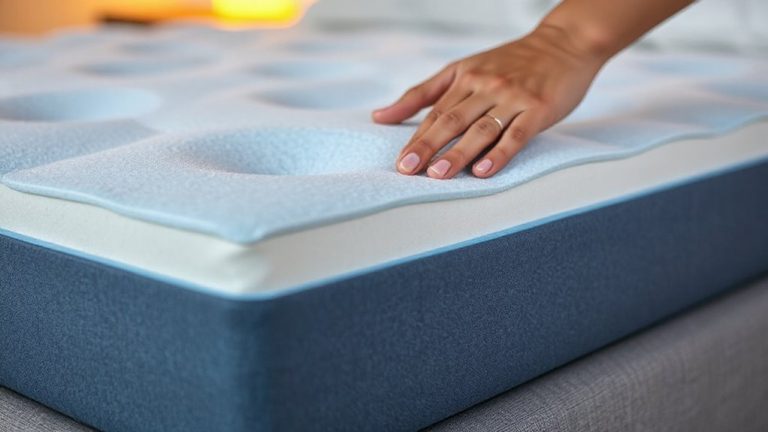
Innerspring Mattress Firmness and Spinal Alignment: The Connection
A medium-firm innerspring mattress supports spinal alignment by balancing lower back support with cushioning for hips and shoulders, preventing sagging or strain. Coils with a 12–15 gauge offer durable, responsive support, while pocketed designs reduce motion transfer and improve pressure relief. Your sleep position and weight affect firmness needs-side sleepers need cushioning, stomach sleepers need firmness. Models with 100-night trials and 10-year warranties let you test comfort and support over time, helping you make a confident choice based on how your spine feels each morning.
Notable Insights
- Medium-firm innerspring mattresses support spinal alignment by balancing support and pressure relief.
- Innerspring coils provide durable support, with lower gauge wires offering firmer, long-lasting spinal stability.
- Proper coil count and design distribute weight evenly, reducing sagging and maintaining a neutral spine.
- Mattress firmness should match sleep position: medium for back and combo, medium-firm for stomach sleepers.
- Signs of poor alignment include morning back pain and hip/shoulder pressure, often fixable with proper pillow use.
How Firmness Affects Spinal Alignment
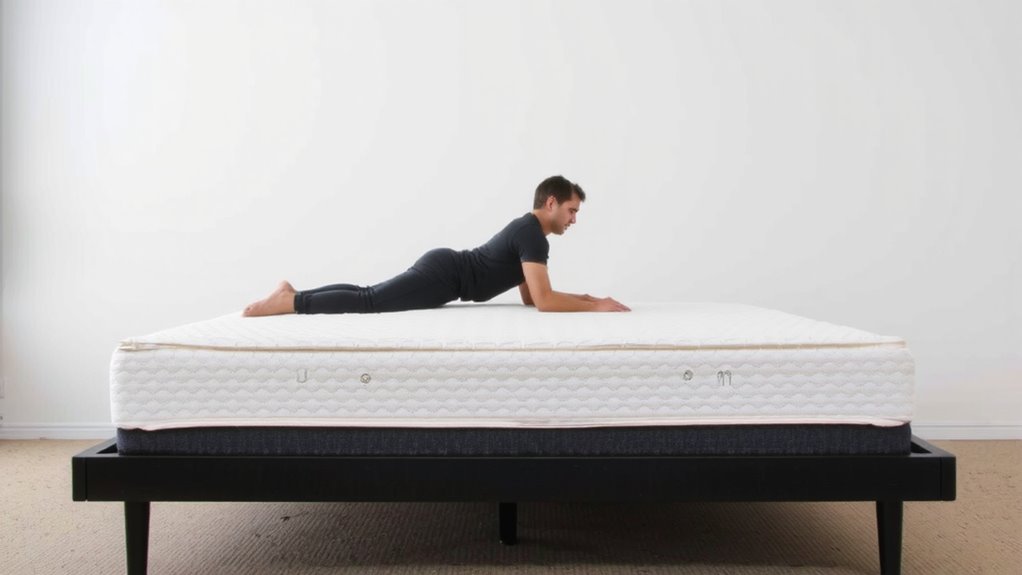
A medium-firm innerspring mattress often provides the best balance for spinal alignment, especially if you sleep on your back or side. You’ll notice how it supports your lower back while gently cushioning hips and shoulders, reducing pressure points without letting your spine sag. Too soft, and your body sinks out of alignment; too firm, and you may feel strain or discomfort, especially at key pressure points like hips and shoulders. This balance can improve your overall sleep quality, helping you wake with less stiffness. Since poor alignment may worsen existing sleep disorders, choosing the right firmness matters. Many brands offer 90- to 120-night trial periods and prorated warranties, so you can test support and comfort long-term. Look for models with zoned support or layered comfort foams that enhance contouring. These features influence both spinal position and pressure relief, directly affecting how well you rest night after night.
What Innerspring Coils Do for Support
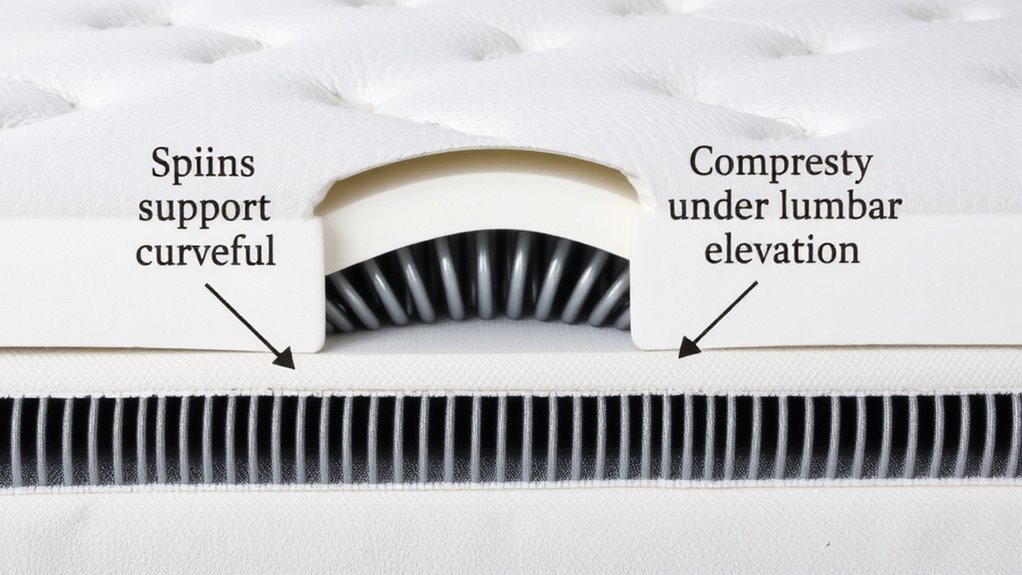
Support begins with the core, and in an innerspring mattress, that means the coil system. These coils bear your weight and maintain spinal support throughout the night. Your comfort and alignment hinge on two key factors: coil gauge and tension levels. Lower gauge numbers mean thicker, more durable wires that offer firmer support. Higher tension levels increase resistance, which can help reduce sagging over time.
| Feature | Impact on Support |
|---|---|
| Coil Gauge | Lower = firmer, more durable |
| Tension Levels | Higher = greater resistance |
You’ll find that coil count and design also influence how well the mattress responds to pressure. Pairing proper support with a suitable comfort layer guarantees lasting performance. Many models come with trial periods, so test firmness and support over time.
Soft vs. Firm: Which Aligns Your Spine Best?
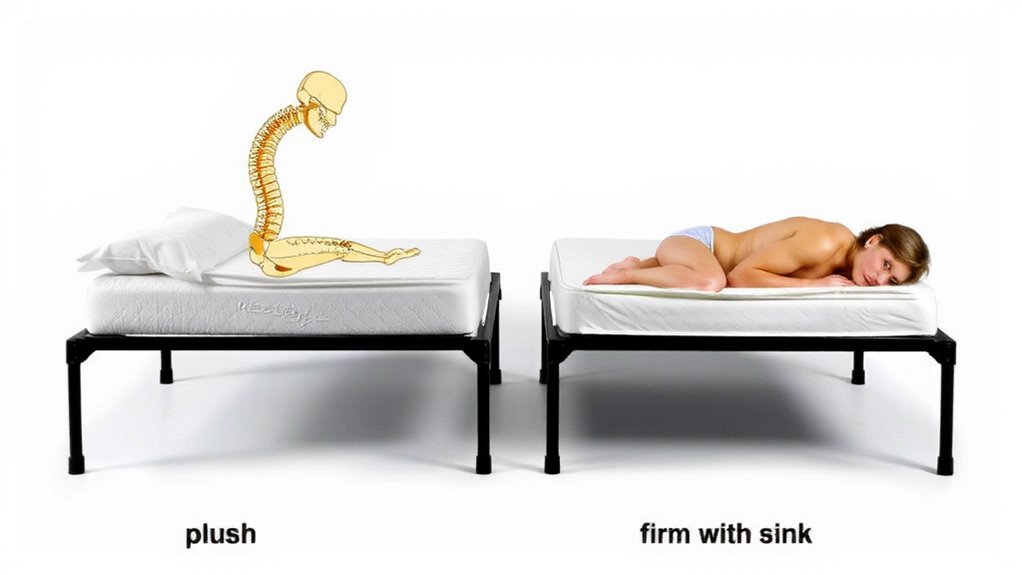
How firm should your mattress really be for proper spinal alignment? It depends on how well it supports your spinal curvature while easing pressure points. A mattress that’s too soft may let your spine sag, straining your lower back. One that’s too firm might not bend enough, creating discomfort at hips and shoulders. You need balanced support-something that keeps your spine neutral and your joints aligned. Innerspring mattresses with coil support respond well under pressure, contouring slightly for comfort without sacrificing stability. Look for models with pillow tops or thin comfort layers that cushion pressure points but don’t overwhelm the firm base. Consider sleep trials and warranties so you can test firmness risk-free. Many brands offer 100-night trials and 10-year warranties, giving you time to assess spinal support. Your ideal firmness maintains alignment while easing stress where your body needs it most. For a balance of support and comfort, consider trying one of the best semi-firm mattresses on the market.
How Your Sleep Position Changes Firmness Needs
Why does your go-to sleep position matter when choosing mattress firmness? Your sleep posture directly affects spinal alignment and pressure points, so the right firmness supports your body weight evenly. Too soft or too firm can strain your back, depending on how you sleep. Below is a guide to recommended firmness based on sleep posture and body weight:
| Sleep Position | Recommended Firmness |
|---|---|
| Side | Medium-soft to medium |
| Back | Medium |
| Stomach | Medium-firm to firm |
| Combination | Medium |
Side sleepers often need softer support to cushion hips and shoulders, especially with lower body weight. Back and stomach sleepers usually benefit from firmer surfaces to prevent spine sagging, particularly if they have higher body weight. A well-matched innerspring mattress promotes alignment, helping you wake rested. Always check trial periods and warranties when testing firmness.
Warning Signs Your Mattress Hurts Your Spine
If you wake up with stiffness or nagging back pain that eases as you move around, your mattress might not be supporting your spine like it should. Spine pain in the morning is a key signal your innerspring mattress isn’t keeping your body aligned. Over time, this misalignment can encourage poor posture, especially if your spine sinks too far into the mattress or is angled unnaturally. You might also notice shoulder or hip discomfort, which often means the surface is too firm or worn out. Sagging coils or lumpy padding reduce support and increase pressure points, worsening spine pain. If you’ve had your mattress more than 7–8 years, wear could be the issue. Look for models with reinforced edge support and individually wrapped coils for better spinal alignment. Check sleep trial and warranty details when replacing it-these offer practical reassurance. For those seeking targeted relief, consider mattresses specifically designed for back pain relief.
How to Test Mattress Firmness for Spine Support
Where should you start when checking if a mattress truly supports your spine? Begin by lying on it in your usual sleep position-side, back, or stomach-and notice how your body settles. Check for sagging or uneven contours that could misalign your spine. A good innerspring mattress should offer balanced firmness, cushioning pressure points like hips and shoulders without letting you sink too deeply. Try moving near the edge; solid edge support helps you move freely and stay aligned, especially if you share the bed. Pay attention to how your lower back feels after a few minutes-any strain means the mattress might be too firm or too soft. Look for models with trial periods and warranties, so you can test spine support over time. This hands-on evaluation helps match mattress firmness with your body’s needs.
Simple Fixes to Improve Spinal Alignment Tonight
How can you start improving your spinal alignment right now, without buying a new mattress? Try adjusting pillows to support your neck and maintain a neutral spine. If you sleep on your back, use a thinner pillow to keep your head in line with your torso. For side sleepers, a thicker pillow helps fill the gap between shoulder and neck. Avoid stacking too many pillows, as this can strain your neck. Changing sleep posture also makes a difference-switching from stomach to back or side sleeping reduces spinal distortion. Place a pillow between your knees if you’re on your side, or under your knees if on your back, to balance pelvic alignment. These small changes enhance comfort and promote better posture overnight. While they don’t replace proper mattress support, they’re practical, immediate steps toward improved spinal alignment. A well-chosen mattress for restricted spaces, such as a Murphy bed mattress, can further support spinal alignment while maximizing bedroom functionality.
On a final note
Your innerspring mattress’s firmness plays a key role in spinal alignment, with proper coil support helping maintain a neutral spine. Depending on your sleep position, you might need softer or firmer feels-side sleepers often need cushioning, while back or stomach sleepers may benefit from more firmness. Pay attention to signs like aching or stiffness, and use trial periods to test comfort. A good warranty can protect your choice, letting you make informed, practical decisions for better sleep.