How to Break the Cycle of Pain-Induced Sleep Disturbances and Sleep-Related Pain Flare-Ups
You can break the pain-sleep cycle by adjusting your environment and habits. Use a medium-firm mattress with memory foam for joint support, and try contoured pillows to keep your spine aligned. Choose soft, non-irritating bedding and keep your room cool, dark, and clutter-free. A warm-toned nightlight helps if you move at night. Wind down with gentle stretches like child’s pose, and use lavender aromatherapy to relax. Limit screens before bed and stay hydrated earlier in the evening. Mindful breathing or visualization may ease nighttime pain. Short-term use of non-opioid sleep aids, under guidance, could help reset sleep patterns. Track your symptoms to spot triggers. Small, consistent changes often lead to better rest and less pain over time-there’s more to explore about fine-tuning your approach.
Notable Insights
- Track pain and sleep patterns to identify triggers and optimize timing for interventions.
- Use non-opioid sleep aids with anti-inflammatory properties under medical guidance for short-term relief.
- Create a joint-friendly sleep environment with ergonomic lighting, soft textiles, and non-slip flooring.
- Choose a medium-firm mattress and supportive pillows to maintain spinal alignment and reduce pressure points.
- Practice pre-sleep routines like gentle stretching, mindful breathing, and screen avoidance to ease pain and promote rest.
Break the Pain-Sleep Cycle First
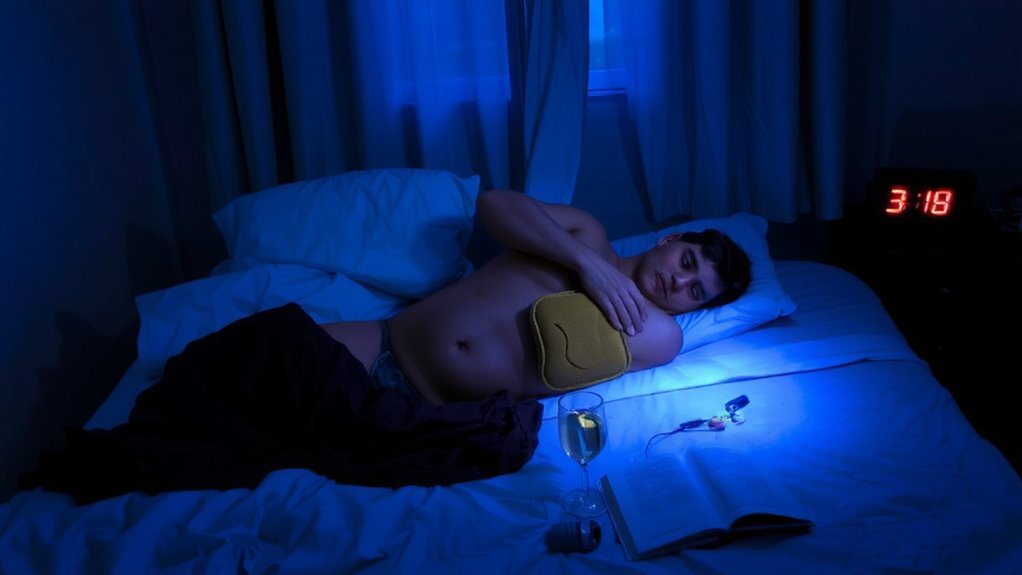
If you’re caught in a loop where pain keeps you from sleeping and poor sleep makes your pain worse, breaking this cycle should be your first priority. Your nervous system becomes hypersensitive when sleep is disrupted, amplifying pain signals and feeding chronic inflammation. This creates a feedback loop that’s tough to escape. Start by tracking your pain and sleep patterns-this helps identify triggers and times when symptoms peak. Consider non-opioid sleep aids with anti-inflammatory effects, like certain antihistamines or supplements such as magnesium. Some have minimal impact on the nervous system while supporting deeper sleep. Evaluate each option’s half-life, side effects, and interaction with inflammation. A short trial with a doctor’s guidance can reveal what works without long-term reliance. Addressing the cycle early improves your odds of lasting relief and better rest, giving your body a chance to repair. Wearing orange and blue light-blocking glasses in the evening can further support sleep quality by enhancing melatonin production and reducing nighttime alertness.
Design a Sleep Space That Eases Aching Joints

While your body repairs itself during sleep, the design of your sleep space can either support or strain your aching joints. Choose ergonomic lighting that’s soft and adjustable, so you can read or move at night without harsh overheads that disrupt melatonin. Use floor lamps or wall sconces with warm-toned bulbs to create gentle illumination. Opt for joint friendly textiles like supple cotton, bamboo, or microfiber sheets-they’re smooth, breathable, and reduce friction when you shift. Avoid stiff or coarse fabrics that can irritate sensitive skin. Keep your room clutter-free to allow easy movement, especially if you wake stiff. Dark, calming colors promote relaxation, while non-slip rugs add safety without bulk. These thoughtful details don’t cure pain, but they reduce nighttime strain, support comfort, and help you stay in restful sleep longer. Applying the right best sleep lotions can further enhance nighttime comfort by soothing sore muscles and improving skin hydration.
Pick a Pain-Relieving Mattress and Pillow

A well-designed sleep space sets the stage for comfort, but the right mattress and pillow make all the difference when it comes to easing joint pain and supporting restful sleep. You need proper mattress support to keep your spine neutral and reduce pressure on hips and shoulders. Look for medium-firm models with layers that cushion without sagging-memory foam or hybrid designs often work well. Check trial periods and warranties, since it may take weeks to adjust. For pillow alignment, choose one that keeps your neck level with your spine, whether you sleep on your side, back, or stomach. Contoured or adjustable pillows help maintain this balance. Poor alignment worsens pain over time. Test options with return policies so you can switch if needed. Good support and alignment aren’t luxuries-they’re essential for reducing nightly discomfort and improving long-term sleep quality. The best mattresses for back pain provide a balance of support and pressure relief, with medium-firm models consistently ranked highest in clinical studies for pain reduction.
Wind Down With a Pain-Soothing Night Routine
How can you ease into sleep when pain keeps your body on high alert? Start with a consistent night routine that signals it’s time to relax. Use aromatherapy benefits by diffusing lavender or chamomile-scents linked to reduced tension and better sleep onset. Keep the room dim and cool, minimizing disruptions. The hydration importance can’t be overlooked: sip water earlier in the evening but taper off to avoid waking for bathroom trips. Choose non-irritating fabrics for pajamas and bedding to prevent skin-related discomfort. Avoid screens at least 30 minutes before bed to support natural melatonin release. This routine isn’t about perfection-it’s about creating small, repeatable habits that support rest. Over time, these choices help your nervous system shift from alert to restful, making it easier to fall and stay asleep despite chronic discomfort.
Ease Night Pain With Gentle Movement
You’ve settled into a calming bedtime routine, quieting your mind with soothing scents and screen-free downtime-but lingering pain can still make getting comfortable a challenge. Gentle movement before bed may help ease tension and improve sleep quality. Night stretches and bedtime yoga are low-impact options that promote flexibility and relax tight muscles. Simple poses like child’s pose or seated forward bend can relieve lower back or hip discomfort. Holding each stretch for 20–30 seconds allows muscles to loosen without strain. These practices support circulation and reduce stiffness, which may otherwise worsen overnight. Consistency matters more than intensity-regular, mild movement yields better long-term results than occasional intense sessions. You don’t need special equipment; a yoga mat and quiet space are enough. Consider trying guided videos or apps designed for bedtime yoga to stay on track. Over time, you might notice fewer nighttime pain interruptions.
Quiet Your Mind to Ease Pain at Night
Why does pain seem to grow louder when the lights go out? In the quiet, your mind focuses more on discomfort, making it feel stronger. You can reduce this effect with mindful breathing-slow, deep inhales and exhales that help calm your nervous system. Try counting each breath or pairing it with a soft word like “peace” to deepen the effect. Mental distraction works too; visualize a calming scene or replay a favorite memory to shift focus away from pain. These techniques don’t erase pain, but they can lower its intensity at night. They’re low-risk, free, and can be combined with other sleep-friendly habits. While they may not replace sleep aids for everyone, they offer a starting point. Practice them regularly, not just when pain flares, to see better results. Over time, they may help you fall asleep more easily and stay asleep longer.
When to Talk to a Doctor About Pain and Sleep
Is it time to bring your nighttime pain and sleep struggles into the doctor’s office? If you’ve tried lifestyle changes and your sleep still suffers, it might be. Ongoing pain can disrupt rest enough to trigger sleep disorders like insomnia or sleep apnea. When poor sleep leads to chronic fatigue, daily function drops, and pain often worsens-creating a difficult loop. You don’t have to wait months to seek help. A doctor can review your symptoms, check for underlying conditions, and test for sleep disorders. Treatments vary and might include therapy, medication, or devices like CPAP machines. Some sleep aids help, but they’re best used short-term and under care. Early discussion improves outcomes and helps you weigh risks and benefits. Don’t ignore persistent fatigue or sleep disruption-they’re signs your body needs support. Medical guidance offers clearer paths forward.
On a final note
You can break the pain-sleep cycle by adjusting your environment and habits. Choose a supportive mattress and pillow designed for pressure relief, keep your bedroom cool and dark, and follow a calming routine. Gentle stretches or mindfulness may reduce nighttime discomfort. If sleep problems continue despite trying these strategies, talk to your doctor. Some people benefit from medical treatments, therapy, or sleep aids-trial options carefully, noting results and side effects.