The Role of Evening Yoga in Reducing Hamstring Tightness and Improving Sleep Duration
Tight hamstrings can pull on your pelvis, misalign your spine, and irritate the sciatic nerve, making it hard to relax and fall asleep. Evening yoga gently stretches these muscles, helping ease tension and quiet your nervous system. Holding poses like seated forward fold for 30–60 seconds improves flexibility while deep breathing lowers mental and physical tension. This routine supports better sleep hygiene without pills or devices. You’ll find longer, deeper sleep with consistent practice-there’s more to discover about building your ideal nightly routine.
Notable Insights
- Tight hamstrings can disrupt sleep by altering spinal alignment and increasing nerve pressure.
- Evening yoga reduces hamstring tension through gentle stretches that promote muscle relaxation.
- Practicing yoga at night aligns with the body’s natural wind-down cycle to support sleep onset.
- Poses like seated forward fold and butterfly stretch hamstrings safely before bedtime.
- Holding stretches 30–60 seconds with deep breathing enhances flexibility and improves sleep quality.
Why Tight Hamstrings Keep You Awake
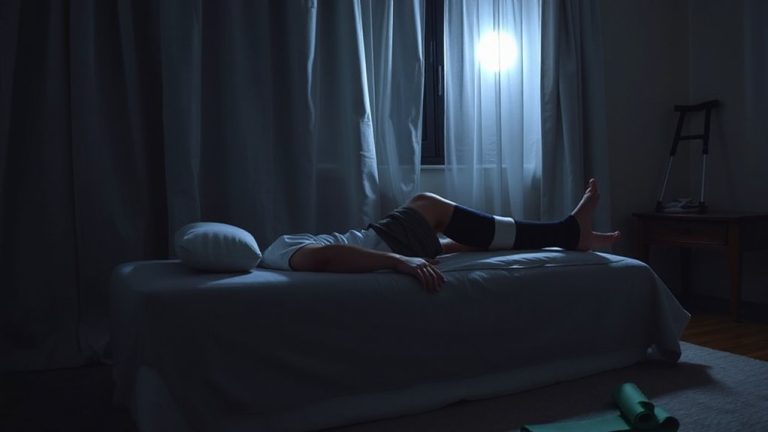
Why do tight hamstrings make it so hard to settle into sleep? Because hamstring discomfort can pull on your pelvis, altering spine alignment and increasing pressure on sensitive areas. This strain may lead to nerve compression, especially along the sciatic nerve, causing sharp or persistent pain that flares when you lie down. As you shift positions, the tension resists relaxation, making it harder to find comfort. Your body stays alert, interpreting the discomfort as a signal to stay awake. Over time, this pattern disrupts sleep onset and reduces overall sleep quality. You might start relying on sleep aids, but these don’t address the root cause. Instead, consider evaluating your daily movement habits and posture. A trial of targeted stretching or supportive sleep surfaces could help. Warranties on therapeutic pillows or mats may offer low-risk ways to test solutions. Performance varies, so track changes over a few weeks to decide what works.
How Evening Yoga Helps You Sleep Better
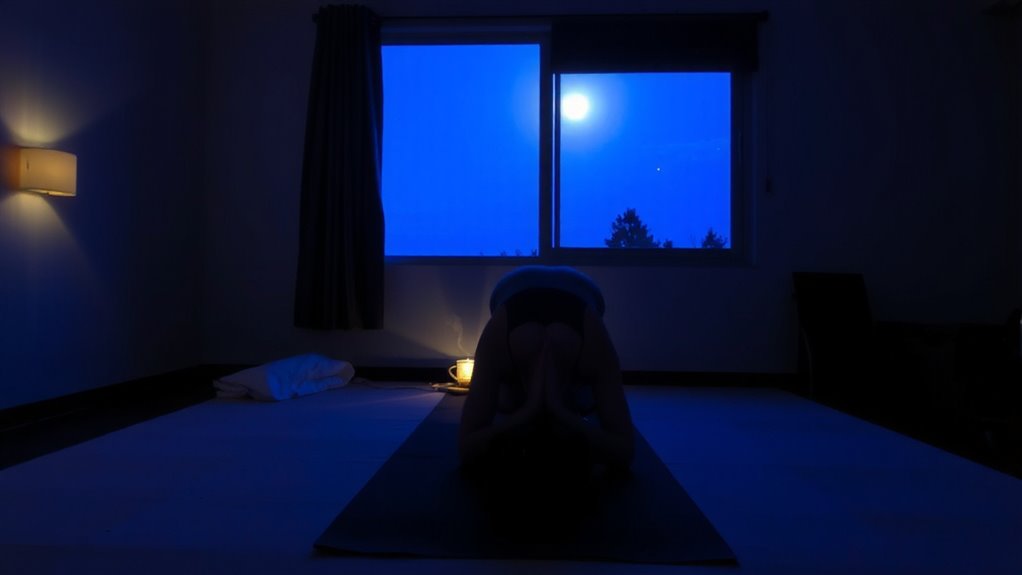
While your body winds down at night, gentle evening yoga can help ease hamstring tension that might otherwise interfere with sleep. Stretching under soft moon lighting creates a calming environment, signaling your brain that it’s time to rest. Slow, controlled movements increase blood flow and relax overworked muscles, which may reduce nighttime discomfort. This routine supports natural sleep regulation, often improving sleep tracking results by promoting deeper, less disrupted rest. You might notice fewer awakenings and a faster shift into sleep. Unlike sleep aids, which can have side effects or dependency risks, yoga offers a non-invasive option with added flexibility benefits. There’s no trial period or warranty needed-just consistent practice. Sleep tracking data often shows improved duration and quality after just a few weeks. Whether you’re managing mild sleep issues or simply aiming for better rest, evening yoga is a practical, evidence-based strategy worth trying without added cost or risk.
Best Time to Do Yoga for Sleep and Flexibility
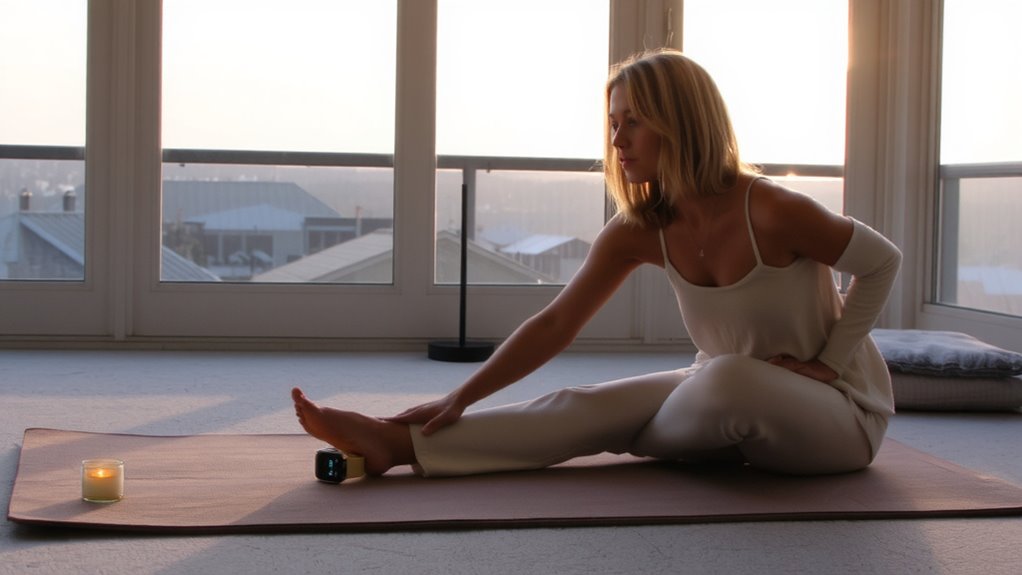
Yoga in the evening fits naturally into your body’s winding-down process, making it a smart choice for improving both sleep and flexibility. While morning flexibility often requires dynamic stretching to activate muscles, evening yoga uses slower movements that support relaxation and sustained muscle lengthening. This timing aligns with your body’s natural cooldown, potentially reducing reliance on sleep aids. Below is a comparison to help you decide the best time based on your goals:
| Time of Day | Best For |
|---|---|
| Morning | Dynamic stretching, increased circulation |
| Evening | Muscle relaxation, sleep onset |
| Morning | Waking the nervous system |
| Evening | Reducing hamstring tightness |
| Morning | Morning flexibility gains |
Evening sessions may improve sleep duration, especially if you struggle with restlessness. Trial a consistent 15-minute routine for one week to evaluate results.
5 Easy Yoga Poses for Tight Hamstrings
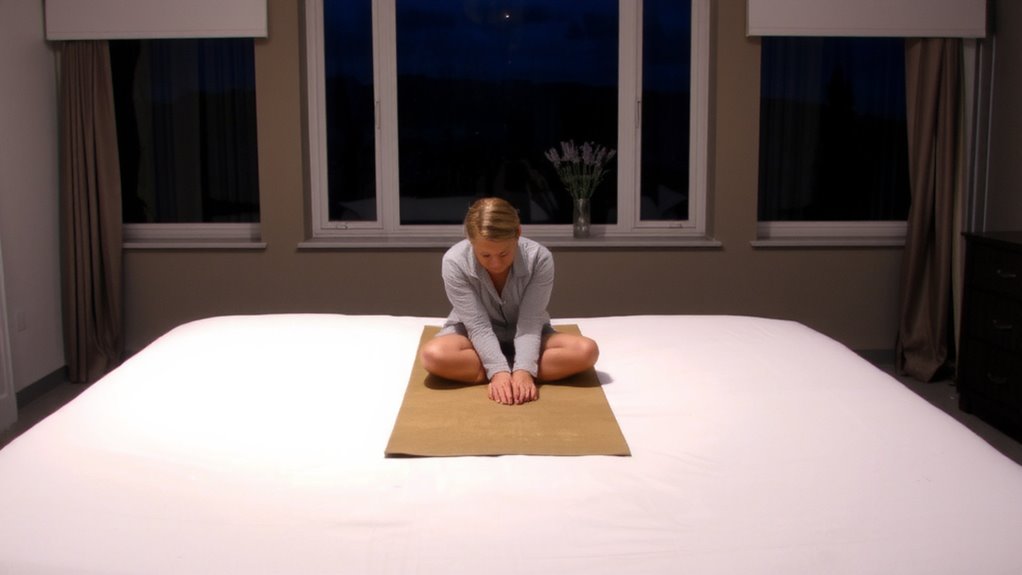
Tight hamstrings can quietly undermine both comfort and sleep quality, especially when tension lingers into the night. You can ease this tightness with simple, effective yoga poses done before bed. Forward bends like seated forward fold gently stretch the back of your legs while encouraging relaxation. These poses let you control intensity-just hinge at the hips and keep your spine long. Seated poses such as butterfly pose or seated straddle offer mild tension relief without strain. You don’t need flexibility to start; just consistency. Use a cushion under your hips if needed to make seated poses more accessible. Holding these stretches helps signal to your body that it’s time to wind down. Over time, this routine may improve both hamstring flexibility and sleep duration. Always move within your range-no bouncing or forcing-so you stay safe and comfortable. This gentle practice supports rest without depending on sleep aids.
How Long to Hold Each Stretch
You’ve tried the five easy poses, and now you might wonder how long to keep holding them for the best results. For effective static stretching, aim for 30 to 60 seconds per pose. This duration allows your hamstrings to gradually release without strain. Keep the stretch intensity mild to moderate-never sharp or painful-so your muscles relax instead of resisting.
| Pose | Hold Time (Seconds) |
|---|---|
| Seated Forward Bend | 45 |
| Standing Hamstring Stretch | 30 |
| Reclined Hand-to-Toe | 60 |
| Downward Dog | 45 |
Holding each stretch this long supports muscle lengthening and signals your nervous system to unwind. Consistency in static stretching nightly may ease tightness over time and support better sleep patterns. This routine isn’t a sleep aid, but reduced discomfort could help you fall asleep faster. Always adjust stretch intensity based on daily tension levels.
Add Breathwork to Deepen Relaxation
While holding each stretch, pairing your movements with intentional breathwork can help you relax more fully and prepare your body for rest. You’ll activate your nervous system’s calming response by slowing your breath and deepening each inhale. Try inhaling for a count of four, then exhaling just a bit longer-this small shift supports breath control and signals safety to your brain. Over time, this practice can ease physical tension linked to hamstring tightness and quiet mental chatter that disrupts sleep. It’s not about perfection; even a few mindful breaths make a difference. You don’t need special tools-just consistency. When used nightly, breathwork becomes a low-effort, no-cost method to support sleep quality. Unlike sleep aids, it carries no side effects and strengthens your body’s natural ability to wind down. Give it a week or two-you may notice falling asleep feels easier, and your sleep feels deeper.
Build a 15-Minute Nightly Yoga Routine
If you’re looking to ease into rest with minimal effort, building a 15-minute nightly yoga routine can be a realistic and effective step toward better sleep and reduced hamstring tightness. Start with gentle stretches like seated forward fold and lie on your back for a supine hamstring stretch-both respond well to yoga props like straps or pillows for support. Hold each pose for 1–2 minutes, focusing on steady breath. Include sequence variations-swap legs-up-the-wall for a reclined twist-so your body adapts without strain. These small changes keep the routine sustainable and tailored. Consistency matters more than intensity. Over time, you might find less reliance on sleep aids and fewer nighttime disruptions. This routine doesn’t cure sleep disorders but supports better sleep hygiene. Try it nightly for two weeks to assess changes in comfort and rest. No special warranty applies, but your body may reward the effort.
On a final note
You can ease hamstring tightness and improve sleep by practicing gentle evening yoga consistently. Poses like forward folds and seated stretches, held for 30–60 seconds, increase flexibility and signal relaxation. Adding slow breathwork enhances parasympathetic response, supporting deeper rest. This accessible routine requires no equipment and can replace reliance on sleep aids over time. Try it nightly for several weeks to assess improvements in comfort and sleep duration before considering other options.