How to Prevent Insomnia-Like Symptoms in Advanced Sleep Phase Disorder
You wake up too early because your internal clock shifts forward, making you sleep and rise earlier than desired. To prevent insomnia-like symptoms, get bright light exposure right after waking-sunlight or a 10,000-lux light box helps delay your rhythm. Stick to consistent sleep and wake times every day, even on weekends. Avoid caffeine after 2 p.m. and skip screens two hours before bed. These steps support your body’s timing without disrupting it further-you’ll see how small changes add up over time.
Notable Insights
- Align bedtime and wake time consistently within a one-hour window daily, including weekends, to stabilize circadian rhythms.
- Seek bright morning light exposure within one hour of waking to gradually delay internal clock timing.
- Use a 10,000-lux light box for 30 minutes daily if natural sunlight is unavailable after waking.
- Avoid caffeine after 2 p.m. and limit evening screen time to prevent further circadian misalignment.
- Consult a sleep specialist if symptoms persist despite lifestyle changes to explore targeted treatments like timed melatonin.
Why You’re Waking Up Too Early (It Might Be ASPD)
Why do you wake up so early, unable to go back to sleep even when you’re clearly not rested? You might have advanced sleep phase disorder (ASPD), where your internal clock shifts forward, making you fall asleep and wake up much earlier than typical. This isn’t just habit-it often stems from a genetic predisposition, meaning it could run in your family. Your melatonin timing also plays a key role; melatonin releases earlier in your cycle, signaling bedtime sooner than most. Because of this, standard sleep aids or routines may not help and could even disrupt your rhythm more. Understanding your body’s natural patterns helps guide better choices. Consider tracking sleep times and discussing options with a specialist. Some treatments adjust light exposure or use timed melatonin, but always review risks and effectiveness first.
Reset Your Circadian Rhythm With Morning Light
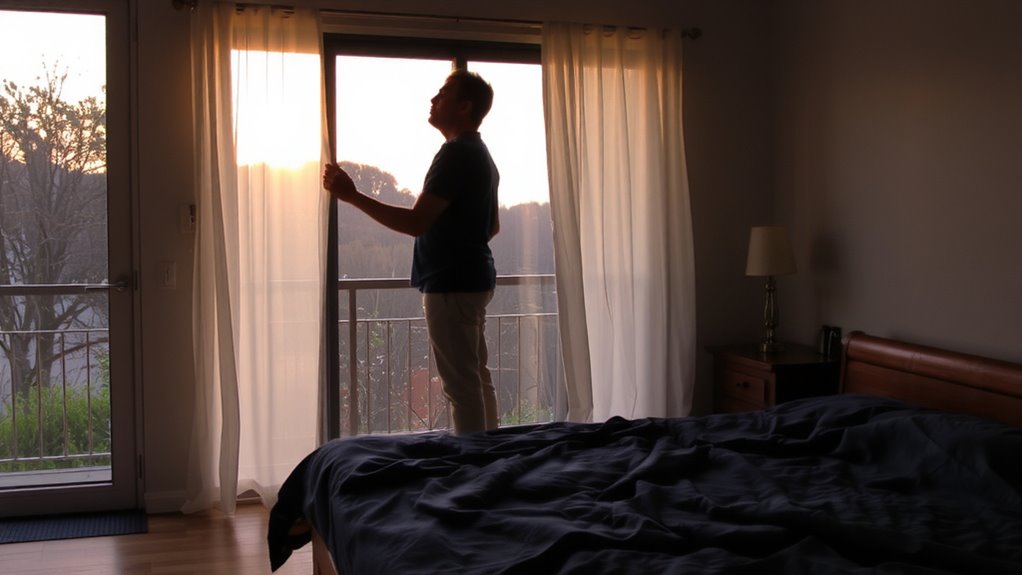
Though your internal clock may seem stubbornly set, exposing yourself to bright light soon after waking can gradually shift your rhythm to a later schedule. Getting outside within an hour of waking helps you absorb natural morning sunlight, which signals your brain to stop producing melatonin and reinforces a delayed sleep phase. Aim for at least 20–30 minutes of outdoor light, even on cloudy days, since daylight intensity far exceeds indoor lighting. If morning sunlight exposure isn’t possible due to weather or schedule, consider light therapy using a 10,000-lux light box. Sit within 16–24 inches of the device, with eyes open but not staring directly at the light, for about 30 minutes each morning. Most devices are made with UV filters and durable construction, and many come with adjustable stands and a 1–2 year warranty. Consistent use improves results.
Keep a Fixed Sleep Schedule: Even on Weekends
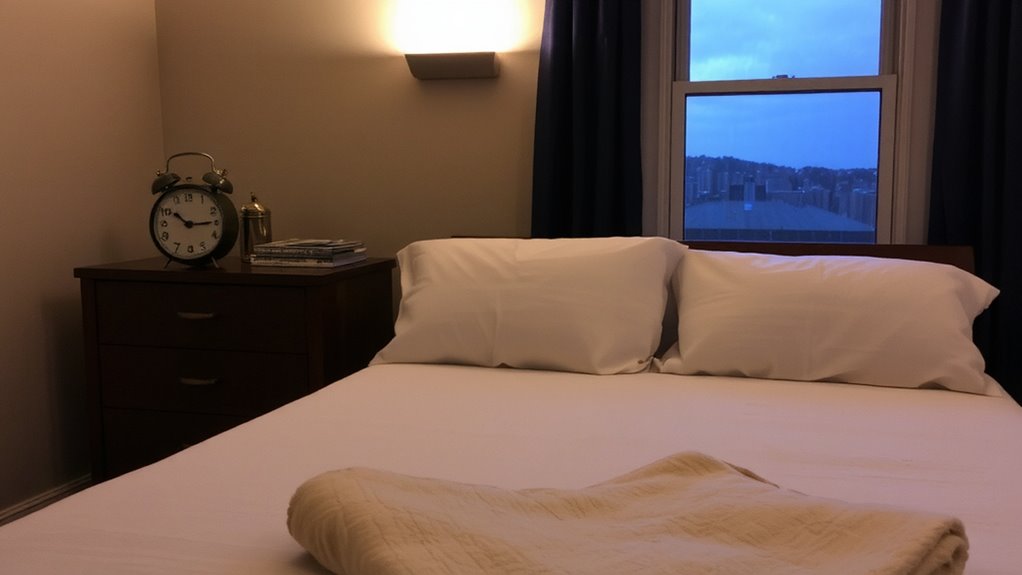
Sticking to a consistent sleep schedule every day, including weekends, helps strengthen your body’s internal clock and supports the shift you’re working toward with morning light exposure. You’ll notice better sleep consistency when your wake-up and bedtime stay within an hour of each other daily. This routine stability makes it easier to fall asleep at night and wake up feeling refreshed. Even if you’re tempted to sleep in or stay up late, doing so can undo progress by misaligning your circadian rhythm. Think of your sleep schedule like a reliable machine-predictable use improves performance. Small, consistent choices add up. If you struggle at first, track your pattern for two weeks and adjust gradually. There’s no need for supplements or sleep aids when behavioral adjustments provide a strong foundation. Your long-term well-being benefits most from this simple, evidence-backed habit.
Avoid Afternoon Caffeine and Evening Screens
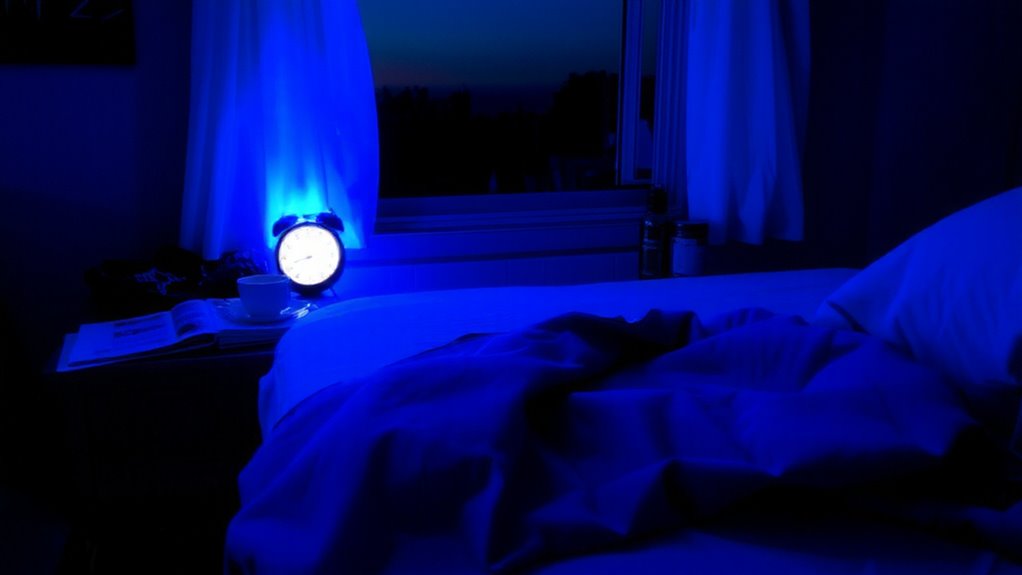
How often do you reach for that afternoon coffee or scroll through your phone at night? These habits can worsen insomnia-like symptoms in advanced sleep phase disorder. Caffeine timing matters-drinking coffee or tea after 2 p.m. may delay your internal clock, making early sleep harder. Even moderate caffeine then can stay in your system for hours. Evening screen brightness is just as disruptive. Devices like phones and tablets emit blue light, which suppresses melatonin. That makes it tougher to wind down. Lowering screen brightness helps some, but it’s not enough. Try switching to dim, warm lights and reading a book instead. You might also use night mode settings, but avoid screens altogether two hours before bed. Small changes to caffeine timing and screen use support better sleep alignment without medications or devices. Give them a fair trial-most notice improvements within a week.
See a Doctor If You Can’t Adjust Your Sleep Cycle
You’ve made changes to your caffeine habits and cut back on evening screen time, and those steps often help realign your sleep pattern. But if you still can’t adjust your sleep cycle, it might be more than a simple routine issue-it could be a sleep disorder like advanced sleep phase disorder. In that case, a medical consultation is important. A doctor can evaluate your symptoms, review your sleep history, and possibly recommend a sleep study. This helps confirm whether your early sleep and wake times are part of a recognized condition. Treatment might include timed light therapy, melatonin, or behavioral strategies. Don’t wait too long to seek help-early intervention improves outcomes. A healthcare provider can guide you on safe, effective options. It’s not about fixing things overnight but finding sustainable ways to align your rhythm with daily life.
On a final note
You might be waking up too early due to advanced sleep phase disorder, but adjusting your rhythm can help. Expose yourself to bright light in the morning and keep a consistent sleep schedule, even on weekends. Avoid caffeine in the afternoon and limit screen use at night. These steps support natural circadian shifts. If symptoms persist, consult a doctor to rule out underlying issues and discuss whether light therapy or melatonin supplements could help your case.