Sleep Inertia by Sleep Stage: Why Waking Feels Worse Sometimes
You feel groggy after waking because your brain is still in sleep mode, especially if you’re pulled from deep or REM sleep. Waking during light sleep leaves you clearer-headed, while deep sleep interruptions cause slow thinking and drowsiness. REM awakenings may trigger temporary paralysis from lingering muscle atonia. Sleep inertia varies in length and intensity based on your cycle stage and regularity. Using sleep trackers can help time alarms for lighter stages, reducing grogginess-there’s more to discover about aligning your wake-up with your body’s natural rhythms.
Notable Insights
- Sleep inertia is grogginess after waking, caused by abrupt interruption of sleep cycles, especially during deep or REM stages.
- Waking during slow-wave sleep leads to worse disorientation due to ongoing brain recovery and reduced neural connectivity.
- Inertia is milder when awakening occurs during light sleep, which is more common in the final hours of sleep.
- Abruptly waking from REM sleep can cause dream recall, sleep paralysis, and temporary muscle atonia upon waking.
- Timing wake-ups to coincide with lighter sleep stages, such as via sleep trackers, reduces sleep inertia severity.
What Is Sleep Inertia (And Why You Feel Groggy)?
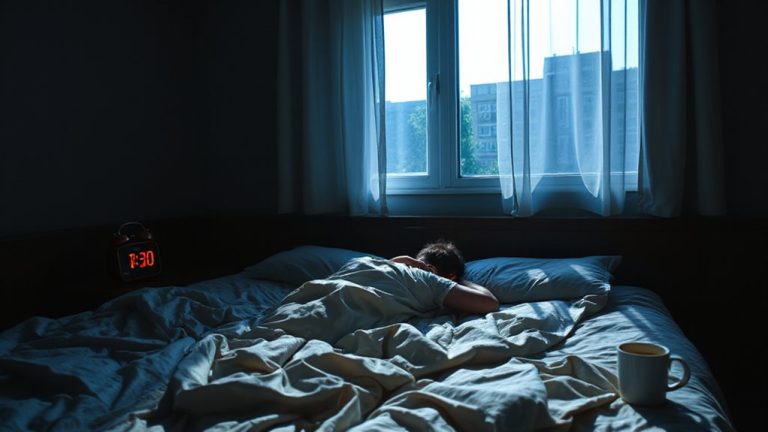
Ever woken up feeling like you’re still half-asleep, even though your alarm’s been blaring for minutes? That grogginess is called sleep inertia-the period right after waking when your brain hasn’t fully switched on. It happens because your body got interrupted mid-sleep cycle, especially during deep stages. Your brain fog can last minutes or stretch into hours, depending on how abruptly you woke. If you’re pulling from multiple incomplete sleep cycles, the effect worsens. Everyone experiences it, but those with irregular sleep patterns or untreated sleep disorders often feel it more sharply. Using a sleep tracker might help you time awakenings near the end of a cycle, reducing inertia. Some people try light alarms or dawn simulators to ease the shift. Check product warranties and trial periods if testing sleep aids. Small changes can reduce grogginess and sharpen your mornings. Staying cool during sleep can improve cycle completion, and choosing breathable best cool bed sheets may help minimize disruptions.
How Sleep Stages Fuel Morning Grogginess
While your body cycles through different sleep stages each night, waking up during the wrong phase can leave you feeling sluggish and disoriented. This grogginess ties directly to your sleep architecture-specifically, how deep you were when the alarm rang. If you wake during slow-wave sleep, your brain is still in neural recovery mode, struggling to regain full alertness. Sleep stages like REM and deep NREM are essential for cognitive and physical repair, but abrupt interruption hampens performance. You might feel confused or slow to react, a hallmark of sleep inertia. Understanding your personal sleep cycles helps explain why some mornings feel harder than others. Tracking patterns, adjusting wake times by even 15 minutes, or using sleep aids that monitor stages can reduce grogginess. Look for devices offering phase-based alarms, clear data on sleep architecture, and trials to test compatibility with your routine. Some advanced tools, such as sleep trackers without a subscription, provide accurate sleep stage analysis without ongoing fees.
Waking From Light Sleep: The Smoothest Transition
Waking during light sleep often leaves you feeling more alert and composed than being jolted from deeper stages. Your body rhythm naturally cycles through sleep stages, and timing your wake-up during light sleep can improve sleep quality. These lighter phases occur more frequently in the second half of the night, making morning alarms better aligned with this stage. When you rise during light sleep, shifts feel smoother, with less disorientation. This pattern supports a more natural start to your day, working with your internal clock instead of against it. Devices like sleep trackers or smart alarms claim to detect these phases, helping you wake at ideal moments. While results vary, they may offer useful insights over time. Look for models with clear data tracking, trial periods, and solid warranties. For consistent benefits, aligning your schedule with your body rhythm often matters more than any gadget. Practicing sleep relaxation techniques can further enhance the quality of light sleep and ease the transition to wakefulness.
Why Deep Sleep Leaves You Dazed and Slow
If you’ve ever felt groggy and disoriented right after waking, it’s likely because you were pulled from deep sleep, the heaviest phase of your sleep cycle. During this stage, your brain chemistry shifts dramatically-slowing brainwaves and reducing alertness signals. Your body is deep into neural recovery, repairing cells and strengthening memory. This makes waking abrupt and jarring. Sleep inertia hits harder here because your brain hasn’t had time to reset. Unlike light sleep, where起身 is smoother, deep sleep interruption leaves you dazed and slow. Adjusting your sleep schedule to wake after full cycles-about 90 minutes each-can reduce this effect. Consider using sleep trackers to identify patterns. Some sleep aids may help regulate cycles, but always check features, trial periods, and expert guidance before choosing one.
Waking From REM: When Dreams Trap Your Body
How does it feel when you’re awake but can’t move? That’s dream paralysis, and it often hits when you wake straight from REM sleep. Your brain’s active, but your body’s still in standby-muscles relaxed to keep you from acting out dreams. It’s unsettling, but usually brief. If you’ve been sleep-deprived, you might experience REM rebound, where your body grabs extra REM sleep and makes these episodes more likely. Though dream paralysis isn’t typically dangerous, frequent episodes could point to an underlying sleep disorder worth discussing with a doctor. Tracking your sleep patterns helps identify triggers. Some find relief by adjusting sleep schedules or reducing stress, while others explore sleep aids under medical guidance. Devices like sleep monitors can offer insights into your cycles. Always check warranty and trial options when considering new tools-know what you’re testing and why.
How to Time Your Alarm to Beat Sleep Inertia
Ever wonder why you feel so groggy after hitting snooze? It’s because you’re likely waking during deep sleep or REM, worsening sleep inertia. To beat it, time your alarm to match lighter sleep stages. Most sleep cycles last about 90 minutes, so plan your sleep in multiples of that-say, 6 or 7.5 hours-to wake more naturally. This method uses sleep compression, letting you function well even with slightly less time in bed, as long as sleep quality stays high. Also, aim for circadian alignment by waking at roughly the same time each day, even on weekends. This stabilizes your internal clock and reduces grogginess over time. Don’t rely on loud alarms or caffeine just yet-first adjust timing. Test different wake-up moments over a week, tracking alertness. Small tweaks in when you rise can make a big difference in how fast your brain shifts into gear.
Natural Ways to Wake Up Refreshed
Why do some mornings feel like a struggle while others leave you alert from the start? It often comes down to sleep hygiene and exposure to natural light. Good sleep hygiene means sticking to a consistent bedtime, limiting screen time before bed, and creating a restful environment-dark, cool, and quiet. These habits help regulate your internal clock, making wake-up easier. Once you’re up, getting natural light quickly resets your circadian rhythm, reducing grogginess. Open curtains or step outside within 15 minutes of waking. Even on cloudy days, outdoor light is far stronger than indoor lighting. Pairing strong sleep hygiene with morning light exposure improves sleep quality over time, decreasing dependence on alarms or caffeine. You don’t need special gear-just consistent routines and sunlight. Over weeks, this combination supports deeper sleep and smoother wake-ups, helping you feel refreshed more often.
On a final note
You feel groggy because sleep inertia varies by stage-light sleep offers the easiest wake-up, while deep sleep or REM leaves you foggy. Timing your alarm to end a sleep cycle helps reduce sluggishness. Prioritize consistent sleep schedules and light exposure. If grogginess persists, consider tracking sleep patterns or consulting a professional. Some aids may help, but check features, trial periods, and evidence before deciding.