The Effect of Outdoor Morning Light on Delayed Sleep Phase Disorder
You can reset your delayed sleep pattern by getting outdoor morning light soon after waking. Natural light signals your brain to stop melatonin, helping shift your internal clock earlier over time. Aim for 20–30 minutes outside during the first hour after sunrise, even on cloudy days. You don’t need direct sun-just being outdoors helps. Pair this with a consistent wake time for best results. More practical steps follow.
Notable Insights
- Morning sunlight exposure helps reset the circadian rhythm by suppressing melatonin production early in the day.
- Consistent outdoor light within an hour of sunrise gradually shifts sleep onset to earlier times in DSPD.
- Natural morning light, even on cloudy days, provides sufficient intensity (1,000–10,000 lux) to impact circadian timing.
- Daily 20–30 minute outdoor exposure without sunglasses maximizes retinal light reception for circadian entrainment.
- Combining morning light with fixed wake times and evening light reduction enhances treatment effectiveness for DSPD.
What Is Delayed Sleep Phase Disorder (And Why Light Matters)?

Ever wonder why you can’t fall asleep until way past midnight-and struggle to wake up in the morning no matter how hard you try? You might have Delayed Sleep Phase Disorder (DSPD), a condition where your circadian rhythm runs hours behind the typical sleep-wake cycle. It’s not just a habit; it’s a biological shift that makes falling asleep early nearly impossible. Your brain naturally delays melatonin release, and evening light exposure adds to melatonin suppression, pushing sleep even later. This pattern disrupts daily life, especially with early responsibilities. Unlike insomnia, DSPD is consistent-you fall asleep at the same late time, night after night. Treatments focus on realigning your internal clock, often through timed light exposure. While sleep aids may help in the short term, they don’t fix the root cause. Understanding your circadian rhythm helps you choose options that adjust timing, not just mask symptoms.
Why Morning Sun Helps You Fall Asleep Earlier

Why does stepping into the morning sunlight help you fall asleep earlier, even if you’ve long struggled with late-night wakefulness? Because morning sun resets your circadian rhythm-the internal clock that controls when you feel awake or tired. When light hits your eyes early in the day, it signals your brain to stop producing melatonin, a hormone that promotes sleep. This is called melatonin suppression, and it helps you feel alert in the morning while pushing your body toward an earlier sleep cycle. Over time, consistent morning sunlight exposure shifts your natural rhythm earlier, making it easier to fall asleep at a more typical hour. You don’t need special equipment-just 20 to 30 minutes outside, ideally within an hour of waking. No side effects, no cost, and no prescription. It’s a simple, science-backed step that supports long-term sleep adjustment.
Best Time to Get Morning Sun for Better Sleep
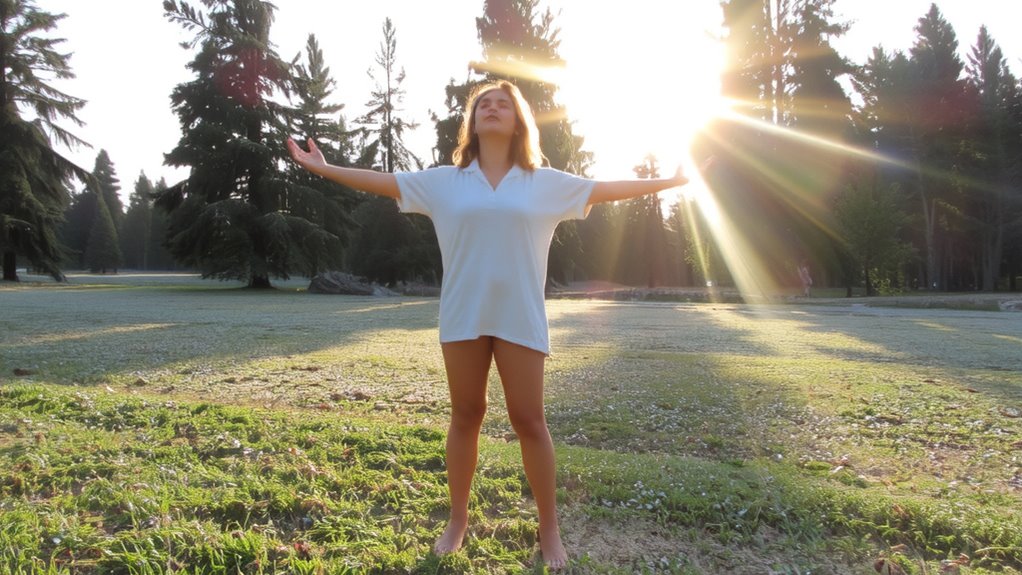
Getting morning sun at the right time makes a noticeable difference in how quickly your sleep schedule shifts. For the best results, aim for sunlight exposure during the golden hour-shortly after sunrise-when natural light is rich in blue wavelengths that reset your internal clock. Your body responds strongest to light within the first hour of sunrise timing, so stepping outside within that window can help shift your sleep cycle earlier over time. You don’t need intense midday sun; gentle morning light works better and is easier to tolerate. Being outdoors, even on cloudy days, provides enough light intensity to signal your brain to reduce melatonin. Positioning your morning routine within this ideal window supports steady progress without relying on sleep aids. Consistency matters most-doing it daily strengthens the effect.
How Much Morning Sun Do You Need?
Though the timing of light exposure plays a key role, how much morning sun you get also determines how effectively your sleep rhythm shifts. For most people with delayed sleep phase disorder, 20 to 30 minutes of outdoor morning light works well. You don’t need direct sunlight-just being outside on a clear or even slightly overcast day provides enough light intensity to help reset your internal clock. Eye exposure is essential, so avoid wearing sunglasses during this time, unless glare is uncomfortable. Brightness outdoors is measured in lux, and natural morning light typically delivers 1,000 to 10,000 lux, far more than indoor lighting. This level of exposure helps signal your brain to reduce melatonin. Consistency matters more than perfection-aim for daily practice. Even on cold or cloudy days, being outside still supports results. Adjust duration slightly if improvements are slow, but avoid exceeding 30 minutes without guidance.
How to Get Morning Light Even If You’re Not a Morning Person
How do you start your day when waking up early feels impossible? You don’t need to force yourself into sunlight right away. A practical alternative is using light therapy devices, which mimic natural outdoor light and help regulate your sleep cycle. These lamps provide bright, artificial lighting for 20 to 30 minutes each morning, ideally within an hour of waking. Look for models emitting 10,000 lux, proven effective for delayed sleep phase disorder. Use them consistently at the same time daily. Many units are designed with adjustable brightness and UV filters, ensuring safety and comfort. Some come with timers and warranties, supporting long-term use. While outdoor light is ideal, light therapy offers a controlled, reliable option when mornings are tough. You can sit near the device while eating or reading-no need to stare directly at it. This method bridges the gap when natural exposure isn’t possible. For those seeking a gentler approach, consider a wake-up light that gradually increases light intensity to simulate sunrise.
Pair Morning Light With These 3 Sleep Habits for Best Results
While morning light sets a strong foundation for resetting your sleep schedule, pairing it with consistent habits can make a real difference in how well your body adjusts. First, stick to a fixed wake-up time-even on weekends-to support steady circadian entrainment. Second, create a bedtime routine that includes dimming lights and avoiding screens 60–90 minutes before sleep; this boosts melatonin and improves sleep hygiene. Third, keep your bedroom cool, dark, and quiet, using blackout curtains or a sleep mask if needed. These practices enhance the morning light’s effect by aligning your internal clock more precisely. Over time, this combination helps regulate sleep timing and increases sleep quality. You don’t need special equipment-just consistency and small, deliberate changes. With patience, the shift becomes natural, supporting long-term circadian stability. For added darkness and comfort, consider using one of the best eye masks for ultimate comfort & darkness. A high-quality best eye masks can significantly improve sleep quality by blocking out disruptive light.
On a final note
You can use outdoor morning light to gently shift your sleep schedule earlier if you have delayed sleep phase disorder. Aim for 20–30 minutes of natural light soon after waking, ideally between 7–9 a.m. This helps reset your internal clock over time. Combine it with consistent sleep times, limited evening light, and good sleep hygiene for best results. It’s a safe, low-cost step that works for many people, though results may take a few weeks.