Why Innerspring Mattresses Are Often Lighter Than Hybrids
You’ll find innerspring mattresses lighter than hybrids because they rely on an open coil system and thinner comfort layers, cutting down on dense materials. Hybrids add heavy foams or latex on top of coils, increasing weight notably. This makes innersprings easier to move, especially upstairs or through tight spaces. If setup ease matters to you, the lighter build helps, especially in apartments or solo moves-knowing the differences in construction can guide your choice based on practical needs and long-term comfort.
Notable Insights
- Innerspring mattresses use open coil systems that reduce material density and overall weight.
- They feature lighter comfort layers made of thin foam or breathable fabrics instead of dense padding.
- Hybrid mattresses add heavy materials like thick memory foam or latex on top of coils.
- Reinforced edges and dual-coil systems in hybrids increase structural weight significantly.
- Less dense construction in innersprings maintains support while keeping the profile lightweight.
Why Mattress Weight Matters for Moving and Setup
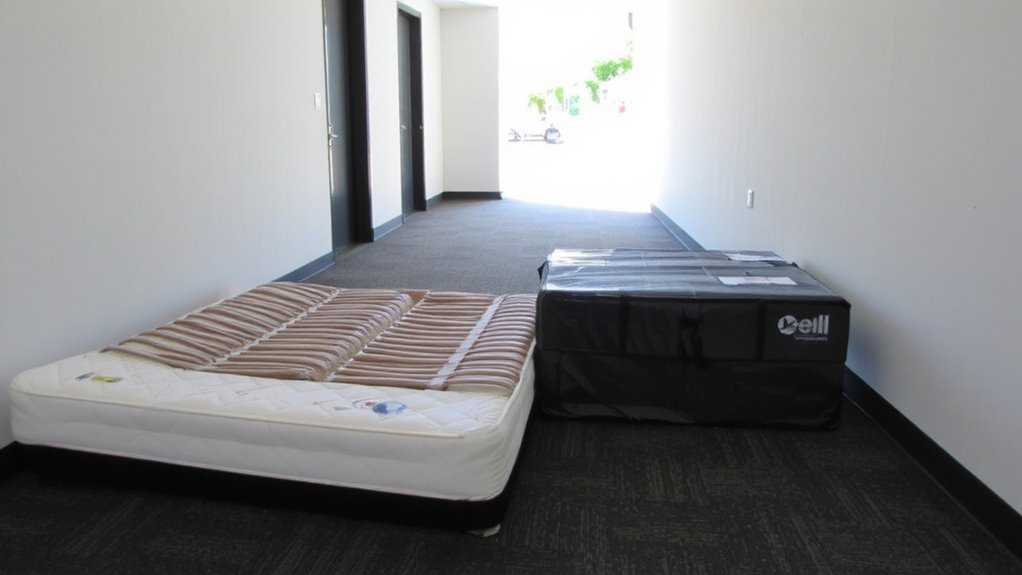
While you might not think about it at first, the weight of your mattress can make a real difference when it comes to moving it into your home or shifting it from room to room. Heavier models, like many hybrids, can complicate the ease of transport-especially up stairs or through tight hallways. You’ll often need help, which adds time and effort. Lighter innerspring mattresses, by comparison, are simpler to carry and position, reducing assembly difficulty and stress during setup. This matters if you live alone, in a high-rise, or move often. A lighter bed can mean less strain on your body, potentially supporting better routines if you’re managing a sleep disorder or adjusting sleep aids. While weight doesn’t directly affect performance, it does impact practicality. Check trial periods and warranties, since those often cover return shipping or setup issues-making the choice less risky when you weigh convenience alongside comfort.
How Innerspring Mattresses Keep Weight Low
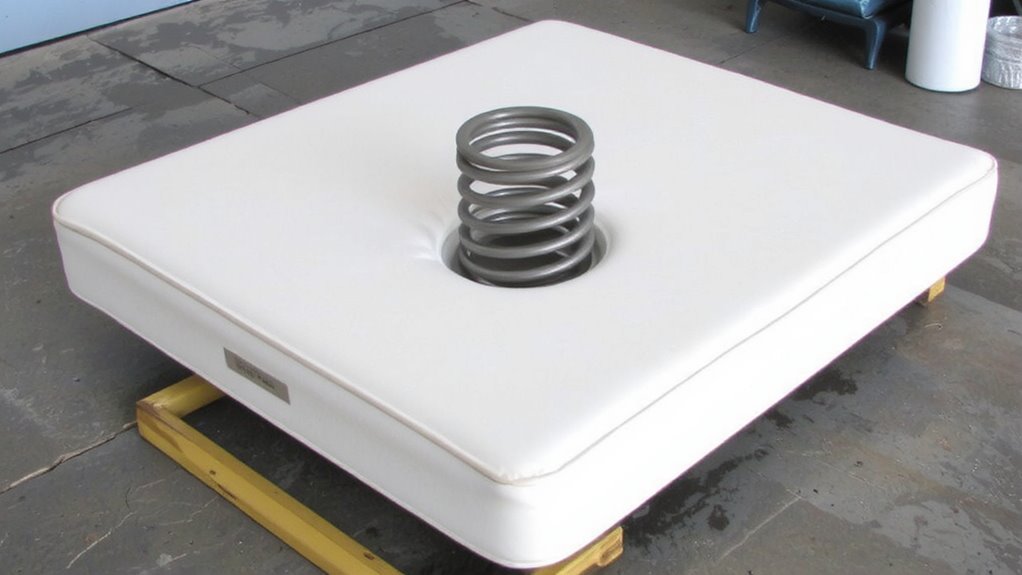
You’ll find innerspring mattresses easier to handle during moves because their design naturally keeps weight low. The core of coil design uses open spaces between steel springs, cutting down on dense materials. This open structure reduces bulk without sacrificing support. Paired with a lightweight fabric choice, like breathable knit or polyester blends, the overall mattress stays easy to lift and maneuver. These choices also help with airflow, which may assist if you tend to sleep hot.
| Layer | Material | Weight Impact |
|---|---|---|
| Top | Lightweight fabric | Low |
| Core | Coiled steel | Moderate |
| Base | Support coils | Low |
This construction keeps the profile light, especially compared to thicker foams. Many models come with trial periods, so you can test comfort without long-term risk.
Why Hybrid Mattresses Are Heavier (And What Adds Bulk)
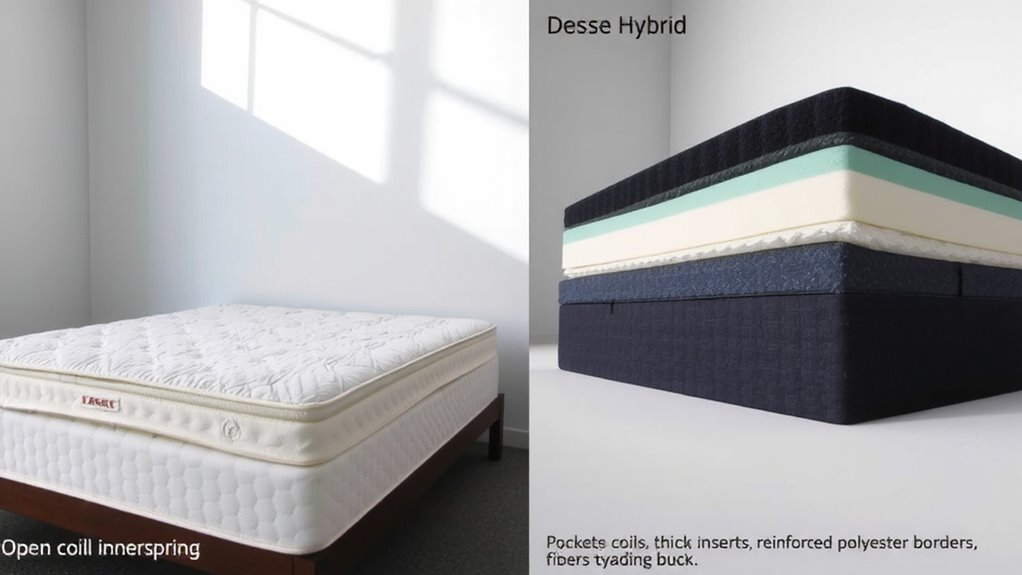
Many hybrid mattresses weigh more than innerspring models because they combine two heavy components: a coil support system and a thick foam or latex comfort layer. You’ll notice the extra heft especially when lifting or moving the bed. That’s due in part to dual layer coils, which add support and durability but also increase mass. The reinforced framing around the edges helps maintain shape and prevents sagging, yet adds further weight. These design choices improve motion isolation and pressure relief, which may help if you have sleep discomfort or frequent nighttime awakenings. While hybrids offer balanced feel and better contouring than basic innersprings, their size and weight can make setup harder-especially for one person. Consider whether the enhanced comfort and support are worth the heavier build, particularly if you plan to rotate or move the mattress regularly. Check the trial period and warranty too, so you can evaluate performance risk-free.
What Materials Actually Make a Mattress Heavy?
The weight of a mattress comes down to what it’s built with, not just how big it is. You’ll find that materials like memory foam and latex layers add significant heft. Memory foam, especially high-density types, conforms closely but packs on pounds due to its tightly bonded cells. Latex layers, whether natural or synthetic, are durable and supportive, yet denser than many realize. Together with reinforced coil systems in hybrids, these materials create a heavier feel. Innerspring models use lighter foams or thinner comfort layers, reducing overall weight. If you move homes often or prefer easier setup, a lighter build might help. But heavier materials often mean longer lifespan and less motion transfer, supporting better sleep. Always check manufacturer specs for exact composition. Most offer trial periods, so you can assess feel and performance risk-free. Warranty length can also hint at expected durability.
Should You Choose Lightness or Comfort?
A good night’s sleep often depends on balancing convenience and comfort, especially when choosing between lighter and heavier mattress types. Lighter innerspring models are easier to move and set up, thanks to lower material density. But heavier hybrids often offer better motion isolation and support, which can help if you share the bed or have sleep disruptions. Consider your needs carefully-prioritizing comfort may mean accepting more weight.
| Factor | Lighter Mattress | Heavier Mattress |
|---|---|---|
| Ease of setup | High | Low |
| Motion isolation | Low | High |
| Edge support | Moderate | Strong |
| Durability | Varies | Often higher |
| Pressure relief | Limited | Improved |
Higher material density in hybrids often enhances pressure relief and motion isolation. Check trial periods and warranties-many brands offer 100-night trials and 10-year coverage. Test both types if possible, focusing on how you feel in the morning.
On a final note
You might prefer an innerspring if you value lighter weight for easier moving and setup, since they rely mostly on coils with minimal padding. Hybrids add foam or latex layers, increasing support and comfort but also bulk. Heavier materials like memory foam or dense support cores raise overall weight. Consider your priorities: lightness for convenience, or added cushioning for pressure relief. Check trial periods and warranties to test comfort risk-free.