Innerspring Mattress Odor Removal: Natural Methods That Work
Your new innerspring mattress may smell due to off-gassing from foam and adhesives, but you can reduce this naturally. Unwrap it and let it air out for 24–48 hours in a well-ventilated room. Sprinkle baking soda, let it sit overnight, then vacuum. Use a light vinegar-water spray to neutralize odors, and place the mattress in sunlight for a few hours. These steps help break down VOCs and keep your sleep surface fresh. You’ll discover more effective strategies ahead.
Notable Insights
- Unwrap the mattress and air it out for 24–48 hours in a well-ventilated room to reduce off-gassing odors naturally.
- Sprinkle baking soda evenly over the surface and let it sit overnight to absorb lingering smells before vacuuming thoroughly.
- Lightly spray a mix of equal parts white vinegar and water to neutralize odors, then let the mattress dry completely.
- Place the mattress in direct sunlight for 2–4 hours, flipping it halfway, to kill odor-causing bacteria and mold.
- Rotate the mattress every 3–6 months and use a breathable, washable protector to prevent future odor buildup.
Why Your New Mattress Smells
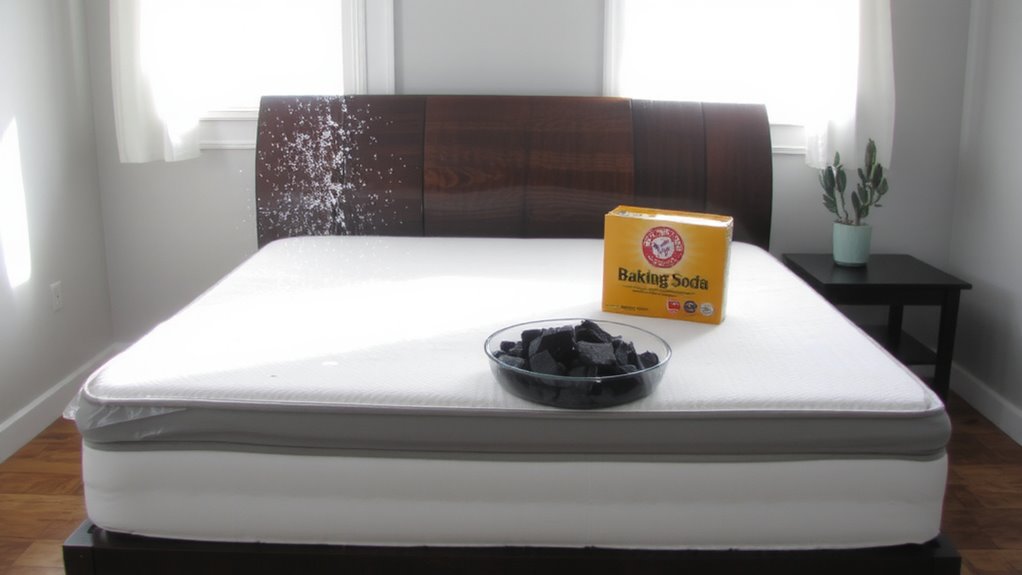
While you might expect a new mattress to smell like fresh linen or clean cotton, it’s common for innerspring models to carry a noticeable chemical or rubbery odor right out of the packaging. This scent usually comes from off gassing concerns-volatile organic compounds (VOCs) released as the foam and adhesives break down. Though most emissions are harmless and diminish over time, those with chemical sensitivity may notice headaches or irritation. The metal coils and layered padding in innersprings can trap these odors briefly, affecting air quality in small rooms. If you’ve dealt with sleep disruptions before, this temporary phase might influence your comfort. Manufacturers follow safety standards, but sensitivity varies. Checking product labels for CertiPUR-US® certification helps identify lower-emission foams. Knowing your risk for chemical sensitivity lets you weigh materials against trial periods. A solid warranty often supports returns if odors persist beyond the break-in phase.
Air It Out: The First Step to Freshness
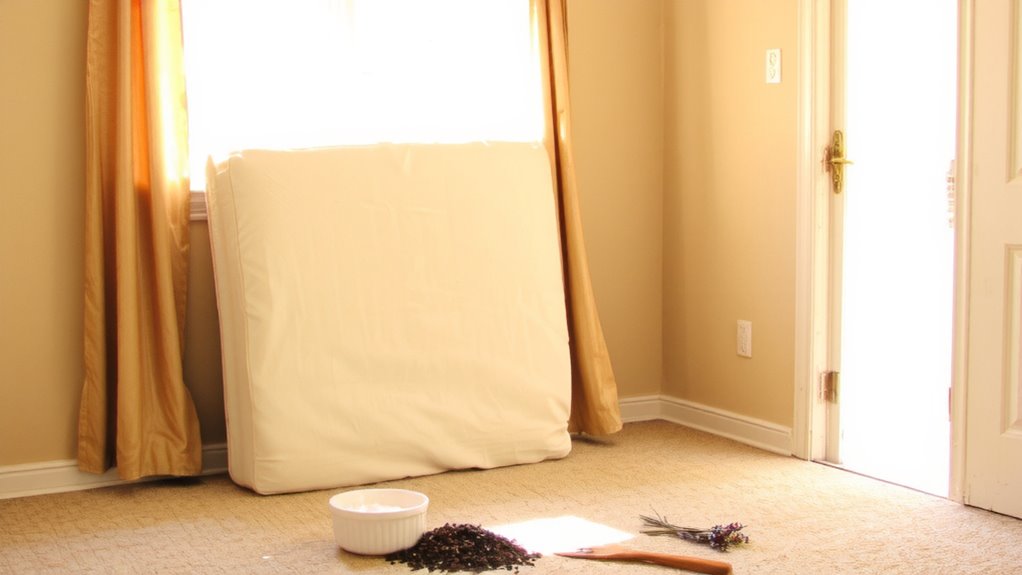
You can take care of that new mattress smell quickly by giving it time to breathe. Mattress ventilation is essential-unwrapping your innerspring mattress and letting it air out helps release trapped gases from packaging. Place it in a well-ventilated room, ideally near an open window or fan, to speed up the process. Fresh air benefits include breaking down volatile organic compounds (VOCs) that cause odors, letting your mattress settle more comfortably. Avoid covering it with bedding right away; let it off-gas for at least 24 to 48 hours. This step supports better indoor air quality and may reduce irritation for sensitive sleepers. Proper airflow also prevents moisture buildup, which could affect the steel coils over time. Airing it out doesn’t fix deep odors, but it’s the smart first move. Many manufacturers suggest this before use, and some warranty guidelines recommend it. Letting your mattress breathe is simple, effective, and free.
Remove Odors With Baking Soda
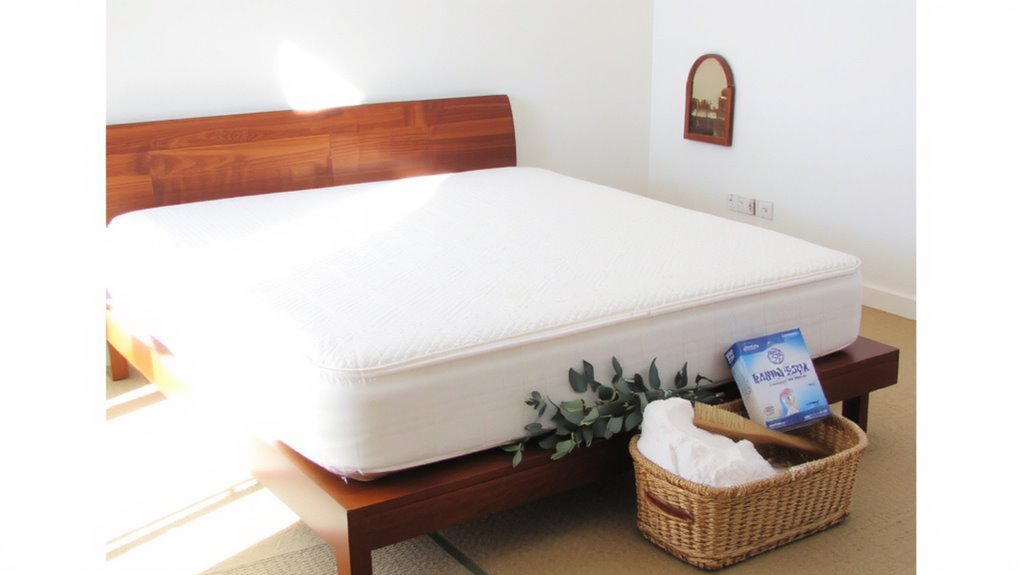
Baking soda is a go-to solution for tackling stubborn mattress odors without harsh chemicals. You can easily apply it by evenly sprinkling a generous layer over your innerspring mattress. Let it sit for at least a few hours, but for best results, allow the baking soda activation process to work overnight. This extended odor absorption timing maximizes its ability to pull out deep-seated smells from the mattress layers. Make sure the room is dry and well-ventilated during treatment, as moisture can hinder performance. After the wait, vacuum thoroughly with an upholstery attachment to remove all residue. This method supports better sleep hygiene by reducing irritants that might disrupt rest. It’s a safe, low-cost step especially helpful if you’re sensitive to smells or managing sleep issues. Consider repeating it monthly, especially if you don’t use mattress encasements or allergy barriers.
Clean and Deodorize With Vinegar Spray
How do you cut through lingering odors when baking soda isn’t enough? Try a vinegar spray-its natural acidity neutralizes stubborn smells at the source. The vinegar benefits include breaking down odor-causing residues without harsh chemicals, making it safe for most innerspring mattresses. Mix equal parts white vinegar and water in a spray bottle for balanced strength. Use light, even spray techniques to dampen the surface, not soak it-over-wetting can damage internal coils or padding. Focus on problem areas like the center and edges where body oils accumulate. Let the mattress air dry completely, which may take several hours. The vinegar scent fades as it dries, leaving a cleaner base. This step supports better sleep hygiene, especially helpful if odors disrupt your nighttime routine or worsen sensitivities.
Kill Bacteria With Safe Sunlight Exposure
While sunlight might seem like a simple fix, it’s actually one of the most effective ways to kill odor-causing bacteria on your innerspring mattress without chemicals. You can harness sunlight benefits by placing your mattress in direct sun for 2–4 hours, turning it halfway so both sides get exposure. UV rays naturally break down bacteria and mold that contribute to unpleasant smells, supporting long-term odor prevention. Just make sure not to leave it out too long-excessive sunlight can weaken fabric or fade materials over time. This method works especially well after cleaning with vinegar or other natural solutions. For best results, choose a dry, sunny day with low humidity to avoid moisture buildup. Sunlight exposure won’t replace deep cleaning, but it’s a smart, no-cost step that boosts freshness safely. You’ll reduce allergens and create a cleaner sleep surface with minimal effort.
Prevent Smells With Smart Bed Habits
If you want to keep your innerspring mattress smelling fresh over time, small daily choices can make a real difference. Good bedroom ventilation helps reduce moisture buildup, which can lead to musty odors. Open windows regularly or use a fan to keep air moving. Avoid blocking vents or crowding furniture near walls, as this limits airflow. You should also rotate your mattress every three to six months to promote even wear and prevent odor-trapping compression in one area. Mattress rotation improves longevity and supports consistent comfort. Keep bedding clean and consider using a breathable, washable mattress protector. These habits won’t cure deep odors, but they help prevent them. Smart bed habits support better sleep hygiene and may reduce irritation for those with sensitivities. Over time, proper care reduces the need for intensive cleaning and extends the life of your mattress.
On a final note
You’ve aired it out, used baking soda, sprayed vinegar, and let sunlight help-these steps reduce odors safely. Most off-gassing fades within days, but persistent smells may signal poor materials. Check warranty terms for replacements. Good sleep starts with a clean, fresh bed, so maintain it with breathable covers and regular airing. If odors linger or affect breathing, consider hypoallergenic options or consult a sleep specialist.