Reducing Facial Pressure Sores With Doughnut-Shaped Travel Pillows Recycled as Bed Accessories
You can reduce facial pressure sores by using a doughnut-shaped travel pillow to lift and support your face, distributing weight away from high-risk areas like the jaw and cheeks. Look for one with soft, breathable fabric and a wide central opening to avoid pressing on your nose or mouth. Position it so your forehead, chin, and jaw rest evenly on the ring. Check stitching regularly and choose models with removable, washable covers. Many come with a one-year warranty, and trying one overnight helps gauge comfort and fit-next steps reveal smarter ways to protect skin during long rests.
Notable Insights
- Doughnut-shaped travel pillows redistribute facial pressure by lifting the face off the bed surface.
- Using breathable, hypoallergenic materials helps protect delicate skin from irritation and moisture buildup.
- Proper alignment centers the pillow’s hole with the face to avoid pressure on nose and mouth.
- Regular repositioning every few hours enhances blood flow and reduces sore development risk.
- Washable, removable covers maintain hygiene when repurposing travel pillows for prolonged bed use.
Why Bed-Bound Patients Get Facial Sores
While lying in bed for long periods, you might not realize how much pressure builds up on certain parts of your face, especially if you’re unable to shift positions easily. This constant pressure reduces blood flow, increasing the risk of skin breakdown over time. When you’re dealing with immobility risks-due to recovery, illness, or disability-your skin becomes even more vulnerable. Without regular movement, tissues under the ears, along the jawline, and at the back of the head suffer. Even slight friction or moisture can worsen the situation. You don’t always notice early warning signs like redness or warmth, but they’re indicators your body is struggling. These sores start subtly, yet can deepen quickly if unaddressed. Choosing sleep aids that reduce facial pressure matters-not just for comfort, but for long-term skin health. Understanding how pressure affects sensitive areas helps you make informed choices about positioning and support during rest.
How Travel Pillows Prevent Facial Pressure Sores
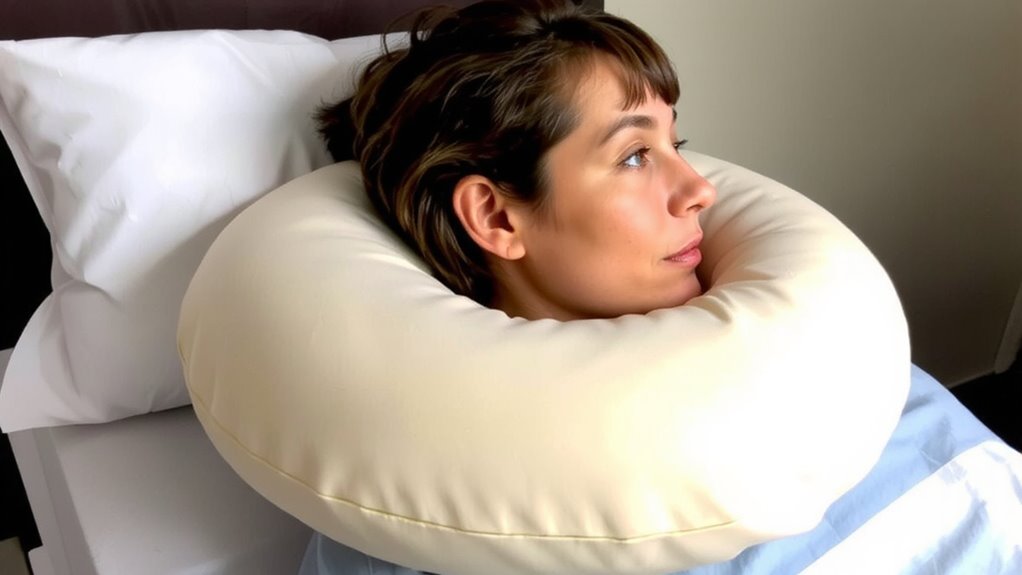
A well-designed travel pillow can make a real difference in protecting your skin when you’re spending long hours in bed. The key lies in smart material selection-memory foam or plush-filled fabrics help soften contact with sensitive facial areas. These materials work with the pillow’s ring shape to improve pressure distribution, lifting your face slightly so no single point bears too much weight. Evenly spread force means less risk of sores developing overnight. You’ll want a pillow with enough firmness to support, but enough give to stay comfortable. Look for models tested for durability and skin safety, many of which come with trial periods so you can test comfort. While not medical devices, these pillows offer a practical layer of protection. Choosing one involves balancing softness, shape, and how well it maintains pressure distribution through the night. It’s a simple upgrade that may help reduce skin stress. Some of the best travel pillows for comfort are specifically designed with ergonomic support in mind, making them ideal for extended use.
How to Repurpose a Travel Pillow for Bed Use
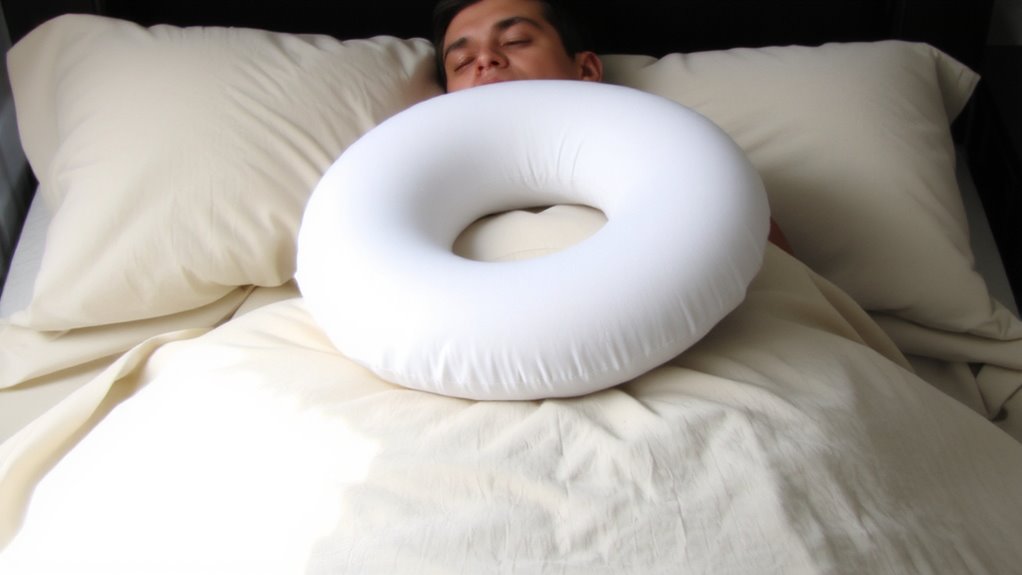
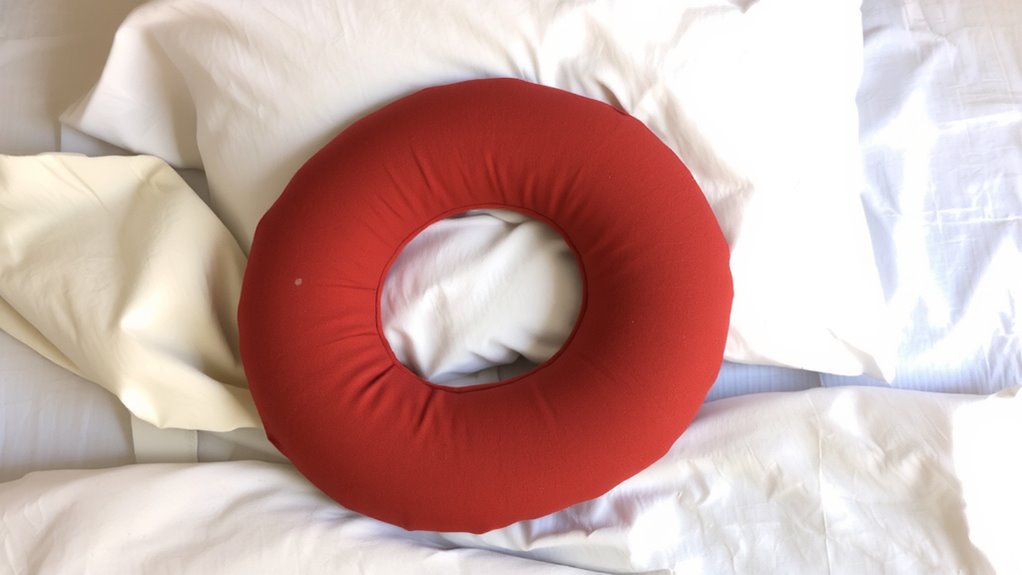
If you already own a doughnut-shaped travel pillow, you can easily adapt it for use at home to help ease facial pressure during sleep. Choose one made from breathable, hypoallergenic materials-memory foam offers support, while polyester fills are lighter and more flexible. Material selection affects both comfort and airflow, so consider your skin sensitivity and sleeping environment. Cover the pillow with a removable, washable case to simplify hygiene maintenance; machine-washable fabrics help prevent buildup of oils, bacteria, and allergens. Check stitching regularly for wear, especially if used nightly. Most travel pillows come with a one-year warranty, so keep the receipt. Though not designed for long-term bed use, with proper care, they can perform well as temporary sleep aids. Try it for a few nights to assess comfort and skin response before relying on it consistently. For optimal comfort and support, consider models highlighted in the Best Travel Pillows for 2024 roundup.
How to Position the Pillow to Protect Skin
Since proper placement makes a difference in how well the pillow protects your skin, start by centering the doughnut hole around your face so your forehead, nose, and chin rest on the raised outer ring. This pillow alignment reduces direct pressure on sensitive facial areas like the cheeks and jawline. Make sure the opening is wide enough to avoid contact with the nose and mouth, allowing clear breathing during sleep. Adjust your head position so the weight distributes evenly across the ring, minimizing strain. Check your skin regularly-skin monitoring helps catch early redness or irritation before sores develop. Reposition slightly every few hours if possible, especially during long rest periods. A well-aligned pillow supports airflow and comfort, making it easier to maintain restful sleep. Try different lying positions to see what works best, and reassess nightly.
Caregiver-Approved Tricks for Preventing Sores
While you’re focused on keeping skin healthy during long rests, small adjustments can make a real difference in preventing pressure sores. Regular skin monitoring helps catch redness or irritation early, especially around the cheeks, chin, and forehead. You can gently shift head position every few hours to reduce prolonged pressure. Consider pillow alternatives like foam rings, inflatable cushions, or specially designed bed supports that relieve facial contact with surfaces. These options vary in firmness and airflow, so try ones that suit the sleeper’s position and mobility level. Look for washable, hypoallergenic covers to maintain hygiene. Some products even come with trial periods, letting you test comfort and fit. Lightweight designs work well for travel or adjustable beds. While no solution is one-size-fits-all, combining proper alignment, frequent checks, and the right support improves outcomes. Small, consistent efforts add up to better skin health over time.
On a final note
You can reduce facial pressure sores by repurposing a doughnut-shaped travel pillow in bed. Its hollow center relieves pressure on sensitive areas like the nose and cheeks, while the soft, supportive ring cradles the face gently. Choose one with smooth seams and machine-washable fabric for comfort and easy care. Position it under the head or face, aligning the opening with bony prominences. Test it during short rests first, and check skin regularly. Caregivers note fewer sores with consistent use.