Creating a Digital Sunset Plan That Preserves Pineal Gland Function for Natural Sleep-Wake Regulation
You start protecting your sleep the moment you stop scrolling, since blue light suppresses melatonin by tricking your brain into daytime mode. Set a digital sunset 60–90 minutes before bed, turning off screens or using night mode and dimming brightness. Swap late-night use with calming rituals like tea, candles, or journaling. Even in a dark room, pre-bed screen time disrupts rhythm-shifting usage earlier helps. Orange-tinted glasses offer extra protection if screens are a must. Consistency strengthens natural alignment, and small changes improve sleep onset and quality over time-with the right plan, your pineal gland stays in sync more easily, especially when you see how each choice adds up.
Notable Insights
- Establish a digital sunset 60–90 minutes before bedtime to support natural melatonin release.
- Use blue light filters and reduce screen brightness to minimize circadian disruption during evening screen use.
- Wear orange-tinted blue light-blocking glasses for maximum protection against melatonin suppression.
- Replace late-night screen time with wind-down rituals like journaling, stretching, or drinking herbal tea.
- Shift screen use earlier in the evening and avoid devices in the last hour before bed to preserve pineal gland function.
How Blue Light Blocks Melatonin (And Ruins Sleep)
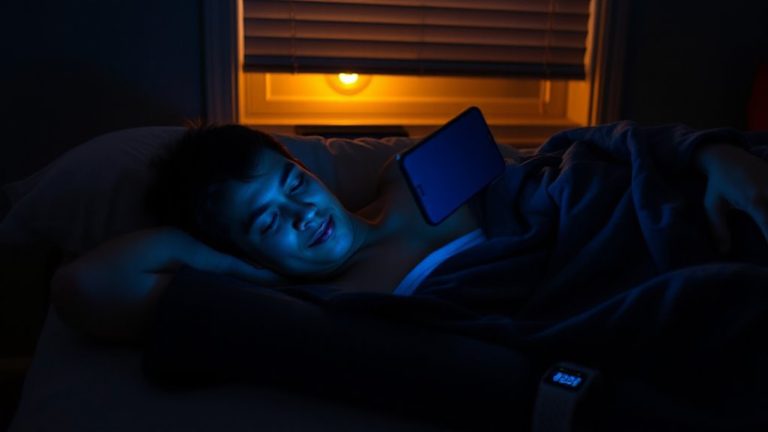
While you’re winding down in the evening, the blue light from your phone, tablet, or computer might be silently disrupting your sleep by interfering with melatonin production. Your eyes’ retinal sensitivity to short-wavelength blue light tricks your brain into thinking it’s still daytime, suppressing melatonin release when you need it most. This leads to circadian disruption, shifting your internal clock and delaying sleep onset. Over time, consistent exposure can worsen sleep quality and contribute to sleep disorders. You don’t need to eliminate screens entirely-adjusting brightness, using night modes, or wearing blue-blocking glasses are practical options. These tools reduce high-energy visible light, supporting natural pineal gland function. Consider testing different strategies over a week to see what improves your sleep. Small changes can make a measurable difference, helping you rely less on sleep aids and maintain a healthier rhythm naturally. For those prone to light-triggered headaches, trying the best blue light glasses for migraine relief can further protect your neurosensory health while supporting sleep hygiene.
Set a Digital Sunset Curfew for Better Sleep
Since your brain relies on light cues to regulate sleep, setting a digital sunset curfew-say, 60 to 90 minutes before bed-can help signal that it’s time to wind down. This simple act supports your pineal gland’s natural melatonin release, improving sleep quality over time. Establishing clear digital boundaries reduces exposure to sleep-disrupting blue light, letting your body shift smoothly into rest. Practicing screen discipline means turning off phones, tablets, and TVs consistently each night, not just when you feel tired. It’s not about perfection, but progress-small, repeatable changes build lasting habits. You don’t need special tools; a timer or phone setting can enforce your curfew. Treat this time like a bedtime for devices, not just a suggestion. Over days, you’ll likely notice easier sleep onset and fewer nighttime awakenings, reducing reliance on sleep aids or fixes for sleep disorders.
Swap Late-Night Scrolling for Wind-Down Rituals
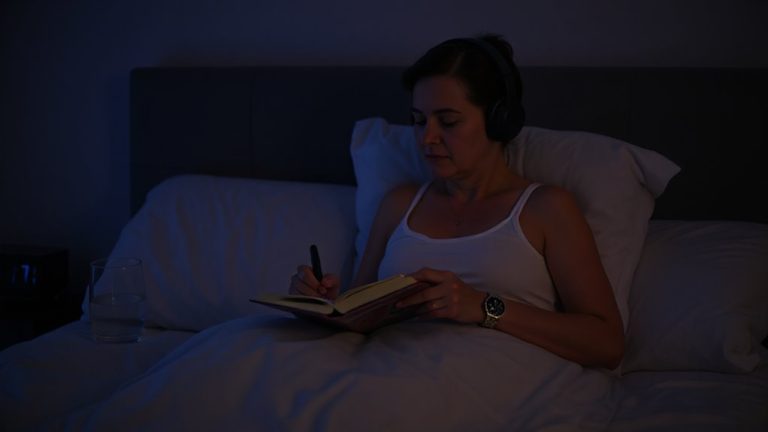
What if the minutes before bed could become the most restful part of your day instead of the most draining? Swapping late-night scrolling for intentional wind-down rituals supports pineal gland function and natural melatonin release. Simple habits like candle lighting or sipping herbal teas signal your brain that it’s time to shift into rest mode. These low-effort practices reduce mental clutter and avoid overstimulation. Consider building a consistent 20- to 30-minute routine with activities that feel calming, not taxing. Lighting the best candles for sleep can enhance relaxation through both scent and soft illumination.
| Ritual | Time Needed | Key Benefit |
|---|---|---|
| Candle lighting | 5 min | Promotes visual calm |
| Herbal teas | 10 min | Aids relaxation |
| Journaling | 15 min | Clears mental clutter |
| Gentle stretching | 20 min | Reduces physical tension |
Try each for three nights to assess impact.
Block Blue Light If You Must Use Screens at Night
If you need to use screens after dark, cutting down blue light is one step you can take to support better sleep. Your pineal gland responds to light cues, and too much blue light at night may disrupt melatonin production. That’s where blue light filters come in-they reduce the amount of stimulating blue wavelengths your eyes receive. Most smartphones and tablets now include built-in blue light filters you can schedule for sunset. Pair this with screen brightness control to dim the display further, lowering overall light exposure. These tools don’t block all disruptive light, but they help reduce strain and signal your brain that night is deepening. You might notice slightly warmer screen tones, but many find the trade-off worth it. Use them consistently for a few nights to assess how your sleep feels. They’re simple fixes, not complete solutions, but they support better alignment with natural rhythms. For added protection, consider wearing orange light-blocking glasses that filter a broader spectrum of nighttime light.
Keep Your Bedroom Dark: But Start With Screen Timing
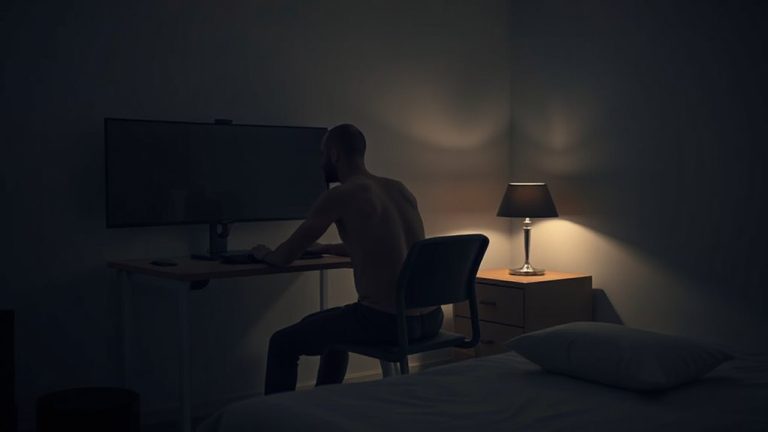
Though you might not realize it, the timing of your screen use affects how easily you can fall asleep, even if your bedroom is completely dark. Your pineal gland responds to light cues long before you hit the sheets. To support natural melatonin production, shift screen use earlier and reduce exposure in the hour before bed. Even small amounts of light pollution from devices can disrupt your internal clock. Enhancing your bedroom ambiance means more than blackout curtains-it starts with smart screen timing.
| Time Before Bed | Screen Use | Impact on Sleep |
|---|---|---|
| 2+ hours | Allowed | Low disruption |
| 1–2 hours | Limited | Moderate risk |
| 0–1 hour | Avoid | High disruption |
Gradually adjust your routine to improve sleep regulation without relying on sleep aids. Consistency matters more than perfection.
On a final note
You can support your pineal gland’s melatonin release by setting a digital sunset at least an hour before bed. If you use screens, apply blue light filters and keep brightness low. Prioritize dark environments and consistent wind-down routines like reading or light stretching. These steps help regulate your natural sleep-wake cycle, reducing reliance on sleep aids. Small, steady changes improve sleep quality over time-try them for at least two weeks to assess results.