Why Innerspring Mattresses Offer Better Bounce for Active Sleepers
You’ll find innerspring mattresses offer better bounce because their steel coils respond quickly to movement, helping you shift positions with ease. The coil system rebounds instantly, supporting hips and shoulders during movements. Pocketed coils reduce motion transfer, while strong edge support stabilizes frequent movers. Though bounce can disturb a partner, models vary in isolation. Many come with sleep trials and 10-year warranties, letting you test durability and comfort-useful details that become clearer as you explore further.
Notable Insights
- Innerspring mattresses provide immediate bounce due to responsive steel coils that quickly adapt to movement.
- Coil systems offer rapid rebound, helping active sleepers reposition easily during the night.
- Pocketed coils enhance support while maintaining bounce, improving comfort for frequent turners.
- Strong edge support in innersprings aids mobility and stability for active sleepers.
- Coil tension and gauge can be tailored to body weight, optimizing bounce and durability.
Why Restless Sleepers Need Innerspring Bounce

While you might toss and turn through the night, an innerspring mattress could actually help you move more easily. Its coil system responds quickly to shifts, letting you reposition without resistance. This responsiveness aids pressure relief by adjusting to your body’s changing contours, especially around heavier areas like hips and shoulders. Though innerspring models aren’t known for top-tier motion isolation, newer designs with pocketed coils reduce partner disturbance better than traditional open coils. If you share the bed, this balance of bounce and stability may support uninterrupted rest. Many models also include comfort layers that cushion without trapping heat. Look for ones with solid edge support-it helps if you move often. Most brands offer sleep trials and 10-year warranties, so testing one risk-free makes sense. For restless sleepers needing support and freedom to move, innerspring mattresses offer a practical blend of responsiveness and durability worth considering.
What Makes Innerspring Mattresses Naturally Bouncy
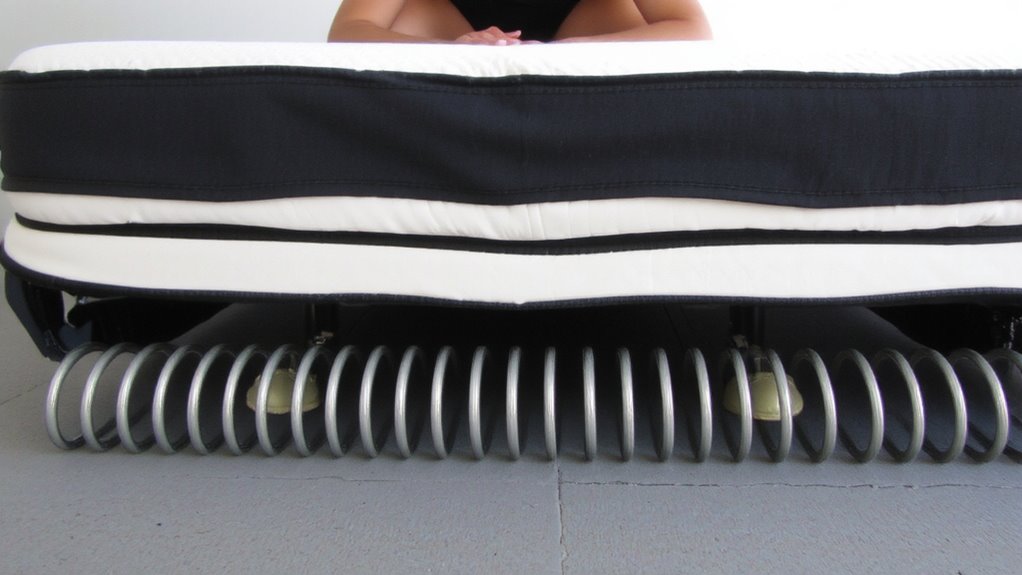
The bounce in an innerspring mattress comes from its core-steel coils that compress and rebound with movement. You feel this response because each coil is designed to support weight and restore shape quickly. Coil tension determines how firm or soft the bounce feels; higher tension gives a tighter, more controlled rebound, while lower tension offers a looser feel. Spring gauge, which refers to the thickness of the wire, also matters-lower gauge numbers mean thicker, more durable coils that support heavier movement without sagging. Together, these elements create natural responsiveness that helps you shift easily at night. This design works well if you move often or share a bed, since the surface resets quickly. Many models include trial periods and warranties, so you can test the feel risk-free. Consider your preferred firmness and body weight when choosing coil specs. For those seeking top-tier support and comfort, exploring the best spring coil mattresses can help identify models that excel in durability and responsive feel.
How Springs React When You Move at Night
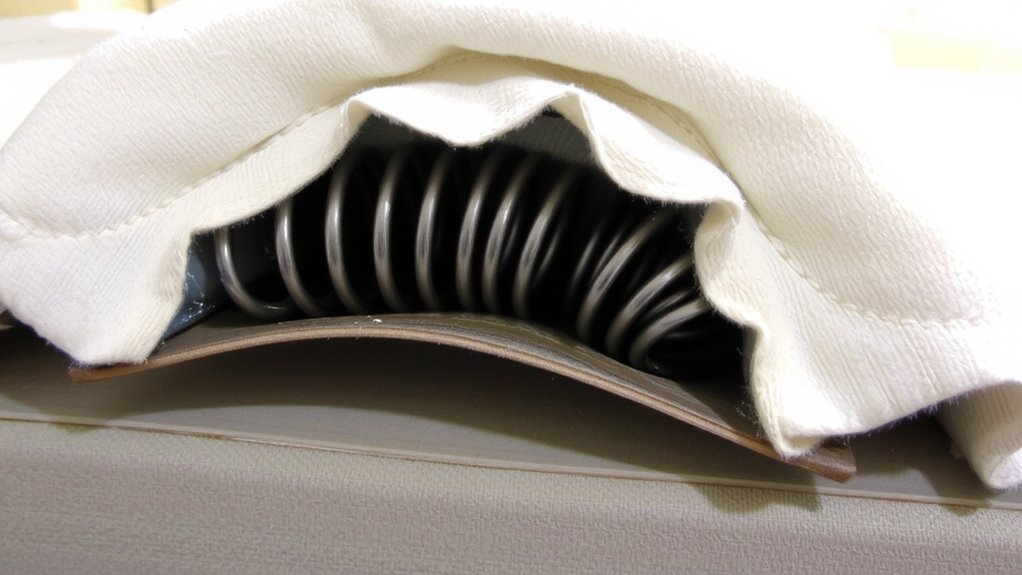
You feel the coils respond the moment you shift positions, flexing under pressure and springing back as you move. This immediate reaction comes from the spring tension engineered into each coil, helping support your body while allowing easy movement. As you roll or adjust during the night, the innerspring system compresses just enough to cushion you, then rebounds quickly to maintain alignment. While the mattress offers solid responsiveness, motion isolation is typically limited-your partner may feel some movement, especially with interconnected coils. If you move frequently, the consistent bounce reduces the effort needed to reposition, which can be helpful if you have mild sleep discomfort. Look for models with pocketed coils for better motion isolation without sacrificing support. Most quality innersprings come with a trial period and long warranties, so test one if ease of movement matters to your sleep routine.
Innerspring Bounce vs. Memory Foam: Key Differences
If you’re used to sinking slowly into your mattress and feeling it contour closely to your body, switching to an innerspring might feel like a big change, especially when compared to memory foam. Memory foam offers deep pressure relief by cradling your curves, while innerspring mattresses respond with more immediate bounce and support. You’ll notice less sinkage, which can make shifting positions easier during the night. However, memory foam typically provides better motion isolation, meaning your partner’s movements are less likely to disturb you. Innerspring models often include a comfort layer over coils, blending some pressure relief with lively responsiveness. Both types have strengths: if you prioritize movement ease and a firmer feel, innerspring may suit you. Consider testing both with a trial period, and check warranty terms to guarantee long-term satisfaction.
The Trade-Off: Bounce and Partner Disturbance
While that responsive bounce in an innerspring mattress makes it easier to move and shift positions at night, it also means more motion transfers when your partner rolls over or gets in and out of bed. This can affect motion isolation, making it harder to maintain uninterrupted sleep. If partner comfort is a priority, you’ll want to weigh bounce against how much movement you both feel. Side sleepers seeking pressure relief may find better performance in foam-based designs like the Tempurpedic mattresses for side sleepers.
| Feature | Innerspring Mattress | Impact on Sleep |
|---|---|---|
| Bounce | High | Easier movement |
| Motion Isolation | Low to moderate | More shared movement |
| Partner Comfort | Varies | May disturb light sleepers |
| Edge Support | Strong | Stable sitting and lying |
Consider models with pocketed coils, as they offer slightly better motion isolation. Look for sleep trial and warranty options when testing for compatibility.
Choose the Best Innerspring for Your Sleep Style
What kind of sleeper are you-restless and shifting throughout the night, or do you settle into one position and stay put? If you move a lot, look for higher coil tension to support frequent repositioning without sagging. Lower coil tension suits lighter sleepers or those who prefer a softer feel. Mattress height also matters-taller models, usually over 12 inches, offer more coil support and padding, which helps with pressure relief and motion isolation. Shorter innersprings may feel firmer and are often lighter, making them easier to move or rotate. Check the warranty, too-many quality innersprings include 10-year coverage, showing confidence in durability. Try models with longer trial periods, so you can test bounce, support, and edge strength. Matching coil tension and mattress height to your body type and sleep habits improves comfort and long-term support, helping you stay aligned and reduce disturbances.
On a final note
You’ll find innerspring mattresses offer responsive bounce, helping you shift easily at night. Their coil systems support movement without trapping heat, unlike denser foams. If you’re active in sleep, this bounce can improve comfort and repositioning. Keep in mind, however, motion may transfer to a partner. Look for models with reinforced edges and solid warranties-many offer trial periods, so test one risk-free to see if it fits your needs.