How to Use Light Boxes for Morning Phototherapy in Delayed Sleep Phase Disorder
Use a 10,000 lux light box that filters UV rays within 30 to 60 minutes of waking, sitting 16–24 inches away with eyes open but not staring. Position the light slightly above eye level and use it daily, including weekends, for 20–30 minutes. Keep a consistent wake-up time to strengthen your circadian rhythm. Avoid evening screen light to prevent interference. Many quality boxes offer warranties or trial periods, so you can test effectiveness with little risk-there’s more to contemplate for lasting results.
Notable Insights
- Use a 10,000 lux light box that filters UV rays to ensure safe and effective therapy.
- Begin treatment within 30 to 60 minutes of waking to shift circadian timing earlier.
- Sit 16 to 24 inches from the light box with eyes open, but avoid staring directly at it.
- Maintain consistent daily use, including weekends, for sustained circadian rhythm alignment.
- Limit sessions to 20–30 minutes while engaging in quiet morning activities like eating or reading.
What Is Delayed Sleep Phase Disorder (And Do You Have It)?
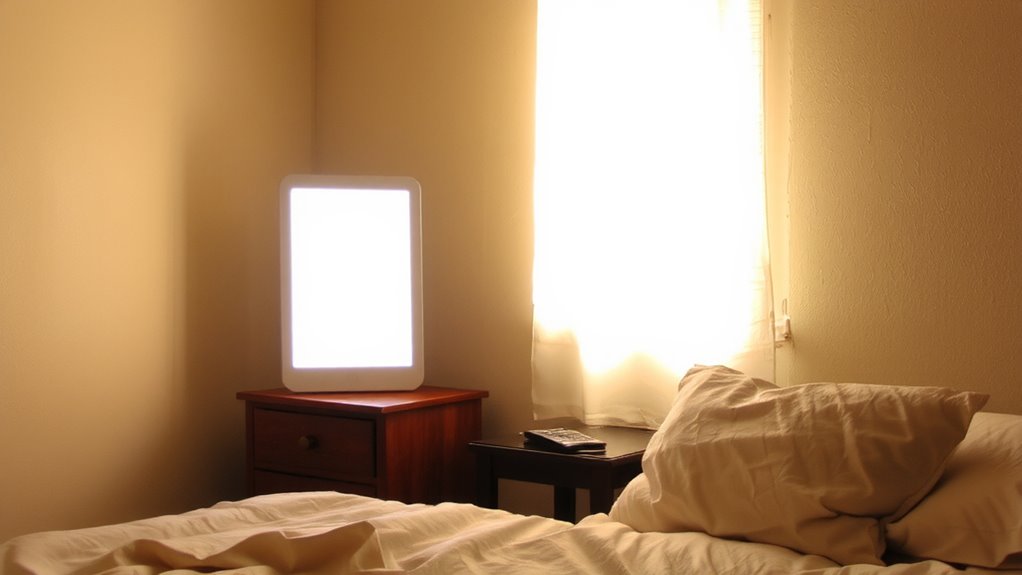
What if your body simply refuses to fall asleep when everyone else does? You might lie awake for hours, even when exhausted, just to finally drift off at 2 a.m. or later. This could be delayed sleep phase disorder (DSPD), not just poor habits. You’re not alone-many with DSPD experience chronic insomnia because their sleep cycle is out of sync. It’s tied to circadian misalignment, where your body’s internal clock runs markedly later than the typical day-night rhythm. You may struggle to wake up in the morning, feel groggy all day, or rely on naps that don’t help long-term. Unlike temporary sleep trouble, DSPD persists for months, often starting in adolescence. It affects school, work, and daily functioning. Diagnosis usually involves sleep logs or actigraphy. Treatments exist, but understanding your condition is the first practical step toward better sleep choices.
How Morning Light Therapy Resets Your Body Clock
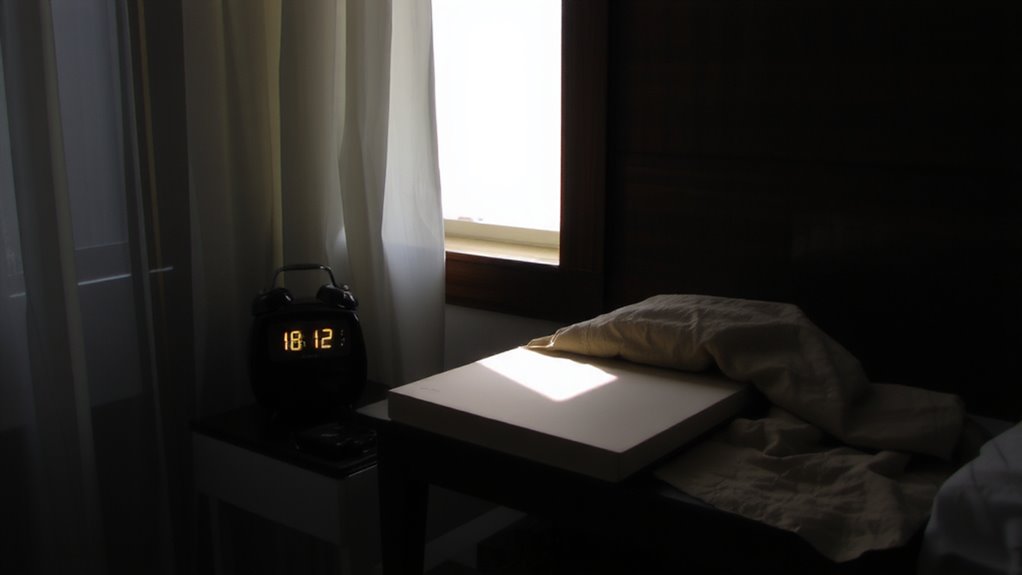
Could it be that something as simple as light helps shift your sleep schedule back on track? Yes-morning light therapy influences your circadian rhythm, the internal clock controlling when you feel awake or tired. Exposure to bright light soon after waking signals your brain to stop producing melatonin, achieving melatonin suppression. This shift helps reset your internal clock, making it easier to fall asleep earlier at night and wake up refreshed.
| Effect | Result on Sleep |
|---|---|
| Morning light exposure | Advances circadian rhythm |
| Melatonin suppression | Reduces drowsiness in morning |
| Regular timing | Stabilizes sleep-wake cycle |
| Brightness (10,000 lux) | Increases therapy effectiveness |
Using a light box daily reinforces this pattern, gradually aligning your sleep with desired times.
When to Use Light Therapy for DSPD (Morning Timing Tips)
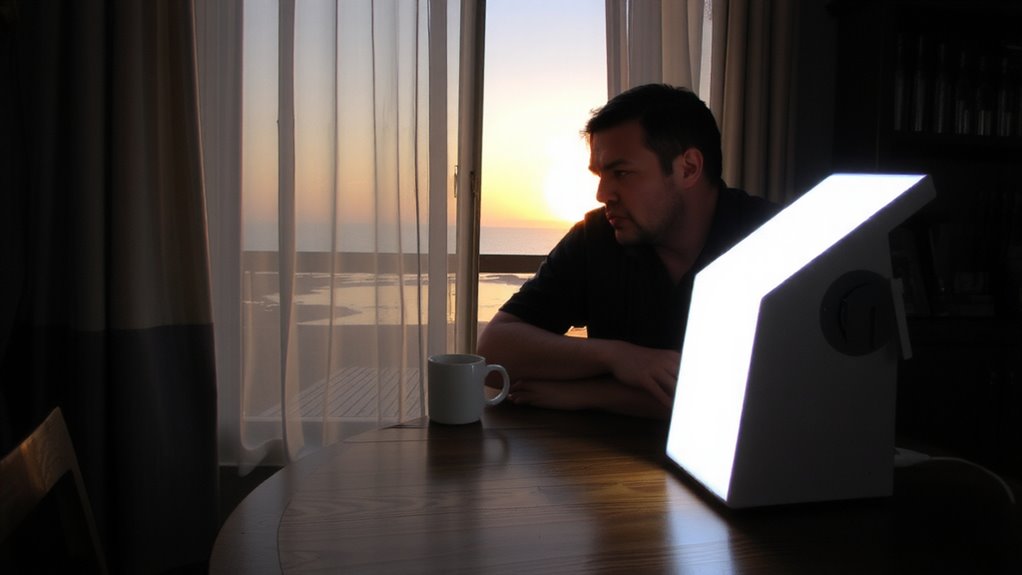
You already know morning light helps reset your internal clock by reducing melatonin and shifting your sleep schedule earlier. For best results, use your light box within 30 to 60 minutes after waking-this timing strengthens the circadian signal. Consistency matters more than perfection; aim for daily use, even on weekends. Avoid evening exposure to bright light, especially blue-rich sources like screens, as it can delay your clock and counteract morning therapy. Your device placement should be slightly above eye level, about 16 to 24 inches from your face, angled to reach your eyes without staring directly. Make sure the light box emits at least 10,000 lux and filters out UV rays. Effective treatment doesn’t require full attention-read, eat breakfast, or work while using it. Track changes over 1–2 weeks to assess impact on your sleep onset.
Your Step-by-Step Morning Light Therapy Routine
Once you’ve picked a reliable light box that delivers 10,000 lux and filters UV rays, setting up a consistent morning routine becomes easier. Sit about 16 to 24 inches from the light box within 30 to 60 minutes of waking. Keep your eyes open, but don’t stare directly at the light-reading or eating works fine. Aim for a treatment duration of 20 to 30 minutes daily, ideally at the same time each morning. This helps shift your circadian rhythm earlier over time. Most people notice improvements within a few days to two weeks. While side effects like headache or eye strain can occur, they’re usually mild and fade with proper positioning or shorter sessions. If discomfort continues, reduce treatment duration or increase distance slightly. Consistency matters more than perfection-missed days can slow progress. Track your sleep times and alertness to adjust the routine based on your body’s response.
What to Look for in a Light Box for DSPD
A good light box for Delayed Sleep Phase Disorder (DSPD) should meet a few key criteria to be effective and safe. Look for a device that provides at least 10,000 lux of light intensity, as this level has been shown to help regulate circadian rhythms when used in the morning. Make sure the light box filters out most UV rays-this guarantees device safety and protects your eyes and skin with prolonged use. Choose one with a large, evenly lit surface so you don’t need to sit too close or at a strict angle. Many models are portable and designed for desk use, making them easy to include in your morning routine. Check if the manufacturer offers a trial period or warranty, which lets you test effectiveness without risk. These features help you find a reliable, comfortable option that supports long-term use.
Why Light Therapy Isn’t Working: Common Mistakes to Avoid
Some people don’t see results from light therapy even after using a well-built device, and the issue often lies in how it’s being used rather than the box itself. You might be using incorrect intensity-many boxes don’t emit the 10,000 lux needed for effective morning phototherapy, especially if you’re sitting too far away. Make sure you’re following the manufacturer’s distance guidelines. Inconsistent duration is another common mistake; skipping days or using the light for only a few minutes can weaken results. Aim for 20 to 30 minutes daily, at roughly the same time each morning. Also, avoid looking directly at the light, but keep your eyes open and positioned toward it. Using your device while checking your phone or eating helps build routine. Poor timing, like using it too late in the day, can disrupt sleep further. Small adjustments in intensity, duration, and timing often make a noticeable difference over time.
How Long Does Light Therapy Take to Fix DSPD?
How soon can you expect to feel a real shift in your sleep schedule if you’re using light therapy for delayed sleep-wake phase disorder (DSPD)? Most people start noticing changes within one to two weeks, but full adjustment can take three to six weeks. Your duration expectations should be realistic-consistent use is key. Treatment consistency matters more than perfect timing; aim for daily 30- to 45-minute sessions each morning, ideally within an hour of waking. Light boxes with 10,000 lux intensity work best when placed at eye level, about 16 to 24 inches away. You don’t need to stare directly at the light-just stay in its glow while eating, reading, or working. Results vary, but sticking with the routine improves your odds. Don’t stop early, even if you feel better. Keep going until your sleep stabilizes. Patience and regular use shape success.
On a final note
You can use morning light therapy to help shift your sleep schedule earlier if you have delayed sleep phase disorder. Sit by a quality light box soon after waking, ideally within 30 to 60 minutes, for 20 to 30 minutes daily. Choose a box with 10,000 lux, UV filtering, and a large enough surface. Consistency matters most-stick with it for several weeks, and adjust timing carefully if progress stalls.