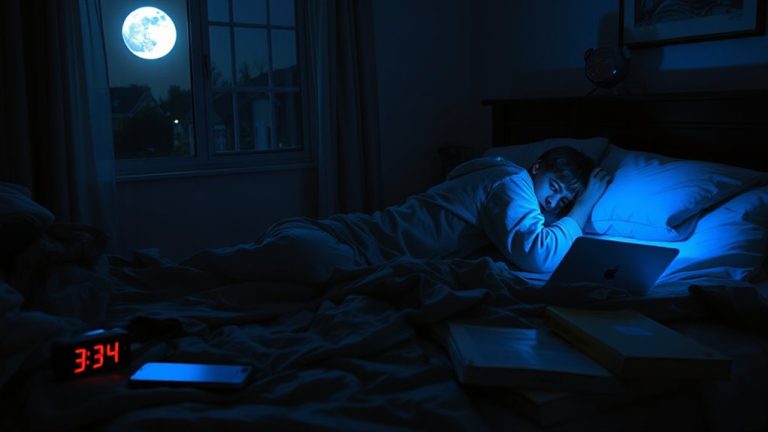
How to Educate Staff on Managing Irregular Sleep-Wake Rhythm Disorder in Care Facilities
Train your staff to spot irregular sleep patterns and nighttime agitation, then respond with calm, consistent routines. Set regular meal and activity times to support circadian rhythms, and use morning light therapy-10,000 lux for 20–30 minutes-to reinforce wakefulness. Guide night wanderers gently, avoid stimulation after dusk, and coordinate with healthcare providers on sleep aids and treatment plans. You’ll soon see how small, structured changes improve rest and safety.
Notable Insights
- Train staff to recognize fragmented sleep and behavioral signs like irritability or disorientation linked to irregular sleep-wake patterns.
- Implement consistent daily schedules with structured meals, activities, and rest times to reinforce circadian rhythms.
- Instruct staff on proper morning light therapy use to support patients’ internal clocks effectively and safely.
- Prepare caregivers to calmly respond to nighttime agitation using non-confrontational communication and a soothing environment.
- Facilitate regular collaboration with healthcare providers to align care practices with medical plans and monitor treatment outcomes.
Spot The Signs Of Irregular Sleep-Wake Rhythm Disorder
An irregular pattern of sleep and wakefulness might be the first clue you notice in someone struggling with Irregular Sleep-Wake Rhythm Disorder (ISWRD). You’ll see fragmented sleep patterns-multiple naps during the day and night, with no clear main sleep period. These aren’t just occasional disruptions; they persist for at least seven days and often longer. You might also observe subtle behavioral cues: low motivation, irritability, or difficulty focusing. The person may seem withdrawn or disoriented, especially during usual daytime hours. Since ISWRD mimics other conditions, it’s key to track sleep logs or use actigraphy for accurate assessment. Identifying these signs early helps guide decisions about evaluations, care strategies, and if needed, professional sleep aids. You’re not diagnosing, but your observations contribute to informed next steps. Stay consistent in noting symptoms-they help build a clearer picture for medical review.
Build Daily Routines That Support Circadian Rhythms
Now that you’ve started recognizing the signs of irregular sleep patterns, you can use that awareness to shape more effective daily routines. Consistent meal timing helps anchor the body’s internal clock, so aim to serve meals at roughly the same times each day. Pair this with thoughtful activity scheduling-plan light physical and social activities in the morning and early afternoon to promote wakefulness. Avoid stimulating tasks close to bedtime, as they may delay sleep onset. Structured routines give residents cues about when to be alert or rest, improving sleep quality over time. These patterns support circadian rhythms naturally, reducing reliance on sleep aids. When routines are predictable, sleep schedules often stabilize. You’ll likely notice fewer nighttime awakenings and more daytime engagement. Trial adjustments gradually and track changes to see what works best. Small, consistent steps make a meaningful difference.
Use Morning Light Therapy to Reset Sleep Schedules
When the body’s internal clock is out of sync, morning light therapy can help guide it back on track by mimicking natural sunlight that stimulates alertness and regulates melatonin release. You should provide consistent light exposure each morning, ideally within one hour of waking, to strengthen circadian signals. Use a lightbox that emits 10,000 lux for 20 to 30 minutes daily-this intensity has proven effective in clinical settings. Proper therapy timing matters: earlier sessions support earlier sleep onset, while delayed use may disrupt rhythms. Position the lightbox at eye level, about 16 to 24 inches away, without staring directly at it. Most units are designed for durability, with replaceable bulbs and a sturdy stand. Many come with a one-year warranty. Regular use, combined with structured routines, improves sleep coherence over weeks. Watch for eye strain or headaches, and adjust placement or duration as needed.
Teach Calm Responses to Nighttime Wandering and Agitation
What can you do when someone with irregular sleep-wake rhythm disorder gets up at night, confused or agitated? Stay calm and use gentle de escalation techniques to prevent fear or escalation. Speak in a soft, reassuring tone and avoid sudden movements. Recognize that their confusion is part of the disorder, not defiance. Support their emotional regulation by maintaining a predictable nighttime environment-dim lights, familiar objects, and quiet. Don’t argue or correct; instead, guide with simple directions if needed. Responding patiently reduces stress for both resident and staff. Consistent, non-confrontational responses help build trust over time. Nighttime wandering may continue, but your calm presence lowers the risk of injury or distress. Training in these responses prepares your team to handle episodes safely and respectfully, supporting rest and stability without relying on sleep aids unless medically advised.
Partner With Healthcare Providers for Ongoing ISWRD Management
You’ve learned how to respond calmly when nighttime confusion or wandering occurs, and that steady, reassuring support makes a real difference. Now, partner with healthcare providers to guarantee ongoing ISWRD management. Care coordination helps align your efforts with medical plans, guaranteeing everyone-nurses, families, physicians-shares updates and adjusts routines as needed. Regular check-ins with providers allow for timely medication oversight, so dosages stay effective and side effects are caught early. You’ll also get guidance on whether sleep aids are appropriate and how they interact with existing treatments. This teamwork improves sleep tracking, reduces trial and error, and supports safer adjustments. Don’t act alone-consistent communication strengthens care quality. When staff and providers collaborate, residents benefit from more stable routines and tailored strategies that evolve with their needs.
On a final note
You can help residents manage irregular sleep-wake rhythm disorder by noticing patterns like nighttime wandering or daytime drowsiness. Set consistent routines, use morning light exposure, and respond calmly to disruptions. Work with healthcare providers to assess needs and adjust strategies safely. These steps support circadian health without strong sedatives. Simple, consistent changes often improve sleep quality over time, making daily life easier for everyone in the facility.