Understanding the Benefits of NREM Stage 2 Sleep Deep Dive
You spend about half your sleep cycle in NREM stage 2, where your brain strengthens memories through sleep spindles and shields rest with K-complexes. It’s key for learning, synaptic efficiency, and blocking disruptions like noise. While not as deep as stage 3, it stabilizes sleep architecture and supports long-term brain health. Consistent sleep schedules, a cool dark room, and reduced screen time boost its quality-you may find even small changes improve how you think and feel tomorrow.
Notable Insights
- NREM Stage 2 sleep supports memory consolidation through sleep spindles that reinforce learning and skill retention.
- Sleep spindles and K-complexes stabilize brain activity, protecting sleep from external disturbances like noise.
- This stage makes up about half of total sleep, acting as a foundation for overall sleep architecture.
- Neural replay during NREM Stage 2 strengthens daily memories and aids synaptic pruning for brain efficiency.
- A cool, quiet environment and consistent sleep schedule enhance the quality and benefits of this sleep stage.
What Is NREM Stage 2 Sleep?

Sleep, particularly the quiet progression through its stages, plays a key role in how well you feel and function. NREM Stage 2 is a deeper phase where your brain waves slow but include brief bursts called sleep spind traffics. These brain waves help shield your sleep from disruptions, making this stage a stabilizing force in your rest cycle. Your body temperature starts dropping here, preparing you for more restorative phases. It’s a quiet reset, not as deep as Stage 3 but more settled than light sleep. Most adults spend about half their sleep cycle in this stage, so regularity matters. If you’re struggling with poor sleep quality or frequent waking, tracking changes in brain waves and body temperature through sleep studies might guide treatment. Sleep aids or adjustments to environment and routine can support better shifts into and through NREM Stage 2, improving overall sleep efficiency.
How NREM Stage 2 Supports Memory Consolidation

Memory thrives during the quiet bursts of brain activity known as sleep spindles, a hallmark of NREM Stage 2 sleep. You’re likely building stronger memories as your brain performs neural replay, quietly reactivating the day’s experiences to reinforce learning. This stage also supports synaptic pruning, trimming less important connections so your mind stays efficient. These processes help solidify skills and facts, especially after focused learning. If you’re studying or training, protecting your sleep quality directly benefits memory gains. Sleep disorders like insomnia or apnea can disrupt this stage, reducing its benefits. Addressing such issues-through evaluation, lifestyle changes, or guided treatment-can restore deep, restorative rest. Some sleep aids may alter sleep architecture, so review options with a provider to guarantee NREM Stage 2 remains intact. Prioritizing consistent sleep schedules supports peak memory performance over time.
The Role of Sleep Spindles and K-Complexes
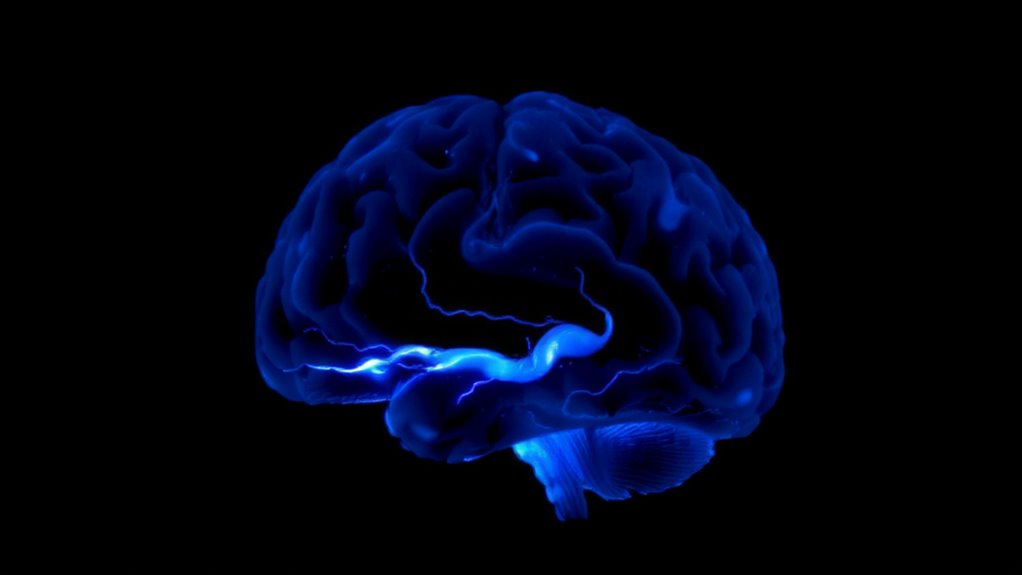
Brain waves hold the key to understanding how your body restores itself during NREM Stage 2 sleep. You experience bursts of rhythmic activity called sleep spindles, which support neural synchronization-helping your brain coordinate activity across regions. These spindles are linked to memory and learning, making them essential for cognitive recovery. Alongside them, K-complexes appear, showing sharp peaks followed by slow waves. They trigger cortical inhibition, briefly silencing neurons to stabilize brain activity and protect sleep continuity. Together, these features guard your rest from disruptions like noise or movement. If you struggle with sleep quality, tracking spindle and K-complex activity through sleep studies could reveal underlying issues. Some sleep aids may influence these waves, but results vary. Devices with EEG feedback might help you adjust habits. Consider trials with reputable manufacturers when exploring options.
NREM Stage 2 vs. Deep and REM Sleep
While it might not feel as restorative as deep sleep or as vivid as REM, NREM Stage 2 still plays a critical role in your overall sleep cycle. It makes up about half of your night, shaping your sleep architecture more than you might realize. Unlike deep sleep, where the body repairs tissue and builds bone and muscle, or REM, where dreaming sharpens memory and mood, NREM Stage 2 balances stability and activity. Your brain shows neural synchronization through sleep spindles and K-complexes, helping filter stimuli and protect sleep. These patterns also support memory consolidation, especially procedural learning. Though less intense, this stage acts as a buffer, maintaining sleep continuity. Monitoring sleep stages can guide decisions about sleep aids or treatments for disorders like insomnia or sleep apnea. Understanding how NREM Stage 2 fits into the full picture helps you assess what changes might improve rest-without overemphasizing one stage over another.
How to Improve Your NREM Stage 2 Sleep Quality
Why do some nights feel more restful than others, even when you sleep the same number of hours? It often comes down to your NREM stage 2 sleep quality, influenced heavily by your sleep environment and lifestyle habits. A quiet, cool space with minimal light supports deeper cycles. Consistent bedtimes and reduced screen use also improve performance. Consider these daily choices:
| What You Do | How It Feels |
|---|---|
| Sleep in a noisy room | Tired, unrested |
| Keep a regular bedtime | Calm, focused |
| Use screens before bed | Wired, sluggish |
Simple changes in lifestyle habits, like limiting caffeine or managing stress, boost rest. Test different sleep environments to see what works-many find blackout curtains or white noise helpful. Trial adjustments over a week, and track how you feel. Small shifts can make a noticeable difference in your nighttime recovery and next-day alertness. Adding a humidifier to your bedroom may also enhance sleep quality, especially by maintaining optimal air moisture levels with cool mist vs warm mist settings tailored to your comfort preferences.
Why NREM Stage 2 Matters for Long-Term Brain Health
Consistency in your nightly rest plays a quiet but powerful role in protecting your mind over time, and NREM stage 2 sleep is where much of that work begins. During this phase, your brain strengthens neural plasticity, helping it adapt and reorganize by forming new connections. This process supports long-term learning and memory consolidation. You also build cognitive resilience, which helps your brain resist age-related decline and manage stress more effectively. Without enough stage 2 sleep, these protective effects weaken over time. While sleep aids might help some people fall asleep, they don’t always improve sleep quality or support this critical stage. Prioritizing natural sleep routines-like regular bedtimes and limiting screen use-supports deeper restoration. If you suspect a sleep disorder, consult a specialist who can assess your sleep cycles. Some at-home monitors track sleep stages accurately, often with trial periods and warranties, letting you test options before committing.
On a final note
You get more than rest during NREM stage 2 sleep-you support memory, brain function, and long-term health. Sleep spindles and K-complexes help protect brain activity and boost learning. While not as deep as slow-wave sleep, this stage makes up a large part of your nightly cycle. Improving sleep quality means consistent routines and less screen time before bed. Consider talking to a doctor if sleep issues persist, and review any sleep aids or devices with proven performance, clear warranties, and reliable trial periods.