Preserving Silk Pillow Integrity With Handwashing and Flat Drying Only
You should handwash your silk pillow in cool water with a pH-neutral, silk-safe cleanser to protect its delicate fibers. Gently swirl it without wringing, then rinse thoroughly. Always dry it flat on a clean surface, away from sunlight and heat, to prevent shrinkage and maintain shape. Never machine wash or dry-it can weaken fibers and damage the fill. Clean every few months, or more often if needed, to balance hygiene and fabric longevity. There’s more to learn about keeping your pillow in top condition.
Notable Insights
- Handwash silk pillows in cool water below 30°C to prevent fiber damage and preserve fabric integrity.
- Use a silk-safe, pH-neutral detergent diluted in water to gently clean without stripping natural proteins.
- Avoid wringing or twisting; gently press out water to maintain the pillow’s structure and prevent thinning.
- Always lay flat to dry on a clean surface, away from sunlight and heat to prevent shrinkage and warping.
- Never machine wash or dry, as agitation and heat degrade silk fibers and compromise long-term durability.
Handwash Your Silk Pillow Step by Step
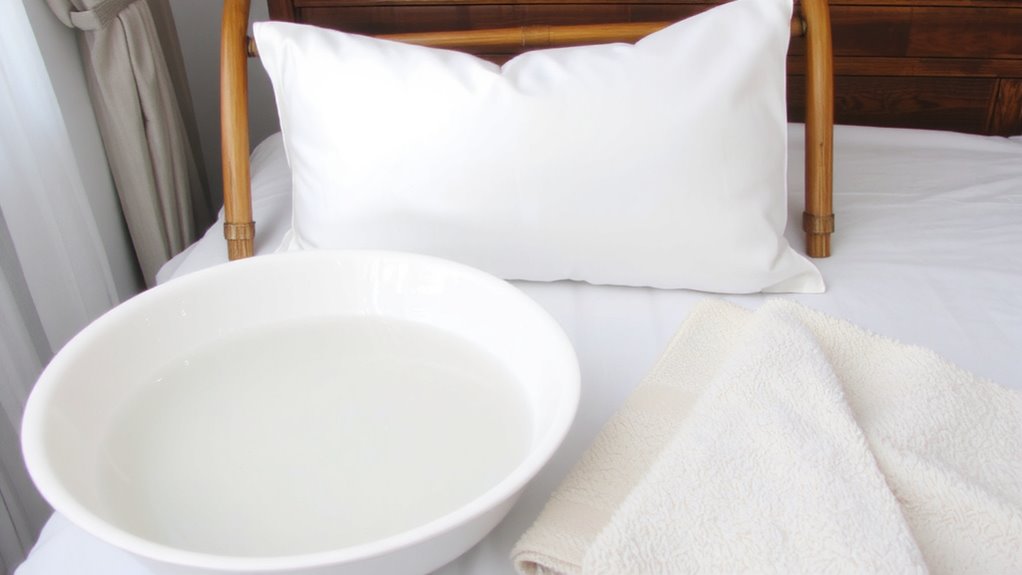
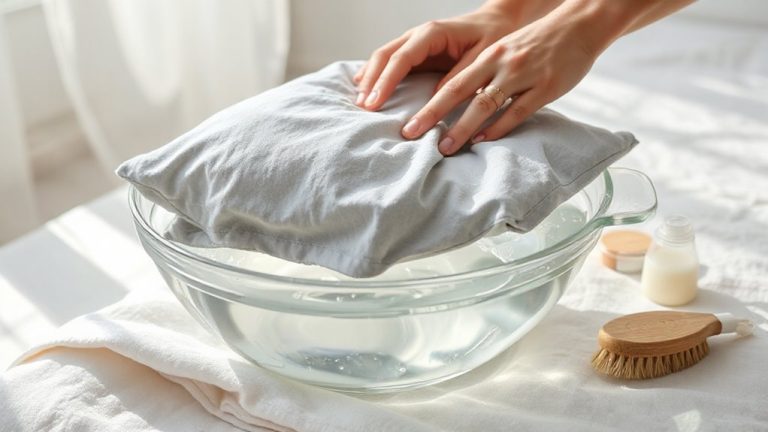
While handwashing your silk pillow might seem delicate, it’s actually a simple process that helps maintain its softness and structural integrity over time. You’ll want to use the proper handwashing technique: gently submerge the pillow and press it down without twisting or wringing. This minimizes stress on the silk fibers and preserves the inner filling’s even distribution. Always use cool to lukewarm water-ideally below 30°C-since high water temperature can weaken silk and lead to shrinkage or dulling. Fill a clean basin with water, then slowly add silk-safe cleanser after you’ve tested a small area. Swirl the pillow lightly for even cleaning, then let it soak for no more than 5 minutes. Rinse thoroughly with cool water to remove all residue. This careful method supports the pillow’s long-term performance and comfort, helping maintain ideal sleep conditions without damaging sensitive materials.
Choose a Detergent Safe for Silk Pillows
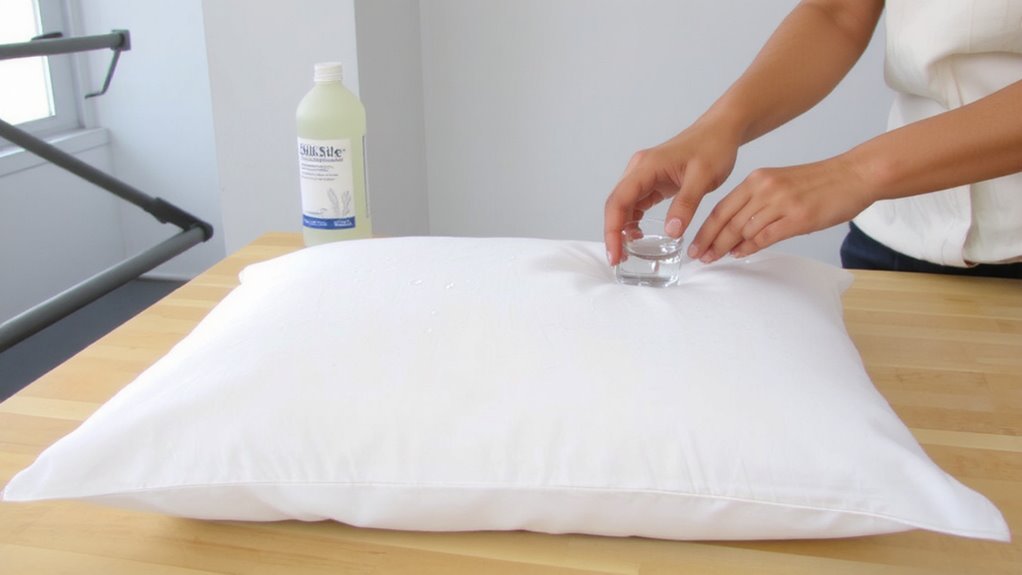
You’ve gently washed your silk pillow by hand, taking care to protect its delicate fibers and inner structure, but the right detergent plays just as big a role in keeping it in top condition. Choose a product with proven silk compatibility-avoid harsh chemicals, bleach, or enzymes that weaken fibers over time. Your detergent selection should prioritize pH-neutral formulas designed for delicates, as these preserve the pillow’s integrity without stripping natural oils. Look for labels specifying “safe for silk” or “gentle on protein fibers,” since silk is a natural protein, much like hair. Brands often list this detail near usage instructions. A small amount goes a long way, so dilute it in water before adding your pillow. Rinsing thoroughly guarantees no residue remains, which could stiffen fibers or irritate sensitive skin. Proper detergent choice complements gentle care, supporting long-term comfort and performance without compromising breathability or softness.
Dry Flat to Prevent Damage and Shrinkage
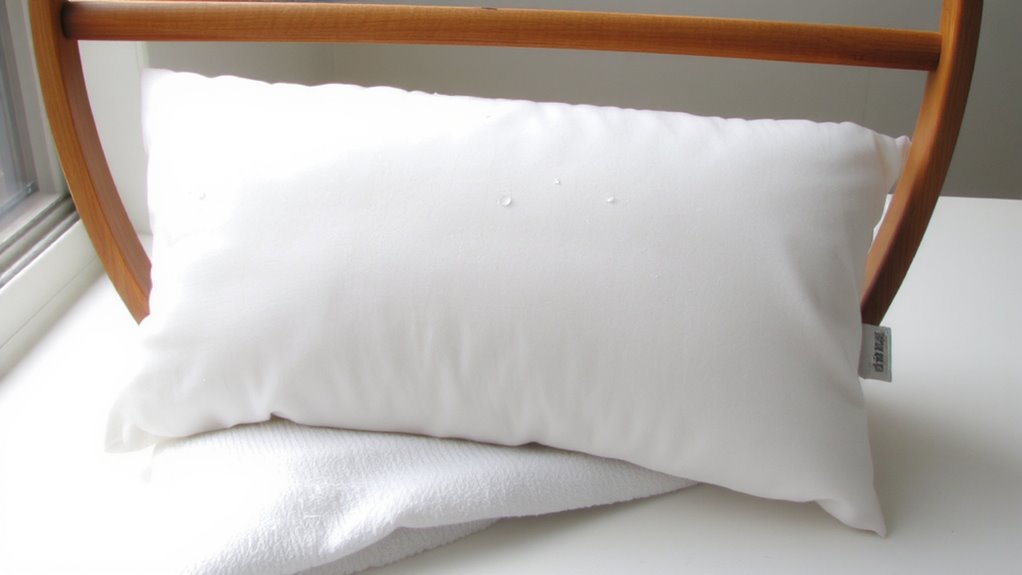
Your silk pillow’s shape and softness depend on proper drying, so always lay it flat on a clean, dry surface away from direct sunlight or heat sources. This gentle method helps maintain fabric tension, preventing warping or distortion. Elevating the pillow slightly on a drying rack improves air circulation, allowing moisture to escape evenly and reducing the risk of mildew. Avoid hanging it, as the weight of trapped water can stretch delicate fibers and weaken structural integrity. Flat drying also minimizes shrinkage, preserving the original size and feel. You’ll notice the pillow retains its smooth texture and supportive shape longer when dried this way. Consistent, low-stress drying supports long-term performance and comfort, especially if you rely on the pillow for specific sleep needs. With proper care, your silk pillow remains a durable, responsive sleep aid through regular use.
Never Machine Wash or Dry Your Silk Pillow
Tossing your silk pillow into the washing machine might seem like a quick fix, but it’s a risk not worth taking. Machine agitation is too harsh for delicate silk fibers, weakening their structure and leading to thinning or holes over time. Silk’s natural luster and smoothness depend on careful handling, and violent spinning or tumbling breaks down the fabric’s integrity. Likewise, heat exposure from a dryer can shrink or warp the pillow, damaging both the outer shell and inner fill. High temperatures also degrade the sericin protein in silk, reducing its hypoallergenic and temperature-regulating properties. Instead, handwashing in cool water with a gentle detergent preserves softness and performance. Air drying flat maintains shape and avoids stress on seams. These steps protect your pillow’s construction and extend its useful life, supporting consistent comfort night after night.
How Often to Clean Your Silk Pillow
Occasionally cleaning your silk pillow helps maintain its quality without compromising the delicate fibers. You don’t need to wash it weekly-every three to six months is usually enough for regular use. If you sweat heavily or sleep with products in your hair, you might clean it more often to support odor control. For those concerned with allergy prevention, a gentle handwash removes dust, pollen, and skin flakes that accumulate over time. Since silk resists mold and bacteria naturally, overwashing can do more harm than good. Spot clean small stains immediately to preserve the fabric. Always air dry flat, away from direct sunlight, to prevent weakening. Cleaning too infrequently might impact hygiene, but too often wears down the fibers. Balancing care intervals helps extend the pillow’s lifespan while keeping it fresh, supportive, and suitable for sensitive sleepers seeking comfort without irritation.
Why Silk Needs Gentle, Regular Care
Silk demands gentle, consistent care because its delicate fibers can easily weaken when exposed to harsh treatments. You’re dealing with natural protein strands that break down under friction, heat, or strong detergents, leading to silk degradation over time. Regular maintenance helps preserve the pillow’s structure and support, which matters if you rely on it for comfort during sleep. Silk’s moisture sensitivity means it absorbs humidity quickly, creating a risk for mildew or discoloration if left damp. That’s why handwashing with cool water and mild soap is essential-machine washing can crush the fibers. Flat drying prevents distortion and keeps the fill evenly distributed. These steps aren’t fussy; they’re practical ways to extend the pillow’s life and performance. With proper care, your silk pillow stays soft, breathable, and supportive longer, helping maintain consistent sleep quality night after night.
On a final note
Handwashing your silk pillow with a silk-safe detergent keeps the fibers strong and soft, while flat drying prevents shrinkage and misshaping. Never machine wash or dry, as agitation and heat damage delicate threads. Clean it every three to six months, depending on use, to maintain hygiene and integrity. Regular, gentle care preserves performance and comfort, supporting better sleep. A well-maintained silk pillow lasts longer, making it a worthwhile, durable choice worth the careful upkeep.