The Role of Technology in Monitoring And Improving Your Sleep Quality Over Time
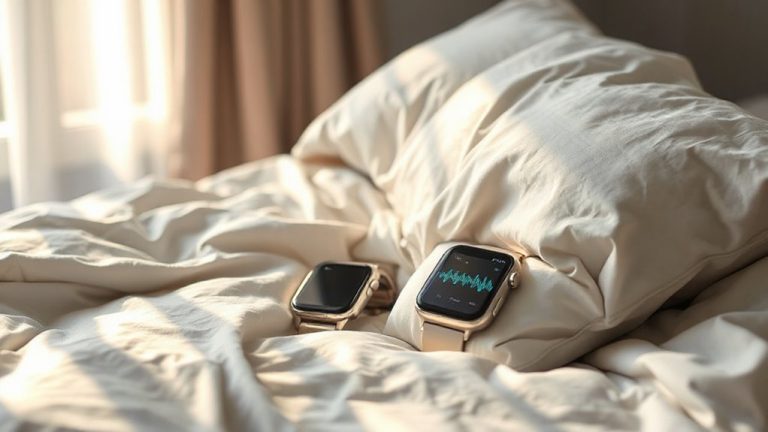
You’re likely losing deep sleep without knowing it, but technology helps catch those losses early. Wearables track your heart rate, movement, and sleep stages through the night, giving you a clear picture of your sleep quality over time. Devices with reliable sensors and long battery life offer accurate data, while apps turn that information into personalized feedback. You can spot trends linked to stress, caffeine, or bedtime habits and make informed choices about routine changes or sleep aids-many with free trials and solid warranties. There’s more to discover about optimizing your rest based on your unique patterns.
Notable Insights
- Wearables track sleep stages in real time using motion, heart rate, and breathing data for accurate nightly insights.
- Sleep tracking helps detect early signs of circadian disruption and related health risks like mood or metabolic issues.
- Long-term data reveals trends linking lifestyle habits, environment, and sleep quality for proactive improvements.
- Sleep scores and stage breakdowns provide actionable feedback on restfulness and recovery patterns over time.
- Coaching apps use tracked data to offer personalized recommendations, improving sleep through data-driven habit changes.
Why Sleep Tracking Prevents Long-Term Health Issues
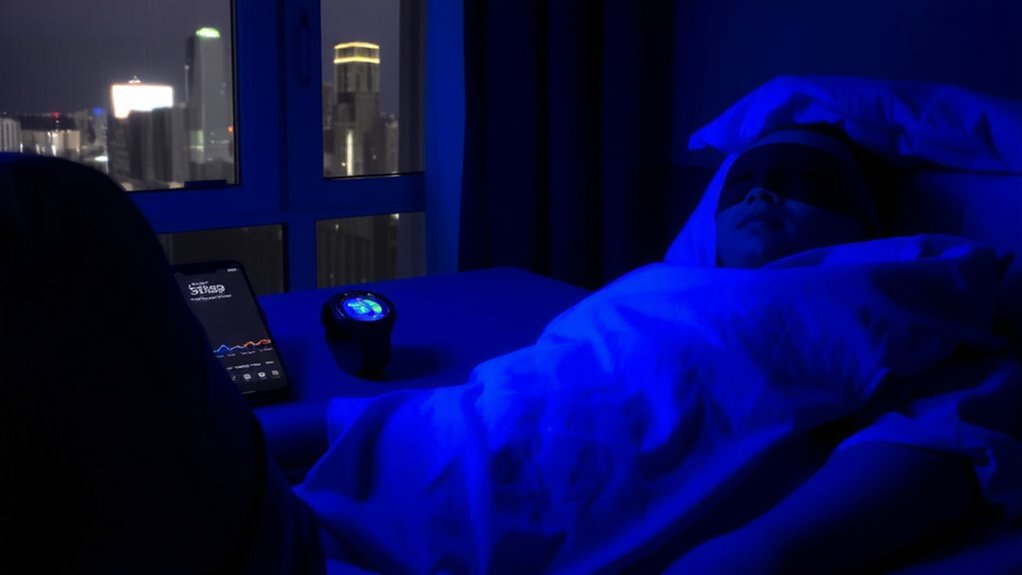
A simple habit-tracking your sleep-can quietly become one of the most effective tools in protecting your long-term health. You’ll start noticing patterns in your energy, mood, and focus that tie back to your sleep duration and quality. Consistently disrupted circadian rhythms can lead to hormonal imbalances, increasing risks for conditions like insulin resistance, weight gain, and mood disorders. By monitoring your sleep over time, you catch small shifts before they become serious. Tracking helps you assess how lifestyle choices, stress, or caffeine affect your rest. It also guides decisions about when to adjust habits, consider sleep aids, or consult a professional. You’re not just collecting data-you’re building awareness. Devices vary in accuracy and features, so look for models with solid warranties and clear performance details. Trial periods let you test effectiveness. Informed by real trends, you can take practical steps to support long-term well-being. For actionable insights, consider using one of the best sleep trackers to accurately measure your sleep stages and environmental factors.
How Wearables Track Your Sleep in Real Time
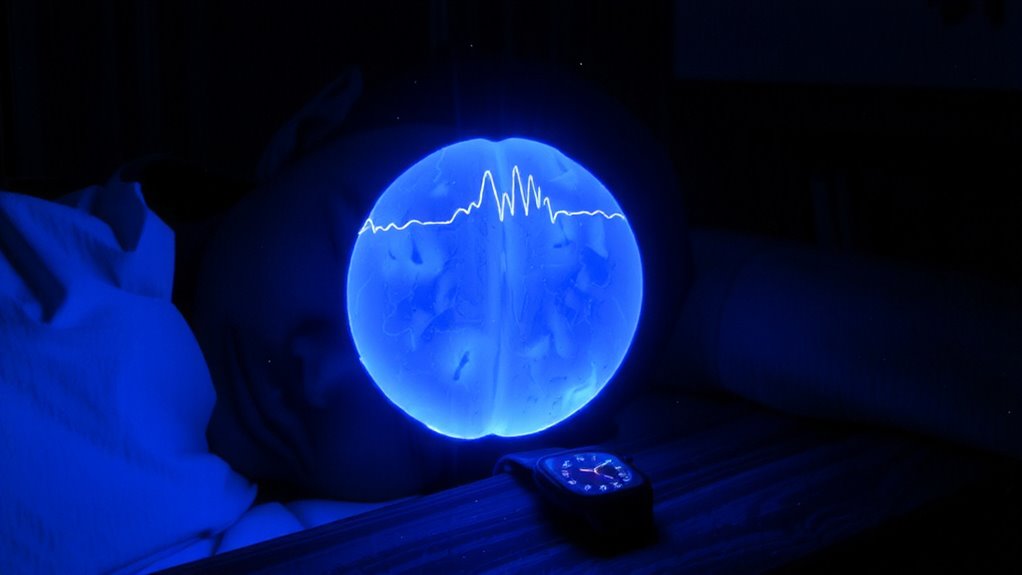
Your body’s movements, heart rate, and breathing patterns are the key signals wearables use to track your sleep in real time. Motion sensing detects when you’re still, helping the device decide when sleep likely begins. This is the foundation of sleep detection, which combines movement data with changes in heart rate and breathing to identify shifts between wakefulness and rest. Most wearables use accelerometers and optical sensors to gather this info throughout the night. They continuously record data, so patterns over time improve accuracy. Some devices even adjust sensitivity based on your typical routine. Battery life, comfort during sleep, and how well the device syncs with your phone matter when choosing one. Many offer trial periods or warranties, letting you test long-term reliability. These features help you assess whether a wearable fits your sleep tracking needs without guesswork. Top-rated devices often feature advanced algorithms that analyze sleep stages with greater precision, making best sleep quality monitors a valuable consideration for long-term improvement.
Understanding Your Sleep Data: Stages, Scores, and Insights
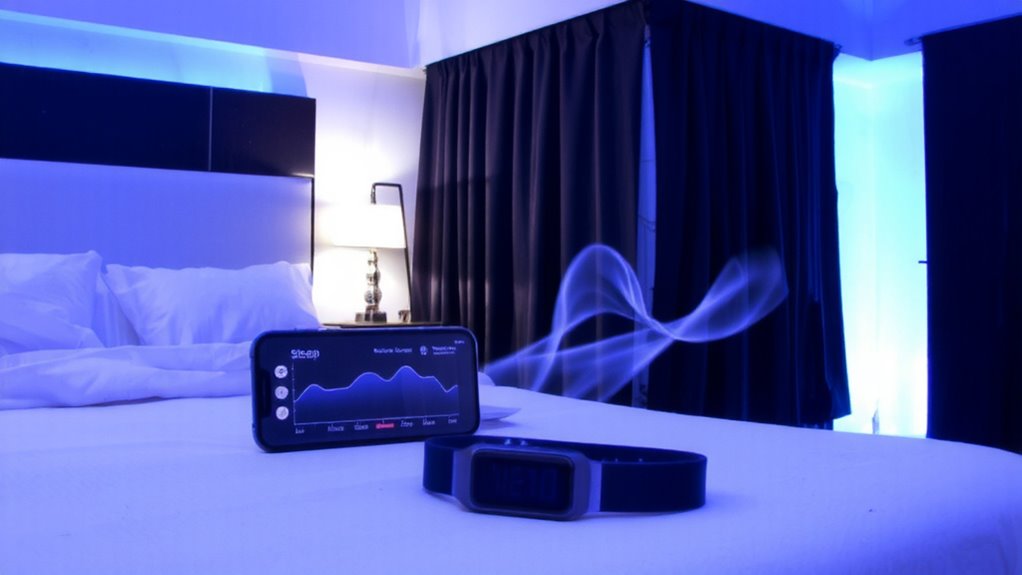
Sleep tracking devices don’t just record how long you’re in bed-they break down what’s actually happening while you sleep, giving you insights into sleep stages, overall scores, and patterns worth watching. You’ll see how much time you spend in light, deep, and REM sleep, which helps you understand your sleep cycles and where disruptions might occur. Most devices assign a sleep score nightly, combining duration, restlessness, and stage distribution into one easy number. Some even offer dream analysis, linking REM periods to potential dream activity. These insights let you assess consistency and identify trends that may point to broader issues, like irregular cycles or poor recovery. You can use this data to adjust habits, consider sleep aids if needed, or decide when to consult a specialist. Over time, tracking helps you make informed choices-without overreacting to a single night’s results. Advanced trackers now offer best sleep-optimizing fitness trackers with highly accurate sensors and personalized feedback to enhance long-term sleep quality.
Find Hidden Causes of Poor Sleep Using Trend Data
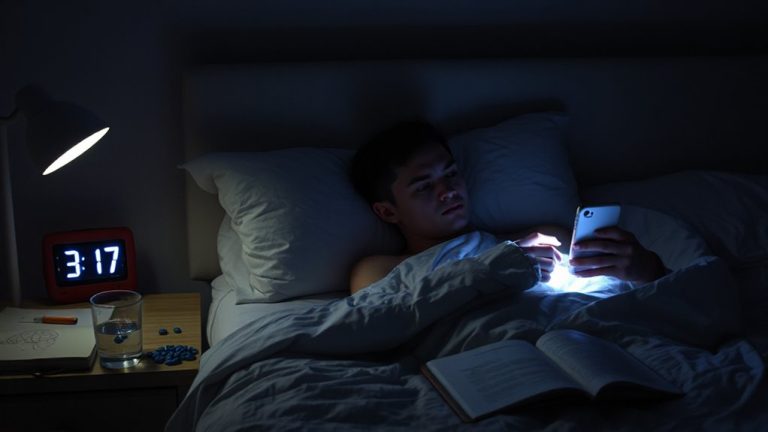
What if the reason you’re waking up tired isn’t obvious from one restless night but buried in patterns over weeks? Sleep trackers collect trend data that can reveal hidden links between your sleep quality and recurring lifestyle factors. Maybe caffeine late in the day or inconsistent bedtimes are weakening your deep sleep over time. Your sleep environment might also play a role-changes in room temperature, noise, or light exposure can subtly disrupt rest. By reviewing weekly or monthly data, you can spot correlations, like poor sleep following evening workouts or screen use. These patterns help you make informed choices about adjustments to routines or sleep aids. You’re not guessing-you’re testing changes and seeing what works, giving you clear insight into what supports better rest over time.
Apps That Turn Data Into Custom Sleep Coaching
Patterns in your sleep data become far more useful when paired with guidance that fits your habits and goals. That’s where apps with custom sleep coaching come in. Instead of just showing numbers, they use your trends to offer personalized suggestions-like adjusting bedtime or reducing screen time. These apps often include data visualization tools, turning complex info into easy-to-read charts so you can spot patterns quickly. Some even factor in stress, caffeine, or exercise to refine their advice. You’re not just tracking sleep; you’re getting feedback that evolves as your routine changes. Many apps offer free trials, letting you test the coaching style before committing. While features vary, look for clear visuals, flexible feedback, and integration with your wearable. This kind of tailored insight helps you make informed choices about sleep aids or routine adjustments, supporting long-term improvement without pushing one-size-fits-all solutions.
Build Better Sleep Habits Using Device Feedback
While your sleep data alone can highlight issues, it’s the feedback from your device that helps you act on it effectively. Your wearable or smart sleep tracker might show you’re waking often, and then suggest checking your sleep environment for noise or light disruptions. It could prompt you to adjust your bedtime routine by dimming lights or lowering the room temperature. Over time, consistent feedback helps shape habits-like going to bed at the same time or reducing screen use before sleep. You’ll start noticing patterns: a cooler room may improve deep sleep, while a steady bedtime routine shortens how long it takes to fall asleep. These small changes, guided by real-time insights, support long-term improvement without drastic fixes. The device doesn’t decide for you, but gives actionable clues to test what works best for your body and schedule.
Choose the Best Sleep Tracking Tools for Long-Term Results
You’ve started using device feedback to shape better habits, and now it’s time to make sure your tool is up to the task for the long run. When choosing a sleep tracker, consider battery life-devices needing daily charging may break your routine, while those lasting several nights help maintain consistent data. Comfort level matters just as much; a bulky wristband or wired headband can disrupt sleep instead of improving it. Look for lightweight materials and adjustable fits that feel natural overnight. Devices with medical-grade sensors often offer more reliable data, which helps spot patterns linked to sleep disorders. Check if the company offers a trial period or warranty, so you can test real-world performance. Prioritize tools that sync easily with apps you already use. Balancing accuracy, comfort level, and battery life increases your chances of sticking with it and seeing long-term gains.
On a final note
You can use sleep tech to spot patterns and catch issues early. Wearables and apps track stages, scores, and trends over time, helping you understand what affects your rest. Look for devices with clear data, long battery life, and sleep coaching. Many offer trials or warranties, so test one that fits your routine. Small changes, guided by feedback, lead to better, lasting sleep habits.