Creating An Optimal Sleeping Environment That Promotes Healthy Circadian Rhythms
Set your bedroom temperature between 60–67°F using programmable thermostats or cooling pillows for steady comfort. Block disruptive noise with heavy curtains and white noise machines. Use dawn-simulating alarms and limit evening screen time, wearing blue light-blocking glasses if needed. Choose breathable, cooling bedding like TENCEL™ or bamboo. Stick to a consistent sleep schedule, and consider how small changes in light, sound, and temperature can quietly enhance your circadian rhythm over time.
Notable Insights
- Exposure to bright morning light and dawn-simulating alarms helps regulate circadian rhythms and improve wakefulness.
- Keep bedroom temperature between 60–67°F using cooling bedding, insulation, or programmable thermostats for optimal sleep.
- Reduce noise disruptions with soundproofing, rugs, and white noise machines to prevent micro-awakenings and support sleep continuity.
- Limit evening blue light from screens using glasses, filter apps, and amber lighting to protect melatonin production.
- Maintain consistent sleep and wake times daily, along with a screen-free wind-down routine, to strengthen circadian alignment.
Control Light to Reset Your Circadian Clock
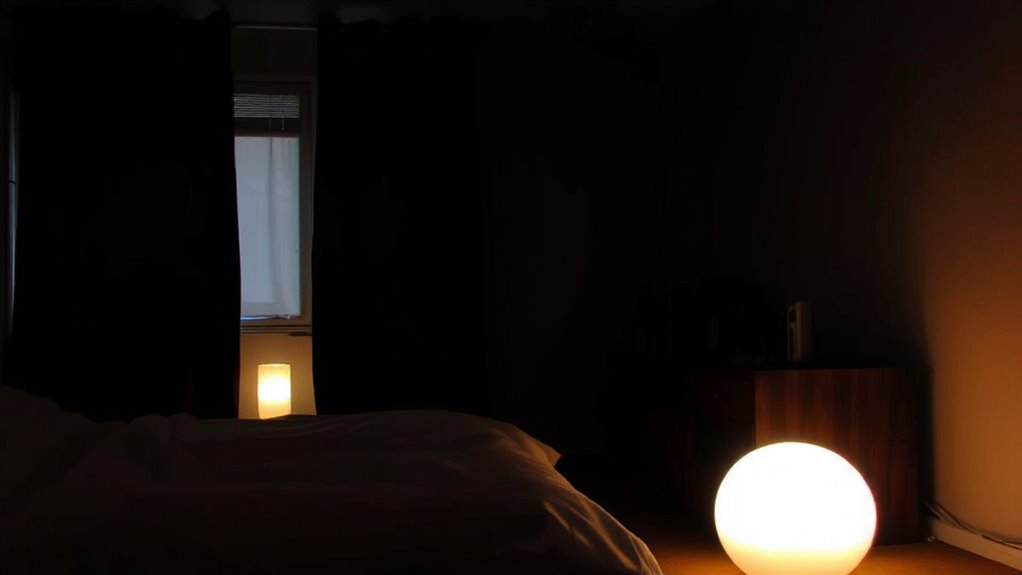
Why does light have such a strong effect on when you feel awake or tired? Your body’s internal clock, the circadian rhythm, relies heavily on light exposure to stay aligned. Bright light in the morning signals your brain to stop producing melatonin, helping you feel alert. Too much light at night, especially blue light from screens, can delay sleep onset. To reset your rhythm, use dawn simulation alarms that gradually increase light before waking, mimicking sunrise. These devices ease your body into wakefulness naturally. For evening wind-down, reduce artificial lighting and consider amber-tinted bulbs. Consistent light exposure patterns improve sleep quality over time. Some wake-up lamps offer customizable settings and come with warranties of 1–2 years. Look for models with adjustable brightness and timer functions. Experiment to find what fits your schedule and enhances your sleep hygiene without discomfort. Pairing these habits with best blackout curtains can further minimize disruptive nighttime light.
Set Your Bedroom to the Ideal Sleep Temperature
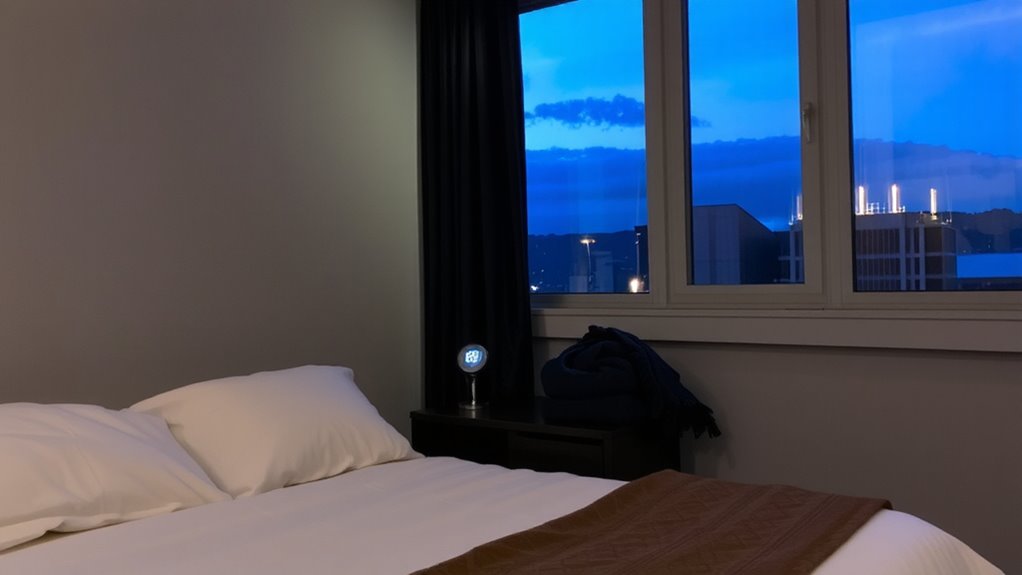
How cool should your bedroom actually be for the best sleep? Most people sleep best when the room is between 60 and 67 degrees Fahrenheit. This range supports natural drops in core body temperature, which helps regulate your circadian rhythm. Proper bedroom insulation plays a key role-it keeps the cool air in during summer and cold out in winter, maintaining steady thermal comfort all night. Poor insulation can create drafts or hot spots, disrupting sleep consistency. If your room heats up at night, consider breathable bedding or a fan to improve airflow. Some people use programmable thermostats to gradually lower the temperature in the evening. Others test cooling pillows or temperature-adjustable mattress pads, many of which come with trial periods. Good thermal comfort isn’t about extreme cold-it’s about consistency and personal preference. Adjust gradually to find your ideal balance. For targeted relief, consider using a bed cooling system to actively regulate your sleep surface temperature.
Block Noise That Disrupts Circadian Sleep
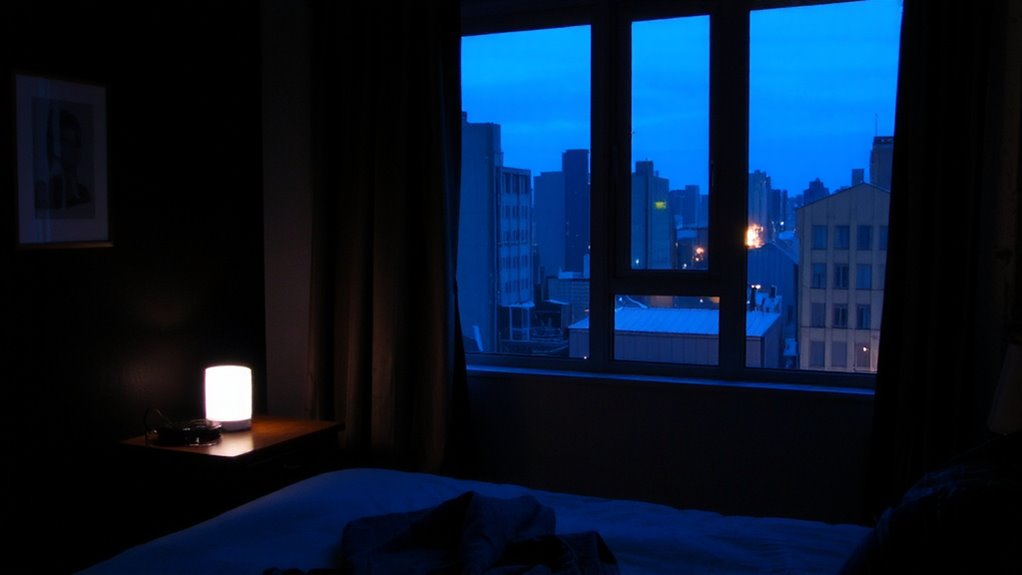
What if the key to steadier sleep isn’t just in the dark or the chill-but in the silence? Noise disrupts circadian rhythms by triggering micro-awakenings, even when you don’t fully wake up. To limit disturbances, consider basic soundproofing techniques like adding weatherstripping to doors, using heavy curtains, or installing rugs with thick padding. These reduce outside noise transmission markedly. For consistent background masking, white noise machines work well-they emit steady sound that covers sudden noises like traffic or creaking floors. Look for models with multiple settings, timer options, and a solid warranty so you can test what suits your sleep best. Some people prefer fans or apps, but dedicated machines often perform more reliably. Try different solutions, since effectiveness varies by room layout and sleep sensitivity. A quieter space supports deeper, more aligned sleep cycles, helping regulate your body’s internal clock over time.
Use Blue Light Barriers for Evening Wind-Down
Isn’t it strange how something as small as a screen can throw off your entire sleep rhythm? Blue light from phones and tablets tricks your brain into thinking it’s still daytime, delaying melatonin release. That’s where blue light glasses come in-they filter out that disruptive spectrum, helping your body prepare for sleep. You can also use filter apps on devices, which automatically reduce blue light in the evening. Both options support natural circadian alignment without requiring big changes. Glasses vary in tint and fit, so look for ones with full UV and blue light blocking; many offer trial periods. Filter apps are often free or low-cost, with customizable schedules. While neither fixes poor sleep habits alone, used together, they’re practical tools. Try one for a week and track how easily you fall asleep.
Choose Cooling Bedding for Circadian Support
You’ve already taken steps to manage light exposure in the evening, and that’s a solid foundation for circadian health. Now, focus on your bedding’s role in maintaining thermoregulation balance through the night. Your body naturally cools as bedtime approaches, and staying within an ideal temperature range supports uninterrupted sleep. Cooling bedding helps by improving fabric breathability, allowing heat and moisture to escape. Look for materials like TENCEL™, bamboo, or tightly woven linen-they wick moisture and resist overheating. Some options include phase-change materials that absorb excess warmth, though they may cost more. Check if the product offers a trial period, so you can test comfort over time. Keep in mind that thread count isn’t everything-high breathability often matters more. Choosing the right cooling bedding supports your circadian rhythm by stabilizing core temperature, giving you a better chance at waking refreshed. For reliable options, consider reviewing the best cool bed sheets based on performance and comfort.
Ditch Screens to Protect Your Sleep Rhythm
While your body prepares for sleep by naturally lowering its core temperature, exposure to screens can interfere with this process by emitting blue-rich light that suppresses melatonin. Your evening screen time-whether from phones, tablets, or TVs-can delay sleep onset and reduce sleep quality. Blue light mimics daylight, tricking your brain into staying alert when it should wind down. To support your circadian rhythm, consider a digital detox at least one hour before bed. This simple shift lets melatonin rise naturally, aligning your internal clock with your sleep schedule. Using night mode settings helps somewhat, but eliminating devices entirely offers stronger results. Think of this change as a low-cost, effective adjustment with no side effects. It doesn’t require tools or prescriptions, just consistent practice. Over time, reduced screen time at night improves sleep continuity and next-day alertness. Try it for a week and track how you feel. Many notice deeper rest and easier wake-ups.
Stick to a Sleep Schedule That Strengthens Your Clock
Most people find it easier to wake up and fall asleep when they follow a consistent sleep schedule every day. Your body’s internal clock thrives on routine, and bedtime regularity helps align it with natural light cycles. Going to bed and waking up at the same time-even on weekends-supports stable energy and mood. Consistent wake times, in particular, anchor your rhythm, making it easier to fall asleep at night. Small shifts can disrupt your cycle, so aim for no more than a 30-minute difference on off days. This pattern strengthens circadian cues and improves sleep quality over time. It’s practical for managing sleep issues and reduces the need for sleep aids. Think of it like setting a daily alarm for your body. Trial this approach for several weeks to see improvements. No warranty needed-just patience and commitment.
On a final note
You can strengthen your circadian rhythm by controlling light, temperature, and noise in your bedroom. Use blackout curtains, set the thermostat between 60–67°F, and try white noise machines if needed. Limit screen time before bed, or use blue light filters. Choose breathable, cooling bedding for steady sleep. Stick to a consistent sleep schedule, even on weekends. Most sleep aids work best when combined with these habits, and many come with trial periods-test them wisely.