How to Optimize Your Sleep Environment to Reduce Back Pain and Improve Musculoskeletal Recovery
Choose a medium-firm mattress with high-density foam or reinforced coils to support spinal alignment and reduce back pain. Use a sturdy bed frame with slats no more than 3 inches apart to prevent sagging. Pick a pillow that matches your sleep position-contoured for back sleepers, taller for side sleepers-and keeps your neck aligned. Keep your room between 60–67°F, use breathable bedding, and run a HEPA air purifier to aid recovery. Minimize disruptions with sleep tracking wearables and pain journaling to identify patterns. Models with 100-night trials and 10-year warranties let you test support and durability. You’ll find even small upgrades can make a noticeable difference for healing.
Notable Insights
- Choose a medium-firm mattress with high-density foam or reinforced coils for optimal spinal support and durability.
- Use a supportive pillow with adjustable fill to maintain natural neck alignment based on your sleep position.
- Maintain a cool bedroom temperature between 60–67°F to promote muscle relaxation and restorative sleep.
- Install a sturdy bed frame with slats no more than 3 inches apart to prevent mattress sagging and ensure proper support.
- Use sleep tracking wearables and pain journaling to monitor rest quality and guide treatment for musculoskeletal recovery.
Choose a Mattress That Supports Spinal Alignment
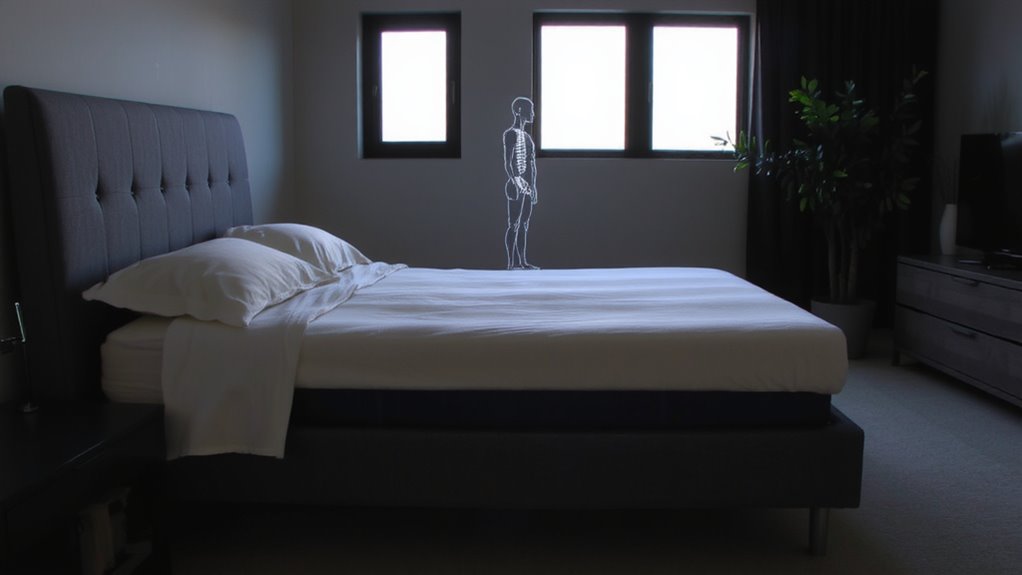
Your spine’s natural curve matters most when you’re lying down, and a mattress that keeps it properly aligned can make a real difference in how you feel each morning. The right mattress firmness supports your body weight without pressing too hard on pressure points or letting your spine sag. Too firm may strain your lower back; too soft won’t offer enough support. Medium-firm options often work best for most sleepers, especially those with back pain. Material durability also plays a key role-high-density foams and reinforced coils tend to hold their shape longer, maintaining support over time. Look for models with at least a 10-year warranty and sleep trials of 100 nights or more. These let you test comfort and alignment in your own home. Prioritize balanced support and long-term performance to help reduce pain and support recovery. Top-rated twin XL mattresses for back pain provide targeted support and pressure relief ideal for musculoskeletal recovery.
Set Up Your Bed for Spine-Friendly Sleep
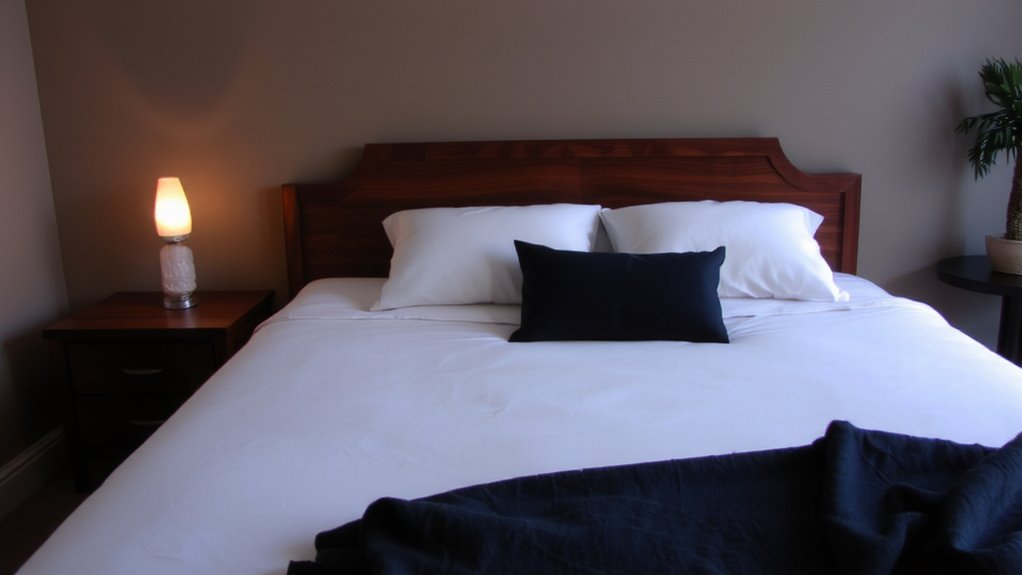
Proper bed setup plays a key role in maintaining spinal alignment through the night, and small adjustments can make a meaningful difference in comfort and recovery. Your bed frame should be sturdy and level, providing consistent support to your mattress so it doesn’t sag or shift. An adjustable bed frame can help you fine-tune your sleep posture, especially if you need slight elevation for breathing or circulation. Make sure the frame’s slats are no more than 3 inches apart to prevent mattress deterioration. A well-supported mattress works best when paired with a stable foundation-avoid using old or warped frames that could compromise performance. Choose a setup that allows you to maintain a neutral spine, reducing strain. Test different configurations during trial periods to see what supports your sleep posture long-term. Check warranty terms that cover frame and mattress compatibility. For latex mattresses, consider a foundation designed for optimal support, such as a best bed frame for latex.
Use a Pillow That Keeps Your Neck Aligned
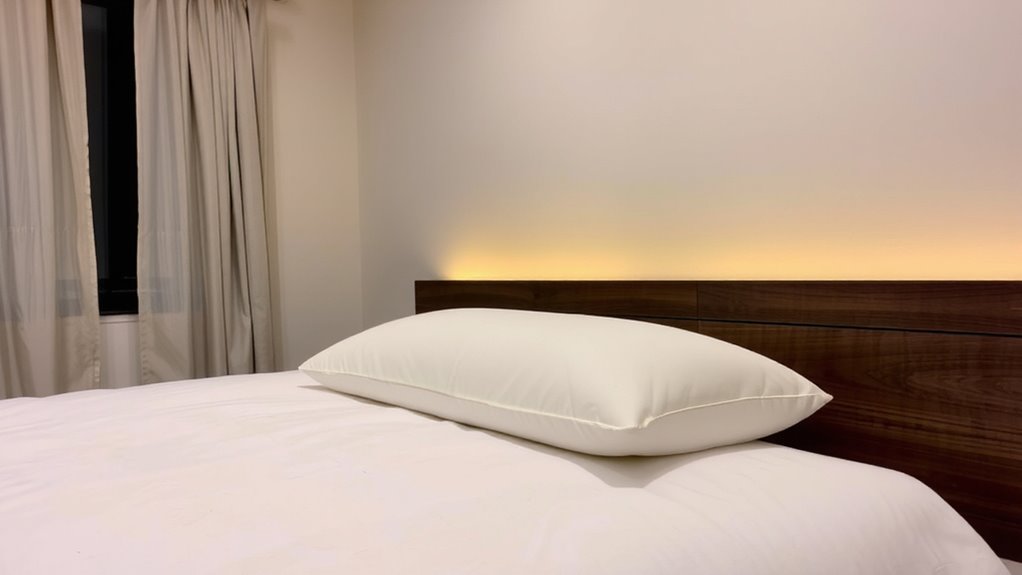
A supportive pillow can make just as much difference as a well-aligned bed when it comes to managing back pain and supporting recovery. You need to maintain proper neck curvature whether you sleep on your back, side, or stomach. A pillow that’s too high or too firm can strain your cervical spine, while one that’s too soft may not offer enough support. Look for adjustable fill-like shredded memory foam or latex-so you can modify the pillow firmness to suit your posture. Contoured pillows can help align your neck with your spine, especially if you sleep on your back. Side sleepers often need a taller pillow to fill the gap between head and shoulder. Try models with breathable covers and trial periods of at least 30 nights. This lets you test comfort and support without risk. A good fit supports natural neck curvature and improves overall spinal alignment. For side sleepers, choosing one of the best pillows for side sleepers can significantly enhance spinal alignment and comfort.
Keep Your Room Cool and Air Clean for Recovery
Temperature and air quality play quiet but powerful roles in how deeply and restoratively you sleep, especially when recovering from back pain. Your body needs a slight drop in core temperature to enter deep sleep, so keeping your room between 60–67°F helps support natural temperature control. This range minimizes disruptions and encourages muscle relaxation, aiding spinal recovery. Poor air quality, meanwhile, can trigger inflammation and breathing issues that subtly disturb sleep cycles. Using a HEPA air purifier reduces allergens and improves air quality, especially if you have asthma or sensitivities. Breathable, moisture-wicking bedding enhances cooling and complements good airflow. Some smart thermostats offer programmable temperature control through the night, adjusting based on your sleep stage. While individual comfort varies, testing small changes-like lowering the thermostat by a few degrees or adding an air filter-can yield noticeable improvements without added cost or complexity.
Stop Sleep Interruptions That Harm Back Healing
You’ve already set up a cool, clean sleep environment to support back healing, but even the best setup can fall apart if nighttime disruptions keep pulling you out of restorative sleep. Frequent awakenings from pain, noise, or discomfort interrupt deep sleep cycles your body needs to repair tissues. To catch patterns, try sleep tracking-many wearable devices now monitor rest quality and movement, helping you spot what’s breaking your sleep. Pair this with pain journaling: write down nightly pain levels and possible triggers, like position or activity. This combo helps you and your doctor make informed choices about sleep aids, positioning, or treatments. Choose devices with long battery life, easy syncing, and comfortable wear. Look for models offering trial periods so you can test them risk-free. Reducing interruptions isn’t about perfection-it’s about finding small, sustainable fixes that support healing night after night.
On a final note
You’ll sleep better and support your back when your mattress keeps your spine neutral and your pillow aligns your neck. A cool, clean room helps muscles recover, while uninterrupted sleep boosts healing. Try different setups to see what feels best-look for sleep aids with solid warranties so you can test them risk-free. Make small changes, then track how your back feels over time.