How to Choose an Ergonomic Bedside Table to Reduce Shoulder Strain and Improve Sleep Setup
Set your bedside table at the right height so your elbow bends comfortably at 90 degrees when lying down-this reduces shoulder strain. Match depth to your arm’s reach to avoid stretching. Pick storage that fits your routine, like drawers for glasses or open shelves for quick access. Choose soft, rounded edges to prevent bumps. Position the table on your preferred sleep side, within 16–20 inches of the mattress. Test it for a week to see how it supports your posture and adjust if needed-small changes can make a noticeable difference over time.
Notable Insights
- Set table height so your elbow bends at 90 degrees when resting on it to prevent shoulder strain.
- Match table depth to your arm length for comfortable reach without leaning or overextending.
- Choose a bedside table with rounded, soft edges to reduce injury risk during nighttime use.
- Position the table on your preferred sleep side within 16–20 inches of the mattress edge.
- Optimize storage based on habits-use drawers for books and open spaces for quick-access sleep essentials.
Set the Right Height to Protect Your Shoulders

Getting the height right matters more than you might think-about 60% of shoulder strains linked to bedtime habits stem from tables that are too high or too low. When you reach for a glass or phone, your arm alignment should stay neutral, with your elbow bending comfortably at 90 degrees. A table that matches your mattress height supports this, reducing strain. Proper posture support comes from keeping shoulders relaxed and arms parallel to the floor. If the surface forces you to stretch or hunch, it disrupts sleep-ready positioning and may worsen tension over time. Adjustable models let you fine-tune the height, often with a range of 18–25 inches, so you can align it with your lying position. Test the height while lying down, not standing. Many brands offer trial periods, letting you assess comfort over a few nights. Look for solid construction and wobble-free legs to maintain stability.
Match Depth to Your Lying-Down Arm Reach
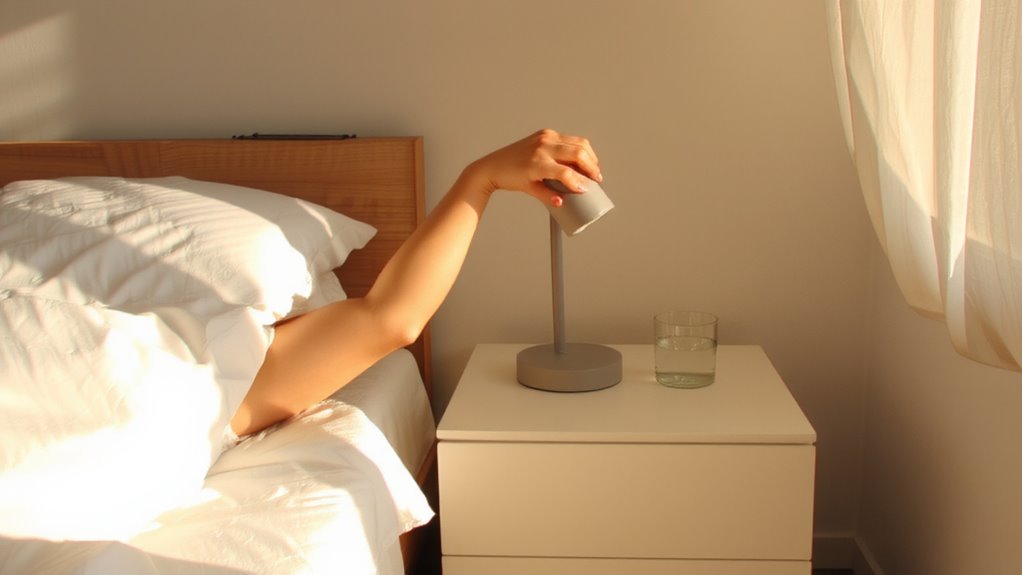
While lying in bed, your arm should easily reach the surface without stretching forward or swinging back, so choosing the right depth matters just as much as height. Your arm length directly affects your reach distance, and an ill-fitting table can cause shoulder strain over time. To match depth to your natural reach, measure from your shoulder to your hand while lying down and use that as a guide. Tables too deep force you to extend forward, while shallow ones may limit usability.
| Arm Length | Ideal Table Depth |
|---|---|
| 20–24 in | 12–14 in |
| 25–29 in | 14–16 in |
| 30–34 in | 16–18 in |
A well-matched depth supports comfortable access to sleep aids and personal items, helping maintain proper alignment. Test placement before finalizing-some models offer adjustable shelves or depth extensions, with warranties covering structural defects for up to five years.
Choose Storage That Fits Your Nighttime Habits

A well-organized bedside table can make nighttime routines smoother, so you’ll want to pick storage that aligns with your actual habits. If you read before bed, you’ll need space for a book and reading glasses-drawers help keep those personal items from sliding. If you use sleep aids like eye masks or earplugs, a small tray or open shelf lets you grab them quickly. Consider how often you set down your phone or water glass; enclosed storage reduces clutter but may slow access. Mesh baskets or soft-close drawers offer quiet, lasting performance. Tables with USB ports built in can support device charging, which fits modern nighttime routines. Check warranty details-longer coverage often signals better construction. You don’t need the most storage, just the right kind. Match it to what you actually use, and you’ll reduce strain while improving sleep setup over time. For even greater organization, consider using a nightstand organizer designed to maximize drawer and surface efficiency.
Pick a Bedside Table With Soft, Safe Edges
Sharp corners on a bedside table can be more than just uncomfortable-they’re a safety risk if you reach for your phone or water in the dark. You’re better off choosing a design with rounded corners, which reduce the chance of bumps and bruises, especially in low light. Look for materials with good impact resistance, like molded wood composites or reinforced polymers, since they absorb contact better than hard plastics or glass. These materials also tend to hold up well over time, even with nightly use. Some models even include soft-edged drawers or padded fronts for extra safety. If you share the bed or have kids who climb in at night, this feature becomes even more helpful. Many quality tables come with trial periods, so you can check how the edges feel in real use. A small design detail like rounded corners can quietly improve both safety and comfort in your sleep setup-without calling attention to itself.
Align Position With Your Favorite Sleep Side
You’ve already considered how soft edges keep your nights safer and more comfortable, especially when moving around in the dark. Now it’s time to align your bedside table with your preferred sleep side to support proper arm alignment and reduce strain. Where you place the table should match your natural sleep side so reaching for items feels smooth, not stretched. Proper alignment means your shoulder stays relaxed, not hiked or twisted.
| Sleep Side | Ideal Table Position |
|---|---|
| Left | Left of pillow, 16–20” from mattress edge |
| Right | Right of pillow, 16–20” from mattress edge |
| Back | Either side, within easy reach |
| Stomach | Opposite side, lower height to minimize reach |
This setup promotes neutral arm alignment, helping prevent discomfort and improving sleep quality over time.
Adjust Your Table After a Week of Use
After a week of use, most people find small adjustments make a noticeable difference in comfort and ease. You might need to shift the table’s height, angle, or position depending on how your shoulder feels in the morning. Check the material durability-if edges are chipping or surfaces scratching easily, consider a more resilient build like solid wood or reinforced laminate. Some designs outlast others with daily use. Lighting integration also matters; if your reading light is too dim or awkwardly placed, try repositioning the fixture or switching to LED inserts with adjustable brightness. Many models allow you to reconfigure outlets or reattach mounts without tools. Use this trial period to test stability, access, and nighttime function. If the table doesn’t support your sleep aids comfortably or shows wear, look into warranty options. Small tweaks now improve long-term performance and shoulder alignment.
On a final note
You’ll sleep better when your bedside table supports your body and habits. Choose a height level with your shoulder to ease arm movement, and pick a depth that matches how far you reach lying down. Rounded edges prevent bumps, and storage should fit your nightly needs without clutter. Position it on your preferred sleep side, then test it for a week-adjust if needed. Many models offer trial periods, so check the warranty before deciding.