The Role of Body Temperature in Regulating Circadian Rhythms and Sleep Quality
Your body naturally cools down in the evening as your circadian rhythm signals sleep onset, helping you fall and stay asleep. This drop, guided by the hypothalamus and melatonin release, works best in a room between 60–67°F. Cooling supports deep sleep, while disruptions may hint at issues like sleep apnea or hormonal changes. If night sweats or chills persist, evaluating sleep aids or consulting a specialist could help improve rest-further clues lie in tracking your nightly patterns.
Notable Insights
- A drop in core body temperature in the evening signals the onset of sleep and aligns with circadian rhythm.
- The hypothalamus links melatonin release to cooling, promoting heat loss through dilated blood vessels in the extremities.
- Core temperature continues to decline during light and deep sleep, reaching its lowest point in deep sleep.
- Sleep environments between 60–67°F support natural thermal regulation and improve sleep onset and continuity.
- Disruptions in temperature rhythms, such as night sweats or chills, may indicate underlying sleep or metabolic disorders.
The Role of Body Temperature in Sleep Timing

Even though you might not notice it, your body’s temperature plays a key role in telling you when it’s time to sleep. As evening approaches, your core temperature naturally drops, signaling your brain to prepare for sleep onset. This shift is closely tied to your circadian rhythm and is influenced by the thermal environment around you. A cooler room-typically between 60–67°F-supports this process, making it easier to fall asleep. If your surroundings are too warm, sleep onset may be delayed, affecting overall sleep quality. Adjusting bedding materials or using breathable pajamas can help regulate your personal thermal environment. Some cooling mattresses or temperature-controlled bedding systems offer warranties and trial periods, allowing you to test their effect. While not a fix for all sleep disorders, optimizing temperature is a practical step you can take to support better timing and improve rest. Choosing the right bedding, such as best bedding for hot sleepers, can significantly enhance thermal comfort during sleep.
How Body Temperature Changes During Sleep?
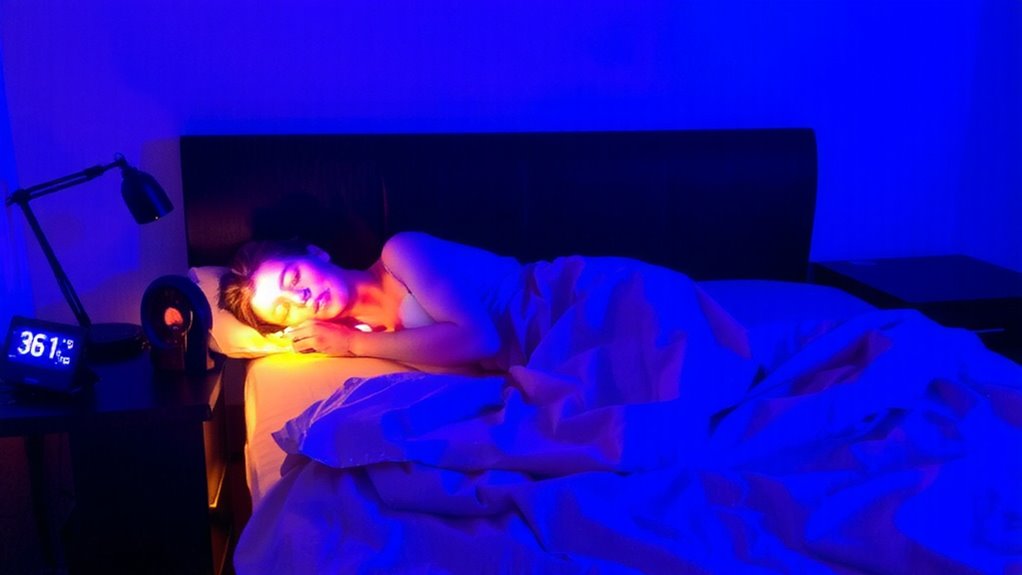
Your body temperature doesn’t stay constant while you sleep-it follows a predictable pattern that supports each stage of your rest. As you drift into light sleep, your core temperature begins to drop, reaching its lowest point during deep sleep. This cooling helps maintain stable, restorative rest. When REM cycles begin, brain activity surges, but your body’s ability to regulate heat slows due to thermal inertia, meaning temperature changes lag behind metabolic shifts. You might experience warmer sensations or sweat slightly during these phases. This fluctuation is normal and supports brain function and memory consolidation. Sleeping in a cool room-around 65°F-aligns with your body’s natural drop in heat, improving comfort and continuity. Some sleep aids, like cooling mattresses or breathable bedding, work with this cycle. They enhance thermal regulation, especially useful if you struggle with night awakenings or excessive tossing. Best cooling mattress pads can further support this natural temperature regulation by actively dissipating heat throughout the night.
How Your Internal Clock Lowers Body Temperature for Sleep

As evening approaches and daylight fades, your internal clock-known as the circadian rhythm-begins signaling the body to prepare for sleep, one of the key actions being a deliberate drop in core temperature. This process starts with hypothalamus regulation, which responds to diminishing light by triggering melatonin release. As melatonin levels rise, blood vessels in your hands and feet dilate, releasing heat and helping cool your core. This natural cooling process usually begins about one to two hours before your usual bedtime. Understanding this can help you identify ideal sleep windows or recognize disruptions in your cycle. If you struggle with sleep onset, consider how factors like light exposure or room temperature may interfere with melatonin release and hypothalamus regulation. Monitoring these patterns supports informed choices about sleep aids or behavioral adjustments without overreliance on medication. Maintaining an optimal sleep environment with the right cooling solutions, such as best sleep temperature regulators, can enhance this natural thermal regulation and improve overall sleep quality.
Why Cooling Down at Night Helps You Sleep
Because your body naturally cools down at night, falling asleep becomes easier when your environment supports that drop in temperature. A well-regulated sleep environment helps maintain thermal comfort, letting your core temperature fall as needed. You’ll likely fall asleep faster and stay in deeper sleep longer when your room is cool-typically between 60 and 67°F. Overheating can disrupt sleep cycles, so breathable bedding and moisture-wicking pajamas can help manage heat. Fans, cooling mattresses, or adjustable bed bases improve thermal comfort for many. These options vary in cost and setup, but most offer trial periods, letting you test what works. There’s no one-size-fits-all solution, but adjusting your sleep environment to stay cool is a practical step that supports your body’s natural rhythm without relying on medication or sleep aids.
How to Tell If Your Body Temperature Cycle Is Disrupted
A consistent drop in body temperature at night supports deeper, more restful sleep, but when that natural cycle is off, you might notice trouble falling or staying asleep despite a cool room and comfortable bedding. If you frequently wake up drenched from night sweats or feel sudden waves of heat-hot flashes-during rest, your thermal rhythm could be disrupted. These symptoms often signal mismatches in your circadian timing, especially if they happen regularly. You may also feel unusually alert at bedtime or groggy in the morning, even with enough time in bed. Shift work, poor sleep hygiene, medical conditions, or hormonal changes can contribute. Tracking sleep patterns and nighttime symptoms helps identify issues. Some find relief through breathable bedding or moisture-wicking sleepwear, though persistent problems may require consulting a healthcare provider to rule out underlying causes.
Cooler Nights, Better Sleep: What Works
Why do cooler sleeping environments seem to help you drift off more easily? Your body naturally cools as bedtime approaches, and a sleep environment between 60–67°F (15–19°C) supports this drop, making it easier to fall and stay asleep. You can enhance this by adjusting your bedding-consider breathable materials like cotton or moisture-wicking fabrics. Cooling mattress pads or temperature-regulating pillows also help maintain comfort. Pair this with consistent bedtime routines, such as dimming lights or avoiding screens, to signal your body it’s time to wind down. These habits strengthen your circadian rhythm and improve sleep onset. Small changes to your sleep environment often offer noticeable improvements without medication or costly interventions. Try adjusting one factor at a time and track results over a week. Most cooling products come with trial periods, so test them fairly before deciding.
When Temperature Issues Signal a Sleep Disorder
Could something deeper be going on if you’re frequently waking up drenched in sweat or shivering, even with the thermostat set just right? These temperature disruptions might point to an underlying sleep disorder or medical condition. Night sweats with fever symptoms, especially if recurring, can signal infections or other health issues. Persistent chills or overheating during sleep may also stem from hormonal imbalances, such as those in menopause or thyroid disorders. If adjusting your bedding or room climate doesn’t help, consider tracking symptoms and consulting a doctor. Below are signs suggesting when to seek advice:
| Symptom | Possible Cause |
|---|---|
| Frequent night sweats | Hormonal imbalances |
| Fever symptoms at night | Infection or inflammation |
| Sudden temperature shifts | Sleep apnea or narcolepsy |
| Consistent sleep chills | Metabolic issues |
| Overheating without cause | Medication side effects |
On a final note
You can improve sleep by aligning with your body’s natural temperature drop at night. A cooler room-around 65°F-supports this shift and helps you fall asleep faster. If you wake often or feel unrested, your rhythm might be off due to stress, light exposure, or irregular schedules. Try adjusting your sleep environment first, like using breathable bedding or a cooling mattress. If problems continue, consider a sleep study to rule out disorders. Many devices and aids have trial periods, so test options safely.