How to Use White Noise for Better Sleep Hygiene Practices
Use white noise to mask sudden sounds like traffic or creaking doors, helping your brain stay in a steady sleep rhythm. Play it at 50–60 decibels, about the level of a quiet conversation, and place the speaker 4 to 6 feet from your bed. Choose a device with a timer, app control, or long warranty for reliability. You’ll find options from basic models to smart ones with nature sounds like rainfall or ocean waves. Consistent use builds a stronger link between the sound and sleep, improving how quickly you settle and stay asleep. There’s more to explore about fine-tuning your setup for long-term results.
Notable Insights
- Use white noise consistently 30 minutes before bed to build a mental association with sleep onset.
- Maintain volume between 50–60 decibels and place the speaker 4–6 feet from the bed for optimal sound.
- Choose a device with a timer or smart plug to automate playback and support long-term sleep hygiene.
- Opt for nature-based alternatives like rainfall or ocean waves for a soothing, rhythmically consistent option.
- Select a reliable device with app control, trial periods, and warranty for sustained, personalized sleep support.
How White Noise Improves Your Sleep
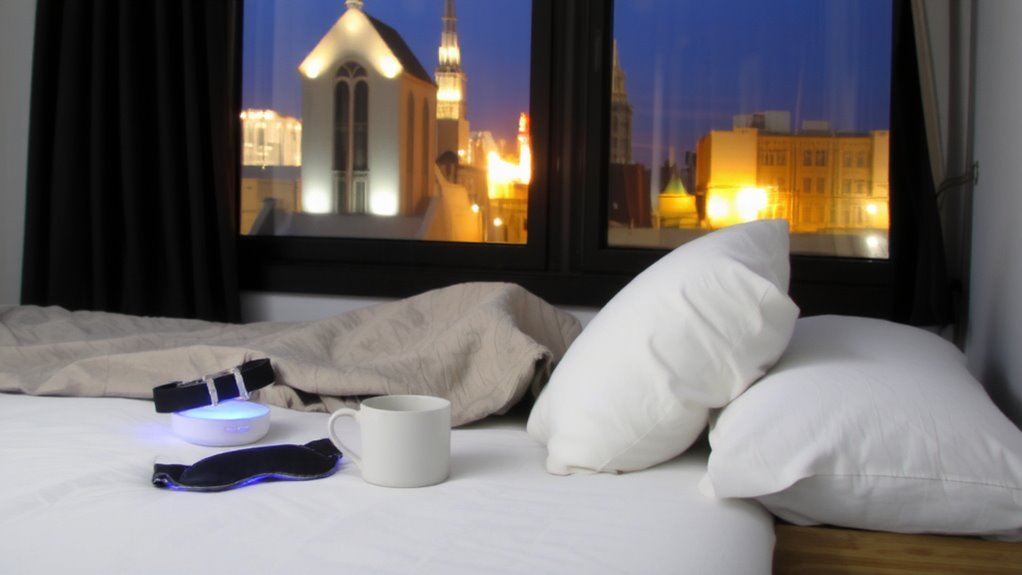
While it might seem simple, using white noise can make a real difference in how well you sleep, especially if you’re sensitive to sounds around you. It works by creating consistent background sound that masks sudden noises-like a door closing or traffic-through sound masking, helping your brain stay calm. This steady input supports brainwave synchronization, gently guiding your mind into sleep-ready rhythms. Unlike abrupt sounds that jolt you awake, white noise provides a predictable audio environment, reducing nighttime awakenings. Many users report better sleep continuity, especially in noisy homes or cities. Devices range from dedicated machines to smartphone apps-most offer adjustable volume and timer settings. Some include warranties, letting you try risk-free. Though not a fix for all sleep disorders, it’s a practical, non-invasive aid worth trying, especially if light sleep or environmental noise disrupts your rest. For those frequently on the move, a travel white noise machine can maintain sleep quality across different environments.
Try These Soothing Alternatives to White Noise
What if white noise isn’t quite your fit-could another sound do the job better? You might find deeper calm with natural soundscapes like ocean waves or rainfall sounds. These alternatives provide consistent, rhythmic audio that masks disruptive noises without the flat, constant drone of white noise. Ocean waves offer a slow, rolling pattern that can feel grounding, while rainfall sounds bring a gentle, pattering rhythm some find easier to relax into. Unlike pure white noise, these nature-based options often include subtle variations in pitch and volume, which may feel more organic to your brain. Many sleep apps and sound machines include high-quality recordings of both, often with loop-free playback and adjustable volume. If you struggle with anxiety or have trouble winding down, trying one of these options could improve your sleep hygiene. Give each a short trial-many devices offer warranties or money-back guarantees-so you can decide what truly works for you. A best sound machines for sleep guide can help you choose a reliable device with the right sound options for your needs.
Pick the Right White Noise Device
If you’re looking for consistent sound to support better sleep, choosing the right white noise device can make a real difference in how well you rest. Consider device compatibility with smart home systems or apps, especially if you want to automate sound schedules. A strong brand reputation often signals reliability, customer support, and proven performance. Below is a comparison of key features to help guide your choice:
| Feature | Basic Device | Smart Device |
|---|---|---|
| Sound Options | 1–3 | 10+ |
| Device Compatibility | None | Wi-Fi, App, Voice |
| Brand Reputation | Mixed Reviews | High (e.g., Hatch, Bose) |
| Portability | High | Medium |
| Trial/Warranty | 30-day | 60-day, full refund |
Look for warranties and trial periods to test performance before committing. For those also seeking physical comfort during sleep, pairing your white noise routine with best sleep caps can enhance overall sleep quality.
Set Safe Volume and Speaker Placement
A good rule of thumb is to keep white noise volume between 50 and 60 decibels-the level of a quiet conversation or soft shower-so it supports sleep without risking hearing health over time. Volume safety matters, especially during long-term use; too loud can strain your ears or disrupt your sleep cycle. Keep the device at a distance-about 4 to 6 feet from your bed-for balanced sound diffusion. Speaker positioning affects quality; aim for elevated, unobstructed placement, like on a nightstand or shelf, avoiding corners or under blankets. This helps maintain consistent sound without hotspots or distortion. If using multiple speakers, sync levels to prevent uneven output. Most quality devices include volume controls, timers, and decibel ratings-use them to test settings over several nights. Check warranty details in case of performance issues. Trial periods let you assess comfort and effectiveness, supporting smarter choices for lasting sleep hygiene.
Make White Noise Part of Your Sleep Routine
You’ve already set a safe volume and positioned your speaker for even sound, so now it’s time to weave white noise into your nightly routine in a way that supports consistent sleep. Start with consistent use-play the sound at the same time each night, about 30 minutes before bed, to signal your brain that it’s time to wind down. This routine integration helps build a mental association between the noise and sleep. Use a timer or smart plug to automate playback, ensuring reliability. Over time, this pattern can improve sleep onset and reduce nighttime awakenings. Choose devices with reliable performance and, if possible, warranties that cover long-term use. Whether you use an app or dedicated machine, the key is regularity. With consistent use, white noise becomes a stable part of your sleep hygiene, offering measurable support without disrupting your natural rhythms.
Combine It With Better Sleep Habits
Think of white noise as one piece of a larger sleep puzzle, not a standalone fix. For real results, pair it with a solid sleep environment and consistent bedtime habits. A calming bedroom-cool, dark, and quiet-lets white noise work better. Bedtime consistency trains your body to wind down naturally, making sleep aids more effective. Consider combining white noise with other hygiene practices to support deeper, more restorative rest.
| Factor | Without Routine | With Routine |
|---|---|---|
| Sleep environment quality | Inconsistent | Optimized |
| Falling asleep time | Variable | Predictable |
| Sleep disruption | More frequent | Less likely |
| Bedtime consistency effect | Low | Strong |
Avoid Dangerous White Noise Habits and Debunked Myths
Now that you’ve built a consistent routine and optimized your sleep environment, it’s just as important to use white noise safely and correctly. Overuse risks include hearing damage or disrupted sleep if volume stays too high for too long-experts recommend keeping output below 50 decibels, roughly the sound of a quiet conversation. Using white noise nonstop may also reduce your brain’s responsiveness over time, so limit it to sleep hours only. Don’t fall for myth confusion: white noise isn’t a cure for sleep disorders like insomnia or sleep apnea-it’s a tool, not a treatment. Some believe any sound machine works the same, but models vary in sound quality, timer options, and volume controls. Look for units with auto-off features and adjustable frequencies. Test different settings, and stop use if irritation or reliance develops.
On a final note
You can use white noise to support better sleep hygiene by choosing a reliable device with adjustable volume and safe sound output. Place it a few feet from your bed, set it at a moderate level, and pair it with consistent bedtime habits. Consider models with timers or warranties for added convenience. While white noise may help mask disruptions, it works best alongside proven sleep practices, not as a standalone fix. Try it cautiously, especially if you suspect a sleep disorder.