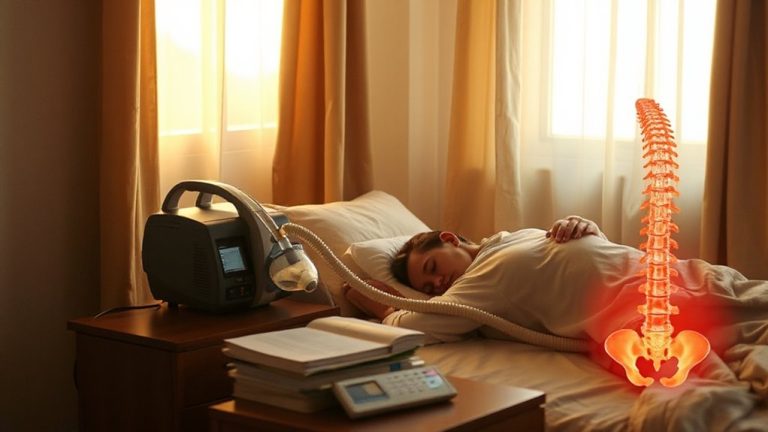
Enhancing Blood Circulation With Gradient Compression Leg Pillows at Night
You wake up stiff or restless because poor circulation lets blood pool in your legs overnight. Gradient compression leg pillows help by elevating your calves and applying gentle, targeted pressure-strongest at the ankles and easing upward-to boost venous return and support oxygen flow. They’re designed with breathable, contoured foam or adjustable inflatable chambers to stay comfortable all night. Many medical-grade models include trial periods, so you can test fit, firmness, and cooling features to find what works best for your body and sleep routine.
Notable Insights
- Gradient compression leg pillows improve nighttime blood flow by enhancing venous return and reducing lower limb pooling.
- Angled elevation and graduated pressure-highest at ankles-promote circulation without restricting arterial flow.
- Proper placement under the calves (not knees) ensures optimal alignment and effective circulation support.
- Breathable, medical-grade materials reduce swelling, cramping, and overheating during overnight use.
- Ideal for those with poor circulation, prolonged standing/sitting, or recovery needs, especially when using adjustable, trial-available models.
Why Poor Circulation Ruins Sleep (And How Compression Helps)
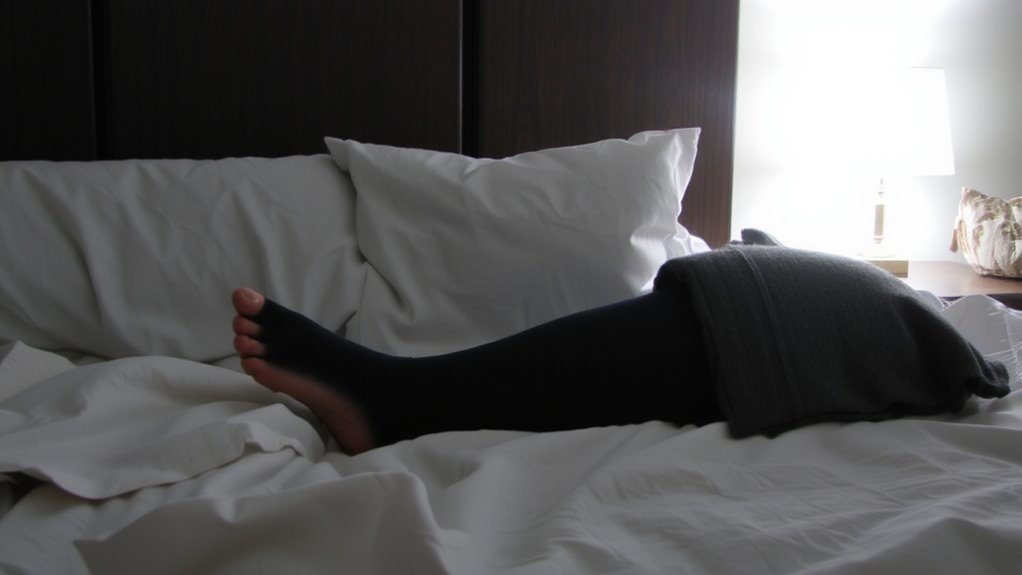
What if poor circulation is the reason you wake up restless or stiff each morning? You might be experiencing venous stasis, where blood pools in your legs due to weak vein function, or arterial insufficiency, which limits oxygen delivery to tissues. Both disrupt sleep quality by causing discomfort, cramping, or swelling. These conditions often worsen overnight when movement stops, reducing natural circulation support. Poor blood flow doesn’t just affect comfort-it can signal deeper vascular concerns. Recognizing symptoms early helps you choose better sleep aids and habits. While some products offer temporary relief, others like gradient compression leg pillows are designed to address underlying flow issues. They’re built with layered support to gently encourage circulation without restricting movement. Many come with trial periods, so testing effectiveness is low-risk. Assess how such tools fit your needs, especially if standard solutions haven’t helped.
How Compression Leg Pillows Improve Blood Flow Overnight
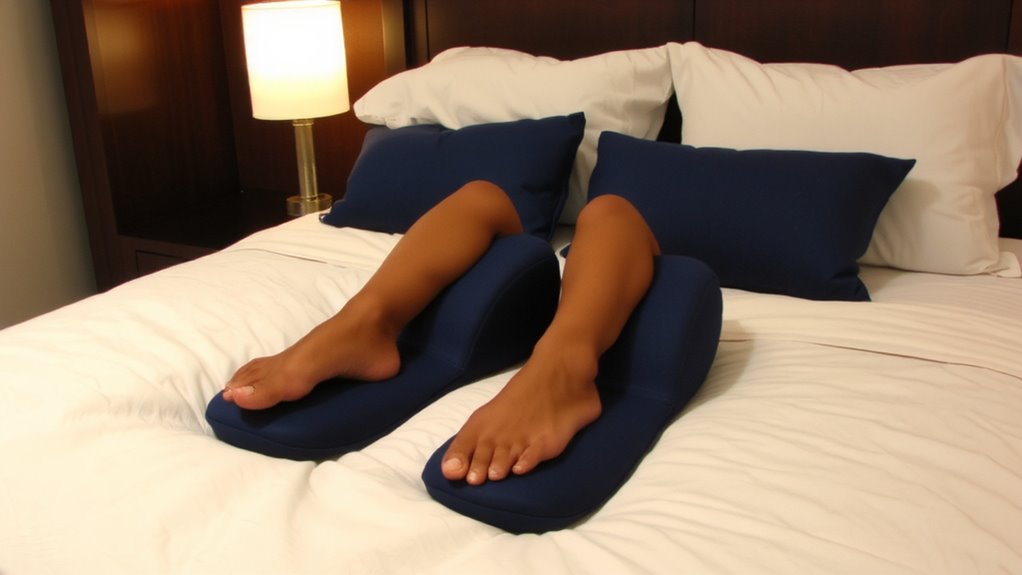
A well-designed compression leg pillow works by combining angled elevation with graduated pressure to keep blood moving through your legs while you sleep. The gentle upward tilt helps boost venous return, reducing pooling in your lower limbs. Graduated compression applies more pressure at the ankle, easing upward toward the knee, which supports steady circulation without restricting arterial pressure. This balance keeps oxygen-rich blood flowing efficiently while preventing discomfort. You’ll likely notice less swelling and fewer nighttime leg cramps. The materials are breathable and contoured to maintain proper alignment, so you’re not shifting all night. Many models come with a 30-night trial and a one-year warranty, letting you test them risk-free. They’re lightweight and easy to position, fitting most bed setups. If you struggle with circulation-related sleep issues, this kind of support may improve your comfort and rest over time.
Proper Way to Use a Compression Leg Pillow at Night
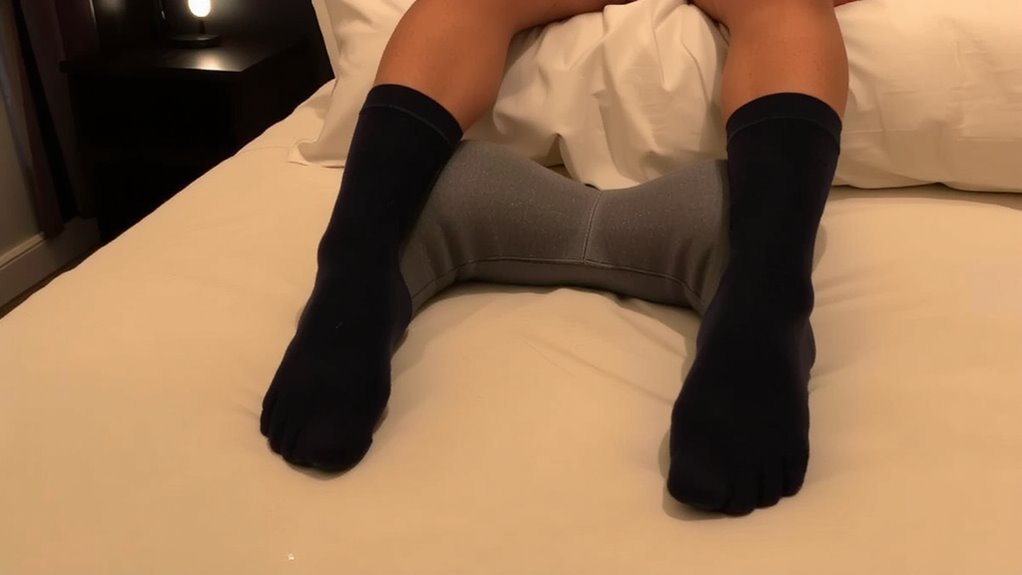
You’ve already learned how compression leg pillows support circulation through elevation and graduated pressure, but knowing how to use one correctly guarantees you get the full benefit. Position the pillow under your calves-never your knees-to maintain proper leg elevation. This alignment supports vein function and reduces swelling overnight. Most models offer adjustable pressure settings, so start on low and increase gradually as comfort allows. Make sure the pillow fits your bed and body oe to avoid shifting during sleep.
| Feature | Benefit for Night Use |
|---|---|
| Leg elevation | Helps blood return to the heart |
| Pressure settings | Customizable support and comfort |
| Memory foam core | Holds shape without overcompression |
| Machine-wash cover | Easy hygiene maintenance |
Follow manufacturer instructions for inflation and cleaning, and test with a trial period if available.
Who Should Use a Compression Pillow While Sleeping
While not everyone needs a compression leg pillow at night, you might benefit from one if you deal with poor circulation, swollen legs, or discomfort after being on your feet all day. If you often notice leg swelling by evening or feel heaviness in your lower limbs, a compression pillow can help support better vein health while you sleep. These pillows gently lift your legs, promoting blood flow back to the heart and reducing strain on your veins. You may find them especially useful if you sit or stand for long hours, are pregnant, or are recovering from surgery. Even if you don’t have serious issues now, using one could help prevent future circulation problems. They’re also a practical option if you’re looking for non-invasive sleep aids to improve rest and comfort. With many models offering trial periods, testing one is a low-risk step toward better nighttime recovery.
Top Features in Medical-Grade Compression Leg Pillows
If you’re already seeing benefits from elevating your legs at night, it’s worth looking closer at what sets medical-grade compression leg pillows apart. These models offer enhanced support through targeted gradient compression, designed to promote circulation without restricting movement. Key features include superior material durability and intelligent temperature regulation, so you stay comfortable all night. Many are made with breathable, antimicrobial fabrics that resist wear and maintain shape over time. Below is a comparison of core features across common medical-grade options:
| Feature | Foam Core Pillow | Gel-Infused Pillow |
|---|---|---|
| Material Durability | High – resists flattening | Moderate – may degrade over time |
| Temperature Regulation | Moderate – retains warmth | High – dissipates heat |
Most come with a 30-night trial and limited warranty, letting you test comfort and effectiveness risk-free.
Foam vs. Inflatable: Best Compression Pillow Designs Compared
When it comes to choosing between foam and inflatable compression pillows, design plays a key role in how well the support fits your needs. Foam models offer consistent shape and firm support, with high material durability that withstands nightly use over time. They contour naturally to your legs, enhancing user comfort without needing adjustments. Inflatable options are lighter and adjustable-you can customize firmness by adding or releasing air, which helps fine-tune support. However, they may wear down faster, especially with frequent use, affecting long-term material durability. While inflatables pack small and suit travel, foam pillows typically provide more stable, hands-free comfort. Both types can improve nighttime circulation, but your choice depends on preference for firmness, portability, and how much setup you’ll tolerate. Many brands offer trial periods, so test for user comfort before deciding.
Avoid These 5 Mistakes With Nighttime Leg Compression
Why do some people still wake up with aching legs despite using compression supports at night? You might be making one of five common mistakes. First, incorrect sizing can reduce effectiveness-too loose and the support slips; too tight and it restricts blood flow. Always measure your leg before choosing a pillow. Second, applying excessive pressure, especially around the calves, may lead to discomfort or numbness. Gradient compression should feel firmest at the ankles and ease upward. Third, placing the pillow too high or low alters alignment and circulation benefits. Fourth, using worn or flattened foam reduces support over time-check for signs of breakdown. Finally, skipping a trial period means missing fit or comfort issues. Many brands offer 30-day warranties, so test them. Avoid these errors, and you’ll improve nighttime circulation more effectively.
On a final note
You’ll sleep better with improved circulation, and a compression leg pillow can help. These pillows gently boost blood flow, reducing nighttime leg discomfort. Choose medical-grade models with firm, even pressure, and try foam for comfort or inflatable for adjustability. Always follow usage guidelines to avoid skin issues. Many brands offer a trial period, so test one risk-free. Check warranty terms before buying. A good pillow supports your legs properly, helping you wake refreshed.