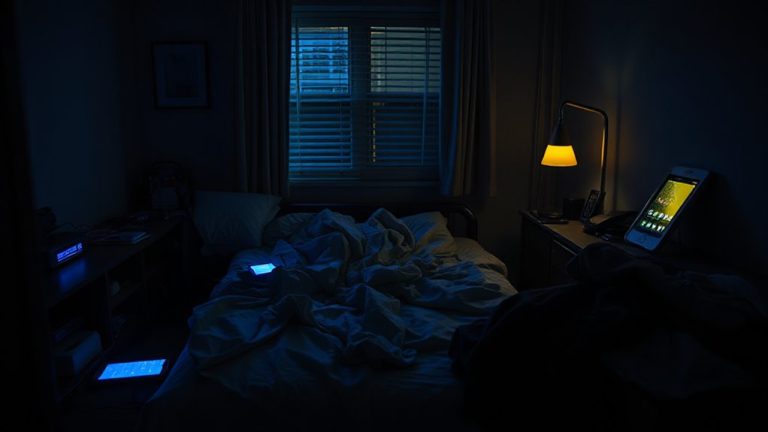
How Social Jet Lag Impacts Work Performance and Overall Wellbeing
You’re likely feeling tired and unfocused because social jet lag disrupts your sleep schedule, especially when weekend habits clash with weekday routines. Inconsistent bedtimes confuse your body’s clock, harming concentration and energy. Even with enough sleep, poor timing weakens performance and long-term health. Hormones, immunity, and mood suffer over time. Morning light, steady wake-ups, and less screen time can help reset your rhythm-small changes make a real difference, and there’s more to discover about restoring balance.
Notable Insights
- Social jet lag disrupts circadian rhythms, reducing focus and impairing work performance due to misaligned sleep schedules.
- Inconsistent sleep between weekdays and weekends leads to brain fog, lowering productivity and task completion efficiency.
- Sleep debt from chronic sleep loss diminishes alertness, making it harder to maintain energy throughout the workday.
- Hormonal imbalances caused by circadian disruption contribute to mood swings, weakened immunity, and long-term health risks.
- Weekend sleep drift worsens Monday fatigue, but consistent bedtimes and morning light help reset rhythms for better wellbeing.
What Is Social Jet Lag (And Why You’re Probably Experiencing It)?
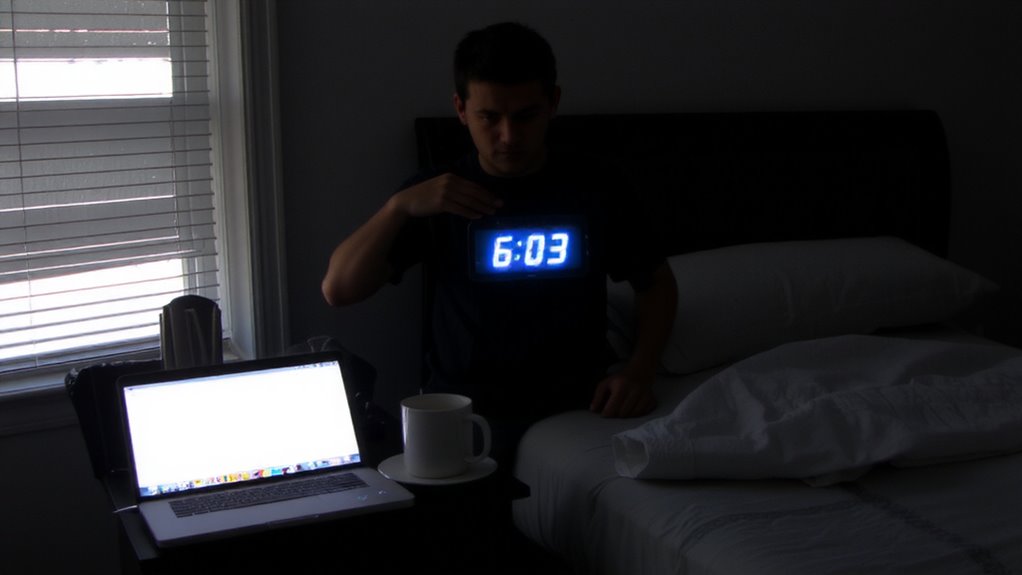
Picture your body running on two different time zones-one during the week and another on weekends. That shift disrupts your circadian rhythm, the internal clock governing sleep and wakefulness. When you stay up late Saturday but wake early Monday, you pile up sleep debt, missing the recommended 7–9 hours nightly. Over time, this mismatch creates social jet lag, leaving you tired, even after long weekend sleep. It’s common-nearly 70% of adults experience it-especially if weekday alarms clash with natural sleep tendencies. The fix starts with small, consistent steps: align bedtimes across weekdays and weekends, limit screens before bed, and consider light exposure to reset your rhythm. Sleep aids may help short-term, but check with a provider if issues persist, as chronic sleep debt can signal deeper sleep disorders.
How Social Jet Lag Kills Focus and Productivity
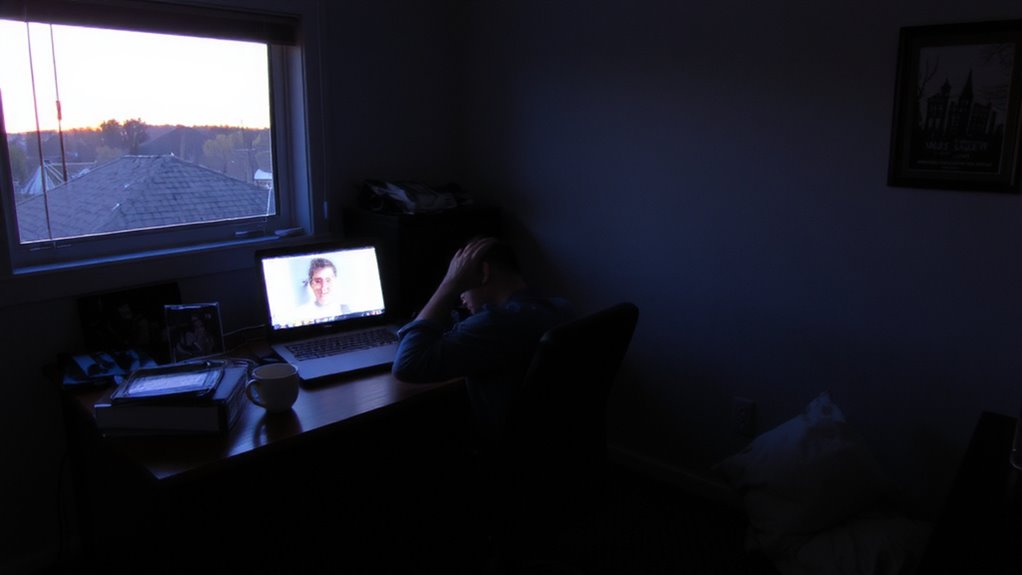
Your brain’s ability to focus takes a direct hit when social jet lag throws your sleep schedule out of sync. You’re likely to experience brain fog, making it harder to process information or follow through on tasks. Mental fatigue builds quickly, reducing your capacity to stay alert during meetings or finish projects on time. Even if you sleep eight hours, inconsistent bedtimes confuse your internal clock, weakening concentration. You might rely on caffeine or naps, but those only mask symptoms. Consider tracking your sleep patterns for a week-this helps spot misalignments. Some find gradual bedtime adjustments help, while others benefit from light therapy or melatonin supplements under medical guidance. Devices like sleep trackers or white noise machines offer support, often with free trial periods. Warranties on quality sleep aids range from 30 to 365 days, allowing risk-free testing. Small, informed changes can improve focus and daily performance.
What Long-Term Sleep Misalignment Does to Your Body

Over time, when your sleep schedule stays out of sync with your body’s natural rhythm, the effects go beyond scattered focus or midday sluggishness. You’re likely to face chronic fatigue, hormonal imbalance, and weakened immunity. These issues build quietly but can disrupt your long-term health. Your body relies on consistent cues to manage repair, metabolism, and mood regulation-without them, performance declines. Consider how sleep aids or disorders affect your routine, and evaluate options based on need and lifestyle. Choosing breathable bedding, such as cool bed sheets, can support better temperature regulation during sleep.
| Issue | Common Effect | Possible Action |
|---|---|---|
| Chronic Fatigue | Low energy, poor recovery | Track sleep, consult doctor |
| Hormonal Imbalance | Appetite swings, mood shifts | Adjust bedtime, test if needed |
| Immune Decline | Frequent illness | Prioritize consistency, try aids |
Why Weekend Sleep Changes Worsen Social Jet Lag
While your body thrives on routine, sleeping markedly later on weekends can throw off your internal clock, making it harder to adjust when Monday morning arrives. This shift is known as weekend drift, and it deepens social jet lag by misaligning your biological rhythm with your workweek schedule. When you stay up late and sleep in, you accumulate sleep debt instead of repaying it, especially if weekday sleep is already insufficient. Your body doesn’t fully recover, and the delayed bedtime pushes your sleep cycle further out of sync. Over time, this irregularity weakens sleep quality and reduces alertness during work hours. Even small changes-like sleeping two hours later on weekends-can impair Monday focus and mood regulation. Consistency matters more than catch-up sleep. Keeping bedtimes within an hour of your weekday norm helps stabilize your internal clock and reduce long-term strain on your health.
How to Fix Your Sleep Schedule (Without Drastic Changes)
How do you reset your sleep schedule without completely overhauling your routine? Start by gently aligning your habits with your natural circadian rhythm. Small improvements in sleep hygiene make a lasting difference over time. Aim to wake up within the same hour each day-even on weekends-to stabilize your internal clock. Then, shift bedtime earlier by 15-minute increments nightly. Reduce screen exposure before bed and avoid caffeine after 2 PM.
| Time of Day | Action | Benefit |
|---|---|---|
| Morning | Open curtains or go outside | Resets circadian rhythm |
| Afternoon | Avoid long naps | Prevents sleep fragmentation |
| Evening | Limit screens, dim lights | Improves sleep hygiene |
| Night | Set consistent bedtime | Supports natural sleep cycles |
These steps promote steady adjustment without drastic changes, helping you maintain better performance and wellbeing long-term.
On a final note
You might feel fine now, but ongoing social jet lag slowly weakens focus, mood, and long-term health. Small, consistent changes-like keeping a steady sleep schedule, limiting screens before bed, and using light exposure wisely-can reset your rhythm without drastic effort. If problems persist, consider tracking sleep patterns or consulting a professional. Some find mild sleep aids helpful short-term, but look for options with clear labels, minimal side effects, and flexibility in dosing to match your needs safely.