How To Develop Good Sleep Hygiene Practices That Encourage Quality Slumber Every Night
Set a consistent bedtime and wake time, even on weekends, to strengthen your body’s internal clock. Spend 30 minutes winding down with calm activities like reading or stretching, and keep your bedroom cool, dark, and quiet. Cut back on blue light from screens at least an hour before bed, and avoid caffeine after noon. These steps support natural sleep patterns and improve nightly rest-you’re already on the path to better choices, and more improvements can come with small, steady adjustments.
Notable Insights
- Maintain a consistent sleep schedule by going to bed and waking up at the same time daily, including weekends.
- Establish a 30-minute evening wind-down routine with calming activities like reading or stretching.
- Optimize your bedroom environment by keeping it cool, dark, and quiet for ideal sleep conditions.
- Reduce evening blue light exposure by avoiding screens and using filters at least one hour before bed.
- Limit caffeine and screen use in the late afternoon and evening to support natural sleep onset.
Set a Sleep Schedule You Can Stick To

One key step to better sleep is setting a consistent sleep schedule you can follow most days. When you go to bed and wake up around the same time daily, even on weekends, your body adjusts to a predictable rhythm. This regularity strengthens your internal clock, making it easier to fall asleep and wake naturally. The consistency benefits include improved sleep quality, better mood, and sharper daytime focus. Bedtime discipline means choosing a realistic hour that allows 7–9 hours of rest and sticking to it without frequent changes. While life events may disrupt the pattern occasionally, returning to your routine quickly minimizes setbacks. You don’t need special tools-just commitment and awareness. Over time, this habit supports long-term slumber patterns without relying on sleep aids. It’s a simple, effective foundation many sleep specialists recommend when addressing common sleep troubles.
Wind Down With a 30-Minute Evening Routine
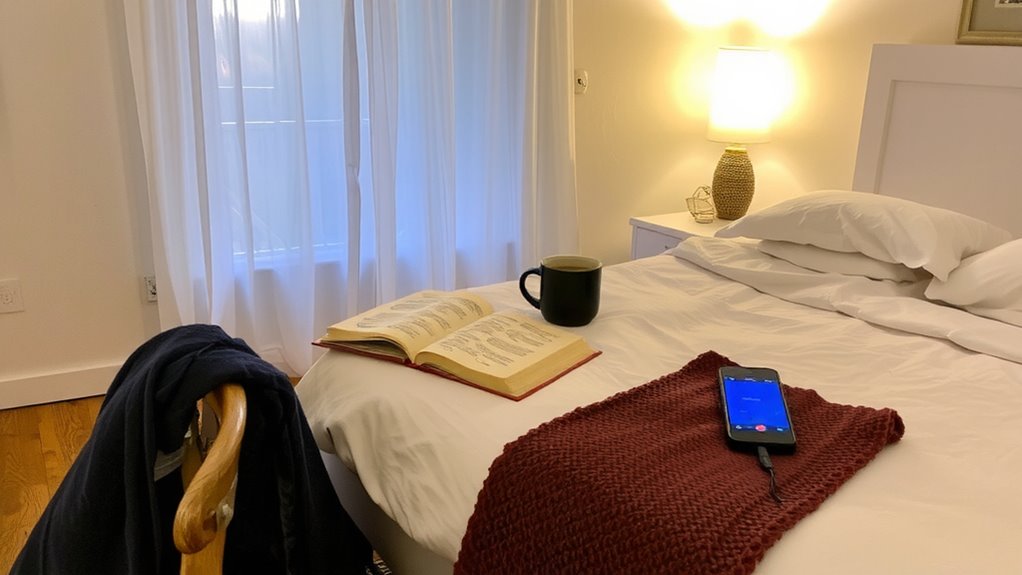
As the day winds down, carving out a consistent 30-minute evening routine can make a meaningful difference in how smoothly you move into sleep. This time is perfect for calming bedtime rituals that signal to your body it’s time to rest. Incorporate relaxation techniques like deep breathing, gentle stretching, or reading a book-activities that lower stress and ease mental chatter. Avoid screens, as their light can disrupt your natural sleep cycle. A predictable pattern helps regulate your internal clock and improves sleep quality over time. Exploring the best tools designed for stress reduction can further enhance your wind-down experience with the help of relaxation tools.
| Feeling Before | After Routine |
|---|---|
| Overwhelmed | Calmer |
| Mentally alert | Relaxed |
| Tense | Physically at ease |
Try this nightly for a week and note changes in your rest. Consistency matters more than perfection when building effective bedtime rituals.
Keep Your Room Cool, Dark, and Quiet
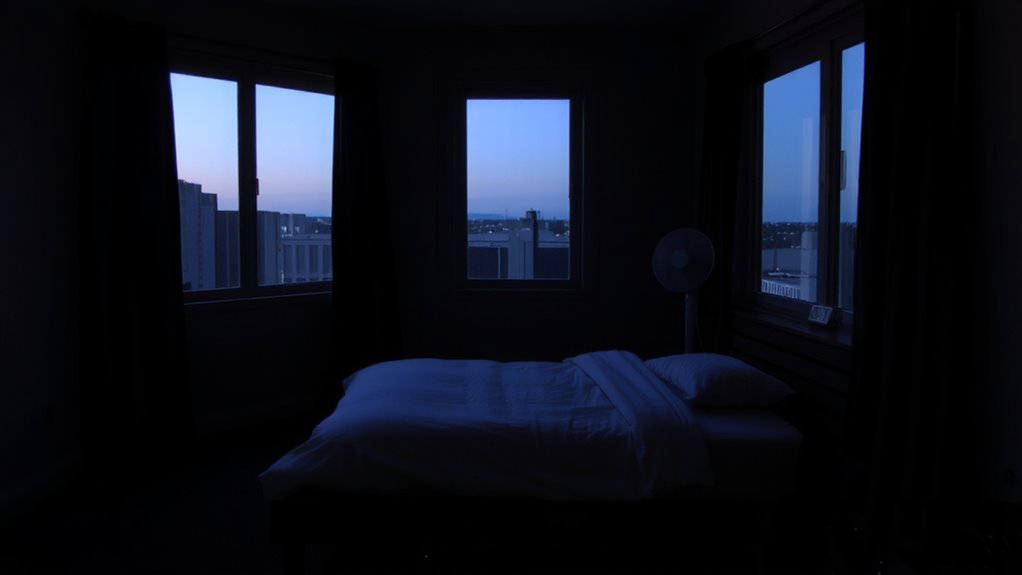
A cool, dark, and quiet bedroom isn’t just ideal-it’s essential for high-quality sleep, and your environment can make or break your rest. Keeping your room temperature between 60–67°F helps regulate your body’s natural cooling process during sleep. This range supports deeper, more consistent rest. Darkness signals your brain to produce melatonin, so use blackout curtains or a sleep mask if needed. Low noise levels are just as important-sudden sounds can disrupt sleep cycles. Consider using a white noise machine or earplugs to block disruptive sounds like traffic or snoring. Fans or air purifiers also help by providing steady background noise and improving air circulation. These tools are effective, affordable, and often come with warranties or trial periods. Test options to see what suits your space and sleep pattern. Small adjustments in room temperature, light, and noise levels can greatly improve sleep quality over time. For maximum light blockage, consider investing in the best blackout curtains designed specifically to eliminate external light and reduce noise.
Reduce Blue Light Before Bed
Though your brain relies on light cues to regulate sleep, exposure to blue light from screens in the evening can delay melatonin release and shift your circadian rhythm. To counter this, you can use screen filters that reduce blue light emission on phones, tablets, and computers. These filters are often built into device settings or available as affordable add-ons with easy application and clear performance benefits. Setting a digital sunset-turning off screens at least one hour before bed-helps signal to your body that it’s time to wind down. This practice supports natural sleep timing and may improve sleep quality over time. While results vary, many people notice better ease in falling asleep after consistent use. Consider trying screen filters and a digital sunset for a few weeks to assess their effect on your routine.
Avoid Caffeine and Late-Day Screens
Since caffeine can stay in your system for several hours, it’s smart to avoid it in the afternoon and evening if you’re sensitive to its effects-many people don’t realize it can disrupt sleep even when consumed six hours before bedtime. Paying attention to caffeine timing helps you avoid restlessness and falling short on quality rest. Similarly, late-day screen use emits blue light that can suppress melatonin, making it harder to fall asleep. Setting a screen curfew-say, one hour before bed-gives your brain time to wind down naturally. This small change supports your body’s internal clock and improves sleep onset. If you struggle with sleep, adjusting these habits may reduce the need for sleep aids or doctor visits. Try tracking your progress over a week to see how your sleep quality shifts. These adjustments are simple, evidence-based, and reversible, making them a low-risk way to support better slumber.
On a final note
Stick to a consistent sleep schedule, even on weekends, to regulate your body’s clock. Build a relaxing 30-minute routine-like reading or light stretching-to signal bedtime. Keep your room cool, dark, and quiet, and limit blue light from screens an hour before bed. Reduce caffeine after noon and avoid heavy meals late. Try these steps for several weeks to see what works. If sleep problems continue, consider talking to a doctor or exploring sleep aids with professional guidance.