Using Valerian to Improve Sleep in People With PTSD
You can try valerian to help with PTSD-related sleep issues, as it may calm an overactive nervous system by supporting GABA activity. It won’t cure insomnia, but some people find it shortens the time to fall asleep and improves sleep quality slightly. Use 300–600 mg before bed, ideally in a standardized form, and allow a few weeks to notice effects. Pair it with good sleep habits for better results. There’s more to think about regarding how it interacts with medications and which forms work most reliably.
Notable Insights
- Valerian may help reduce sleep onset time in people with PTSD by modulating GABA activity in the brain.
- Its active compound, valerenic acid, calms nervous system hyperarousal linked to PTSD-related insomnia.
- Limited direct research shows mixed results on valerian’s effectiveness specifically for PTSD sleep disturbances.
- Typical doses of 300–600 mg before bed may improve sleep quality over several weeks of use.
- Combining valerian with good sleep hygiene and relaxation techniques may enhance overall sleep outcomes.
How Valerian Helps PTSD Sleep
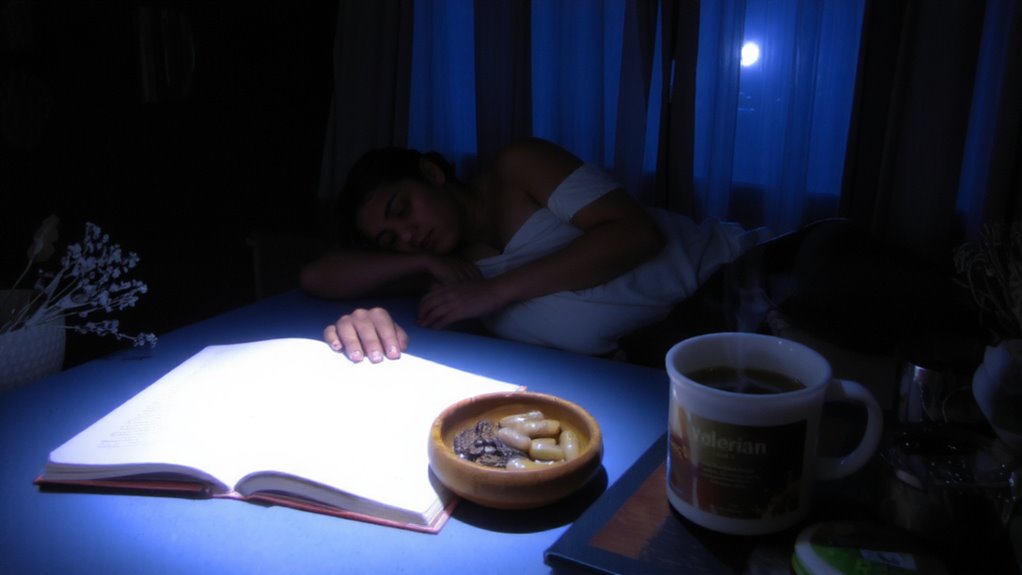
While you might feel overwhelmed by sleep troubles tied to PTSD, valerian root offers a gentle, natural option to contemplate. It interacts with your brain chemistry by supporting GABA activity, a neurotransmitter that helps calm nerve signals. This effect may reduce the overactive stress response common in PTSD, making it easier to fall and stay asleep. You’ll typically take valerian 30 to 60 minutes before bed, in capsule, tea, or tincture form. Doses range from 300 to 600 mg, though starting low helps assess tolerance. Unlike prescription sedatives, it doesn’t usually cause morning grogginess, but results can take a few weeks. Some brands standardize extracts for valerenic acid, which may improve consistency. While research is mixed, some trials show meaningful improvements in sleep quality. Always check with your doctor, especially if you’re on other medications.
Why PTSD Causes Insomnia
Because your mind remains on high alert after experiencing trauma, falling asleep can feel nearly impossible, even when you’re exhausted. Your brain stays trained to detect danger, creating hypervigilance cycles that disrupt normal sleep patterns. When you’re caught in these loops, small sounds or thoughts can feel threatening, making it hard to relax enough to drift off. Trauma triggers-like certain smells, noises, or even memories-can activate your nervous system unexpectedly, spiking stress hormones at night. This reaction often leads to frequent awakenings or trouble falling asleep, even in safe environments. Over time, the pattern worsens, turning occasional restlessness into chronic insomnia. These sleep issues aren’t just fatigue-they’re your body’s response to unresolved stress. Understanding how trauma affects sleep helps you recognize symptoms and consider targeted support, including safe, research-backed options to improve rest without dependency.
How Valerian Calms the Nervous System
Valerian root works with your body’s chemistry to help ease the nervous SEALING into a more relaxed state, which may support better sleep when PTSD keeps you on edge. It supports nerve regulation by influencing how your brain chemistry responds to stress. Compounds in valerian, like valerenic acid, interact with GABA receptors, helping slow nerve signals that keep you alert. This effect may reduce overactivity linked to hyperarousal. Choosing a high-quality valerian root supplement can make a difference in effectiveness due to variations in potency and formulation.
| Mechanism | Effect on Nervous System |
|---|---|
| GABA modulation | Encourages calm brain chemistry |
| Nerve regulation | Slows overactive neural firing |
| Valerenic acid | Supports natural relaxation |
| Sedative terpenes | May ease shift into sleep |
These actions don’t force sleep but may help your body’s natural rhythm shift toward rest.
What Research Says About Valerian for PTSD
Though research on valerian specifically for PTSD is limited, studies suggest it may help ease some sleep-related symptoms tied to stress and hyperarousal. You might find it supports falling asleep faster and improving sleep quality, which can be especially helpful when PTSD disrupts rest. Some trials show modest improvements in insomnia, though the clinical efficacy for PTSD-related sleep issues isn’t yet strong or consistent. Most studies are short term, so the long term safety remains uncertain. You should consider that while valerian is generally well-tolerated, gaps in evidence mean it’s not a guaranteed solution. It works differently for everyone, and results may take a few weeks to notice. If you’re exploring supplements, weigh the available support against unknowns, and remember that what helps one person might not work the same for you.
Valerian’s Side Effects and Drug Interactions
When considering valerian for better sleep, it’s important to know that while most people tolerate it well, some may experience mild side effects like dizziness, headache, or stomach upset. Its safety profile is generally favorable for short-term use, but long-term effects aren’t well studied. Though rare, cases of liver toxicity have been reported, so you should use caution if you have existing liver concerns. Valerian may also interact with medications, especially those that affect the central nervous system.
| Common Side Effects | Possible Interactions |
|---|---|
| Dizziness | Sedatives or sleep meds |
| Headache | Antidepressants (e.g., SSRIs) |
| Stomach upset | Alcohol or anti-anxiety drugs |
Always talk to your doctor before combining valerian with other drugs. Being informed helps you make safer choices for your sleep and overall health.
How to Use Valerian for PTSD Sleep
If you’re dealing with sleep troubles from PTSD, you might consider trying valerian as a natural option to help ease into rest. Start with a low dose, typically 300–600 mg, taken about 30 minutes to two hours before bed. This dosage timing helps align the herb’s effects with your sleep cycle. You can find valerian in capsules, tablets, or as a tea. Stick with standardized extracts for consistent potency. While short-term use appears safe for most, the long term safety of valerian isn’t well studied, so ongoing use should be approached with caution. It may take a few weeks to notice changes in sleep quality. Always talk to your doctor before starting, especially if you take other medications. This way, you can weigh benefits and risks based on your health needs.
Best Sleep Strategies to Pair With Valerian
A handful of well-chosen sleep habits can make valerian work more effectively for PTSD-related insomnia. Practicing good sleep hygiene-like keeping a consistent bedtime, limiting screen time before bed, and avoiding caffeine late in the day-creates a solid foundation. Your bedroom should be cool, quiet, and dark, helping signal your body it’s time to rest. Pairing valerian with relaxation techniques such as deep breathing, progressive muscle relaxation, or gentle guided meditation can deepen its calming effects. These methods help quiet the mind, which is often overactive with PTSD. You might start with 10 minutes of practice each night. Over time, combining valerian with these strategies may improve sleep onset and quality. It’s not a quick fix, but a gradual process. Give each change a few weeks to assess its impact. Always consult your healthcare provider when adjusting your sleep plan.
On a final note
You might find valerian helpful for sleep if PTSD disrupts your rest, though results vary. It may ease nervous system activity, supporting relaxation without heavy sedation. Research is limited but suggests potential for mild improvement in sleep quality. Consider combining it with proven sleep habits like consistent timing and reduced screen use. Talk to your doctor first, especially if you take other medications, to avoid interactions. A short trial could help you decide if it works for you.