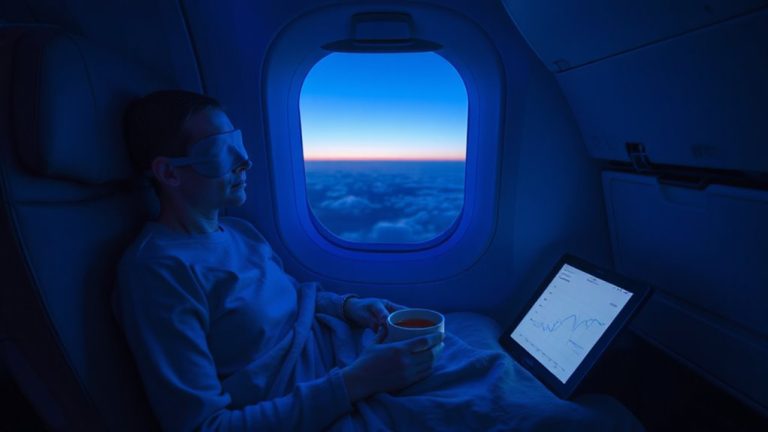
Sleep Hygiene Tips to Combat Jet Lag and Reset Circadian Rhythms Quickly
Start shifting your bedtime and wake time by 15–30 minutes daily a few days before travel, depending on your destination’s time zone. Use morning sunlight exposure to reset your rhythm quickly, and avoid evening blue light from screens. Keep your sleep space dark and quiet with a sleep mask or white noise machine. Align meals and caffeine with local time, nap briefly if needed, wake at the same time every day, and consider melatonin to help adjust-more strategies follow.
Notable Insights
- Gradually shift bedtime and wake time by 15–30 minutes daily toward destination time before travel.
- Seek 15–30 minutes of morning sunlight upon arrival to reset your internal clock quickly.
- Use blackout masks and white noise devices to create a sleep-friendly environment during travel.
- Align meals and caffeine intake with local time, avoiding caffeine within six hours of bedtime.
- Limit naps to 20–30 minutes and wake at the same time daily to stabilize your circadian rhythm.
Adjust Your Clock Before Travel
While you’re still at home, start shifting your sleep schedule to match your destination’s time zone, especially if you’re crossing three or more time zones. This early adjustment helps your body ease into the new rhythm before you land. Begin pre travel scheduling a few days ahead-gradually move bedtime and wake time 15 to 30 minutes closer to your target zone each day. If you’re heading east, go to bed earlier; for westward trips, delay sleep. Avoid caffeine and bright screens close to your new bedtime. This method supports your natural circadian biology, reducing the severity of jet lag symptoms. It’s a low-risk, effective strategy that doesn’t rely on sleep aids, though some may find mild melatonin use helpful under medical guidance. Planning ahead improves results without side effects or cost.
Reset Your Rhythm With Smart Light Exposure
How can you reset your body clock quickly after a long flight? Use smart light exposure to guide your circadian rhythm. Seek bright morning sunlight as soon as possible-it’s rich in blue light, which suppresses melatonin and signals daytime to your brain. This helps you adjust faster, especially if you arrive in the early hours. Avoid blue light from screens in the evening, as it can delay sleep onset. Instead, dim lights and wear blue-blocking glasses if needed. Natural light exposure during the day improves alertness and sleep quality over time. Consistency matters: spend at least 15–30 minutes outside each morning. Even on cloudy days, outdoor light is more effective than indoor lighting. This method works gently but reliably, aligning your internal clock without drugs or devices. Try it for a few days to see improvement.
Set Up a Sleep-Friendly Environment Anywhere
Your hotel room’s setup can make or break your sleep during travel, so take a few minutes to shape it into a rest-friendly zone. Start by checking if the room has blackout curtains-these block early morning light and help maintain melatonin levels for deeper sleep. If they’re missing, consider a portable sleep mask as a backup. Outside noise can disrupt sleep, especially in busy cities, so a compact white noise machine helps mask traffic, elevators, or loud neighbors. Many models are small, USB-powered, and include soothing sounds like rain or static. Look for ones with adjustable volume and timer settings for better control. Some even double as travel chargers. Testing your gear at home first guarantees it works well under real conditions. A reliable device often comes with a warranty, so keep receipts. These tools don’t cure jet lag alone, but they support consistent sleep when your rhythm’s off. Consider a best alarm clock radio with CD player to combine soothing music playback with gradual wake-up alarms for improved sleep hygiene.
Time Meals and Caffeine to Fight Jet Lag
If you’re crossing time zones, adjusting your meal and caffeine schedule can help reset your internal clock faster. Shifting your meal timing to match the destination’s local schedule cues your body to adapt. Eating meals at consistent times there helps regulate circadian rhythms over a few days. Try to align breakfast, lunch, and dinner with local daylight hours. For caffeine cutoff, stop consuming coffee, tea, or soda at least six hours before bedtime. Caffeine’s effects vary, but delaying intake too late can interfere with sleep onset and quality. You’ll minimize grogginess and support better nighttime rest by managing both meal timing and caffeine cutoff wisely. These habits work best when started on travel day and maintained. They’re simple, effective tools that don’t rely on sleep aids but instead use daily patterns to reset your body’s clock naturally and steadily.
Take Short Naps Without Wrecking Sleep
Sticking to smart meal and caffeine habits sets the foundation for better sleep while adjusting to a new time zone, and napping the right way can add to that progress without causing setbacks. If you feel drowsy, a short nap can help, but nap timing matters. Try to limit naps to 20–30 minutes and avoid sleeping past mid-afternoon, as late naps may interfere with nighttime sleep. Napping too long or too late can lead to sleep inertia-the groggy, disoriented feeling that hampers alertness and performance. To reduce this effect, keep your nap environment dim and quiet, and expose yourself to light afterward. Power naps can restore focus, but they’re best used as a temporary aid, not a long-term fix. Use them sparingly to manage fatigue without disrupting your circadian rhythm reset.
Wake Up at the Same Time Daily
Consistently waking up at the same time each day, even on weekends, helps stabilize your internal clock and can speed up adjustment to a new time zone. This regularity supports healthy sleep duration by reinforcing your body’s natural rhythm, making it easier to fall asleep and wake up feeling refreshed. To maintain this habit, practice solid alarm discipline-use a reliable alarm and resist hitting snooze repeatedly, as irregular wake times confuse your circadian system. Over time, consistent wake-up times increase sleep efficiency, even if you’re adjusting after travel. While it may feel tough at first, especially across time zones, sticking to a fixed morning rise time accelerates recovery. You don’t need sleep aids if you build this routine; it’s a natural, drug-free method. Give it a few days, and your body learns when to feel alert or drowsy, improving overall sleep quality without extra tools or supplements.
Use Melatonin to Reset Your Body Clock
Why does it feel so hard to fall asleep when your body thinks it’s midnight but the clock says it’s only 8 p.m.? Your circadian rhythm is out of sync, but melatonin can help reset it. This hormone signals darkness to your brain, easing the shift to a new time zone. For best results, consider melatonin dosage carefully-most adults start with 0.5 to 3 mg about 30 to 60 minutes before bedtime. Too much can cause grogginess or disrupt sleep. Supplement timing matters just as much as dosage: take it at the target bedtime of your destination, not your departure point. Consistent use for a few nights may improve adjustment, but it’s not meant for long-term reliance. Always check with a healthcare provider, especially if you have sleep disorders or take other medications. Choosing a high-quality melatonin supplement can make a meaningful difference in effectiveness and safety.
On a final note
You can reduce jet lag by adjusting your schedule before travel and using light exposure to reset your rhythm. A calm, dark environment helps you sleep anywhere, while timed meals and caffeine keep energy in check. Short naps refresh without disrupting night sleep. Waking at the same time daily strengthens your clock. Melatonin may help, especially if used briefly and at the right dose.