Tailoring Pillow Shape to Fit Unique Head Circumference and Ear Profile
Your head circumference and ear profile affect how well a pillow supports spinal alignment, especially if you’re a side sleeper. A pillow too high or low strains neck muscles and disrupts sleep. Measure your head above the ears and check ear-to-shoulder alignment for proper fit. Contoured or adjustable pillows in memory foam or buckwheat adapt to your shape, offering support where needed. Look for models with trial periods to test comfort confidently.
Notable Insights
- Measure head circumference above the ears to determine optimal pillow width and support needs.
- Ensure ears align with shoulders when side sleeping to maintain proper spinal alignment.
- Choose contoured pillows that match head and neck curvature for personalized anatomical support.
- Use adjustable or shredded memory foam pillows to customize fit based on head and ear profile.
- Select pillow materials like latex or gel-infused foam to adapt to shape while regulating temperature.
Why Your Head and Ear Shape Affect Pillow Choice
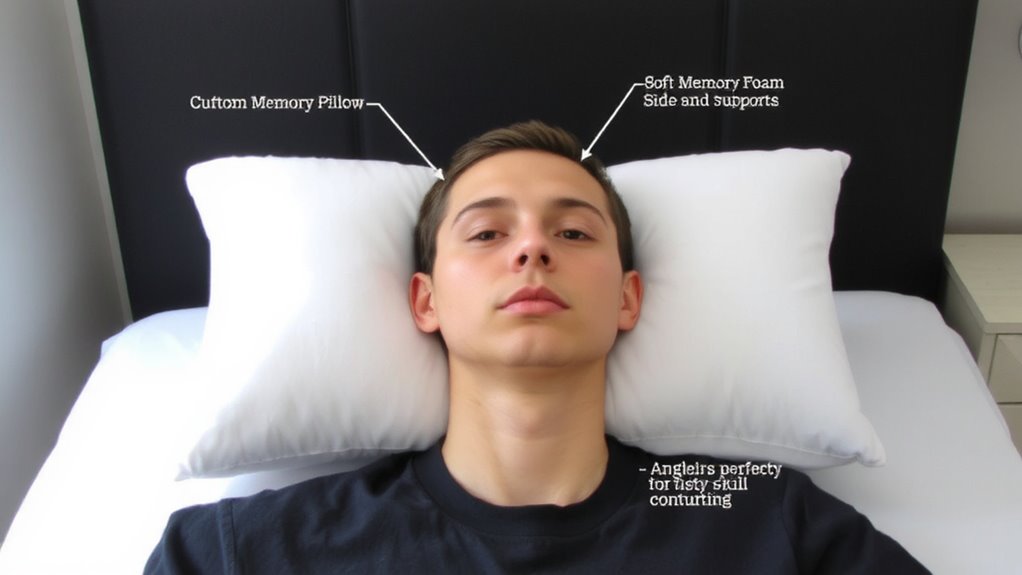
Have you ever wondered why some pillows feel comfortable while others leave you tossing and turning? Your head and ear shape play a key role in how well a pillow supports you. If your pillow doesn’t match your head symmetry, it can tilt your skull unevenly, straining muscles overnight. Proper ear alignment with your spine is essential-especially if you sleep on your side. A pillow too thin or too thick throws this off, disrupting natural posture. Manufacturers design contoured, shredded, or adjustable pillows to respond to these differences, using memory foam or latex to hold shape. Look for models with trial periods or warranties so you can test support and comfort. Checking how your head rests, and whether your ears stay level with your shoulders, helps narrow choices. Matching pillow loft and firmness to your anatomy improves spinal positioning, making it easier to stay asleep. Side sleepers often benefit most from pillows with higher loft support to keep the head properly aligned.
How the Wrong Pillow Causes Neck Pain and Poor Sleep
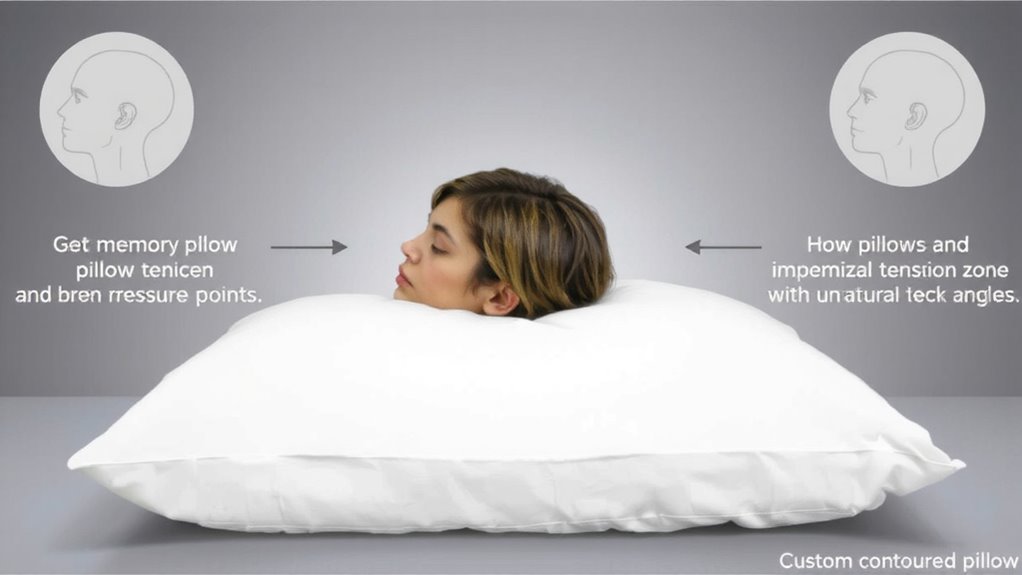
While a pillow might seem like a simple part of your sleep setup, picking the wrong one can quietly lead to neck pain and restless nights. If the pillow height doesn’t match your head and neck shape, it forces your spine out of proper alignment. That strain builds up over time, often causing stiffness or aching by morning. Without correct spine alignment, muscles stay tense instead of relaxing, which can disrupt sleep cycles and worsen sleep disorders like insomnia. A pillow that’s too high or too flat changes your natural posture, making your neck bend awkwardly. Some sleep aids, like adjustable or contoured pillows, help maintain alignment by adapting to your body. Look for models with trial periods or warranties, so you can test them risk-free. Testing guarantees the pillow truly supports your spine alignment over time. For those seeking targeted relief, best buckwheat pillows offer firm, moldable support that adapts to the contours of the head and neck.
How to Measure Your Head and Ears for the Right Fit

What if the secret to better sleep starts with a simple tape measure? Start by measuring your head’s circumference just above your ears and across your forehead-this helps assess head symmetry and guarantees your pillow supports balanced alignment. Next, check ear alignment: sit sideways in front of a mirror and note where your ear lines up with your shoulder; if it angles forward or back, your pillow height may need adjusting. Use a soft tape measure for accuracy, and take readings in centimeters and inches. Repeat the process twice to confirm consistency. These numbers guide your choice in pillows built for your proportions, improving spinal support. Accurate measurements mean fewer guesswork issues, better trial outcomes, and smarter use of sleep aids. Many brands offer warranties-test with your numbers in mind. For side sleepers, choosing a pillow with adequate loft and firmness is crucial, and reviewing the best pillows for side sleepers can help identify models that match your measured dimensions.
Pillow Contours Designed for Your Head Shape
A well-designed pillow contour can make a real difference in how well you sleep, especially when it matches your head shape. If your head symmetry is uneven, a tailored contour supports the curves you may not even notice, reducing neck strain. Proper ear alignment guarantees your spine stays neutral when lying on your side, which matters for long-term comfort and breathing. Contours that cup the back of your head without pushing it forward help maintain natural spinal positioning. Look for adjustable designs or memory foam that molds to your shape over time. Many models offer trial periods, so you can test how well the contour works over several nights. Check warranty length too-longer coverage often reflects confidence in design. A thoughtful contour doesn’t promise miracles, but it can improve alignment, support head symmetry, and promote steadier sleep.
Best Pillow Materials for Your Head Shape and Sleep Style
How does your sleep position shape your pillow material choice? Your head shape and sleep style work together to determine whether memory foam, cooling gel, or another material suits you best. Side sleepers often need firmer support to keep the spine aligned, while back and stomach sleepers may prefer softer, contouring options. Memory foam adapts well to head circumference, offering durable shaping, while cooling gel helps regulate temperature for hot sleepers.
| Sleep Style | Best Material | Key Benefit |
|---|---|---|
| Side | High-density foam | Supports neck and ear profile |
| Back | Memory foam | Cradles head, maintains alignment |
| Stomach | Soft gel-infused | Prevents overextension |
| Combination | Cooling gel + foam | Balances support and breathability |
| Hot sleeper | Gel-chip memory foam | Enhances airflow and heat dissipation |
Signs You Need a Personalized Pillow
You’ve probably noticed how your sleep quality shifts depending on your pillow’s material and support, especially when your head shape or sleep position isn’t fully accommodated. If you wake with neck pain or stiffness, your pillow firmness might not align with your sleep posture. Side sleepers often need firmer support to fill the gap between head and shoulder, while back sleepers may prefer medium firmness for gentle spinal alignment. Noticeable pressure on your ears or a misaligned head position are signs your pillow doesn’t match your head circumference or ear profile. You might also shift frequently at night, seeking comfort. A personalized pillow considers your unique dimensions and preferred sleep posture, improving overall spinal support. Many brands offer trial periods and adjustable fills, letting you test pillow firmness risk-free. These features help you make informed choices without commitment. Pay attention to how your body responds-consistent discomfort is a clear signal a tailored solution could help.
On a final note
You’ll sleep better when your pillow matches your head size and ear profile. A proper fit supports your neck, keeps your spine aligned, and reduces pain. Look for contours that cradle your head shape and materials that suit your sleep style-memory foam molds gently, while latex offers resilience. Try pillows with trial periods and warranties so you can test comfort and durability. These features help you make a confident, informed choice.