Understanding the Role of Chronotypes in Individual Differences of Physical Fitness and Health Outcomes
You perform best when your workout and sleep schedule match your natural chronotype. Larks feel sharp and strong in the morning, while owls hit their stride by evening. Aligning exercise with your rhythm boosts performance and consistency. Mismatched timing can disrupt sleep and metabolism. Track your alertness for two weeks to spot your pattern. Small shifts in light, meals, and activity help fine-tune your cycle. There’s more to discover about optimizing your daily flow.
Notable Insights
- Chronotypes influence peak physical performance times, with larks excelling in morning workouts and owls in evening sessions.
- Aligning exercise timing with natural circadian rhythms enhances workout efficiency and long-term fitness outcomes.
- Misalignment between chronotype and daily schedule increases risks of sleep deprivation, metabolic issues, and circadian disruption.
- Morning light exposure and consistent meal timing help regulate circadian rhythms and support better health outcomes.
- Individual differences in alertness and coordination throughout the day are linked to inherent chronotype-driven biological patterns.
When Larks and Owls Feel Most Alert
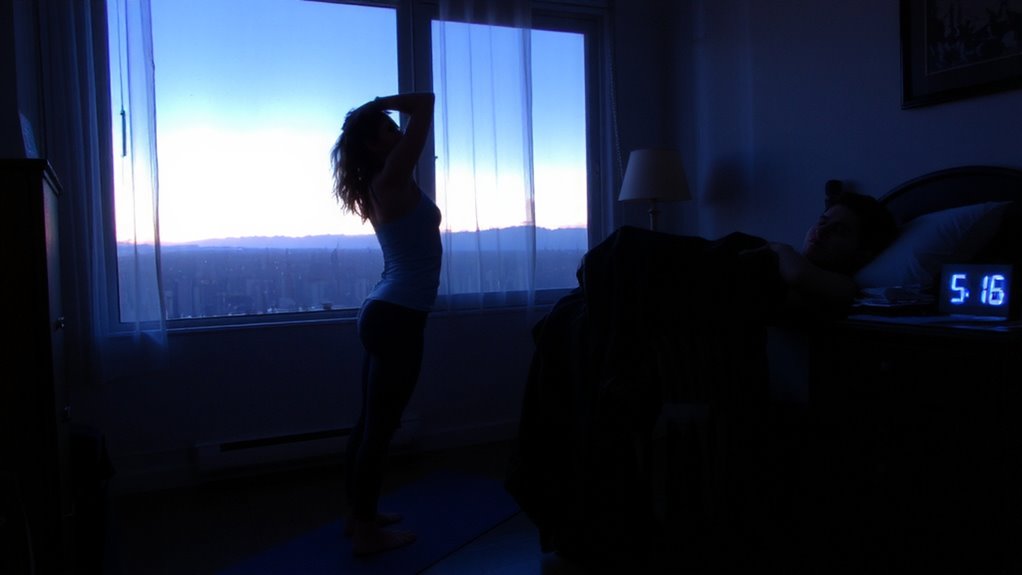
When do you feel most sharp-first thing in the morning or late at night? If you’re a lark, you likely experience peak cognitive sharpness and mood elevation shortly after waking, with focus tapering in the evening. Owls, on the other hand, often feel sluggish at dawn but gain mental clarity and energy as the night progresses. These patterns tie directly to your chronotype, an inherent biological rhythm influencing alertness and performance. Recognizing your peak alertness window helps guide decisions about sleep timing, managing sleep disorders, or whether sleep aids might disrupt natural cycles. Cognitive sharpness typically aligns with core body temperature and melatonin levels, so aligning routines with these cues supports consistency. If you’re unsure, a two-week sleep log can reveal patterns without bias. Trial adjustments-shifting bedtime by 15-minute increments-offer measurable insights, often backed by wearable trackers, with no long-term commitment needed.
Fitness Performance: Larks vs. Owls

Your body’s internal clock doesn’t just shape when you feel alert-it also affects how well you perform during workouts. If you’re a lark, you likely hit peak performance earlier in the day, when your body temperature and alertness rise naturally. This means morning exercise intensity may feel more manageable, and your strength or endurance could be at its best by late morning. Owls, on the other hand, often reach ideal performance timing in the late afternoon or evening, when coordination and muscle function peak. Trying workouts at different times helps you notice when movements feel smoother and effort seems lower. Matching your exercise schedule to your chronotype supports better consistency and results. There’s no need to force a morning routine if it drains you-adjusting timing can improve effort tolerance without supplements or sleep aids. Listen to your body’s signals to find what works.
Best Time to Work Out by Chronotype
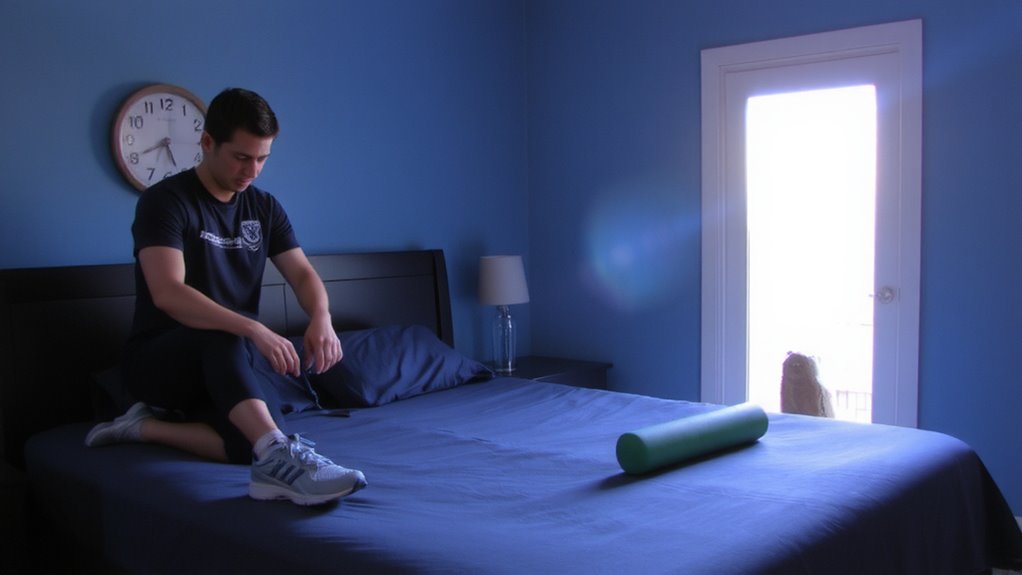
Why do some people crush their workouts at dawn while others only hit their stride after sunset? It comes down to your chronotype. If you’re a lark, morning exercise timing aligns with your peak energy, boosting workout efficiency. You’ll likely feel stronger and more focused early on. Owls, though, hit their stride later-afternoon or evening workouts often feel easier and more productive. Aligning exercise timing with your natural rhythm enhances performance and consistency. You don’t need to force early gym sessions if they drain you. Instead, trial workouts at different times to see what fits. Notice how your body responds-energy levels, motivation, recovery. Tracking helps clarify patterns. There’s no universal “best” time-only what works for you. Matching your routine to your chronotype supports long-term adherence and better workout efficiency without relying on sleep aids or disrupting sleep patterns.
How Chronotype Shapes Sleep and Health
A natural rhythm governs your sleep and energy patterns, and recognizing your chronotype helps explain why one person sleeps soundly until morning while another stays alert late into the night. When your schedule clashes with your internal clock, circadian misalignment occurs, increasing risks for metabolic disruption and poor health. Consistently going to bed or waking too early or late for your chronotype can reduce sleep quality and affect long-term wellness.
| Chronotype | Risk with Mismatched Schedule |
|---|---|
| Early (Lark) | Insomnia, sleep deprivation |
| Late (Owl) | Circadian misalignment |
| Intermediate | Mild fatigue |
| Flexible | Low disruption |
| Irregular | Metabolic disruption |
Aligning rest patterns with your biology supports better recovery and health. Sleep aids may help short-term, but consistent routines tailored to your chronotype are more effective and sustainable.
Daily Routine Tweaks for Your Internal Clock
What if adjusting your daily schedule could make falling asleep easier and boost how you feel during the day? Aligning your routine with your internal clock can do just that. Start with light exposure: get bright, natural light early in the morning to signal wakefulness and reduce screen brightness at night to ease into sleep. Your meal timing also matters-eating meals at consistent times each day helps regulate energy and digestion, especially when you avoid heavy meals close to bedtime. If you’re a night owl, gradually shift your activities earlier; morning types should protect their sleep window. These tweaks support better sleep patterns without immediate need for sleep aids. Small changes in light exposure and meal timing can improve alertness, mood, and long-term health, offering a practical way to work *with* your body’s rhythm, not against it.
On a final note
You likely perform best when aligning workouts with your chronotype-larks in the morning, owls in the evening. Matching activity and sleep schedules to your internal clock supports better health and fitness outcomes. Consistent timing improves sleep quality, which can reduce risks linked to sleep disorders. Consider adjusting your routine gradually, tracking energy and recovery. Trial changes over a few weeks, noting results. This simple, evidence-backed approach helps you make informed choices about sleep aids or habits without relying on quick fixes.